
Walker系列人形机器人

Search documents
中国机器人行业年度融资回顾
机器人圈· 2026-01-06 12:06
Core Insights - The Chinese robotics industry in 2025 is characterized by a dramatic interplay of capital, technology, and application scenarios, described as a "song of ice and fire" [2] - The industry has seen unprecedented growth in financing, with approximately 610 financing events and a total amount nearing 50 billion RMB, representing over a 150% increase compared to the previous year [5][9] - A shift in investment logic is evident, moving from a focus on flashy technological demonstrations to a critical evaluation of scalable production capabilities and real-world commercial applications [10][11] Financing Scale and Structure - The financing scale in 2025 has reached a historic high, with total financing exceeding 50 billion RMB, marking a 2.5 times increase from the previous year [5] - There is a significant "head concentration" effect, with 9 companies completing 13 financing rounds of over 100 million USD, indicating that "billion-level" financing has become the new norm for leading players [5][9] - The capital structure has evolved into a diversified ecosystem, with financial VCs, industrial capital, and state-owned capital forming a "tripod" [6][8] Investment Logic Evolution - The focus of investors has shifted from prototype demonstrations to the ability to scale production, with metrics such as production line progress and order stability becoming critical [10][11] - Companies that can disclose specific order data and delivery milestones are more attractive in the financing market, as seen with firms like UBTECH and Zhiyuan Robotics [11] Application Scenario Differentiation - The application scenarios for robotics are increasingly stratified, moving away from the ambition of creating a general AI to focusing on practical economic value [14][15] - A "value pyramid" is forming, with high-end manufacturing at the top, standardized process scenarios in the middle, and specialized tasks at the base [14][15][16] Challenges and Market Dynamics - The robotics industry faces significant challenges, including technological bottlenecks in hardware and software, as well as economic viability issues related to manufacturing costs [19][20] - The current high valuations in the market are under scrutiny, with debates on whether they reflect genuine future potential or are speculative bubbles [21][22] Future Trends and Competitive Landscape - 2026 is anticipated to be a pivotal year for mass production in the robotics sector, with key performance indicators such as delivery rates and customer retention becoming crucial [23][24] - The competitive landscape is expected to evolve from product-centric competition to a more integrated ecosystem approach, with major tech companies like Tencent and JD.com establishing platforms to enhance their competitive edge [25][26]


2025,机器人“铁军”元年:资本抢滩,量产开跑
Sou Hu Cai Jing· 2026-01-02 04:55
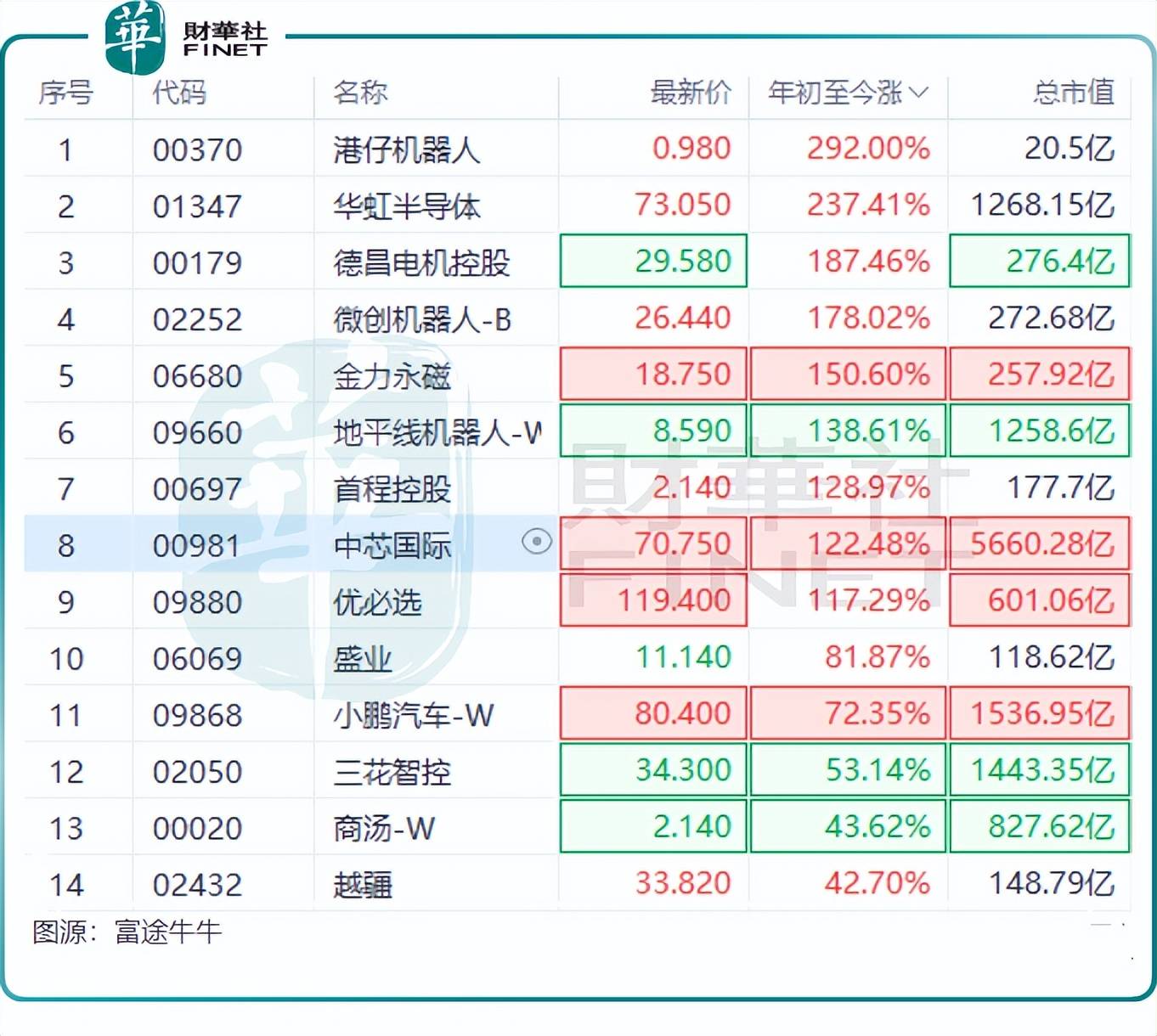
Core Insights - The robot industry is experiencing significant growth, highlighted by the acquisition of 43% stake in Fenglong Co. by UBTECH Robotics for RMB 1.665 billion, marking a strategic move to strengthen its production capabilities [1] - The year 2025 is seen as a pivotal moment for the robot industry, transitioning from storytelling to tangible results, with a surge in capital inflow and technological advancements [2] Financing Trends - The financing landscape for the robot sector has been robust, with domestic startups raising approximately RMB 50 billion in the first three quarters of 2025, a 2.5-fold increase compared to the same period last year [3] - The secondary market is also thriving, with multiple companies from the robot industry successfully listing on the Hong Kong Stock Exchange, creating a vibrant atmosphere of new listings and applications [4] Market Performance - The Hong Kong market has seen over ten robot-related companies listed, establishing a capital structure where leading firms drive innovation while mid-tier and supporting companies collaborate [5] - Notable stock performance includes companies like Gangzi Robotics and Huahong Semiconductor, with stock prices increasing over 200% year-to-date [6] Policy and Market Drivers - The rise in listings is supported by favorable policies from the Hong Kong Stock Exchange, which has opened doors for technology-intensive robot companies [7] - Efficient review processes and high demand from international investors have further enhanced the attractiveness of the Hong Kong market for robot companies [7] Technological Advancements - The robot industry is shifting towards a deep integration of hardware, software, and AI, moving beyond simple automation to intelligent decision-making capabilities [8] - Key components such as reducers and servo motors are seeing breakthroughs, with domestic companies capturing over 40% of the global market share in critical areas [9] Commercialization Milestones - 2025 is recognized as a critical turning point for the commercialization of robots, with significant orders and projects validating the industry's capabilities [10] - Major contracts, such as a RMB 1.2 billion order from China Mobile, highlight the growing acceptance of robots in commercial applications [11] Future Outlook - The robot industry is poised for expansive growth, driven by increasing demand for intelligent manufacturing and the integration of AI technologies [12] - However, challenges remain, including the need for improvements in core component precision and the competitive landscape with international players [15]


“ 汽车人,变形出发!”——浙江汽配企业转型 布局人形机器人样本调查
Zhong Guo Zheng Quan Bao· 2025-12-28 23:56
Core Insights - The automotive parts industry in Zhejiang is collectively transforming towards humanoid robotics, viewing it as a significant growth opportunity following the success of electric vehicles and intelligent driving [2][3][7] - The market for humanoid robots is projected to grow substantially, with an expected sales volume of 12,400 units and a market size of 6.339 billion yuan by 2025, and further growth anticipated by 2035 [3][4] Group 1: Industry Transformation - Zhejiang's automotive parts companies are rapidly entering the humanoid robotics sector, with over 100 related companies and more than 40 listed on the A-share market [2][3] - Companies like Junsheng Electronics have upgraded their strategies to "Automotive + Robotics Tier 1," marking the beginning of a new growth phase [2][3] - The collective shift is characterized by strategic partnerships, product launches, and international market expansion [2][3] Group 2: Market Potential - The humanoid robot market is seen as a "potential stock" by Zhejiang automotive parts companies, with a strong belief in its future profitability [3][4] - The commercialization of humanoid robots is accelerating, with significant orders and deliveries reported in 2025 [3][4] Group 3: Cost Reduction and Localization - The rise in domestic production of core components for humanoid robots is driving down costs, with examples showing a 25% reduction in the cost of certain models compared to 2024 [5][6] - Companies are leveraging existing supply chains and production capabilities to reduce investment costs and enhance equipment utilization [6][7] Group 4: Technological Synergy - The transition to humanoid robotics is facilitated by the technological similarities between automotive parts and robotics, allowing for seamless integration and reduced R&D costs [7][8] - The existing expertise in sensors, motors, and mechanical transmission systems within the automotive sector is being effectively transferred to the humanoid robotics field [7][8] Group 5: Collaborative Ecosystem - The high overlap of customers between the automotive and humanoid robotics sectors enhances market entry opportunities for companies [8] - The collaborative nature of the supply chain is enabling companies to tap into existing channels for humanoid robot component procurement [8]


“ 汽车人,变形出发!”
Zhong Guo Zheng Quan Bao· 2025-12-28 21:08
Core Viewpoint - The automotive parts industry in Zhejiang is collectively transforming towards humanoid robots, viewing this sector as a significant growth opportunity following the success of electric vehicles and intelligent driving [1][3]. Group 1: Industry Transformation - The transformation was initiated by Junsheng Group's subsidiary, Junsheng Electronics, which upgraded its strategy to "Automotive + Robotics Tier 1" in early 2025, marking the beginning of a new growth curve [2]. - Over 100 humanoid robot-related companies exist in Zhejiang, with more than 40 listed on the A-share market, primarily from the automotive parts sector [2]. - The collective shift towards humanoid robots is seen as a strategic response to the increasing competition in the electric vehicle market, with companies aiming to tap into the "trillion-dollar blue ocean" of humanoid robotics [3]. Group 2: Market Potential - The global humanoid robot market is projected to reach 12,400 units and 6.339 billion yuan in 2025, with expectations to exceed 5 million units and 400 billion yuan by 2035 [3]. - The commercialization of humanoid robots is accelerating, with significant milestones such as the delivery of the 5,000th general-purpose robot and substantial order volumes for specific models [3]. Group 3: Cost Reduction and Technological Advancements - The rise of humanoid robots is supported by advancements in domestic production of core components, leading to reduced costs; for instance, the cost of the Walker series robots has decreased by 25% compared to 2024 [5]. - The integration of production capabilities for both electric vehicles and humanoid robots allows companies to lower investment costs and enhance equipment utilization [5][6]. - The potential for further cost reductions exists, particularly in key components like harmonic reducers and planetary roller screws, where domestic production rates can still improve [6]. Group 4: Synergy and Supply Chain Advantages - The existing supply chain in Zhejiang, developed over years in the automotive sector, provides a strong foundation for the humanoid robot industry, facilitating a seamless transition [7][8]. - The overlap in customer bases between electric vehicle and humanoid robot sectors is significant, with a 70% overlap reported, allowing companies to leverage existing channels for component procurement [8]. - The technological similarities between automotive parts and humanoid robots enable companies to transfer knowledge and capabilities, reducing R&D costs and risks associated with the transition [7][8].
全球人形机器人年鉴:从一级市场到二级市场
Robot猎场备忘录· 2025-12-26 04:08
Core Insights - The humanoid robot sector is currently experiencing unprecedented attention globally, particularly in China, where it is supported by policies and government funds [2][21] - The competition among major players in the humanoid robot field is intense, with many startups likely to fail in the commercialization process [3][5] Group 1: Market Overview - Since 2025, major automotive and tech companies have adopted a dual approach of "self-research + investment" in the embodied intelligence sector, but most are still in the early stages without commercially viable bipedal humanoid robots [3][5] - The industry is characterized by a lack of consensus, with various new startups continuously emerging despite existing technological bottlenecks [4][5] Group 2: Commercialization Progress - In the second half of 2025, domestic humanoid robot startups have made significant commercialization progress, surpassing that of leading foreign companies, primarily due to better scene selection rather than advanced technology [5][22] - Current commercial applications remain limited to research, education, and entertainment, with industrial and household applications still a long way off [5][22] Group 3: Technological Development - The humanoid robot sector is entering an era focused on self-research of the robot "brain," driven by breakthroughs in artificial intelligence and large model technologies [5][6] - The dual-system architecture, specifically the VLA model, has become the mainstream approach in the field of embodied intelligence, with no consensus yet on hardware and software technologies [6][8] Group 4: Investment Trends - The secondary market is seeing a surge in interest, particularly in T-chain companies, driven by the positive developments surrounding Tesla's Optimus project [4][11] - Leading startups are increasingly pursuing IPOs, with companies like Zhiyuan Robotics and Yushun Technology initiating their IPO processes [10][11] Group 5: Future Directions - The development of dexterous hands and multi-modal tactile sensors is gaining traction, as these components are crucial for the performance of humanoid robots [9][10] - The healthcare and elderly care sectors are expected to become key focus areas for humanoid robot startups in the future [10]


无锡经开区多维度书写“双湾联动”精彩篇章
Xin Hua Ri Bao· 2025-12-21 22:30
Group 1 - The core viewpoint of the articles highlights the rapid growth and investment in the humanoid robotics sector, particularly by Shenzhen Youbixuan Technology Co., Ltd., which has secured significant contracts and is expanding its production capacity in Wuxi [1][2] - Youbixuan has received major orders, including the largest single contract for humanoid robots globally, with total orders for the Walker series exceeding 800 million yuan by November [1] - The company is constructing a 1 billion yuan industrial robot R&D and production base in Wuxi, aiming to produce 200 humanoid robots annually, contributing to a new landmark in the robotics industry valued at over 10 billion yuan [1] Group 2 - Wuxi Economic Development Zone is actively fostering collaboration with the Greater Bay Area, having launched over 50 projects and attracted more than 50 companies from the region [2][4] - The establishment of the Xiganghu Robotics Institute, led by top research teams, aims to enhance innovation and industrialization in robotics, with plans to connect resources from Hong Kong universities [3] - The region is also developing smart connected vehicle industries, with companies like Wenyan Zhixing operating autonomous microbuses, serving over 200,000 passengers [3]
全球人形机器人调研纪要(2025)
Robot猎场备忘录· 2025-12-13 04:08
Core Insights - The humanoid robot sector is currently experiencing unprecedented attention globally, particularly in China, where it is supported by policies and government funds [2][21] - The competition among major players in the humanoid robot field is intense, with many startups likely to fail in the commercialization process [3][5] Group 1: Market Overview - The humanoid robot market is characterized by a dual approach of "self-research + investment" from major automotive and tech companies, but most are still in the early stages without commercially viable bipedal robots [3][5] - The industry is witnessing a surge in capital interest, with new startups continuously emerging despite existing technological bottlenecks [4][5] - The commercial applications of humanoid robots remain limited to research, education, and entertainment, with industrial and household applications still in the early stages [5][10] Group 2: Commercialization Progress - Domestic humanoid robot startups have made significant commercialization progress compared to their international counterparts, primarily due to better scene selection rather than technological superiority [5][22] - Major companies like Tesla and Figure AI are focusing on versatile robots for industrial and household applications, while domestic firms are often limited to educational and exhibition scenarios [22][26] Group 3: Technological Development - The humanoid robot sector is divided into two main camps: hardware-focused companies and software-driven firms, with both facing unique challenges in commercialization [5][6] - The development of the "brain" of humanoid robots, driven by advancements in AI and large models, is seen as a critical barrier to achieving widespread commercialization [6][8] - The VLA model has emerged as the mainstream technical path in the field of embodied intelligence, indicating a lack of consensus on technology convergence [6][8] Group 4: Investment and IPO Trends - The secondary market is seeing a rush of IPOs from leading humanoid robot companies, with significant attention on T-chain companies due to the positive market sentiment surrounding Tesla's Optimus [4][11] - Companies like Zhiyuan Robotics and Yushun Technology are leading the way in the IPO process, indicating a growing interest in the humanoid robot sector [10][11] Group 5: Future Directions - The development of dexterous hands and multi-modal tactile sensors is gaining traction, as these components are crucial for the performance of humanoid robots [9][10] - The healthcare and elderly care sectors are expected to become key focus areas for humanoid robot startups in the future [10][12]
梳理了国内60家人形机器人公司 ,我们发现了这三大特征
3 6 Ke· 2025-12-08 12:13
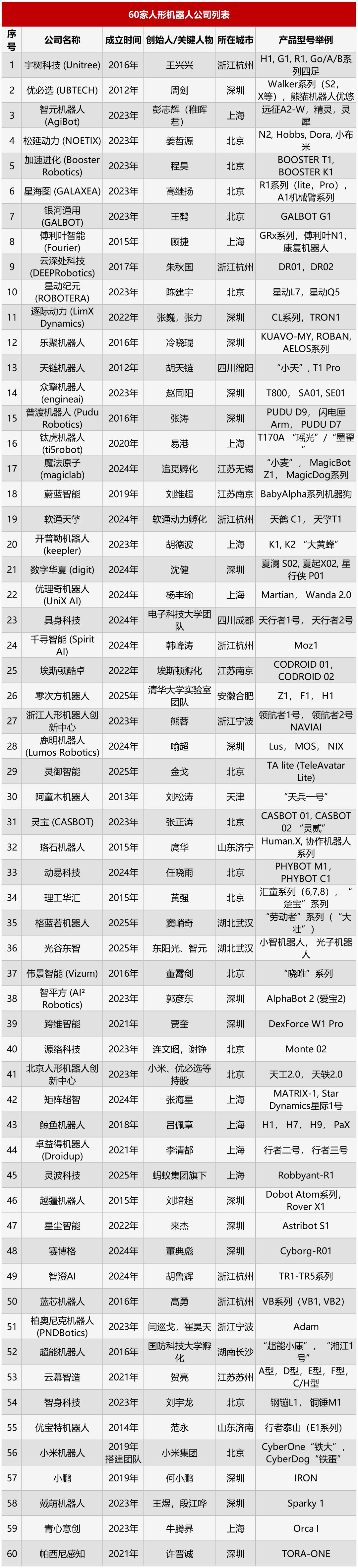
Core Insights - The humanoid robot industry in China has rapidly gained momentum since 2023, with significant capital investments and some companies initiating IPO processes, leading to an elevated industry narrative [1] - Over 150 humanoid robot companies currently exist in China, with 60 representative companies identified for a clearer industry landscape [1] - The industry is characterized by a generational shift in technology focus, moving from traditional engineering to AI-driven capabilities [1] Group 1: Industry Characteristics - More than half of the humanoid robot companies were established between 2023 and 2025, driven by the global emergence of ChatGPT and Tesla's Optimus demonstration effect [1] - The majority of these new companies have founders with backgrounds in artificial intelligence or research, emphasizing large models and embodied intelligence [1] - The geographical concentration of humanoid robot companies is primarily in Beijing, Shanghai, Suzhou, Hangzhou, and Shenzhen, benefiting from mature industrial ecosystems and talent pools [2] Group 2: Product and Market Dynamics - There is a notable divergence in product routes among companies, yet the downstream application scenarios are highly overlapping, primarily targeting factories, research education, hazardous environments, and household tasks [3] - The competition among companies is intensifying due to limited scalable downstream scenarios, making technology investment, supply chain capabilities, and customer resources critical for success [3] - A detailed list of 60 humanoid robot companies has been compiled, showcasing their founding years, key personnel, locations, and product examples [3]
瑞银证券最新报告:具身智能加速场景落地,量产积极信号逐步显现
2 1 Shi Ji Jing Ji Bao Dao· 2025-12-04 08:33
Core Insights - UBS released a report titled "Humanoid Robot Insight," analyzing the global humanoid robot industry developments expected by November 2025, indicating positive signals for mass production in 2026 [1] Group 1: Industry Developments - Companies like Tesla, UBTECH, and Weijian are gradually realizing their production capacity plans, with continuous growth in orders from Chinese manufacturers and increased interest from European investors [2] - UBTECH recently announced a winning bid for a 143 million yuan order, bringing its total order amount for the Walker series humanoid robots to 1.3 billion yuan for 2025 [2] - Weijian has formed a strategic partnership with Cao Cao Mobility to introduce humanoid robots into the first "green intelligent passage island," paving the way for large-scale applications in transportation and logistics [2] Group 2: Market Trends - UBS forecasts that the production capacity plans of Tesla and the significant orders secured by companies like UBTECH and Weijian indicate an acceleration in the industry chain's realization [2] - European investors have shown a marked increase in interest in Chinese technology and embodied intelligence, recognizing structural growth opportunities in the sector [3] - Despite the humanoid robot business not expected to contribute significant profits in the next 1-2 years, capital markets are beginning to position themselves for long-term potential [3] Group 3: Order Momentum - Chinese humanoid robot manufacturers are demonstrating strong order momentum, with Weijian recently securing multiple large orders, including over 80.5 million yuan from Redefeng for embodied intelligent robots [3] - On November 4, Lens Technology committed to purchasing 1,000 embodied intelligent robots from Weijian by 2025 [3] - A strategic cooperation between Green Source and Weijian aims to promote the application of 5,000 robotic dogs in smart store upgrades, marking a significant transition from "technology validation" to "commercial creation" [3][4] Group 4: Application Expansion - The report emphasizes the rapid expansion of application scenarios for embodied intelligent robots, extending from industrial manufacturing to commercial services, and accelerating realization [4]
港股异动 | 优必选(09880)早盘涨超5% 公司与卓世科技达成合作 5年内部署1万台人形机器人
智通财经网· 2025-12-04 03:21
Core Viewpoint - Company UBTECH Robotics (09880) has signed a strategic cooperation framework agreement with ZHOSHI Technology, focusing on "industry models + embodied intelligence" with plans to deploy 10,000 robots over the next five years and jointly pursue billions in commercial orders [1] Group 1: Company Developments - UBTECH's stock rose over 5% in early trading, currently at 113.4 HKD with a trading volume of 710 million HKD [1] - On November 28, UBTECH won a bid for a humanoid robot data collection and training center project in Jiujiang, Jiangxi, with a contract value of 143 million HKD [1] - The latest model, the Walker S2, will be used in the aforementioned project, which features autonomous battery swapping capabilities [1] Group 2: Financial Outlook - As of now, the total order value for the Walker series humanoid robots for the year 2025 has reached 1.3 billion HKD [1]