CDO

Search documents
全球爆发流动性危机的可能性有多大?
Sou Hu Cai Jing· 2025-11-23 00:16
Core Viewpoint - Recent significant decline in BTC price, breaking below $100,000, raises concerns about global financial market liquidity [3][4] Group 1: Market Dynamics - On November 14, both spot gold and BTC prices experienced a drop of over 3%, closing down more than 2% [4] - Investors are increasingly worried about liquidity issues in the global financial market, prompting a discussion on the principles of cyclical liquidity crises [6] Group 2: Safe-Haven Assets - The concept of "safe-haven assets" is critiqued, highlighting that true safe-haven assets are cash, short-term bonds, and money market funds, rather than gold and BTC [7] - The article illustrates a scenario where investors replace cash with safe-haven assets, leading to a distorted pricing framework for risk assets [9][10] Group 3: Historical Context and Evolution - The article references Ray Dalio's strategy of shorting cash, which has evolved into a widespread practice among investors, leading to inflated prices for gold and BTC [16][20] - The historical context of credit default swaps (CDS) during the 2008 financial crisis is compared to the current reliance on gold and BTC as safe-haven assets, indicating a cycle of moral hazard [27][29] Group 4: Federal Reserve's Role - The Federal Reserve's balance sheet has been pressured by the "too big to fail" logic, with financial institutions evolving from needing a single "emperor" to a complex web of interconnected entities [30][31] - Despite the Fed's tight monetary policy, financial institutions have found ways to circumvent these restrictions, leading to the creation of "fake cash" through safe-haven assets [32][34] Group 5: Future Implications - The inevitability of intermittent liquidity crises is emphasized, suggesting that without significant crises, the financial system cannot compel the Fed to convert "fake money" into "real money" [37]

从花旗,巴克莱到中金原首席风险官:李祥林教你用衍生品追踪黑天鹅
华尔街见闻· 2025-11-18 10:43
Core Viewpoint - The year 2025 presents a dramatic scenario where global liquidity is revitalized, and market enthusiasm is rekindled, particularly driven by the AI narrative, leading to record highs in global stock markets [1][4]. However, there is a simultaneous sharp decline in risk appetite, with institutional funds flowing into safe-haven assets like gold, resulting in multiple historical highs in gold prices [2][4]. Group 1: Market Dynamics - Investors are simultaneously betting on the future of AI while holding onto the reality of gold, reflecting a historical pattern seen during the internet bubble in 2000 and the financial crisis in 2008 [4][5]. - The current market environment is characterized by a dissonance between the fervor for AI and the rising demand for risk aversion, indicating a potential for irrational collapse following a period of rational exuberance [5][24]. Group 2: Risk Management Insights - The article emphasizes the need for a robust risk framework to navigate the current chaotic market conditions, as highlighted by Professor Li Xianglin's upcoming course aimed at equipping participants with essential skills for risk assessment and management [8][25]. - The course will cover the construction of risk factor models, risk prevention and early warning systems, and strategies for asset allocation during turbulent times [27][28]. Group 3: Professor Li Xianglin's Background - Professor Li Xianglin has a distinguished career in financial risk management, having worked at major institutions like Citigroup and Barclays, where he developed the Gaussian Copula function, a foundational model for pricing credit derivatives [11][22]. - After the 2008 financial crisis, he shifted focus from financial innovation to risk governance, contributing to the Basel Committee and advising key financial regulatory bodies in China [13][23]. Group 4: Course Objectives - The course aims to help participants understand how financial risks are generated and to develop a framework for identifying and responding to risks, rather than merely predicting opportunities [34][35]. - It will also address the psychological aspects of market behavior, emphasizing the importance of maintaining independent judgment amidst market euphoria and panic [30][34].

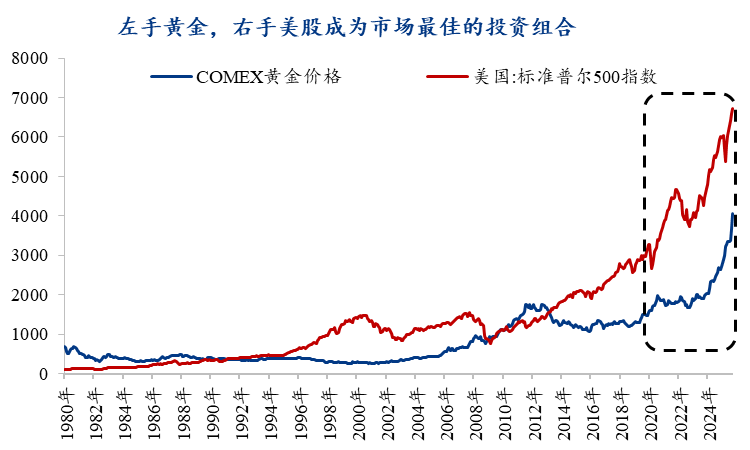
左手黄金右手美股就能对冲风险吗?原中金首席风险官李祥林教你用衍生品辨别应对“黑天鹅”
Hua Er Jie Jian Wen· 2025-10-29 06:36
Core Insights - The year 2025 is characterized by a dramatic dichotomy where global liquidity is reviving market enthusiasm, particularly around AI narratives, while simultaneously, risk appetite is sharply declining as institutional funds flock to safe-haven assets like gold, leading to multiple record highs in gold prices [1][3] Group 1: Market Dynamics - Investors are simultaneously betting on the future of AI while holding onto the reality of gold, reflecting a historical pattern in financial markets where optimism and caution coexist [3] - The current market environment mirrors past financial bubbles, such as the 2000 internet bubble and the 2008 financial crisis, where overconfidence in technology and risk models led to significant downturns [3][5] - The volatility of risk assets is increasing even as indices reach record highs, indicating a disconnect between market performance and underlying risk factors [3] Group 2: Risk Management - The current risks stem from an overreliance on sophisticated algorithms and models, which may create a false sense of security in the market [5][6] - The belief that risks can be fully controlled through advanced models is challenged by the reality that increased information can lead to greater noise and potential misjudgments [5][6] - Investors need to develop a framework for identifying and responding to risks rather than merely relying on market trends [7][14] Group 3: Educational Initiatives - A course led by Professor Li Xianglin aims to equip investors with the skills necessary to maintain clarity in chaotic market conditions, emphasizing the importance of understanding risk rather than merely predicting opportunities [8][14] - Li Xianglin's background in risk management across various financial sectors positions him as a suitable instructor for this course, focusing on the interplay of risk factors and market behavior [10][12][14] - The course will address how to build a "risk immunity system" and recognize the emotional structures behind market behaviors, which are crucial for navigating future market uncertainties [18]