Cobalt CPU

Search documents
微软这颗芯片,撼动英伟达?
半导体行业观察· 2026-01-29 01:15
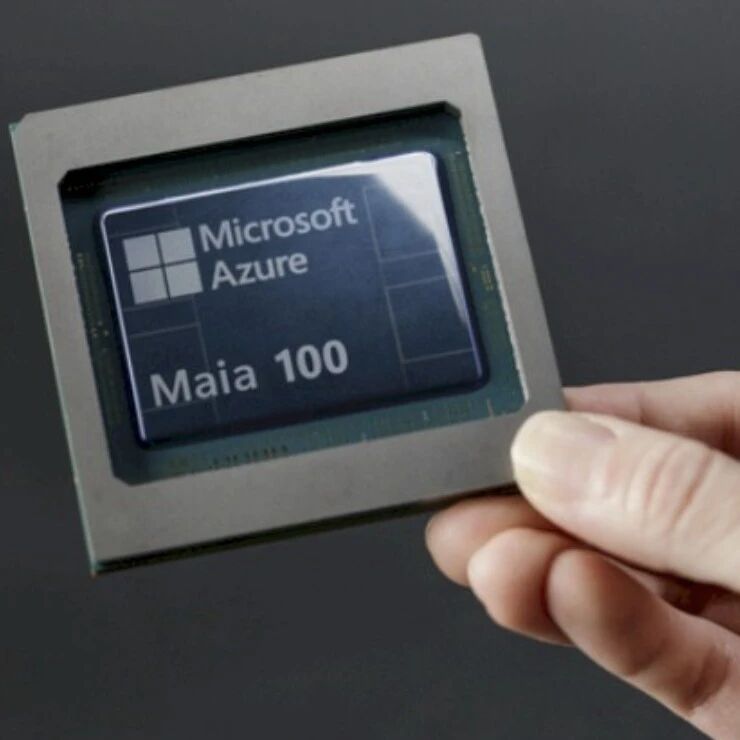
Core Insights - Microsoft is the largest user of OpenAI models and has completed the development of its Maia AI accelerator, which aims to enhance AI capabilities [2] - Major cloud service providers and GenAI model developers are creating custom AI XPUs to reduce the cost of GenAI inference workloads [2] - Nvidia currently dominates the AI training market, while AI inference computing power is expected to be an order of magnitude higher than training, presenting opportunities for over a hundred AI computing startups [2] Group 1: Microsoft and AI Hardware Development - Microsoft aims to control its hardware resources while deploying AI-driven systems, balancing the use of third-party GPUs and CPUs with its own developed computing engines [3] - The Maia 100 XPU, announced in November 2023, is designed to support AI training and inference, specifically for OpenAI's GPT models, although its performance has been questioned [4][12] - The upcoming Maia 200 XPU, set for release in January 2026, is designed specifically for AI inference, simplifying its architecture [5] Group 2: Technical Specifications of Maia Chips - The Maia 100 chip features 64 cores, approximately 500MB of total L1 and L2 cache, and a total of 105 billion transistors, with a clock speed of around 2.86GHz [12][14] - The Maia 200 chip will utilize TSMC's N3P process, increasing transistor count to 144 billion and improving clock speed to 3.1GHz, while also enhancing memory capacity and bandwidth significantly [21][22] - The Maia 200 chip's tensor units are expected to deliver 10.15 petaflops at FP4 precision and 5.07 petaflops at FP8 precision, with a total power consumption of 750W [24] Group 3: Deployment and Future Plans - The Maia 200 computing engines will be used to support OpenAI's GPT-5.2 model and will drive Microsoft's Foundry AI platform and Office 365 Copilot [26] - Currently, there is no information on when Azure will offer VM instances based on the Maia 200, which would allow testing of various AI models [26]


微软计划全面转向自研芯片!
国芯网· 2025-10-09 14:47
Core Viewpoint - Major tech companies, including Microsoft, are shifting towards self-developed chips to reduce reliance on traditional suppliers like NVIDIA and AMD, aiming for a more autonomous and controllable technology ecosystem [1][3]. Group 1: Strategic Shift to Self-Developed Chips - Microsoft plans to primarily use self-developed chips in its data centers, marking a significant strategic shift in its overall data center system design [3]. - The move is part of a broader trend among major cloud service providers seeking customized solutions to meet specific business needs, driven by the rapid development of artificial intelligence technology [3][4]. Group 2: Investment in AI and Chip Development - In 2023, Microsoft launched the Azure Maia AI accelerator and Cobalt CPU, specifically designed for AI workloads, which have been widely adopted in its data centers [3]. - Tech giants, including Meta, Amazon, Alphabet, and Microsoft, have committed over $300 billion in capital expenditures this year, with a significant portion allocated to artificial intelligence to meet the growing market demand [3]. Group 3: Industry Trends and Implications - The shift to self-developed chips is not only driven by cost and performance considerations but also by strategic concerns regarding supply chain security and business customization [4]. - This trend is expected to reshape the global semiconductor industry landscape as more companies follow suit [4].

微软希望未来主要使用自己的AI数据中心芯片
Sou Hu Cai Jing· 2025-10-03 09:23
Core Viewpoint - Microsoft aims to primarily use its own chips in data centers to reduce reliance on major companies like Nvidia and AMD [1][3][5] Group 1: Chip Strategy - Microsoft has been using Nvidia and AMD chips in its data centers, focusing on selecting the right silicon for optimal cost-effectiveness [3][5] - The company has launched AI-specific chips like the Azure Maia AI accelerator and Cobalt CPU, and is developing next-generation semiconductor products [5][6] - Microsoft is implementing a new cooling technology to address chip overheating issues [5] Group 2: Industry Context - Major cloud computing players, including Microsoft, Google, and Amazon, are designing their own chips to enhance efficiency and reduce dependence on Nvidia and AMD [6] - Tech giants, including Meta, Amazon, Alphabet, and Microsoft, have committed over $300 billion in capital expenditures this year, primarily focused on AI investments [6] Group 3: Capacity Challenges - There is a significant shortage of computing capacity, exacerbated since the launch of ChatGPT, with Microsoft struggling to build enough capacity to meet demand [7] - Despite ambitious forecasts, Microsoft has found its data center capacity deployments insufficient to satisfy the growing needs [7]
微软CTO:希望未来主要采用自研AI数据中心芯片,自主设计数据中心系统
美股IPO· 2025-10-02 03:53
Core Viewpoint - Microsoft aims to transition its data centers to primarily utilize self-developed chips, reducing reliance on major chip manufacturers like NVIDIA and AMD [3][4][6]. Group 1: Chip Development Strategy - Microsoft is focusing on designing a complete data center system, which includes not only chips but also networking and cooling systems [7]. - The company has already launched the Azure Maia AI accelerator chip and Cobalt CPU, and is reportedly developing next-generation semiconductor products [5]. - Microsoft emphasizes the importance of selecting chips based on the best cost-performance ratio, indicating a willingness to consider various solutions as long as capacity meets demand [5][4]. Group 2: Market Context and Competition - Major cloud computing companies, including Microsoft, are increasingly designing custom chips for their data centers to enhance efficiency and reduce dependency on NVIDIA and AMD [4][7]. - The AI sector is driving significant capital expenditure, with tech giants committing over $300 billion this year, primarily towards AI-related investments [8]. Group 3: Capacity Challenges - There is a significant shortage of computing power, described as a "massive crunch," particularly since the launch of ChatGPT, which has made it difficult to rapidly scale capacity [9]. - Despite aggressive deployment of computing resources over the past year, projections often fall short of actual demand, indicating ongoing challenges in meeting the needs of AI workloads [10].

放弃英伟达!全球巨头宣布自研芯片
是说芯语· 2025-10-01 23:42
Core Viewpoint - Microsoft plans to primarily use self-developed chips in data centers to reduce reliance on Nvidia and AMD, focusing on optimizing AI workloads with a complete system design approach [1][4]. Group 1: Chip Development and Strategy - Microsoft has launched the Azure Maia AI accelerator and Cobalt CPU in 2023, continuing to develop next-generation chip products [1]. - The company aims to design a complete data center system to optimize AI workloads, indicating a shift towards self-sufficiency in chip design [4]. - Microsoft currently uses Nvidia and AMD chips in data centers, prioritizing cost-effectiveness, but is expanding the use of its own chips [4]. Group 2: Market Context and Competition - Nvidia dominates the market with its GPUs, while AMD holds a relatively small market share [3]. - Major tech companies, including Microsoft, Google, and Amazon, are designing their own chips for data centers to reduce dependence on Nvidia and AMD and to better meet specific needs [3]. Group 3: Capacity Challenges - There is a severe shortage of computing power since the launch of ChatGPT, making it difficult for Microsoft to quickly establish sufficient capacity [5]. - Tech giants, including Meta, Amazon, Alphabet, and Microsoft, have committed over $300 billion in capital expenditures this year to meet AI demands [5].


Microsoft wants to mainly use its own AI data center chips in the future
CNBC· 2025-10-01 14:07
Core Insights - Microsoft aims to primarily utilize its own chips in data centers to reduce dependence on Nvidia and AMD [1][6] - The company has been developing custom chips for AI workloads, including the Azure Maia AI Accelerator and Cobalt CPU [5] - Microsoft is focused on optimizing the entire system design, including networks and cooling, to enhance performance for specific workloads [7] Chip Strategy - Microsoft currently relies on Nvidia and AMD for chip supply, prioritizing the best price-performance ratio [3][4] - The long-term strategy involves increasing the use of Microsoft-designed silicon in data centers [6] - The company is exploring next-generation semiconductor products to further its chip development efforts [5] Industry Context - Nvidia has been the dominant player in the semiconductor space for AI applications, while AMD holds a smaller market share [2] - Major cloud computing companies, including Microsoft, Google, and Amazon, are designing their own chips to enhance efficiency and reduce reliance on external suppliers [7]