
Colman's

Search documents
Unilever in talks to combine food business with McCormick in $15.7B deal
Invezz· 2026-03-31 09:30
Core Viewpoint - Unilever is in advanced discussions to merge its food business with McCormick & Company in a deal valued at approximately $15.7 billion, which could significantly reshape Unilever's portfolio and provide its shareholders with a controlling stake in the new entity [1][2][5]. Deal Structure and Valuation - The transaction is expected to be structured as a Reverse Morris Trust, allowing for a tax-efficient merger of Unilever's food division with McCormick [3]. - Analysts at Barclays have valued Unilever's food business between $32.1 billion and $35.5 billion, including debt [3]. Strategic Shift Under New Leadership - This potential merger represents a significant strategic move under CEO Fernando Fernandez, who has been in charge since March 2025, and is part of a broader effort to streamline Unilever's portfolio [4]. - Unilever has previously divested its ice cream business and several smaller food assets, indicating a shift away from slower-growing segments [4]. Challenges in the Food Business - Unilever's food division, historically central to the company, has faced growth challenges as consumer preferences shift towards fresh and healthier options [6]. - The rise of GLP-1 weight loss drugs has also negatively impacted demand for packaged food products, contributing to slower growth in this segment compared to beauty and personal care divisions [7]. Investor Pressure and Industry Context - Unilever has faced ongoing pressure from investors, particularly since activist investor Nelson Peltz acquired a stake in 2022, leading to leadership changes and a focus on portfolio streamlining [8]. - Similar strategic moves have been observed in industry peers, such as Procter & Gamble, which exited food and pet food businesses over a decade ago [8].


Dow futures plunge on Friday: 5 things to know before market opens
Invezz· 2026-03-20 11:28
Market Overview - US stock futures declined on Friday morning, with Dow futures falling approximately 200 points, while S&P 500 and Nasdaq 100 futures also showed slight decreases, influenced by rising oil prices and geopolitical tensions [1][6] - The Federal Reserve's hawkish stance and the escalation of the Middle East conflict are contributing to downward pressure on the indices [1] Oil and Commodity Markets - Oil prices have been volatile, impacting investor sentiment since the onset of the US and Israel's conflict with Iran, with prices initially slipping before recovering slightly [3] - Gold prices rebounded by about 0.3% to $4,662.51 per ounce, while silver prices fell approximately 1.7% to $71.62 per ounce [4] M&A Activity - Unilever is in discussions with McCormick & Co. regarding a potential sale of its foods business, which could integrate Unilever brands like Marmite and Colman's with McCormick's Cholula hot sauce [4][5] - The outcome of these discussions remains uncertain, but it aligns with Unilever's strategy to focus on higher-growth beauty and personal care categories [5] Treasury Yields - Treasury yields increased, with the 10-year yield rising about 1.7 basis points to 4.3%, the 2-year yield up 3 basis points to 3.87%, and the 30-year yield edging up 1 basis point to 4.87% [7] Global Market Sentiment - Asian markets experienced mixed trading, with Hong Kong's Hang Seng down 1%, Shanghai slipping 1.2%, and Australia's S&P/ASX 200 losing 0.8%, while South Korea's Kospi and India's Sensex saw slight gains of 0.3% and 0.4% respectively [8] - European markets showed a positive trend, with the pan-European Stoxx 600 up about 0.9%, driven by gains in banking and construction shares [8]

Unilever considers separation of its food assets, Bloomberg News reports
Reuters· 2026-03-17 19:00
Core Viewpoint - Unilever is considering a separation of its food assets to streamline its business, focusing on beauty and wellbeing, amid weak demand for food products [1][2][3]. Group 1: Business Strategy - Unilever is in the early stages of evaluating options for its food business, which may include spinning off most or all food assets while potentially retaining some flagship brands [3]. - The company is facing challenges as consumers are increasingly opting for cheaper store brands and the adoption of GLP-1 weight-loss drugs is impacting overall food consumption [2]. Group 2: Financial Implications - The potential separation of Unilever's food business could value it at tens of billions of dollars [3]. - Selling iconic brands like Marmite, Colman's, and Bovril would represent one of the most significant disposals under the leadership of CEO Fernando Fernandez, who aims to accelerate the company's turnaround strategy [4].

卖零食品牌Graze 联合利华食品业务再瘦身
Bei Jing Shang Bao· 2025-12-04 02:12
Core Viewpoint - Unilever has announced the sale of its health snack brand Graze to Katjes International, marking a strategic shift under new CEO Fernando Fernandez towards higher-margin beauty, personal care, and health products [1][2]. Group 1: Transaction Details - Unilever signed an agreement to sell Graze, with the transaction expected to be completed in the first half of 2026 [1]. - Graze, founded in 2008, was acquired by Unilever in 2019 for approximately £150 million, but has since struggled to meet growth expectations [1]. - Graze's revenue declined by 9.9% year-on-year to £35.6 million in 2024, significantly lower than the £55.9 million reported before Unilever's acquisition [1]. Group 2: Strategic Shift - The sale of Graze is part of a broader strategy by Unilever to focus on more profitable categories, continuing a trend initiated by the previous CEO [2]. - Unilever has made several adjustments in its food sector, including the divestiture of its ice cream business and plans to dispose of nearly €8 billion in food operations [2]. - The company has accelerated its "slimming" strategy, with multiple divestitures planned through 2025, including the sale of its Knorr pasta sauce business and The Vegetarian Butcher brand [2]. Group 3: Financial Performance - Unilever's financial performance has been underwhelming, with sales of €59.6 billion in 2023, a decrease of 0.8%, and net profit down 13.7% to €7.1 billion [3]. - In 2024, sales increased by 1.9% to €60.8 billion, but net profit fell by 10.8% to €6.4 billion [3]. - The first three quarters of 2025 saw sales of €44.8 billion, marking a 3.3% decline year-on-year, the first negative growth in three years [3].
出售零食品牌Graze,联合利华食品业务再瘦身
Bei Jing Shang Bao· 2025-12-03 12:16
Core Insights - Unilever has officially announced the sale of its health snack brand Graze to Katjes International, with the deal expected to be completed by mid-2026 [2] - The sale is part of a strategic shift under new CEO Fernando Fernandez, focusing on higher-margin beauty, personal care, and health products [3] Group 1: Company Strategy - The divestment of Graze aligns with Unilever's broader strategy to streamline its portfolio, having previously announced the sale of its ice cream business and plans to dispose of nearly €8 billion in food operations [3] - Unilever's recent actions include selling its Italian pasta sauce retail business and the vegetarian brand The Vegetarian Butcher, indicating a trend towards reducing its food segment [3] Group 2: Financial Performance - Unilever's financial performance has been declining, with 2023 sales at €59.6 billion, a decrease of 0.8%, and net profit down 13.7% to €7.1 billion [4] - In 2024, sales increased slightly to €60.8 billion, a 1.9% rise, but net profit fell to €6.4 billion, down 10.8% [4] - The first three quarters of 2025 saw sales of €44.8 billion, marking a 3.3% decline, the first negative growth in three years [4] Group 3: Market Challenges - The sale of non-core businesses is seen as a way for Unilever to quickly raise funds and focus on high-margin areas, which is essential for long-term growth [4] - However, the company faces challenges such as potential market confidence issues, internal management complexities, and the competitive nature of the beauty and health markets [4]
Katjes Group ‘in talks to buy Graze from Unilever’
Yahoo Finance· 2025-11-27 11:55
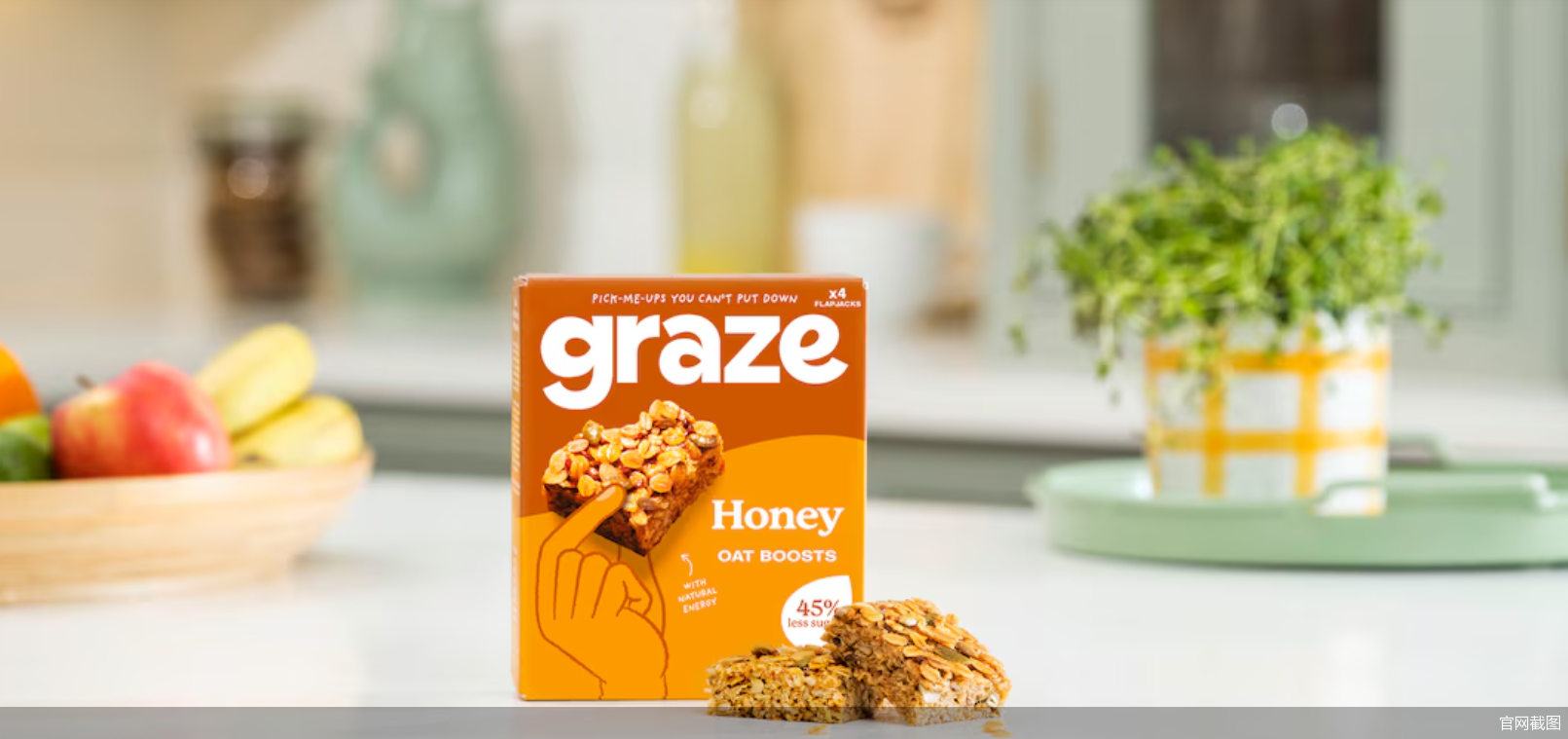
Core Insights - German confectionery group Katjes is in advanced talks to acquire snack brand Graze from Unilever for approximately £35 million ($46.2 million) [1] - Unilever had previously acquired Graze in 2019 for around £150 million from The Carlyle Group [1][2] - Unilever is currently evaluating the potential sale of several UK brands, including Marmite, Colman's, and Bovril, as part of a strategy to streamline its portfolio for long-term growth [2] Group 1 - Katjes has a history of acquiring UK businesses, including the gluten-free baked goods firm Genius Foods in 2022 and a majority stake in vegan-confectionery business Candy Kittens in 2019 [4] - The acquisition of Graze aligns with Katjes' strategy to expand its presence in the UK snack market [1][4] - Unilever's recent divestitures, including the sale of its pasta sauce range in Germany and the meat-free brand The Vegetarian Butcher, indicate a broader trend of portfolio optimization [3][2] Group 2 - The deal for Graze is part of Unilever's ongoing efforts to focus on fewer, larger brands to enhance scalability and growth potential [2] - Katjes' recent acquisition of a 25% stake in German cookie-dough business SD Sugar Daddies further demonstrates its commitment to expanding its product offerings [3] - The potential sale of Graze reflects Unilever's strategic shift towards refining its brand portfolio amidst changing market dynamics [2][3]
Exclusive: Unilever considers sale of British brands Marmite, Bovril, sources say
Reuters· 2025-11-20 12:42
Core Viewpoint - Unilever is contemplating the sale of several British food brands, including Marmite, Colman's, and Bovril, as part of its strategic review of the consumer goods portfolio [1] Group 1: Company Strategy - The potential divestiture of these brands indicates Unilever's ongoing efforts to streamline its operations and focus on core areas of growth within the consumer goods sector [1] - The decision reflects a broader trend in the industry where companies are reassessing their brand portfolios to enhance profitability and operational efficiency [1] Group 2: Market Implications - Selling these well-known brands could impact Unilever's market presence in the UK food sector, potentially leading to shifts in consumer loyalty and brand recognition [1] - The move may attract interest from other food companies looking to expand their product offerings in the British market [1]
