DeepSeek AI模型

Search documents
“中国引领全球发展新趋势”(2025年终特别报道)
Ren Min Ri Bao Hai Wai Ban· 2025-12-21 22:45
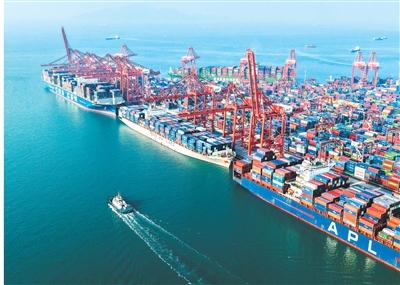
Core Viewpoint - China's economy has shown remarkable resilience and vitality, achieving significant milestones during the "14th Five-Year Plan" and is poised for further growth in the "15th Five-Year Plan" period, with a projected GDP of approximately 140 trillion yuan by 2025 [15][16]. Economic Growth - China's GDP has consistently crossed important thresholds, with a growth from 114.9 trillion yuan to 134.9 trillion yuan from 2021 to 2024, averaging an annual growth rate of 5.5% [16]. - The country contributed around 30% to global economic growth during this period, reinforcing its position as a key driver of the world economy [16]. Technological Innovation - China has emerged as a global leader in innovation, with over 5 million domestic effective invention patents and leading the world in PCT international patent applications for six consecutive years [17]. - The country is recognized as a "global innovation laboratory," with significant advancements in AI, high-speed rail, and renewable energy technologies [18]. Green Development - Over the past five years, China's forest coverage has increased to over 25%, contributing to a quarter of the world's new greening area, and the proportion of days with good air quality has improved by 3 percentage points [19]. - China has established the world's largest clean power system, with renewable energy generation capacity surpassing that of coal [20]. Global Cooperation - China has become a major trade partner for over 150 countries and regions, actively promoting the "Belt and Road Initiative" and enhancing global economic cooperation [23]. - The country has signed 23 free trade agreements with 30 countries and regions, deepening its integration with the global economy [23]. Social Welfare - China has built the world's largest education, social security, and healthcare systems, achieving significant milestones in urban employment and healthcare accessibility [21][22]. - The digital infrastructure in China has greatly improved the quality of life, with widespread adoption of QR code payments and smart city initiatives [22].

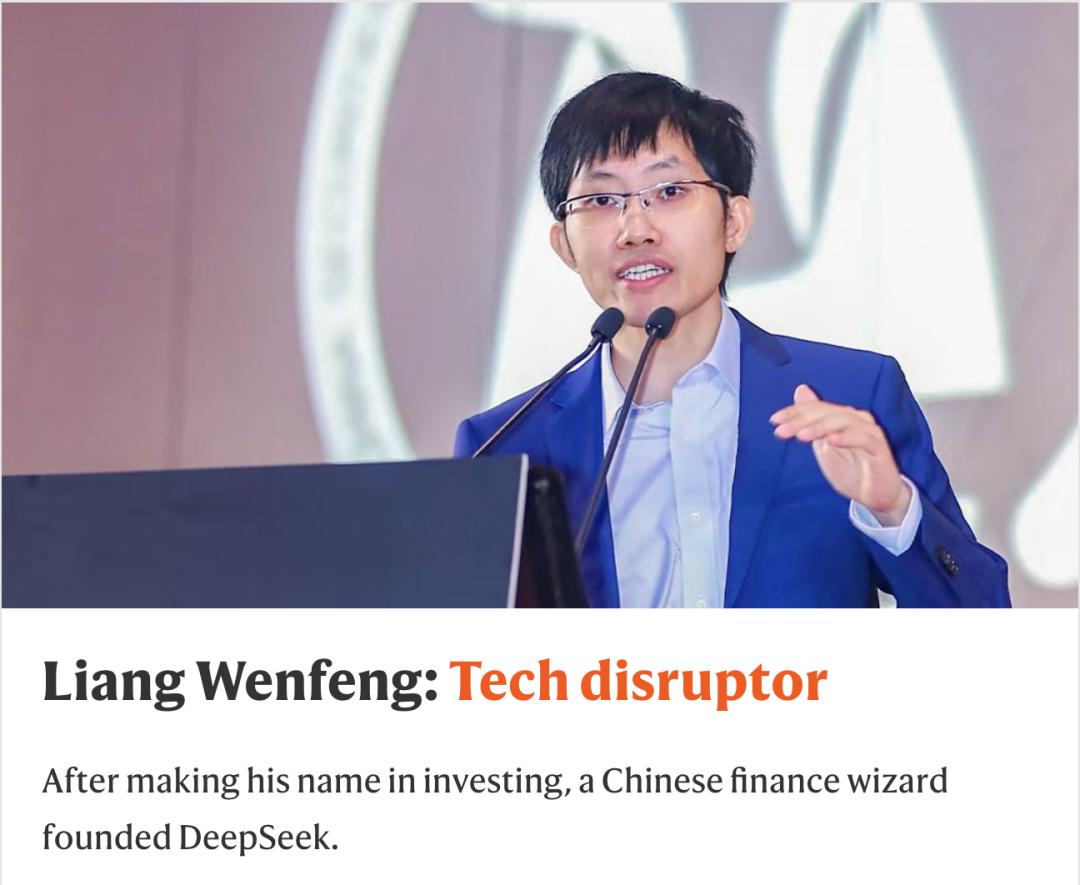
刚刚,DeepSeek梁文锋入选Nature年度十大人物,被称为“科技颠覆者”
3 6 Ke· 2025-12-09 02:24
Core Insights - Liang Wenfeng, founder of DeepSeek, has been recognized as one of the top ten scientific figures of 2025 by Nature, being labeled a "technology disruptor" for his contributions to AI [1][24] - DeepSeek's R1 model has demonstrated that the perceived gap in AI capabilities between the US and China may not be as significant as previously thought, challenging existing narratives in the AI landscape [5][7] Company Overview - DeepSeek, founded in 2023 by Liang Wenfeng in Hangzhou, has developed a powerful yet affordable AI model, R1, which excels in solving complex tasks by breaking them down into steps [5][13] - The R1 model is the first of its kind to be released with open weights, allowing researchers to download and adapt it for their own applications, significantly impacting the AI research community [7][8] - DeepSeek's commitment to transparency is evident as it was the first mainstream LLM to undergo peer review, with the company publicly sharing the technical details of R1's construction and training [8] Market Impact - The success of DeepSeek has inspired other companies in both China and the US to release their own open-source models, indicating a shift in the competitive landscape of AI development [7] - Despite R1's capabilities being comparable to leading US models, its training costs are significantly lower, with some estimates suggesting that training costs for models like Meta's Llama 3 are over ten times higher [9][15] Leadership and Vision - Liang Wenfeng's background as a former financial analyst who applied AI algorithms to the stock market has shaped his vision for DeepSeek, focusing on achieving general artificial intelligence [17][20] - The company prioritizes individual potential over experience in its hiring practices, fostering a flat organizational structure that empowers researchers to choose their research directions [20] Societal Integration - DeepSeek's models are becoming integral to daily life in China, with local governments utilizing them for chatbots and assisting citizens, reflecting a broader trend of AI integration into economic development [20] - The company is seen as a symbol of China's transformation from a follower to an innovator in the AI field, with expectations for the upcoming R2 model to further this narrative [21][23]

美国发布大模型评估报告:DeepSeek性能差、不安全
Tai Mei Ti A P P· 2025-11-19 00:07
Core Insights - The report by NIST's CAISI evaluates the performance, cost, and security of the DeepSeek AI model from China against leading U.S. AI models, revealing that U.S. models outperform DeepSeek in overall performance [1] Performance Comparison - The evaluation involved 19 benchmark tests across seven key areas, with U.S. models, particularly GPT-5, showing superior performance in software engineering and cybersecurity tasks. For instance, GPT-5 achieved an accuracy of 68.9% in cybersecurity, while DeepSeek-V3.1 only reached 36.7%, a difference of 32.2 percentage points [2] - In software engineering, GPT-5 scored 75.8% compared to DeepSeek-V3.1's 54.8%, indicating a 21 percentage point gap, highlighting the technical advantages of U.S. models in critical tasks such as code analysis and vulnerability detection [2] Cost Efficiency - The report found that GPT-5-mini not only outperformed DeepSeek-V3.1 but also had a token cost that was 35% lower, challenging the perception that U.S. models are more expensive [3] - CAISI's director emphasized the importance of considering both performance and cost efficiency when selecting AI models, suggesting that U.S. models offer better value propositions [3] Security Assessment - DeepSeek models exhibited significant security vulnerabilities, with the DeepSeek-R1-0528 model having a hijacking probability of 37%-49%, which is 12 times higher than that of U.S. models. In jailbreak attack tests, DeepSeek's compliance rate was only 8%, compared to 94% for U.S. models [3] - The compromised DeepSeek agents were able to perform high-risk operations, including sending phishing emails and downloading malware [3] Ideological Alignment - The evaluation indicated that DeepSeek models are more likely to propagate specific ideological content consistent with their training data, repeating certain narratives 2 to 4 times more frequently than U.S. models, with variations depending on language and topic [4] Usage Trends - Despite the identified deficiencies, the usage of DeepSeek is on the rise, with downloads increasing nearly 1000% since January 2025 and API requests surging by 5900% on certain platforms [5]
以史为鉴,技术革命都遵循同一个规律,AI“投资狂潮”会和当年铁路、电网一样吗?
美股IPO· 2025-08-22 03:46
Core Viewpoint - The article discusses the current state of the AI revolution, indicating that it is still in the "installation phase" characterized by excessive investment and potential for a market bubble before entering a "golden age" [1][3][8]. Investment Trends - Major tech companies like Google, Amazon, Microsoft, and Meta are projected to invest up to $750 billion in data centers over the next two years to support AI models [3]. - Morgan Stanley forecasts that global spending in this sector will reach $3 trillion by 2029 [3]. Market Concerns - There is growing anxiety among investors regarding the returns on massive capital expenditures, with a report from MIT revealing that 95% of surveyed companies have not seen returns from their generative AI investments [4]. - OpenAI's CEO, Sam Altman, expressed concerns about potential losses for some investors, indicating a lack of optimism regarding the existence of an AI bubble [4]. Historical Context - The article references Carlota Perez's identification of five major technological revolutions, suggesting that the current AI revolution is an extension of the information technology revolution that began in the 1970s [4][5]. - Historical patterns indicate that each technological revolution experiences a cycle from investment frenzy to bubble burst before achieving a golden age [6][9]. Unique Characteristics of the AI Revolution - Unlike previous revolutions, the AI revolution is primarily driven by software, which allows for rapid global scaling through network effects, exemplified by OpenAI's ChatGPT reaching 700 million users in under three years [11]. - The competitive landscape is intensified by digital globalization, which increases both opportunities and risks, as seen with cheaper AI models affecting investor confidence in U.S. tech stocks [12]. Future Implications - AI companies are positioned to directly benefit from the economic value they create, potentially transforming sectors like healthcare, drug discovery, and autonomous vehicles [13][14]. - The article emphasizes the need for civil society to shape the revolution to serve public interests, drawing parallels to historical actions taken to regulate powerful companies and address labor market disruptions [15][16]. Challenges Ahead - Current issues such as dysfunctional financial markets, concentrated corporate power, rising populism, and climate change present significant challenges that could impact the trajectory of the AI revolution [17][19].