DreamOmni2

Search documents
贾佳亚教授:模型不必一味求大!优化神经元连接方式同样是智能跃升的「关键密码」丨GAIR 2025
雷峰网· 2025-12-16 08:28
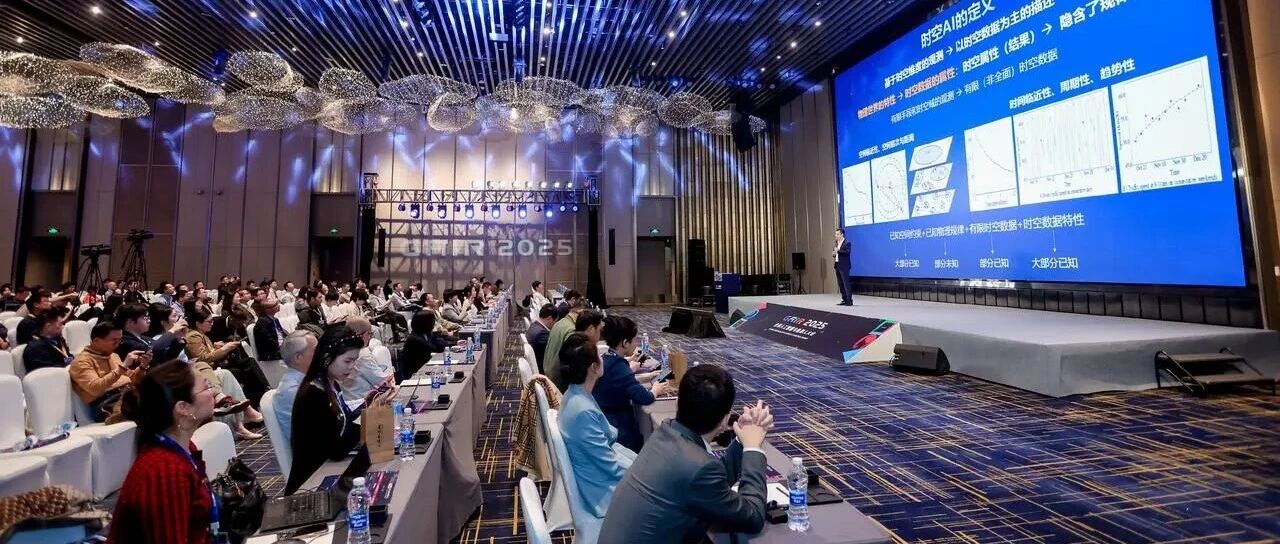
Core Insights - The future of AI architecture is expected to surpass the capabilities of the current Transformer model, potentially enhancing intelligence by a factor of 10,000 [72]. Group 1: Conference Overview - The 8th GAIR Global Artificial Intelligence and Robotics Conference commenced in Shenzhen, focusing on the intersection of academia, industry, and investment in AI [3]. - The conference serves as a platform for high-quality discussions and insights into the forefront of AI technology, reflecting on the rapid transformation driven by large models over the past four years [3]. Group 2: Key Technological Developments - The LongLoRA technology was introduced in 2023, marking the world's first 32K long-text context understanding model [5][13]. - The Mini-Gemini platform, launched in 2024, gained over 3,000 stars on GitHub and is recognized as the strongest model in the open-source community, integrating multimodal understanding capabilities [5][18]. - A new version of Mini-Gemini was released, featuring a complete Chinese voice system capable of long video comprehension and cross-language generation [5][20]. Group 3: Innovations in Image Generation - The ControlNeXt technology allows lightweight operations for image style transfer and dynamic effect generation [6]. - The DreamOmni2 system, developed with significantly fewer resources than competitors, is positioned as a leading unified system for intelligent image generation and editing [6][36]. - DreamOmni2 can perform complex tasks such as virtual try-ons, image editing, and product design, demonstrating capabilities that may surpass existing tools like Photoshop [37][40]. Group 4: Future Directions in AI - The development of large models should focus on improving the connectivity of neurons rather than merely increasing their quantity, emphasizing the importance of neural connections and brain complexity [7][70]. - Future AI training methods are expected to shift from one-time learning to continuous learning, akin to human education, which will enhance the adaptability and intelligence of AI systems [75]. - The integration of robotics and physical embodiments into AI systems is seen as crucial for bridging the gap between AI and human-like understanding [75].


GAIR 2025 大会首日:AI重构教育、科学与产业的十三重碰撞
雷峰网· 2025-12-13 04:02
Core Insights - The GAIR conference aims to explore the transformative power of AI technology beyond technical discussions, focusing on its impact on education, industry, and civilization [1] Group 1: Conference Overview - The 8th GAIR Global Artificial Intelligence and Robotics Conference took place in Shenzhen, featuring prominent scholars and industry leaders [2] - The conference has been a platform for academic exchange and a repository of China's AI development over the past 40 years since its inception in 2016 [2][3] - The main forum included discussions on redefining education and reconstructing paradigms in various fields, showcasing cutting-edge insights from top scholars [3] Group 2: Educational Transformation - Zhao Wei, a prominent academic, highlighted the profound impact of AI on higher education, emphasizing the need to redefine student training and educational management [6][7] - The "add-substitute-replace" model was proposed for student training, focusing on practical skills and reducing ineffective course content [6] - The traditional educational management systems need to evolve into intelligent systems that can provide real-time responses and decision-making capabilities [7] Group 3: AI in Education - Guo Yike discussed the shift in education from knowledge transmission to fostering curiosity, creativity, and collaborative awareness among students [9][10] - He emphasized the importance of integrating values and self-reflection into education, alongside knowledge acquisition [10] - The roundtable forum addressed the core contradictions and transformation paths in education due to AI, highlighting the need for a new educational philosophy [11][13] Group 4: Industry Insights - Kazuhiro Kosuge presented on the potential of AI-powered robotics to revolutionize the garment production process, noting the industry's significant market size and current low automation levels [22][23] - The global garment market is projected to reach $2.3 trillion by 2030, yet automation in textile industries remains minimal [23] - The need for automation in the garment sector is driven by high labor costs, particularly in Europe, where automation is becoming essential for competitiveness [25] Group 5: AI and Scientific Research - Jia Jiaya discussed the future of AI and large models, advocating for a shift towards "perceptual machines" and lifelong learning models [26][29] - The integration of AI into scientific research is seen as a pathway to enhance understanding across various scientific domains, including astronomy and life sciences [42][43] - The development of scientific foundational models aims to overcome language barriers and complex scientific data challenges [42][44] Group 6: Challenges and Opportunities in AI - The roundtable on AI industrialization highlighted the challenges of scaling AI applications and the need for a robust business model [48][49] - Experts noted the disparity between initial optimism in AI capabilities and the practical challenges faced in implementation [49][50] - Opportunities in AI lie in sectors with limited data, such as healthcare, where traditional models may still be necessary [51] Group 7: Future Directions - The conference concluded with discussions on the importance of continuous learning and the integration of AI with physical systems for enhanced capabilities [30][65] - The exploration of new modalities in perception, such as sound and millimeter-wave sensing, is expected to flourish in the coming years [67] - The emphasis on developing intelligent hardware that incorporates native memory and autonomous learning is seen as crucial for future advancements [63]
人工智能周报(25年第43周):OpenAI 推出 AI 浏览器,DeepSeek 发布开源 DeepSeek-OCR 模型-20251028
Guoxin Securities· 2025-10-28 14:28
Investment Rating - The report maintains an "Outperform" rating for the AI industry, indicating expected performance above the market benchmark [3][4]. Core Insights - The AI sector has demonstrated significant impacts on the advertising business of internet giants, cloud computing scenarios, and corporate efficiency, as evidenced by Tencent's advertising growth of 20% in Q2 and Alibaba Cloud's acceleration to 26% [2][29]. - Recent developments include the launch of proprietary chips by companies like Baidu and Alibaba, which are expected to enhance market share through a complete chain layout of chips, models, and applications [2][29]. - Key companies recommended for investment include Tencent Holdings, Alibaba, Kuaishou, Baidu Group, Meitu, and Tencent Music, which is less correlated with macroeconomic fluctuations [2][29]. Company Dynamics - OpenAI launched the AI browser ChatGPT Atlas, integrating large models into web browsing processes, enhancing automation capabilities [15]. - Meta restructured its AI team, laying off 600 employees to focus on advanced model development while increasing its capital expenditure limit to $72 billion [17]. - Google upgraded its AI Studio with vibeCoding, streamlining the development process and enhancing its competitive edge in the AI ecosystem [18]. - Huawei released HarmonyOS 6, enabling cross-ecosystem data transfer and introducing AI capabilities for various applications [19]. - Alibaba's Quark launched a dialogue assistant, marking the first outcome of its internal "C Plan" aimed at enhancing AI capabilities for consumer applications [20]. - Tencent is set to release the ima2.0 version of its AI workbench, enhancing its productivity tools with new features [21]. Underlying Technologies - DeepSeek introduced the open-source DeepSeek-OCR model, achieving a 7-20 times increase in text token efficiency while maintaining over 97% accuracy [22]. - Tencent released the WorldMirror model, a unified 3D reconstruction model that significantly improves processing efficiency [23]. - Baichuan Intelligent launched the Baichuan-M2 Plus model, addressing the credibility of medical AI through a six-source evidence reasoning paradigm [24]. - The Hong Kong University of Science and Technology released the DreamOmni2 model, enhancing multi-modal creative capabilities [25]. Industry Policies - The 18th meeting of the 14th National People's Congress reviewed amendments to the cybersecurity law, proposing a framework for AI safety and development [27]. - The Ministry of Science and Technology outlined core directions for AI development during the 14th Five-Year Plan, focusing on foundational research and international cooperation [28].

腾讯研究院AI每周关键词Top50
腾讯研究院· 2025-10-25 04:34
Core Insights - The article presents a weekly roundup of the top 50 keywords related to AI developments, highlighting significant advancements and trends in the industry [2]. Group 1: Computing Power - Oracle is recognized for its development of the largest AI supercomputer [3]. Group 2: Chips - NVIDIA is noted for its advancements in domestic wafer production in the United States [3]. Group 3: Models - The Glyph framework has been developed by Tsinghua University and Zhiyu [3]. - Google's Gemini 3.0 model is highlighted as a significant development [3]. - DeepSeek has introduced the DeepSeek-OCR model [3]. - Baidu has launched the PaddleOCR-VL model [3]. Group 4: Applications - Google Skills is a new application introduced by Google [3]. - Sora has upgraded its Sora2 application [3]. - Kuaishou has developed a matrix of AI programming products [3]. - Hong Kong University of Science and Technology has released DreamOmni2 [3]. - ByteDance has launched Seed3D 1.0 [3]. - OpenAI has introduced ChatGPT Atlas [3]. - Claude has released a desktop version of its application [3]. - Google AI Studio has developed Vibe Coding [3]. - Tencent has launched the Hunyuan World Model 1.1 [3]. - Baichuan has introduced Baichuan-M2 Plus [3]. - Huawei has released HarmonyOS 6 [3]. - X platform has integrated Grok [4]. - Adobe has introduced AI Foundry [4]. - The AI avatar application has been developed by Hunyuan [4]. - Yuanbao has launched an AI recording pen [4]. - Vidu has released Vidu Q2 [4]. - Google has integrated Gemini with Maps [4]. - Anthropic has introduced Agent Skills [4]. - RTFM has been developed by Fei-Fei Li [4]. - Manus has released Manus 1.5 [4]. - Microsoft has announced a major update for Windows 11 [4]. - Kohler has launched the Dekoda smart toilet [4]. Group 5: Technology - Google has developed a quantum echo algorithm [4]. - Dexmal has introduced Dexbotic [4]. - Original Force has launched Bumi [4]. - Samsung has released Galaxy XR [4]. - Anthropic has developed a specialized Claude for biological sciences [4]. - Yushu has introduced a bionic humanoid robot [4]. - DeepMind has been working on a project related to artificial suns [4]. Group 6: Perspectives - Vercel is noted for the Kimi K2 replacement [4]. - a16z discusses the specialization of video models [4]. - Manus has introduced cognitive processes for agents [4]. - Jason Wei shares key thoughts on AI advancements [4]. - Harvard University discusses the invasion of AI in the workplace [4]. - Reddit presents the theory of the death of the internet [4]. - Karpathy addresses expectations management for AGI [4]. Group 7: Events - Meta has announced layoffs in its AI department [4]. - McKinsey reports on token consumption [4]. - nof1.ai has conducted experiments in Alpha Arena [4].


腾讯研究院AI速递 20251024
腾讯研究院· 2025-10-23 16:01
Group 1: Google Skills AI Learning Platform - Google launched the AI learning platform Google Skills, integrating content from Google Cloud, DeepMind, and Google for Education, offering over 3000 courses covering large language model technology and ethics [1] - The platform employs gamification incentives such as streak tracking, skill badges, and leaderboards, with 26 million users having learned skills on Google's dispersed platforms over the past year, now centralized in one location [1] - Google Skills connects to recruitment channels, with over 150 employers in the recruitment alliance, allowing users who complete relevant certifications to bypass initial screening and directly enter interviews, creating a learning-proof-employment loop [1] Group 2: Sora Project Updates - The Sora2 upgrade will introduce a "role cameo" feature, allowing users to project real objects or generated characters into the virtual world, creating unique character IPs for interaction [2] - Social experience will be optimized, supporting specific community group sharing while reducing excessive content moderation [2] - Application optimizations include improved smoothness, video editing features, and multi-segment stitching, with the Android version set to launch soon and available for pre-registration on the Google Play Store [2] Group 3: Kuaishou's AI Programming Initiative - Kuaishou released an AI programming product matrix, introducing KAT-Coder model, CodeFlicker intelligent development tool, and Wanjing MaaS platform as a comprehensive solution [3] - KAT-Coder achieved a 73.4% solution rate on the SWE-bench Verified leaderboard, ranking among the top tier with GPT and Claude, while the open-source version KAT-Dev-72B-Exp reached 74.6%, with revenue growing fourfold in eight months [3] - CodeFlicker is utilized by 80% of Kuaishou's internal engineers, featuring DeepWiki functionality that automatically generates code repository documentation and supports enterprise-level customization for "coding as annotation" data flywheel [3] Group 4: DreamOmni2 by HKUST - The HKUST team led by Jia Ya introduced the DreamOmni2 multimodal image editing model, gaining 1.6K stars on GitHub in two weeks, capable of processing multiple reference images and understanding abstract concepts like style, lighting, and brushstrokes [4] - Based on the FLUX Kontext model, DreamOmni2 significantly outperforms existing open-source models on traditional tasks, with abstract concept processing comparable to Google's Nano Banana, supporting style transfer, action imitation, and multi-image editing [4] - The innovative three-phase data construction paradigm and indexing coding technology enable the generation from a single object to a complete 3D scene, now open-sourced and available on Huggingface for demonstration [4] Group 5: ByteDance's Seed3D 1.0 - ByteDance launched the 3D generation model Seed3D 1.0, based on the Diffusion Transformer architecture, capable of generating high-precision 3D models from a single image, including detailed geometry, realistic textures, and PBR materials [5][6] - The texture material generation capability matches SOTA levels, with the 1.5 billion parameter Seed3D 1.0 accurately reproducing fine features [5] Group 6: Meta's AI Department Layoffs - Meta conducted large-scale layoffs in its AI department, affecting approximately 600 positions, including prominent AI figure Tian Yuan Dong and his team, with the FAIR lab being heavily impacted [7] - The FAIR lab, led by Yang Likun, faced significant setbacks, with reports suggesting he may resign from his chief scientist position, while the newly established TBD superintelligence lab remains unaffected and continues hiring [7] - A memo from Meta's chief AI officer indicated that the company views its previous structure as overly bureaucratic, shifting focus from open foundational research to a superintelligence competition, recently securing $27 billion in data center financing [7] Group 7: Kohler's Smart Toilet - Kohler introduced the Dekoda smart toilet, priced from $599, featuring an AI camera that analyzes waste to assess gut health, hydration status, and blood detection [8] - Usage requires a subscription to the Kohler Health app, costing between $26 to $70 per person annually, utilizing an AI model trained on over one million data points based on the Bristol stool scale for analysis [8] - The product faces privacy concerns, high costs, and usage limitations, only supporting white toilets with specific edge thickness requirements, and the analysis results are relatively simple, categorizing as normal, hard, or loose stools [8] Group 8: Google's Quantum Computing Breakthrough - Google announced the successful execution of a verifiable quantum echo algorithm on the Willow chip, solving atomic interaction problems 13,000 times faster than the Frontier supercomputer, completing in hours what would take 3.2 years [9] - This marks the first successful run of a verifiable algorithm on real hardware by a quantum computer, with results that can be replicated on other quantum computers of similar capability, confirming accuracy [9] - The algorithm can study various system structures from molecules to black holes, paving the way for applications in drug development and materials science [9] Group 9: Vercel's Kimi K2 AI Model - Vercel's CEO revealed that the internal AI model Kimi K2 operates five times faster than GPT-5 and Sonnet 4.5, completing tasks in 2 minutes compared to 8-10 minutes for its competitors [10] - Kimi K2 boasts an accuracy rate exceeding 60%, surpassing GPT-5 (below 40%) by 50% and showing significant advantages over Sonnet 4.5 (below 50%) [10] - Several Silicon Valley companies, including Cline, Cursor, and Perplexity, have integrated the K2 model, with "SPAC King" Chamath disclosing that his company has shifted substantial work demands to K2 due to its strong performance and lower costs [10] Group 10: a16z Insights on Video Models - a16z partners noted that video models are entering a product era, with Sora 2 focusing on storytelling suitable for memes, while Veo 3 specializes in physical simulation and audio-video synchronization for professional creation, indicating a trend towards specialization [11] - There exists a significant gap between model capabilities and product requirements, necessitating manual efforts from creators to ensure character consistency, frame continuity, and camera control, which should be addressed at the product level [11] - The future is expected to see the emergence of specialized models for specific scenarios, products that help users select models to optimize effects, and integrated creative suites for voice and music, similar to the evolution seen in LLMs after a slowdown in model advancements [11]

让海外创作者喊出「King Bomb」的P图大杀器来了
3 6 Ke· 2025-10-23 06:57
Core Insights - The emergence of AI-driven image editing and generation models is significantly challenging the long-standing dominance of traditional software like Photoshop, with models such as Google's Nano Banana, ByteDance's Seedream 4.0, and Alibaba's Qwen-Image-Edit-2509 leading the charge [1][2][6] - DreamOmni2, developed by a team led by Jia Jia, has been released as an open-source solution that addresses the shortcomings of current multimodal instruction-based editing and generation models, offering enhanced flexibility and performance [2][10][59] - The model has garnered significant attention and praise from the creative community, being referred to as a potential game-changer in image generation and editing [6][10] Multimodal Editing and Generation - DreamOmni2 demonstrates superior performance in both concrete object and abstract concept editing and generation tasks compared to existing state-of-the-art (SOTA) models [2][47] - The model's ability to understand complex semantic instructions and utilize reference images for advanced tasks like style transfer and structural reorganization marks a significant advancement in AI visual creation [59][60] Technical Innovations - The development of DreamOmni2 involved a novel three-phase data construction paradigm, optimizing the training process to overcome data scarcity issues in multimodal tasks [48][50][55] - The model incorporates a unique framework design that accommodates multiple reference image inputs, enhancing its adaptability and performance in various editing and generation scenarios [56][57] Community Engagement and Recognition - Since its open-source release, DreamOmni2 has received substantial recognition within the open-source community, accumulating 1.6k stars on GitHub within two weeks [10][11] - The model's capabilities have been showcased through numerous YouTube videos, further amplifying its visibility and user engagement [6][10] Competitive Landscape - In comparative tests, DreamOmni2 outperformed other leading models like GPT-4o and Nano Banana in various editing and generation tasks, showcasing its advanced understanding and generation capabilities [29][42][47] - The results indicate that while GPT-4o struggled with naturalness in generated images, DreamOmni2 maintained a high level of detail and coherence, solidifying its position as a leading tool in the AI image generation space [29][42]

谷歌最强AI,被港科大开源超了?让海外创作者喊出「King Bomb」的P图大杀器来了
机器之心· 2025-10-23 05:09
Core Insights - The article discusses the significant impact of AI models like Google’s Nano Banana, ByteDance’s Seedream 4.0, and Alibaba’s Qwen-Image-Edit-2509 on traditional image editing software like Photoshop, suggesting a paradigm shift in creative processes [2][14] - DreamOmni2, developed by a team led by Jia Jia, has been released as an open-source model that addresses the limitations of current multimodal instruction-based editing and generation tasks, outperforming existing state-of-the-art models [3][12][53] Multimodal Editing and Generation - DreamOmni2 integrates multimodal instruction capabilities, allowing for more flexible and creative image editing and generation, including the ability to handle both concrete objects and abstract concepts effectively [3][58] - The model has received positive feedback from the creative community, with many praising its potential to revolutionize image generation and editing [7][12] Technical Innovations - The development of DreamOmni2 involved a three-phase data construction paradigm, optimizing the training process to enhance the model's semantic understanding and cross-modal alignment capabilities [59][66] - The model's framework was specifically designed to accommodate multiple reference images, improving its ability to process complex user instructions [67][68] Performance Comparison - In comparative tests, DreamOmni2 demonstrated superior performance in both editing and generation tasks when compared to other models like GPT-4o and Nano Banana, showcasing its advanced capabilities in understanding and executing user instructions [37][52][53] - The quantitative results indicate that DreamOmni2 achieved new state-of-the-art performance metrics in multimodal instruction-based tasks [54][55] Industry Impact - The release of DreamOmni2 signifies a deeper exploration into unified image generation and editing tasks, expanding the capabilities of AI in creative fields [72][73] - The advancements made by Jia Jia's team contribute to a broader evolution in the AI creative ecosystem, enabling more sophisticated human-AI collaboration in visual creation [73]