
Emrelis

Search documents
Will AbbVie's Oncology Drugs Aid Top Line in 2026?
ZACKS· 2026-03-31 14:32
Key Takeaways AbbVie expects 2026 oncology sales of $6.5 billion, down from 2025 due to lower Imbruvica pricing.Newer drugs like Epkinly, Elahere and Emrelis are driving growth, offsetting Imbruvica declines.AbbVie is advancing ADCs and pipeline candidates to strengthen its oncology portfolio.AbbVie (ABBV) has built a significant presence in the oncology space. While the majority of the revenues are generated from blood cancer drugs Imbruvica and Venclexta, the company has diversified its offerings with new ...


AbbVie (NYSE:ABBV) 2026 Conference Transcript
2026-03-10 16:22
AbbVie 2026 Conference Call Summary Company Overview - **Company**: AbbVie (NYSE: ABBV) - **Date**: March 10, 2026 - **Key Executives**: Roopal Thakkar (CSO), Scott Reents (CFO) Key Points Growth Prospects - AbbVie anticipates a revenue of **$67 billion in 2026**, reflecting strong growth momentum from 2025 [2][3] - The company expects to achieve **high single-digit growth** through the decade, supported by a robust portfolio of assets [2][3] Product Performance - **SKYRIZI and RINVOQ** have shown a combined growth of over **20%** in the past year, indicating strong market performance [3] - The company has significant room for market share growth, particularly in immunology and neuroscience [4] - The oral CGRPs for migraine, **UBRELVY and QULIPTA**, are projected to exceed **$5 billion** in peak sales [5] Financial Performance - AbbVie has expanded its operating margin, with **EPS growth exceeding 13%** and top-line growth just under **10%** [6] - The company continues to invest in R&D, maintaining a budget of **14%-15%** of revenue, which has increased by a few billion since 2022 [6] Competitive Landscape - SKYRIZI holds **60%** of new patient starts in IBD, with **75%** share among naive patients, indicating strong competitive positioning despite concerns about Tremfya [11][12] - The label update for RINVOQ allows for more flexible prescribing, enhancing its competitive edge in the market [14] Pipeline and Future Catalysts - Upcoming readouts include: - **RINVOQ** in Hidradenitis Suppurativa (HS) and combination studies in IBD [44][45] - **Lutikizumab**, targeting IL-1 alpha and beta, with potential for significant market impact in HS [44] - **T-cell engaging BCMA antibody** in multiple myeloma, expected to show a favorable safety profile [46] - **Gilgamesh asset** in depression, with potential expansion into PTSD [48] M&A and Business Development - AbbVie has conducted over **30 transactions** totaling approximately **$8 billion** in the last two years to enhance its R&D capabilities [63] - The company is open to pursuing quality assets that align with its long-term growth strategy, despite not needing immediate M&A [62][64] Market Positioning - AbbVie is focused on maintaining a strong financial discipline and providing detailed guidance to investors, which sets it apart from competitors [54][56] - The company is positioned for solid growth, with a low P/E-to-growth ratio indicating potential undervaluation in the market [58][61] Additional Insights - The company is optimistic about the efficacy of its new drug candidates, particularly in under-penetrated markets like HS and IBD [71] - AbbVie aims to optimize its pipeline with a focus on combination therapies and innovative treatment approaches [64][65] This summary encapsulates the key insights from AbbVie's conference call, highlighting the company's growth strategies, product performance, financial health, competitive landscape, and future opportunities.
AbbVie Down Since Q4 Earnings Report: How to Play the Stock
ZACKS· 2026-02-17 15:01
Core Insights - AbbVie reported better-than-expected fourth-quarter results but faced stock price pressure due to declining oncology drug sales and market caution regarding growth sustainability [1] - The company has successfully launched new drugs, Skyrizi and Rinvoq, to offset the decline from Humira, which lost patent protection [2][3] - AbbVie expects continued revenue growth driven by strong performance in immunology and neuroscience, despite challenges in aesthetics and oncology segments [9][23] Group 1: Financial Performance - AbbVie achieved combined sales of Skyrizi and Rinvoq of $26 billion in 2025, representing over 40% year-over-year growth, with projections of over $31 billion for 2026 [3][9] - The company anticipates a revenue growth of approximately 9.5% in 2026, driven by Skyrizi, Rinvoq, and Vyalev, while facing headwinds from Humira erosion [23][24] - AbbVie's neuroscience drugs generated nearly $10.8 billion in sales in 2025, marking a 20% increase, supported by products like Botox Therapeutic and Vraylar [6] Group 2: Product Pipeline and Growth Drivers - AbbVie is focusing on expanding its immunology portfolio with potential new indications for Rinvoq, which could add approximately $2 billion to peak-year sales [4] - The oncology segment generated $6.6 billion in 2025, with new drugs like Elahere and Epkinly contributing to revenue despite a decline in Imbruvica sales [8][10] - AbbVie has been actively acquiring innovative pipeline candidates, investing over $5 billion in 2025 to enhance its early-stage pipeline [11] Group 3: Challenges and Market Conditions - Humira sales are declining significantly due to biosimilar competition, with a projected 50% drop in 2025 and continued erosion expected in 2026 [12] - The aesthetics segment is facing challenges, with global sales declining 5.9% in 2025, and expectations for flat growth in 2026 [13][14] - AbbVie is navigating competitive pressures in its oncology portfolio, but remains optimistic about its pipeline and future product approvals [10][23] Group 4: Stock Valuation and Market Position - AbbVie stock has risen 17.9% over the past year, slightly underperforming the industry average of 19.5% [15][16] - The stock is trading at a price/earnings ratio of 15.75, which is lower than the industry average of 18.83, indicating reasonable valuation [18] - The Zacks Consensus Estimate for 2026 earnings has increased slightly from $14.45 to $14.49 per share, reflecting positive sentiment [20]
Here's What Will Drive AbbVie's Top-line Growth in 2026
ZACKS· 2026-02-10 14:35
Core Insights - AbbVie experienced a sales growth of approximately 8.5% year over year in 2025, despite facing biosimilar erosion of its flagship drug Humira, which lost exclusivity in early 2023 [2] - For 2026, AbbVie projects revenues to reach $67 billion, indicating a growth of about 9.5% over 2025, primarily driven by newer immunology drugs Rinvoq and Skyrizi [3][10] Immunology Segment - AbbVie expects to generate over $31 billion from sales of Skyrizi and Rinvoq in 2026, with both drugs anticipated to grow more than 20% year over year [4][5][10] - Skyrizi is projected to achieve sales of approximately $21.5 billion, while Rinvoq is expected to reach around $10.1 billion [5] Neuroscience Segment - The neuroscience franchise is expected to contribute $12.5 billion in sales for 2026, reflecting a 16% growth over 2025 [7][10] - AbbVie anticipates Vyalev, a new Parkinson's disease therapy, to surpass $1 billion in global sales [7][10] - The company is also seeking FDA approval for a new oral therapy for Parkinson's disease, tavapadon, which could further enhance its neuroscience portfolio [8] Oncology Segment - AbbVie faces near-term challenges in its oncology segment, particularly with the J&J-partnered Imbruvica, which is expected to see sales decline to $2.2 billion, a drop of over 23% from 2025 [11][12][10] - Despite this decline, other oncology drugs are expected to partially offset the impact, including Venclexta, Epkinly, Elahere, and Emrelis [12] Valuation and Market Performance - AbbVie shares have underperformed the industry over the past year and are currently trading at a P/E ratio of 15.25, below the industry average of 18.75 [13][14] - The bottom-line estimate per share for 2026 and 2027 has seen a decline in the past 30 days [16]
2 Healthcare Dividend Stocks That are Just What the Doctor Ordered
The Motley Fool· 2026-02-03 22:35
Core Viewpoint - AbbVie and Medtronic are highlighted as healthcare stocks that consistently grow their dividends, supported by healthy free cash flow, despite the general trend of lower dividend yields in the healthcare sector [1][3][15]. AbbVie - AbbVie has a dividend yield of 2.98% and has increased its quarterly dividend for 54 consecutive years, qualifying it as a Dividend King [4]. - The company reported revenue of $15.8 billion in the third quarter, a 9% year-over-year increase, although earnings per share (EPS) declined by 38% to $1.86 due to higher R&D spending [6]. - AbbVie has successfully transitioned from reliance on Humira, which previously accounted for 63% of its revenue, to a diversified portfolio including Rinvoq and Skyrizi, with Skyrizi generating $4.7 billion in the latest quarter [7]. - The oncology segment now contributes nearly 11% to AbbVie's revenue, bolstered by new therapies [8]. - AbbVie's dividend payout ratio is 58%, but its free cash flow per share of $11.11 supports its annual dividend payout of $6.92 [9]. Medtronic - Medtronic, with a market cap of $132 billion, is the largest stand-alone medical device maker, producing a wide range of medical equipment [10]. - The company reported revenue of $9 billion in the second quarter of fiscal 2026, a 6.6% year-over-year increase, with EPS rising 8% to $1.07 [13]. - Medtronic's dividend yield is approximately 2.76%, and it has increased its dividend for 48 consecutive years, with a payout ratio of 69% [14]. - The company plans to spin off its diabetes business, which accounts for only 8% of revenue, without impacting its dividend [14]. Industry Insights - Healthcare companies, unlike utilities, must continuously invest in R&D due to the nature of their products, which often face patent expirations and generic competition [2]. - AbbVie and Medtronic leverage their size and diversification to maintain revenue growth and dividend increases, mitigating risks from potential downturns in specific segments [15][16].


Will AbbVie's Oncology Segment Support Top-line Growth in Q4 Earnings?
ZACKS· 2026-01-13 14:46
Core Insights - A significant portion of AbbVie's revenues is derived from its oncology franchise, which has expanded from blood cancer drugs to include therapies for solid tumors, contributing over 11% to total revenues in the first nine months of 2025 with a year-over-year growth of 3% [1][7] Oncology Segment Performance - Fourth-quarter 2025 sales for AbbVie's oncology segment are estimated at $1.75 billion, reflecting nearly 4% year-over-year growth, driven by Venclexta, Epkinly, and Elahere, although this growth may be partially offset by declining sales of Imbruvica due to increased competition [2][7] - AbbVie's oncology portfolio includes five therapies, with the latest additions being Epkinly, Elahere, and Emrelis, which was approved in May 2025 [1][2] Competitive Landscape - Major competitors in the oncology space include AstraZeneca, Merck, and Pfizer, with AstraZeneca's oncology sales accounting for 43% of total revenues and growing 16% year-over-year in the first nine months of 2025 [4] - Merck's Keytruda accounted for approximately 48% of its total revenues, while Pfizer's oncology revenues grew by 7%, driven by several key drugs [5] Investor Focus and Valuation - Investor attention is primarily on AbbVie's immunology franchise, which includes Humira, Rinvoq, and Skyrizi, as the company prepares to report fourth-quarter and full-year 2025 results [3][7] - AbbVie is currently trading at a price/earnings (P/E) ratio of 15.19, which is below the industry average of 17.56, indicating a potential valuation opportunity [8]
AbbVie Down 3% in a Month: Why Holding the Stock Still Makes Sense
ZACKS· 2026-01-12 14:55
Core Viewpoint - AbbVie (ABBV) stock has recently declined by 3.2% following the denial of takeover talks with Revolution Medicines, which was rumored to be valued at around $20 billion [1][9]. Group 1: Financial Performance - AbbVie reported combined sales of Skyrizi and Rinvoq at $18.5 billion in the first nine months of 2025, with expectations to exceed $25 billion in 2025 and $31 billion by 2027 [5][6]. - The oncology segment generated revenues of $5.0 billion in the first nine months of 2025, reflecting a year-over-year increase of 2.7% [8]. - Neuroscience drug sales increased by 20.3% to nearly $7.8 billion in the first nine months of 2025, driven by products like Botox Therapeutic and Vraylar [10]. Group 2: Product Developments - AbbVie has successfully launched new immunology drugs, Skyrizi and Rinvoq, to offset the loss of exclusivity for Humira, which has seen a significant decline in sales [4][14]. - The company has settled patent litigation for Rinvoq, extending its exclusivity until 2037 [7]. - New product approvals and pipeline candidates, including tavapadon and pivekimab sunirine, are expected to drive long-term growth [12]. Group 3: Market Challenges - Humira sales have declined over 50% in the first nine months of 2025 due to biosimilar competition [14]. - The Aesthetics segment has faced a 7.4% decline in global sales, with Juvederm and Botox Cosmetics also experiencing significant drops [15][16]. - AbbVie has lowered its Aesthetics business expectations from $5.1 billion to $4.9 billion due to market softness [17]. Group 4: Strategic Initiatives - AbbVie has engaged in over 30 M&A transactions since early 2024 to enhance its early-stage pipeline, including the acquisition of Gilgamesh Pharmaceuticals [13]. - The company aims for mid-single-digit revenue growth in 2025, supported by strong performances from its new product launches [28]. - AbbVie is well-positioned for continued growth despite challenges, with a robust pipeline and a focus on R&D investments [26][29].
多款新药获批上市,数百款新药正在临床开发!这类疗法正在为癌症患者带来新曙光
Xin Lang Cai Jing· 2025-12-22 10:56
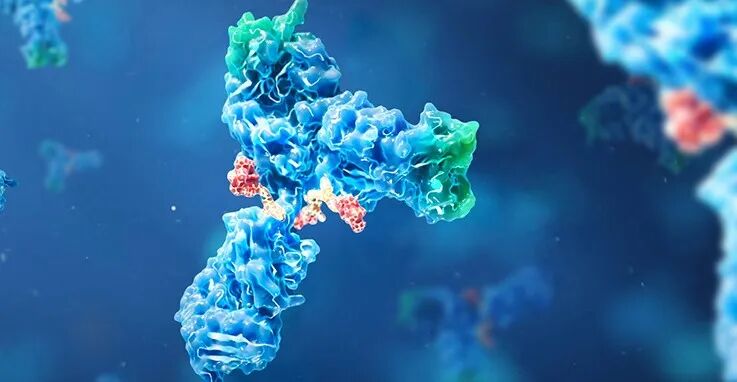
Core Insights - Antibody-drug conjugates (ADCs) are rapidly evolving as a targeted therapy in oncology, with numerous ADC therapies approved globally and hundreds in active clinical research, indicating a robust growth trend [1][13][15] - The complexity of ADC's multi-component structure presents challenges in efficacy and safety evaluation, as well as resistance prediction, necessitating comprehensive support for drug development [1][8][22] ADC Development Progress - Since 2025, several innovative ADCs have received regulatory approval, providing new treatment options for various cancers, including breast cancer and non-small cell lung cancer [15][16] - Notable approvals include Enhertu for HER2-positive breast cancer, Blenrep for relapsed multiple myeloma, and Emrelis for c-Met expressing non-small cell lung cancer [15][16] Clinical Trials and Data - Ongoing ADCs have reported promising clinical data, targeting various antigens such as CDH6 and EGFR/HER3, with indications covering ovarian cancer and endometrial cancer [18][19] - For instance, the CDH6-targeting ADC R-DXd showed a 50.5% objective response rate in platinum-resistant ovarian cancer patients [18] ADC Safety and Efficacy Evaluation - The evaluation of ADC efficacy relies on the synergistic interaction of its three core components: antibody, linker, and payload, which significantly affect drug stability and pharmacokinetics [20][21] - Safety assessments are critical, addressing potential risks such as payload release and immune responses, with comprehensive testing solutions provided to ensure quality and efficiency [21] Addressing Resistance Mechanisms - ADC resistance mechanisms, including antigen downregulation and altered payload metabolism, pose significant challenges, prompting the industry to focus on early-stage strategies to mitigate resistance [22][23] - Strategies include leveraging the "bystander effect" and exploring combinations with immunotherapy to enhance overall immune response [23] Comprehensive Support Solutions - WuXi AppTec has established a complete ADC research platform that integrates high-resolution mass spectrometry and targeted data analysis to address the complexities of ADC development [20] - The company has assisted partners in completing over 100 IND submissions, providing integrated solutions for efficacy evaluation, safety validation, and resistance analysis [23]
Here's How AbbVie's Oncology Drugs are Aiding Top-line Growth
ZACKS· 2025-12-11 13:51
Core Insights - AbbVie is significantly expanding its oncology presence, moving from a two-drug franchise to include solid tumors, with new drugs like Epkinly, Elahere, and Emrelis contributing to over 11% of total revenues in the first nine months of 2025, reflecting a 3% year-over-year growth [1][9] Expansion Strategies - The expansion is driven by both organic and inorganic strategies, with Emrelis being AbbVie's first internally developed solid tumor drug, while Epkinly and Elahere were acquired through collaborations [2] - Sales from newer drugs and rising Venclexta sales have offset the decline in Imbruvica sales due to competition from novel therapies [2] Pipeline Development - AbbVie has a diverse pipeline of new therapies for blood cancers and solid tumors, including antibody-drug conjugates (ADCs), which are seen as a disruptive innovation in cancer treatment [3] - A regulatory filing for the ADC therapy pivekimab sunirine is under FDA review for treating a rare blood cancer, which could add a third ADC to AbbVie's portfolio [4] - The company is also developing Temab-A for metastatic colorectal cancer and other cancers in various stages of clinical trials [4][5] Competitive Landscape - Major competitors in the oncology space include AstraZeneca, Merck, and Pfizer, with AstraZeneca's oncology sales accounting for 43% of total revenues and growing 16% year-over-year [6] - Merck's Keytruda accounted for about 48% of its total revenues, while Pfizer's oncology revenues grew 7%, making up over 27% of its total revenues [7] Financial Performance - AbbVie shares have outperformed the industry year to date, trading at a slight discount with a P/E ratio of 15.87 compared to the industry average of 16.31 [8][11] - EPS estimates for 2025 and 2026 have declined in the past 60 days, indicating potential challenges ahead [13]
EGFRTKI治疗肺癌迭代发展,耐药挑战推动研发升级
Ping An Securities· 2025-12-01 07:27
Investment Rating - The report maintains an "Outperform" rating for the industry [2]. Core Insights - The third-generation EGFR TKI has become the first-line standard therapy for advanced EGFR mutation NSCLC, significantly extending median progression-free survival (mPFS) to 18.9-22.1 months compared to earlier generations [4][24]. - The domestic EGFR TKI market is expected to exceed 20 billion CNY in 2024, with third-generation EGFR TKIs accounting for 88% of the market share [4][30]. - There is an urgent need to address resistance mechanisms following third-generation EGFR TKI treatment, with ongoing exploration of fourth-generation TKIs, bispecific antibodies, and antibody-drug conjugates (ADCs) [5][32]. Summary by Sections 1. High Incidence of Lung Cancer in China - Lung cancer is the most common malignant tumor globally, with approximately 2.6 million new cases expected in 2024, including about 1.15 million in China [8]. - Non-small cell lung cancer (NSCLC) accounts for around 85% of lung cancer cases, with adenocarcinoma and squamous cell carcinoma being the most prevalent subtypes [8]. 2. Third-Generation EGFR TKI as First-Line Therapy - The third-generation EGFR TKI has established itself as the first-line treatment for advanced EGFR mutation NSCLC, with significant improvements in mPFS compared to first and second generations [4][16][24]. - The report highlights the efficacy of third-generation TKIs in overcoming common mutations and their favorable safety profile [4][24]. 3. Exploration of Resistance Mechanisms - The report discusses the complexity of resistance mechanisms to third-generation EGFR TKIs, including both EGFR-dependent and independent pathways [5][32]. - Current research focuses on developing fourth-generation TKIs targeting specific mutations and exploring combination therapies with bispecific antibodies and ADCs [5][32][39]. 4. Investment Recommendations - The report emphasizes the growth potential of third-generation EGFR TKIs and suggests monitoring companies like Hansoh Pharma and Eli Lilly for market penetration and sales growth [51]. - It also highlights the progress of ADCs and bispecific antibodies in clinical trials, indicating a robust pipeline for future treatments [51][52].