
肺癌治疗

Search documents
和黄医药盘中涨超3% SACHI III期研究结果于《柳叶刀》发表
Xin Lang Cai Jing· 2026-01-15 02:43
Core Viewpoint - Hutchison China MediTech Limited (00013) has seen its stock price increase by 2.39% to HKD 23.98 following the announcement of positive results from the SACHI III clinical trial published in The Lancet [6]. Group 1: Company Announcement - On January 14, Hutchison China MediTech announced the results of the SACHI III trial, which studies the combination therapy of Savolitinib (沃瑞沙®) and Osimertinib (泰瑞沙®) for treating EGFR mutation-positive locally advanced or metastatic non-small cell lung cancer patients who have disease progression after first-line EGFR TKI treatment [6]. - The SACHI study focuses on patients with MET amplification and evaluates the efficacy of the combination therapy [6]. Group 2: Drug Information - Savolitinib is a potent and highly selective oral MET TKI co-developed by AstraZeneca and Hutchison China MediTech, with AstraZeneca responsible for commercialization [6]. - Osimertinib is an irreversible third-generation EGFR TKI [6]. - Based on the data from the SACHI study, the combination therapy of Savolitinib and Osimertinib is expected to be approved in China by June 2025 [6].

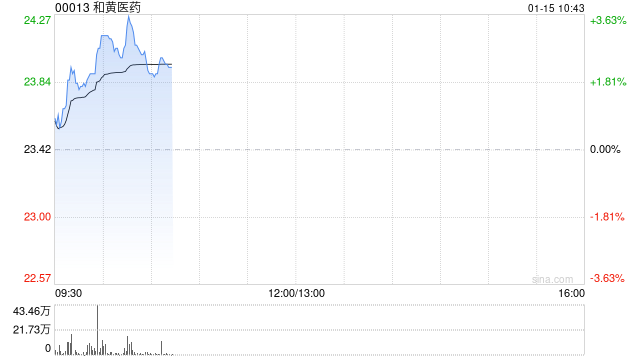
港股异动 | 和黄医药(00013)涨超3% SACHI III期研究结果于《柳叶刀》发表
智通财经网· 2026-01-15 02:18
Core Viewpoint - Hutchison China MediTech Limited (和黄医药) shares rose over 3%, currently trading at 24.1 HKD, with a transaction volume of 57.28 million HKD, following the announcement of positive results from the SACHI III study published in The Lancet [1] Group 1: Company Announcement - On January 14, Hutchison China MediTech announced the results of the SACHI III study, which evaluates the combination therapy of Savolitinib (赛沃替尼) and Osimertinib (奥希替尼) for treating EGFR mutation-positive locally advanced or metastatic non-small cell lung cancer patients who have progressed after first-line EGFR TKI treatment [1] - The SACHI study focuses on patients with MET amplification and demonstrates the efficacy of the combination therapy [1] Group 2: Drug Information - Savolitinib is a potent and highly selective oral MET TKI co-developed by AstraZeneca and Hutchison China MediTech, with AstraZeneca responsible for commercialization [1] - Osimertinib is an irreversible third-generation EGFR TKI [1] - Based on the data from the SACHI study, the combination therapy of Savolitinib and Osimertinib is expected to receive approval in China by June 2025 [1]
破解肺癌靶向耐药困境,上海专家团队临床研究登上《柳叶刀》
Xin Lang Cai Jing· 2026-01-14 13:25
Core Insights - A significant breakthrough in treating advanced non-small cell lung cancer (NSCLC) patients with EGFR mutations and MET amplification has been achieved through a "dual-target" therapy combining Savolitinib and Osimertinib, offering new treatment options for patients facing resistance to targeted therapies [3][5]. Group 1: Research Findings - In China, 40%-50% of lung adenocarcinoma patients exhibit EGFR gene mutations, with MET amplification being a major cause of resistance to EGFR-targeted therapies [2][3]. - The study led by Professor Lu Shun involved 211 patients who were randomly assigned to receive either the combination therapy or standard chemotherapy, revealing a median progression-free survival of 8.2 months for the combination group compared to 4.5 months for the chemotherapy group [4]. - The risk of disease recurrence or death was reduced by 66% in the combination therapy group, with 58% of patients achieving objective response compared to 34% in the chemotherapy group [4]. Group 2: Regulatory and Clinical Impact - The combination therapy of Savolitinib and Osimertinib has received approval from the National Medical Products Administration of China for treating EGFR mutation-positive patients with advanced or metastatic non-squamous NSCLC after progression on EGFR-TKI therapy [5]. - Professor Lu Shun has led 29 domestic and international studies on lung cancer, including 17 national Class 1 new drug studies, contributing to the approval and inclusion of several innovative drugs in medical insurance [6].

和黄医药宣布SACHI III期研究结果于《柳叶刀 (The Lancet)》发表
Zhi Tong Cai Jing· 2026-01-14 04:24
Core Viewpoint - The announcement by Hutchison China MediTech Limited (和黄医药) regarding the publication of the SACHI III study results in The Lancet highlights the efficacy of the combination therapy of savolitinib and osimertinib for treating EGFR mutation-positive non-small cell lung cancer patients with MET amplification who have progressed after first-line TKI treatment [1][2]. Group 1: Study Results - The SACHI study demonstrates that the combination of savolitinib (a potent MET TKI) and osimertinib (a third-generation EGFR TKI) significantly improves treatment outcomes for patients with MET amplification [1][2]. - The data from the SACHI study indicates that the combination therapy has been approved in China as of June 2025 [1]. Group 2: Expert Commentary - Professor Lu Shun, a principal investigator of the SACHI study, emphasized that the results provide strong evidence for the effectiveness of the combination therapy in addressing MET amplification, a key resistance mechanism in challenging patient populations [2]. - The study also noted consistent efficacy in patients who had previously received third-generation EGFR TKI treatment, indicating the therapy's potential for a broader patient base [2]. - The combination therapy offers a convenient and well-tolerated all-oral treatment option for patients in need of new therapies [2].

和黄医药(00013.HK)宣布SACHI III期研究结果于《柳叶刀 (The Lancet)》发表
Ge Long Hui· 2026-01-14 04:11
Core Viewpoint - The results of the SACHI III study, which evaluates the combination therapy of savolitinib and osimertinib for treating EGFR mutation-positive non-small cell lung cancer patients with MET amplification, have been published in The Lancet, indicating significant clinical benefits [1][2]. Group 1: Study Overview - The SACHI study focuses on the combination of savolitinib (a potent MET TKI) and osimertinib (a third-generation EGFR TKI) for patients who have progressed after first-line EGFR TKI treatment [1]. - The combination therapy has been approved in China for use starting June 2025 based on the data from the SACHI study [1]. Group 2: Clinical Implications - The data from the SACHI study provides strong evidence that the combination therapy significantly improves treatment outcomes for patients with MET amplification and EGFR mutations [2]. - The study highlights the ability of the combination therapy to address MET amplification, a key resistance mechanism, offering clinically meaningful improvements for challenging patient populations [2]. - Notably, consistent efficacy was observed in patients who had previously received third-generation EGFR TKI treatment, indicating the therapy's potential for broader application [2].
贝达药业:在肺癌治疗领域,CFT8919和MCLA-129项目目前正在全力推进中
Mei Ri Jing Ji Xin Wen· 2025-12-02 01:21
Core Insights - The company has established a robust cycle of "R&D-commercialization-reinvestment," leading to steady revenue growth and cash flow reserves that meet operational needs and support the orderly advancement of its R&D pipeline [1] - The company employs a dynamic project evaluation mechanism to select projects with higher clinical value and market potential, optimizing resource allocation and pipeline layout [1] - In the field of lung cancer treatment, the company is actively advancing the CFT8919 and MCLA-129 projects [1] Group 1 - The company has achieved stable revenue increments and cash flow reserves, ensuring operational needs are met [1] - The company focuses on R&D directions with greater clinical value and market potential through a mature project evaluation mechanism [1] - The CFT8919 and MCLA-129 projects are currently being prioritized in lung cancer treatment [1] Group 2 - An investor raised concerns about the company's BPI-361175, a fourth-generation EGFR-TKI, questioning why the company has not accelerated its development despite being ahead of competitors [3] - The investor speculated whether the company is facing funding constraints that could hinder further research on the fourth-generation drug [3] - There is a concern that the company might fall behind in fourth-generation drug development, similar to its experience with third-generation drugs [3]
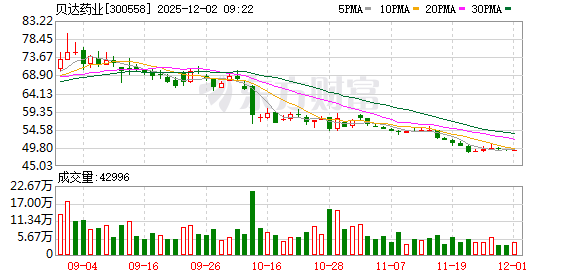
贝达药业(300558.SZ):在肺癌治疗领域,CFT8919和MCLA-129项目目前正在全力推进当中
Ge Long Hui· 2025-12-02 00:59
Core Insights - The company has established a positive cycle of "R&D-commercialization-reinvestment," leading to steady revenue growth and cash flow reserves that meet operational needs and support the orderly advancement of its R&D pipeline [1] Group 1: Financial Performance - The company has achieved stable revenue increments and cash flow reserves, ensuring daily operational needs are met [1] Group 2: R&D Strategy - The company employs a dynamic project evaluation mechanism to select research projects, focusing on those with higher clinical value and market potential [1] - This strategy allows for efficient allocation of R&D resources and optimization of the pipeline [1] Group 3: Product Development - In the field of lung cancer treatment, the company is currently advancing the CFT8919 and MCLA-129 projects [1]
积极预防,科学应对,专家给出五条应对肺癌建议
Bei Ke Cai Jing· 2025-12-01 08:09
Core Viewpoint - The article emphasizes the importance of prevention, early detection, and scientific treatment of lung cancer, highlighting the need for public awareness and proactive measures against the disease [1]. Group 1: Prevention - Smoking is identified as the primary risk factor for lung cancer, with a direct correlation between smoking quantity and the age of initiation to the likelihood of developing the disease. Early cessation and avoidance of secondhand smoke are crucial [2]. - Long-term exposure to dust and harmful chemicals, as well as poor air quality, should be avoided to reduce lung cancer risk [2]. Group 2: Screening - Four high-risk groups are identified for regular low-dose spiral CT screening: long-term smokers, individuals with a family history of malignancies (especially lung cancer), those with chronic lung diseases or occupational exposure, and elderly individuals around 70 years old. Early detection through screening can lead to a clinical cure rate of over 90% for early-stage lung cancer [3]. Group 3: Management of Nodules - The article provides guidance on managing lung nodules, emphasizing that most nodules are benign. For low-risk individuals, follow-up for nodules smaller than 5mm can be done every 2-3 years, while high-risk individuals may require more frequent monitoring [4][5]. Group 4: Treatment Strategies - Personalized treatment plans based on cancer staging can significantly enhance treatment efficacy. Early-stage lung cancer has a cure rate of 80%-90% post-surgery, while mid-stage patients can see survival rates increase from 30%-40% to over 65% with appropriate therapies [6]. - For late-stage patients, targeted therapies and immunotherapy offer new hope for long-term survival, with advancements in domestic drug efficacy and reduced economic burden for patients [7].
EGFRTKI治疗肺癌迭代发展,耐药挑战推动研发升级
Ping An Securities· 2025-12-01 07:27
Investment Rating - The report maintains an "Outperform" rating for the industry [2]. Core Insights - The third-generation EGFR TKI has become the first-line standard therapy for advanced EGFR mutation NSCLC, significantly extending median progression-free survival (mPFS) to 18.9-22.1 months compared to earlier generations [4][24]. - The domestic EGFR TKI market is expected to exceed 20 billion CNY in 2024, with third-generation EGFR TKIs accounting for 88% of the market share [4][30]. - There is an urgent need to address resistance mechanisms following third-generation EGFR TKI treatment, with ongoing exploration of fourth-generation TKIs, bispecific antibodies, and antibody-drug conjugates (ADCs) [5][32]. Summary by Sections 1. High Incidence of Lung Cancer in China - Lung cancer is the most common malignant tumor globally, with approximately 2.6 million new cases expected in 2024, including about 1.15 million in China [8]. - Non-small cell lung cancer (NSCLC) accounts for around 85% of lung cancer cases, with adenocarcinoma and squamous cell carcinoma being the most prevalent subtypes [8]. 2. Third-Generation EGFR TKI as First-Line Therapy - The third-generation EGFR TKI has established itself as the first-line treatment for advanced EGFR mutation NSCLC, with significant improvements in mPFS compared to first and second generations [4][16][24]. - The report highlights the efficacy of third-generation TKIs in overcoming common mutations and their favorable safety profile [4][24]. 3. Exploration of Resistance Mechanisms - The report discusses the complexity of resistance mechanisms to third-generation EGFR TKIs, including both EGFR-dependent and independent pathways [5][32]. - Current research focuses on developing fourth-generation TKIs targeting specific mutations and exploring combination therapies with bispecific antibodies and ADCs [5][32][39]. 4. Investment Recommendations - The report emphasizes the growth potential of third-generation EGFR TKIs and suggests monitoring companies like Hansoh Pharma and Eli Lilly for market penetration and sales growth [51]. - It also highlights the progress of ADCs and bispecific antibodies in clinical trials, indicating a robust pipeline for future treatments [51][52].
基石药业-B再涨近7% 欧盟委员会批准舒格利单抗用于治疗III期非小细胞肺癌
Zhi Tong Cai Jing· 2025-11-27 05:47
Core Viewpoint - 基石药业's stock price increased nearly 7%, currently trading at 6.23 HKD, following the European Commission's approval of a new indication for Shugli monoclonal antibody in treating specific non-small cell lung cancer (NSCLC) patients [1] Group 1: Company Developments - The European Commission has approved Shugli monoclonal antibody for monotherapy in adult patients with unresectable stage III non-small cell lung cancer (NSCLC) who have PD-L1 expression ≥1%, no EGFR sensitive mutations, or ALK/ROS1 genomic alterations, and have not shown disease progression after platinum-based chemoradiotherapy [1] - Dr. Yang Jianxin, CEO and R&D President of 基石药业, stated that this new indication approval marks a significant milestone, providing comprehensive treatment options for a broader patient population in Europe, following the initial approval for first-line treatment of metastatic squamous and non-squamous NSCLC in 2024 [1] - The company aims to enhance the accessibility of Shugli monoclonal antibody globally, reaffirming its long-term commitment to patients [1]