Gumdrop

Search documents
OpenAI首款硬件下半年推出,外形酷似卵石
Mei Ri Jing Ji Xin Wen· 2026-01-20 03:51
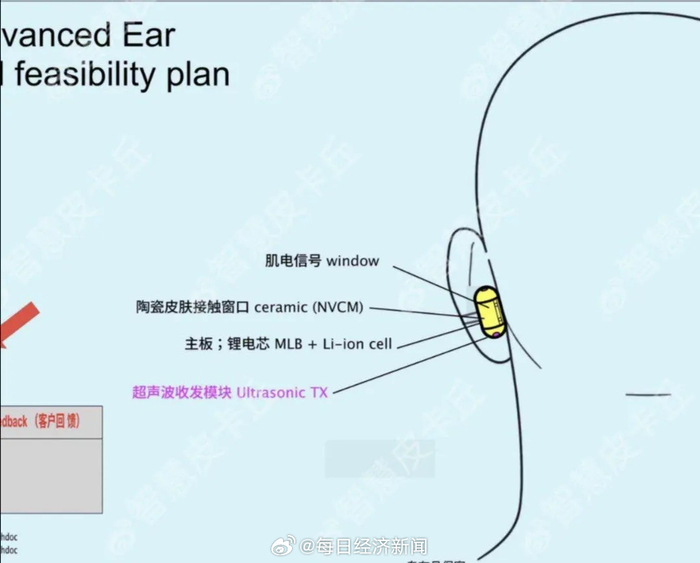
Group 1 - OpenAI plans to launch its first hardware device in the second half of 2026, marking a significant shift from software to a combination of software and hardware [1] - The company acquired hardware startup io for $6.5 billion last year, which was founded by former Apple chief designer Jony Ive, indicating a strategic move towards developing AI hardware [1] - OpenAI has not disclosed specific details about the hardware's form and function but is expected to reveal more information later this year [1] Group 2 - Recent leaks suggest that OpenAI is developing a special audio product, codenamed "Sweetpea," designed to replace AirPods, featuring a unique design and a metal casing resembling an eggstone [2] - Another product, codenamed "Gumdrop," is rumored to be a smart pen or wearable audio device, with production expected to take place at Foxconn's factory in Vietnam [2] - The hardware is reported to be pocket-sized without a screen, differing significantly from smartphones and smart glasses, and OpenAI is anticipated to release more than one AI hardware product [2]

OpenAI首款硬件定了,下半年推出
Di Yi Cai Jing Zi Xun· 2026-01-20 03:17
Core Insights - OpenAI is set to launch its first hardware device in the second half of 2026, marking a significant shift from software to a combination of software and hardware [2] - The company acquired hardware startup io for $6.5 billion last year, which has fueled speculation about its hardware plans [2] - OpenAI's CEO, Sam Altman, indicated that the company will not release a single device but rather a series of smaller devices [5] Group 1: Hardware Development - OpenAI's first AI hardware is rumored to be a special audio product, codenamed "Sweetpea," designed to replace AirPods, featuring a unique design and metallic material [3] - Another rumored product, codenamed "Gumdrop," is expected to be a smart pen or wearable audio device, produced exclusively by Foxconn in Vietnam [5] - The hardware is expected to be pocket-sized without a screen, differing significantly from existing devices like smartphones and smart glasses [5] Group 2: Financial Performance - OpenAI's CFO, Sarah Friar, revealed that the company's annual recurring revenue (ARR) is projected to exceed $20 billion by 2025 [6] - The company's computing power is expected to triple year-on-year by 2025, with a 9.5-fold increase from 2023 to 2025, alongside a similar revenue growth trend [6] - Despite the growth, OpenAI's losses are significant, with indications that losses exceeded $12 billion in Q3 2025 [6] Group 3: Commercial Strategy - OpenAI is increasingly aggressive in its commercialization strategy, exploring new applications in healthcare and advertising [7] - The success of OpenAI's "screenless" hardware in creating new application scenarios and achieving a viable business model will be a key focus for the industry in 2026 [7]
OpenAI首款硬件定了,下半年推出
第一财经· 2026-01-20 03:12
Core Viewpoint - OpenAI is set to launch its first hardware device in the second half of 2026, marking a significant shift from software to a combination of software and hardware [3][4]. Group 1: Hardware Development - OpenAI's global affairs officer, Chris Lehane, confirmed that the company is on track to release its first hardware device, although specific details about the product have not been disclosed [3]. - There are rumors that OpenAI is developing a special audio product, codenamed "Sweetpea," designed to replace AirPods, featuring a unique design and metallic material [4]. - Another rumored product, codenamed "Gumdrop," is expected to be a smart pen or wearable audio device, with production planned at Foxconn's factory in Vietnam [6]. Group 2: Product Characteristics - The hardware is expected to be pocket-sized, without a screen, and significantly different in appearance from smartphones and smart glasses [7]. - OpenAI CEO Sam Altman indicated that the company plans to release a series of small devices rather than a single product, aiming to explore more natural AI interaction methods [7]. Group 3: Financial Performance and Business Strategy - OpenAI's CFO, Sarah Friar, announced that the company's annual recurring revenue (ARR) is projected to exceed $20 billion by 2025, with a threefold increase in computing power and revenue from 2023 to 2025 [7][8]. - The company is pursuing aggressive commercialization strategies, including developments in medical products and advertising models, as it prepares to launch its hardware [8].
新年第一炸——A股一周走势研判及事件提醒
Datayes· 2026-01-04 14:47
Group 1 - The article discusses the rapid U.S. military action in Venezuela, capturing Maduro, which exceeded market expectations and is likely to cause short-term market disturbances [7] - The core objectives of the U.S. action include controlling Venezuela's oil resources to support domestic welfare, stabilizing the petrodollar system, and deterring anti-American countries [7] - The direct impact on China's economy is limited, with bilateral trade around $5 billion and Venezuelan oil exports accounting for less than 5% of China's total oil imports [7] Group 2 - The financial market impact shows a divergence between short-term and long-term logic, with oil prices expected to be pressured in the short term due to increased supply from Venezuela [8] - The dollar may strengthen in the short term due to increased investor confidence but could face long-term pressure from U.S. actions undermining global order [8] - Gold is expected to be under pressure in the short term but may see a bullish trend in the long term [8] Group 3 - The article highlights various brokerage strategies for the upcoming week, indicating a high consensus for a "good start" to the year, which may complicate market movements [9] - Different brokerages suggest focusing on emerging growth sectors and cyclical opportunities, such as AI, robotics, and domestic replacements [10] - The overall market sentiment is optimistic, with expectations for a spring rally supported by liquidity and risk appetite improvements [10] Group 4 - The article notes that the semiconductor industry is seeing significant developments, with companies like Baidu and SMIC making strides in chip technology and IPOs [11][12] - The upcoming IPOs of companies like Zhiyuan Technology and MiniMax are highlighted, indicating a growing interest in the tech sector [13] - The report mentions advancements in brain-machine interface technology, with companies like Neuralink planning large-scale production [20] Group 5 - The article discusses the performance of various sectors, indicating that the chemical, construction, and real estate industries are in a recession phase, while mining, non-ferrous metals, and transportation are expanding [35] - It also notes that sectors like mining and electrical equipment are in a "high prosperity, low risk" quadrant, suggesting potential investment opportunities [37] - The article emphasizes the importance of monitoring industry trends and market dynamics for informed investment decisions [36]

腾讯研究院AI速递 20260104
腾讯研究院· 2026-01-03 16:01
Group 1 - DeepSeek team released a new paper titled "Manifold-Constrained Hyper-Connections," co-authored by founder Liang Wenfeng, proposing the mHC scheme to stabilize large model training and enhance scalability [1] - The mHC scheme projects the residual mapping matrix onto a double-random matrix manifold space, preserving topological expressiveness while restoring the identity mapping property, controlling the signal amplification factor from 3000 to 1.6 [1] - Experiments with a 27B model show that mHC outperforms traditional HC across tasks like BBH and DROP, introducing only a 6.7% training time overhead, with a maximum improvement of 2.3 percentage points [1] Group 2 - Claude Code, launched 6 months ago, generated nearly $1 billion in annualized revenue, with project lead Boris Cherny confirming that 100% of code was completed by Claude Code in the past 30 days [2] - Key configurations include running 5 Claude instances in parallel on terminals, 5-10 Claude instances on the web, utilizing the Opus 4.5 model, and team collaboration through CLAUDE.md files integrated via GitHub actions [2] - Important techniques involve planning mode, slash command encapsulation for workflows, sub-agent handling of repetitive tasks, and PostToolUse hook for code formatting, with feedback loops for Claude to validate its work [2] Group 3 - Tesla's FSD V14.2 successfully completed a cross-country drive from Los Angeles to South Carolina in a 2025 Model 3, covering 2732.4 miles with zero human intervention, including parking and charging [3] - FSD V14.2 or pre-installed Grok shows significant enhancements in driving performance, perception capabilities, and decision-making logic, handling complex intersections and lane changes more decisively, resulting in a more human-like driving rhythm [3] - Tesla's end-to-end architecture contrasts with Waymo's modular approach, as demonstrated by a power outage in San Francisco that disrupted Waymo's operations, while Tesla's FSD remained largely unaffected [3] Group 4 - OpenAI is developing its first AI hardware, potentially a pen-shaped device or portable audio device, codenamed "Gumdrop," which integrates a microphone and camera to convert handwritten notes into text for ChatGPT [4] - The device is similar in size to an iPod Shuffle and aims to become the "third core device" following the iPhone and MacBook, initially planned for production by Luxshare Precision, later shifted to Foxconn, with manufacturing expected in Vietnam or the US [4] - OpenAI is also working on a new audio model architecture set to launch in Q1 2026, promising more natural emotional voices, more accurate and in-depth responses, and improved interruption handling capabilities [4] Group 5 - TSMC's N2 technology is set to enter mass production in Q4 2025, utilizing the first-generation nanosheet transistor (GAA) technology, achieving a 10%-15% performance improvement at the same power level compared to N3E, and a 25%-30% reduction in power consumption at the same speed [6] - The N2 process employs gate-all-around nanosheet transistors that wrap around the current channel, combined with SHPMIM capacitors, resulting in approximately a 20% increase in transistor density and over a 2x increase in capacitance density compared to N3E [6] - TSMC is expanding production simultaneously at its Kaohsiung and Hsinchu fabs, catering to both mobile and AI/HPC chip markets, with N2P and A16 expected to enter mass production in the second half of 2026 [6] Group 6 - Zhiyuan announced the launch of a "small-sized full-body force-controlled humanoid robot," named Q1, standing approximately 0.8 meters tall and capable of fitting into a 30-35L backpack, utilizing innovative materials and control algorithms to shrink QDD joints to "smaller than an egg" while maintaining full-size force control performance [7] - The Q1 robot employs advanced composite material technology for durability and is only 1/8 the size and weight of full-sized robots, with an open-source SDK and HDK supporting 3D printing for custom appearances [7] - It features the "Zhiyuan Lingxin" AI platform for natural conversation and encyclopedic Q&A, and through the "Zhiyuan Lingchuang" platform, users can arrange actions and logic like building blocks, positioning it as a desktop robot for individual creators [7] Group 7 - Elon Musk announced that Neuralink will begin large-scale production of brain-machine interface devices in 2026, transitioning to a streamlined, nearly fully automated surgical process, with electrode wires passing through the dura mater without the need for removal [8] - The new minimally invasive technology reduces costs, lowers risks, and shortens recovery times, making standardization more accessible; as of September 2025, Neuralink had served only 12 patients, increasing to 20 by December [8] - Founded in 2016, Neuralink focuses on treating neurological disorders such as paralysis, muscular atrophy, and Parkinson's disease, with the first patient, Noland Arbaugh, able to post and play games using only the brain chip post-surgery [8] Group 8 - Meta faced criticism from Turing Award winner LeCun after his departure, alleging that Llama 4's testing results were manipulated by using different models on various benchmarks to achieve better scores, leading to a loss of confidence from Zuckerberg in the original AI team [9] - LeCun criticized his 28-year-old supervisor, Alexandr Wang, for lacking research experience and understanding of research methodologies, asserting that Meta's hiring practices have led to a team overly influenced by large language models [9] - LeCun has founded AMI Labs, focusing on world models, with plans to release a "baby-level" model with preliminary physical intuition within 12 months, emphasizing the need for models to understand the physical world's operations rather than relying solely on language [9]