H100 芯片

Search documents
计算机行业重大事项点评:Token 推理大爆发,国产算力再迎海量需求
Huachuang Securities· 2026-03-02 12:02
Investment Rating - The report maintains a "Recommendation" rating for the computer industry, expecting the industry index to outperform the benchmark index by more than 5% in the next 3-6 months [16]. Core Insights - The report highlights a significant increase in demand for domestic computing power, driven by a surge in Token consumption, which reflects a fundamental shift in user engagement with AI technologies [2][5]. - The Chinese AI computing acceleration chip market is projected to grow from 142.54 billion yuan in 2024 to 1,336.79 billion yuan by 2029, with a compound annual growth rate (CAGR) of 53.7% [5]. - The GPU market is expected to see the fastest growth, with its market share increasing from 69.9% in 2024 to 77.3% in 2029, reaching a market size of 1,033.34 billion yuan [5]. Demand Side Summary - The demand for computing power chips has entered a high-load normalization phase, with Token consumption increasing exponentially due to a transformation in AI usage from simple Q&A tools to productivity tools capable of handling complex tasks [5]. - The report cites NVIDIA's CEO, who emphasized that without computing power, Token generation and revenue growth are not feasible [5]. Supply Side Summary - The report discusses the constraints on overseas supply due to policy restrictions and capacity bottlenecks, which limit supply elasticity and create a window for domestic alternatives [5]. - Domestic chip manufacturers are enhancing their capabilities, with significant advancements in performance and commercialization, as evidenced by the breakthroughs in FP8 computing power standards [5]. - The report notes that domestic GPU manufacturers are achieving substantial revenue growth, with companies like Cambrian Technology reporting a turnaround to profitability for the first time [5]. Investment Recommendations - The report suggests focusing on the following areas for investment: 1. Chip design: Cambrian Technology, Haiguang Information, Muxi Co., Moer Technology, and Tianneng Zhixin 2. Chip foundry: SMIC and Huahong Semiconductor 3. Servers and supporting services: Inspur Information and Huafeng Technology [5].
从算力霸主到网络操盘手:英伟达押注6G,是远见还是恐慌?
美股研究社· 2026-03-02 11:18
Core Viewpoint - The article discusses the challenges faced by NVIDIA as it transitions from a dominant player in the GPU market to exploring new growth avenues, particularly in the telecommunications sector with AI-RAN architecture, amidst concerns of a potential slowdown in AI demand and market valuation pressures [2][6][17]. Group 1: Market Dynamics and NVIDIA's Position - NVIDIA has experienced a significant valuation leap, driven by a near-monopoly in AI chip supply, but the market is now questioning its future growth potential beyond GPUs [6][7]. - The company is facing a "success paradox," where its clients are becoming competitors by developing their own AI chips, which could compress NVIDIA's profit margins [7][8]. - Concerns about a "platform ceiling" are emerging, as the market fears that AI model training demand may stabilize post-2026, challenging NVIDIA's growth trajectory [8][12]. Group 2: Strategic Moves and Future Outlook - NVIDIA's collaboration with telecom giants like Nokia and Cisco to advance AI-RAN architecture signifies a strategic pivot towards redefining its role from a chip supplier to an infrastructure re-builder [4][9]. - The shift towards AI in telecommunications is seen as a potential new growth narrative, with the company aiming to control the AI infrastructure of future networks [10][11]. - The telecommunications sector represents a massive market opportunity, with annual capital expenditures around $300 billion, where even a small shift towards AI-native architectures could yield significant returns for NVIDIA [10][15]. Group 3: Investment Implications - The article highlights three key signals for investors: the recognition of single-track risks, the extension of AI infrastructure competition to the network edge, and the shift in valuation focus from GPU shipments to platform control [14][15]. - NVIDIA's ability to become the "default AI foundation" for global communication networks could redefine its market position, but failure to do so may lead to valuation corrections [15][17]. - The company's proactive approach in seeking new revenue sources amidst high valuation pressures is crucial for maintaining its growth narrative in the eyes of investors [17].


商业航天产业链观察系列一:太空算力:以星辰为节点,筑算力新接口
Changjiang Securities· 2026-02-23 08:52
Investment Rating - The report suggests a focus on the space computing industry chain, particularly on upstream and downstream core segments, indicating a positive investment outlook for the sector [8]. Core Insights - Space computing represents a new paradigm of deploying computational facilities in Earth's orbit, transforming the traditional "ground-based computing" into "space-based computing" by utilizing distributed orbital computing clusters [5][6]. - The advantages of space computing include the use of continuous solar energy and near-absolute zero cooling environments, which effectively address the energy and heat dissipation bottlenecks faced by ground data centers [6][7]. - The U.S. is leading the charge with technology companies driving advancements, while China is following a government-led approach with collaborative development across academia and industry [7][8]. Summary by Sections Space Computing Overview - Space computing is characterized by the deployment of computational infrastructure in orbit, leveraging radiation-resistant chips and inter-satellite laser communication to create distributed computing clusters [5][13]. - This model allows satellites to evolve from mere data relays to intelligent nodes, enabling real-time data processing and decision-making in orbit, significantly reducing transmission delays [6][16]. Market Dynamics - The rise of space computing is driven by the exponential growth in global computing demand, particularly under the influence of AI, while traditional data centers face significant energy and cooling challenges [6][24]. - The market for space computing is projected to reach $100 billion by 2030, with a recommendation to focus on key segments such as rocket and satellite manufacturing, laser communication, and space computing chip suppliers [8][24]. Competitive Landscape - Major players in the U.S. include SpaceX, which is developing large-scale space data centers, and other tech giants like Google and Amazon exploring space computing ecosystems [7][8]. - In China, significant projects are underway, including the Beijing GW-level space data center and the "Three-Body Computing Constellation" initiative, indicating a robust governmental push towards space computing [7][8]. Investment Recommendations - The report emphasizes the importance of monitoring the entire space computing industry chain, particularly focusing on core suppliers in rocket and satellite manufacturing, laser communication, and space photovoltaic suppliers [8][24]. - Specific companies recommended for investment include leading firms in laser communication and space photovoltaic technologies, as well as suppliers for SpaceX and space computing chips [8].
英伟达向左,寒武纪向右
Tai Mei Ti A P P· 2025-10-22 03:18
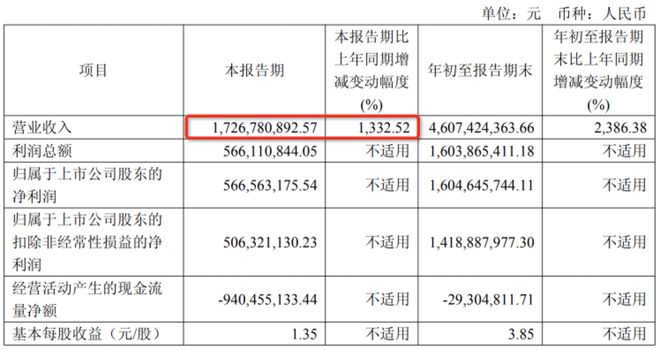
Core Viewpoint - The ongoing geopolitical tensions are causing a significant market split in the AI computing sector between the US and China, leading to a complete exit of Nvidia from the Chinese market, which presents a substantial opportunity for local AI chip companies like Cambricon [1][10]. Group 1: Nvidia's Market Exit - Nvidia's CEO Jensen Huang stated that the company's market share in China has dropped from 95% to 0%, indicating a complete withdrawal from the Chinese market [1][10]. - The US government's export restrictions on high-performance computing chips have severely impacted Nvidia's ability to operate in China, leading to the introduction of less capable products like the H20 platform, which has also faced declining demand [9][10][18]. Group 2: Opportunities for Local Companies - Cambricon, a Chinese AI chip company, has seen a dramatic increase in revenue, achieving 1.727 billion yuan in Q3 2025, a year-on-year growth of 1332.52% [2][22]. - The absence of Nvidia has allowed Cambricon to become a major beneficiary in the Chinese AI computing market, positioning itself as a leading supplier [3][10]. Group 3: Historical Context and Growth - The timeline of AI computing development highlights a significant shift since 2016, when Nvidia began its deep engagement in the Chinese market, which has now reversed due to geopolitical factors [4][6][7]. - Cambricon's growth trajectory has been marked by significant funding rounds and partnerships, including its early collaboration with Huawei, which helped establish its reputation in the AI chip sector [11][12]. Group 4: Financial Performance and Market Position - Despite previous losses, Cambricon has turned profitable, reporting a net profit of 1.038 billion yuan in the first half of 2025, a significant turnaround from a net loss of 530 million yuan in the previous year [16][22]. - The company's stock has surged dramatically, reflecting market confidence in its future growth potential, with its share price reaching a historical high of 1595.88 yuan in August 2025 [16][18]. Group 5: Competitive Landscape - Huawei is emerging as a formidable competitor in the AI computing space, with plans to challenge Nvidia directly through its Ascend chip series and advanced computing clusters [20][21]. - The rapid technological advancements and market responsiveness of local companies like Cambricon are contributing to a robust domestic AI computing ecosystem, further diminishing Nvidia's prospects in China [19][22].

电子行业点评报告:国产算力认知强化!H20限售预期是本轮GPU行情的“底座”
Soochow Securities· 2025-08-14 13:56
Investment Rating - The report maintains an "Accumulate" rating for the electronic industry [1] Core Viewpoints - The sentiment around domestic computing power has been accumulating since late July, largely due to speculation about the H20's ability to ship successfully. The recent discussions around the H20 chip's security risks have raised concerns about its application and safety [6] - The U.S. export licenses for NVIDIA's H20 and AMD's MI308 chips to China come with revenue sharing and "backdoor" mechanisms, which limit their competitiveness in the Chinese market. This creates an opportunity for domestic computing power to gain market space [6] - The report emphasizes that the limitations of the H20 chip in terms of performance and energy efficiency align with domestic green development goals, suggesting that the restrictions on H20 will support the growth of domestic GPU markets [6] Summary by Sections Market Sentiment - Since late July, there has been a buildup of sentiment regarding domestic computing power, driven by speculation about the H20 chip's market entry and safety concerns raised by Chinese authorities [6] Policy Impact - Recent U.S. policy changes have created a challenging environment for the H20 chip, with export licenses requiring revenue sharing and raising security concerns, which may hinder its market performance in China [6] Domestic Opportunities - The limitations imposed on the H20 chip are seen as a catalyst for domestic computing power to expand its market presence, with a focus on the need for advanced process capacity and the demand from internet companies [6]


海外强业绩引领下算力仍是最强主线,移动普缆招标平稳落地
Shanxi Securities· 2025-06-12 10:55
Investment Rating - The report maintains an "Outperform" rating for the communication industry, indicating an expected performance exceeding the benchmark index by over 10% [1]. Core Insights - Strong performance from companies like Broadcom, Ciena, and Credo is driving optimism in the AI computing sector, with Broadcom reporting a 20% year-over-year revenue increase to $15 billion and a net profit of $5 billion, up 134% [3][16]. - Ciena's latest quarterly revenue reached $1.1 billion, a 24% increase year-over-year, with its network platform business growing by 38% [4][17]. - Credo's revenue for the recent quarter was $170 million, reflecting a 26% quarter-over-quarter growth and a 180% year-over-year increase, with expectations for continued growth in the upcoming fiscal quarter [5][18]. - China Mobile's 2025 ordinary optical cable procurement results show a balanced bidding environment, with a total procurement scale of 3.21 million kilometers, indicating a rational competitive landscape in the domestic optical fiber and cable industry [6][19]. - The satellite internet sector is gaining traction, with companies like Starcloud planning to launch satellites equipped with advanced computing capabilities, highlighting the strategic importance of space computing in the coming years [8][20]. Summary by Sections Industry Dynamics - The report highlights the robust demand for AI semiconductors, with Broadcom's AI revenue growing by 46% to $4.4 billion, and expectations for further growth to $5.1 billion in the next quarter [3][16]. - Ciena's focus on developing pluggable coherent optical modules is indicative of the strong demand for DCI network infrastructure in North America [4][17]. - Credo's expanding customer base and its competitive edge in AEC chip capabilities position it favorably for future growth opportunities [5][18]. Market Performance - The overall market saw an increase during the week of June 2-6, 2025, with the Shenwan Communication Index rising by 5.27% [9][21]. - The top-performing sectors included optical modules, liquid cooling, and connectors, with respective weekly gains of 11.9%, 8.8%, and 7.9% [9][21]. Company Recommendations - The report suggests focusing on companies in various segments, including: - AI computing modules: NewEase, Zhongji Xuchuang, Tianfu Communication, etc. - Optical fiber and cable: Zhongtian Technology, Changfei Fiber Optics, Hengtong Optic-Electric, etc. - Satellite computing: Shanghai Hanxun, Tianyin Machinery, etc. [9][21].


来了!特朗普再次出尔反尔,英伟达“跪”完死得更惨了
Xin Lang Cai Jing· 2025-04-17 08:25
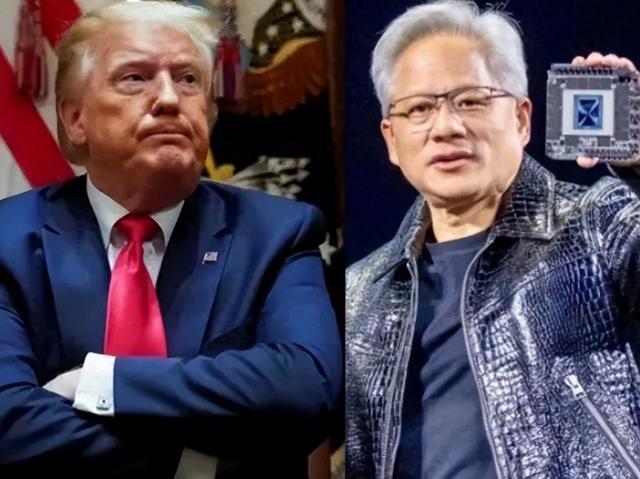
Core Viewpoint - Nvidia is a key player in the global technology industry, particularly in the AI chip sector, but has faced significant challenges due to unpredictable U.S. government policies, particularly under the Trump administration [1][3]. Group 1: Impact of U.S. Government Policies - On April 15, Nvidia announced that the U.S. government required a license for the export of its H20 chip to China, which will indefinitely affect approximately $5.5 billion in quarterly expenses related to inventory and procurement commitments [1]. - Following the announcement, Nvidia's stock price dropped over 6% in after-hours trading, resulting in a market value loss of approximately $130 billion [1]. - The rapid policy changes have led to skepticism regarding the stability of Nvidia's market position and the potential manipulation of stock prices by the Trump administration [3]. Group 2: Financial Projections and Revenue Impact - Bloomberg estimates that Nvidia's revenue for 2025 could decrease by $14 billion to $18 billion due to these policy changes [4]. - The H20 chip, while not as powerful as Nvidia's flagship AI chips, is crucial for maintaining market share in China, projected to generate $12 billion to $15 billion in revenue in 2024 [5]. Group 3: Broader Industry Implications - The erratic U.S. policies not only harm Nvidia but also disrupt the global semiconductor supply chain, which relies on international collaboration for technological advancement [7]. - Companies like Nvidia are forced to invest resources into developing specialized chips to comply with U.S. regulations, which diverts innovation efforts and increases operational costs [7]. - The situation underscores the importance for global companies to be aware of geopolitical risks and to seek diversified and self-sustaining development paths [8].
博通和英伟达,两种打法
半导体芯闻· 2025-03-10 10:23
Core Viewpoint - The surge in global artificial intelligence (AI) is significantly transforming the chip market, with Broadcom and Nvidia leading the charge, showcasing two distinct strategies: Broadcom's custom ASIC chips and Nvidia's multifunctional GPU solutions [1][2]. Group 1: Nvidia's Performance - Nvidia reported a 78% increase in total revenue for Q4 of fiscal year 2025, reaching $39.3 billion, with data center revenue growing approximately 90% to $35 billion [1]. - Nvidia's challenges include high energy consumption and memory bandwidth limitations, particularly with its H100 chip [1]. Group 2: Broadcom's Strategy - Broadcom's AI-related revenue reached $4.1 billion in Q1, accounting for 28% of its total revenue of $14.6 billion [1]. - The company claims its ASICs improve efficiency in matrix operations by over 50% and reduce power consumption by about 30% compared to general accelerators [1]. Group 3: Market Segmentation - The AI chip market is increasingly divided into two segments: training and inference, with Nvidia holding an 80% market share in the training sector [2]. - Broadcom is positioning itself to capture the growing inference market, projected to reach $90 billion by 2027, leveraging its 30 years of ASIC design experience and partnerships with major tech companies like Google and Meta [2]. Group 4: Competitive Landscape - Nvidia's strong CUDA developer ecosystem and strategic acquisitions, such as Mellanox, reinforce its market position [2]. - Nvidia's substantial R&D investments and $14.9 billion in free cash flow enable ongoing innovation [2].