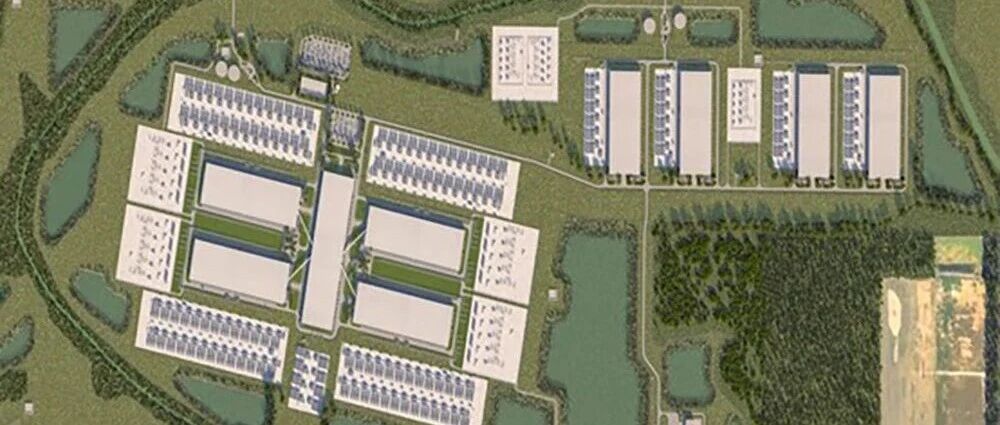
Hyperion数据中心

Search documents
扎克伯格“挥刀斩元老”,Meta倒向闭源
虎嗅APP· 2025-12-11 09:35
Core Insights - Meta is accelerating its adjustment of artificial intelligence strategy, delaying the release of its next-generation model "Avocado" to Q1 2026 and leaning towards a closed-source approach, marking a significant shift from its previously open-source strategy [2][3] - The delay of Avocado reflects deeper organizational changes, with a significant turnover in AI leadership and a shift from an academic-oriented research system to a more product-focused and closed-loop approach [5][6] - Meta's hardware roadmap is also being adjusted, with a shift in focus from the metaverse to AI, leading to a reduction in budget for metaverse projects and an increase in investment in AI-related hardware [8][9] - The overall strategic shift indicates a comprehensive transformation across technology, organization, and capital, as Meta rewrites its AI development path to focus on closed-source models and commercial outcomes [11] Organizational Changes - The leadership of AI at Meta has undergone significant changes, with the introduction of external high-end talent and a shift in focus towards product implementation and speed [5] - The new AI leadership emphasizes a closed-loop management style, contrasting sharply with the previous open research culture, leading to multiple rounds of restructuring and layoffs within AI-related teams [6] Hardware Strategy - Meta is conducting a comprehensive review of its hardware department, Reality Labs, downgrading or pausing several augmented reality projects and reallocating resources towards AI-compatible devices [8] - The company plans to accelerate the production of next-generation ASIC chips aimed at enhancing the efficiency of closed-source model inference, moving towards a more pragmatic mixed infrastructure model [8][9] Strategic Shift - The delay of Avocado is not merely a development timeline adjustment but a clear signal of Meta's strategic pivot in response to competitive pressures and internal restructuring [11] - This marks Meta's third major strategic shift in over a decade, driven not by external trends but by the necessity to adapt to a rapidly changing competitive landscape [11]



“变相担保”却“不并表”!Meta数据中心“表外融资”站得住脚吗?
Hua Er Jie Jian Wen· 2025-11-25 00:49
Core Insights - Meta is employing structured financing to achieve seemingly contradictory financial reporting goals, aiming to build a $27 billion AI data center while avoiding significant debt on its balance sheet [1] - The company has established a joint venture with Blue Owl Capital, retaining a 20% stake while Blue Owl holds 80%, and has sold a record $27.3 billion in bonds to investors [1] - Meta claims it will not consolidate the joint venture's financials, thereby keeping the substantial assets and liabilities off its balance sheet [1] Group 1: Financial Structure and Accounting Treatment - Meta's accounting treatment relies on the variable interest entity (VIE) structure, which requires it to consolidate the joint venture if it is deemed the "primary beneficiary" [3] - The determination of control is contentious, as Blue Owl controls the board, but Meta possesses greater operational expertise in running data centers [3] - Meta's actual risk exposure is significant, as it retains operational control and bears the risks of cost overruns and delays [4] Group 2: Lease Structure and Implications - The transaction is structured as a lease, with Meta set to lease the data center starting in 2029 for an initial term of four years, with options to renew [5] - This short-term lease structure allows Meta to classify it as an "operating lease," minimizing recognized lease liabilities [5] - Meta must assert that future renewals are not "reasonably assured," a subjective judgment that conflicts with the long-term nature of AI infrastructure investments [5] Group 3: Logical Paradox in Accounting Assumptions - Meta's accounting approach creates a logical paradox, as the assumptions about lease renewals and the guarantee obligations are mutually exclusive [6] - Investors must accept conflicting assumptions regarding Meta's decision-making power, the lease duration, and the likelihood of fulfilling its guarantee obligations [6] - This situation reflects a complex financial engineering exercise rather than an accurate representation of economic reality [6]
“DeepSeek冲击”后最大抛压!美国AI巨头举债豪赌算力 华尔街买账吗
Di Yi Cai Jing· 2025-11-17 09:21
Core Insights - The recent sell-off in AI stocks is described as the largest momentum pullback since the "DeepSeek shock," driven by concerns over power bottlenecks, skepticism about AI spending versus returns, SoftBank's sale of Nvidia shares, and a decreased probability of a Federal Reserve rate cut in December [1] Group 1: Market Dynamics - Major tech companies like Meta, Alphabet, and Oracle have raised over $70 billion in the debt market, marking a significant shift in the credit landscape due to the AI-driven capital expenditure race [2] - The annual issuance of investment-grade tech bonds in the U.S. has surged by 115% year-on-year, reaching $211 billion, with a notable increase in the share of tech bonds in the overall market [2] - The rapid issuance of bonds by large tech firms has led to market imbalances, causing fluctuations in yield spreads [3] Group 2: Debt Issuance and Financial Strategy - Meta secured a $27 billion private debt agreement for its "Hyperion" data center, and also raised an additional $30 billion in bonds, the largest corporate bond deal of 2023 [3] - Alphabet issued $25 billion in bonds, while Oracle raised $18 billion for infrastructure leasing [3] - The trend of large-scale bond issuance by tech giants is seen as a necessary response to substantial capital expenditures in AI, with estimates suggesting that related costs could exceed $5 trillion [6] Group 3: Financial Leverage and Returns - The use of debt is viewed as a strategic move to optimize capital structure and enhance shareholder returns, as tech giants can leverage low-cost debt against high return on equity (ROE) [6] - For instance, Microsoft's issuance of approximately $17 billion in bonds at a 4.5% coupon rate, with an ROE near 40%, exemplifies the potential for amplifying shareholder returns through debt financing [6] Group 4: Future Outlook - The AI debt cycle is just beginning, with major companies expected to spend around $450 billion annually on AI and data centers, leading to a projected $725 billion in operating cash flow by 2026 [7] - The high-rated bond market is anticipated to play a crucial role in financing, with AI-related issuers already comprising 14.5% of this market [7] - The issuance of high-rated bonds related to AI and data centers could reach $300 billion annually over the next five years, potentially exceeding 20% of the market by 2030 [7]

Meta Platforms即将敲定有记录以来最大金额的私人资本交易
Xin Lang Cai Jing· 2025-10-17 13:57
Core Insights - Meta Platforms is finalizing a $30 billion financing deal for its Hyperion data center in Louisiana, marking the largest private capital transaction on record [1] - Meta will retain 20% ownership of the data center, while Blue Owl Capital will acquire a majority stake [1] - The financing arrangement was facilitated by Morgan Stanley, highlighting the increasing role of private capital in the digital infrastructure sector [1]
Meta斥资百亿美元建设人工智能项目基地
财富FORTUNE· 2025-09-03 13:03
Core Viewpoint - Meta is investing $10 billion to build a massive data center complex in Richland Parish, Louisiana, aimed at supporting its artificial intelligence ambitions, which will require significant energy resources [2][3][4]. Group 1: Project Overview - The Hyperion project will consist of nine buildings covering over 4 million square feet, making it larger than Disneyland, and will potentially consume energy equivalent to 4 million households [3][4]. - The project is expected to have a power capacity of up to 5 gigawatts, primarily for training large language models [3][4]. - Meta's investment in data centers is projected to increase significantly, with a budget of approximately $70 billion for this year, up from $28 billion last year [10]. Group 2: Local Impact and Reactions - The local community is shocked by the scale of the project, with some residents expressing disbelief at the transformation of their rural area into a major tech hub [5][8]. - Local leaders and residents are hopeful for job creation but are also concerned about the potential negative impacts on the environment and local resources [5][8][17]. Group 3: Energy Demand and Infrastructure - The project will require substantial energy, with cooling and operational needs expected to exceed the electricity consumption of New Orleans [5][11]. - Entergy, the regional utility company, plans to build three new gas turbines with a total capacity of 2.3 gigawatts to meet the rising energy demands from large tech companies [6][9]. - The energy demand from data centers is projected to triple by 2028, potentially accounting for 12% of the total U.S. electricity consumption [11]. Group 4: Regulatory and Environmental Concerns - The project has faced opposition from environmentalists and local industries concerned about rising energy costs and the impact on existing energy users [8][9]. - Meta has committed to building 1.5 gigawatts of solar and battery storage facilities in Louisiana, despite ongoing environmental concerns [12][15]. - The approval of Entergy's gas plant project has raised questions about the long-term sustainability and environmental impact of such developments [9][12]. Group 5: Future Trends and Considerations - The construction of large data centers is expected to continue expanding into rural areas, driven by the need for affordable land and energy [18][19]. - Experts suggest that the focus should shift towards renewable energy investments rather than solely relying on gas-fired power plants [17][18]. - The collaboration between Meta and Entergy may set a precedent for future partnerships between utility companies and tech giants in energy infrastructure development [12][17].