Inferentia芯片

Search documents
自研芯片部署超140万片,亚马逊凭啥
半导体行业观察· 2026-03-23 02:10
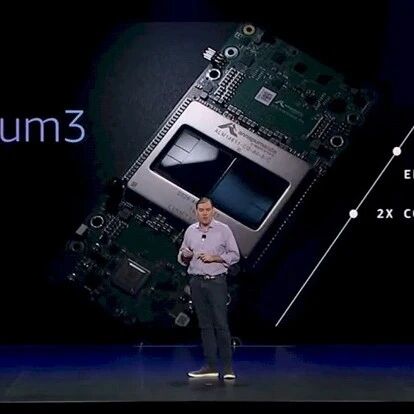
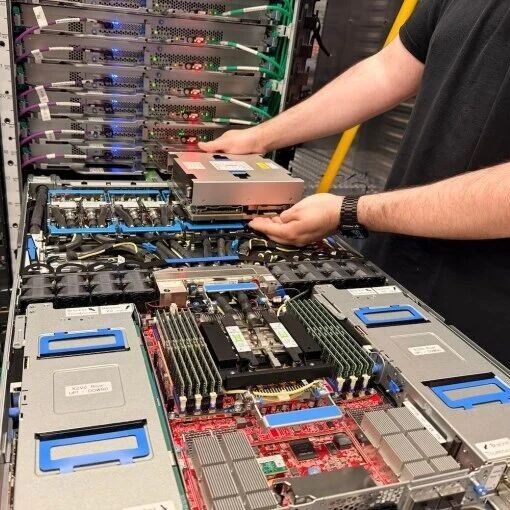
Core Insights - AWS has been a key cloud platform for Anthropic since its inception, maintaining this relationship even as Anthropic partnered with Microsoft and Amazon's collaboration with OpenAI evolved [2] - OpenAI's exclusive agreement with AWS positions it as the sole supplier for OpenAI's new AI agent-building tool, Frontier, which could become a significant part of OpenAI's business if it develops as expected [2] - AWS's appeal to OpenAI lies in its commitment to provide 2 gigawatts of Trainium computing power, a substantial investment given the demand from Anthropic and AWS's own Bedrock service [2] Summary by Sections Trainium Deployment and Performance - The company has deployed 1.4 million Trainium chips across all three product generations, with Anthropic's Claude system utilizing over 1 million Trainium2 chips [3] - Trainium was initially designed for faster and cheaper model training but has been adapted for inference, which is currently the industry's biggest performance bottleneck [3] - Trainium2 handles most of the inference traffic for AWS's Bedrock service, which supports numerous enterprise clients in building AI applications [3] Cost Efficiency and Competition - AWS claims that its new Trn3 UltraServer, running on the latest Trainium chips, offers a 50% lower operating cost compared to traditional cloud servers while maintaining comparable performance [5] - The introduction of Trainium3 and new Neuron switches is seen as transformative, significantly improving cost-effectiveness [6] Chip Development and Innovation - Trainium now supports PyTorch, a popular open-source AI model-building framework, allowing developers to easily transition their applications to Trainium with minimal code changes [7] - AWS has partnered with Cerebras Systems to integrate its inference chips into servers running Trainium, promising enhanced AI performance [7] - The custom chip design department at AWS, established in 2015, has over ten years of experience in designing chips for AWS [8] Chip Manufacturing and Testing - Trainium3 is manufactured using a 3-nanometer process by TSMC, a leader in this technology, while other chips are produced by Marvell [11] - The chip activation process involves rigorous testing and troubleshooting, showcasing the engineering challenges faced during development [11][12] Data Center Operations - AWS has a private data center for quality control and testing, equipped with the latest custom chips, ensuring efficient operation and environmental sustainability [21] - The data center's cooling system is designed to be energy-efficient, with a closed-loop system for the cooling liquid [21] Market Position and Future Outlook - AWS's Trainium is considered a multi-billion dollar business by CEO Andy Jassy, highlighting its significance within AWS's technology portfolio [23] - The engineering team is under pressure to ensure the successful mass production of chips, with ongoing efforts to resolve issues before production [23]


巨头混战AI下半场:亚马逊、微软、谷歌的三种野心
美股研究社· 2026-03-18 10:45
Core Viewpoint - The article discusses the evolving landscape of AI competition, highlighting a shift from model parameters to understanding profit layers, as companies navigate the complexities of capital, energy, and supply chains in the AI sector [1]. Group 1: Amazon's Strategy - Amazon aims to double its cloud revenue to $600 billion by 2036, indicating a strategic focus on "commoditizing computing power" as a long-term business model [3]. - The company emphasizes its core advantage by not defining models or binding applications, positioning itself as the essential infrastructure provider for AI [4]. - Amazon is accelerating the deployment of self-developed chips, such as Trainium and Inferentia, to reduce reliance on suppliers and offer cost-effective computing options [5]. Group 2: Microsoft's Approach - Microsoft is redefining the software industry by embedding AI into productivity tools, transitioning from selling software licenses to charging based on usage frequency and intelligence [7]. - This aggressive business model aims to transform software into an operating system-level capability, potentially increasing cash flow through AI integration [7]. - However, there are risks associated with user willingness to pay for AI features and the potential for open-source models to diminish Microsoft's competitive edge [8]. Group 3: Google's Focus - Google is shifting its focus from algorithms and computing power to energy and cooling solutions, recognizing that data center energy management is becoming a critical bottleneck [9]. - The company is exploring liquid cooling technology to support high-density GPU clusters, indicating a strategic move towards comprehensive infrastructure control [10]. - This approach suggests that future AI leaders must excel in energy and hardware engineering, expanding the competitive landscape beyond software and chips [10]. Conclusion - The three tech giants—Amazon, Microsoft, and Google—are pursuing distinct paths in the AI landscape: Amazon as a "water supplier," Microsoft as a "gateway reconstructor," and Google as a player in the "infrastructure deep water zone" [12]. - This divergence reflects a broader trend where AI is not a single track but a complex system reshaping global industry structures, emphasizing the importance of understanding these different strategies for investors [12].



解构亚马逊最强芯片,GPU迎来劲敌
半导体行业观察· 2025-12-04 00:53
Core Insights - The article discusses the anticipation surrounding AWS's Trainium4 XPU, which is expected to be delivered by late 2026 or early 2027, causing concerns among users currently waiting for Trainium3 [1][18] - Trainium3 is highlighted as a significant improvement over its predecessors, offering enhanced performance and efficiency, but Trainium4 is projected to bring even greater advancements [1][4] Summary of Trainium3 Specifications - Trainium3 utilizes TSMC's 3nm process technology, providing double the computing power and a 40% increase in energy efficiency compared to previous models [4][6] - The UltraServer configuration for Trainium3 can support up to 64 slots, with a total HBM memory bandwidth that is 3.9 times greater than Trainium2 [6][14] Performance Metrics - Trainium3 UltraServer shows a 4.4 times increase in overall computing power compared to Trainium2 UltraServer, with a significant increase in token output per megawatt [6][8] - The architecture includes five types of computing units, enhancing its capability for high-performance computing and AI workloads [9][10] Future Prospects with Trainium4 - Trainium4 is expected to support a new architecture, NeuronCore-v5, which will include native FP4 support, potentially increasing performance by six times compared to Trainium3 [18][21] - The anticipated HBM memory capacity for Trainium4 is projected to be double that of Trainium3, with bandwidth expected to quadruple [18][21] Architectural Improvements - Trainium4 is speculated to incorporate both NVLink and UALink ports, allowing for enhanced connectivity and performance [19][20] - The design aims to balance computation, memory, and interconnect performance, with a potential increase in core count to achieve higher efficiency [20][21]