亚马逊云科技

Search documents
130亿美元换不来独占权?微软与OpenAI的同盟正在瓦解
美股研究社· 2026-03-19 12:10
Core Viewpoint - The potential legal action by Microsoft against OpenAI signifies a deeper conflict over power distribution in the AI industry, particularly regarding computing power, models, and distribution channels, indicating a shift in alliances that were once considered strong [1][3][4]. Group 1: Alliance Dynamics - Microsoft and OpenAI had established a robust alliance, with Microsoft investing over $13 billion for key rights, including model usage priority and exclusive cloud deployment [5][6]. - The essence of this structure was to strengthen Microsoft's cloud business against competitors like Amazon Web Services, positioning OpenAI as a magnet for enterprise cloud adoption [6][7]. - However, OpenAI's increasing independence and its recent partnership with Amazon, involving a $50 billion deal, directly challenge Microsoft's control over distribution channels [6][10]. Group 2: Structural Changes in AI Industry - The conflict highlights a structural contradiction in the AI industry, where model companies like OpenAI are gaining power, shifting from being cloud-dependent to becoming upstream players in the value chain [9][10]. - This shift indicates that models are becoming the primary focus for developers and enterprises, altering the traditional cloud service dynamics [9][10]. - The potential for models to operate independently of cloud infrastructure could undermine Microsoft's established model-cloud binding strategy, allowing competitors like Google and Amazon to regain market competitiveness [10]. Group 3: Implications for Investment - The ongoing conflict signals a need for the market to reassess key questions regarding pricing power, distribution control, and user access within the AI industry [13]. - If model companies gain dominance, their valuation could rise significantly, akin to historical operating system vendors, while cloud providers may revert to lower growth valuations [10][13]. - Investors should recognize that alliances in rapidly evolving tech sectors can quickly shift, and valuations should reflect a company's irreplaceability in the industry rather than current partnerships [13]. Group 4: The Nature of Competition - The potential lawsuit illustrates that competition in the AI era is not merely between companies but fundamentally about "position" within the value chain [15][16]. - The dynamics of alliances are fragile, as interests can diverge rapidly, leading to conflicts even among previously strong partners [11][12]. - The situation emphasizes the importance of diversifying ecosystem capabilities to navigate the complexities of technological revolutions [15][16].



巨头混战AI下半场:亚马逊、微软、谷歌的三种野心
美股研究社· 2026-03-18 10:45
Core Viewpoint - The article discusses the evolving landscape of AI competition, highlighting a shift from model parameters to understanding profit layers, as companies navigate the complexities of capital, energy, and supply chains in the AI sector [1]. Group 1: Amazon's Strategy - Amazon aims to double its cloud revenue to $600 billion by 2036, indicating a strategic focus on "commoditizing computing power" as a long-term business model [3]. - The company emphasizes its core advantage by not defining models or binding applications, positioning itself as the essential infrastructure provider for AI [4]. - Amazon is accelerating the deployment of self-developed chips, such as Trainium and Inferentia, to reduce reliance on suppliers and offer cost-effective computing options [5]. Group 2: Microsoft's Approach - Microsoft is redefining the software industry by embedding AI into productivity tools, transitioning from selling software licenses to charging based on usage frequency and intelligence [7]. - This aggressive business model aims to transform software into an operating system-level capability, potentially increasing cash flow through AI integration [7]. - However, there are risks associated with user willingness to pay for AI features and the potential for open-source models to diminish Microsoft's competitive edge [8]. Group 3: Google's Focus - Google is shifting its focus from algorithms and computing power to energy and cooling solutions, recognizing that data center energy management is becoming a critical bottleneck [9]. - The company is exploring liquid cooling technology to support high-density GPU clusters, indicating a strategic move towards comprehensive infrastructure control [10]. - This approach suggests that future AI leaders must excel in energy and hardware engineering, expanding the competitive landscape beyond software and chips [10]. Conclusion - The three tech giants—Amazon, Microsoft, and Google—are pursuing distinct paths in the AI landscape: Amazon as a "water supplier," Microsoft as a "gateway reconstructor," and Google as a player in the "infrastructure deep water zone" [12]. - This divergence reflects a broader trend where AI is not a single track but a complex system reshaping global industry structures, emphasizing the importance of understanding these different strategies for investors [12].



亚马逊数据中心遭导弹击中!
国芯网· 2026-03-02 13:43
Group 1 - The article emphasizes the importance of revitalizing the domestic semiconductor industry in China while also considering global perspectives [1] Group 2 - On March 1, Amazon Web Services confirmed that one of its availability zones in the UAE was hit by an "object," causing sparks and a fire [2] - The incident occurred amidst a backdrop of retaliatory actions by Iran against the US and Israel, with the UAE also being affected [4] - Amazon did not confirm or deny whether the incident was related to the attacks when questioned [4] - Following the incident, Amazon updated its service health dashboard multiple times, indicating that power restoration was pending approval from the fire department and that connectivity recovery would take several hours [4] - Starting March 2, Amazon advised affected customers to switch to other availability zones within the UAE or to different regions if their business allowed, while emphasizing that other availability zones in the region were operating normally [4]

高盛顶级科技交易员称“分化仍是游戏的核心”
Goldman Sachs· 2026-02-10 03:24
Investment Rating - The report indicates a mixed sentiment towards the technology sector, with a focus on dispersion among stocks, suggesting a cautious but potentially favorable investment environment for select companies [6][18]. Core Insights - The technology sector is experiencing significant dispersion, with approximately 50 stocks in the Nasdaq 100 index rising over 60% while another 50 stocks have fallen by over 40% since October [6][8]. - Institutional trading has favored selling, particularly in the information technology sector, with hedge funds net selling U.S. stocks for the fourth consecutive week [8][9]. - The forward P/E ratio for the Nasdaq 100 has decreased from 28-29 times in late 2025 to about 24-25 times, indicating a return to more normalized valuation levels [9][11]. - The report highlights strong earnings growth expectations for the information technology and communication services sectors, projecting around double-digit growth in earnings per share (EPS) for the year [11]. Summary by Sections Market Performance - The Nasdaq 100 index has shown volatility, with the worst three-day performance since April 2025, yet ended the week nearly flat [5][6]. - Major tech stocks like Amazon, Microsoft, and Meta have seen their prices decline, raising questions about market sentiment and future performance [9][22]. Earnings and Revenue Insights - The report notes that 85% of companies in the information technology sector reported positive surprises in earnings, indicating strong performance relative to expectations [12]. - The anticipated capital expenditures for major tech companies are projected to grow by 65% in 2026, reaching $618 billion, up from previous estimates of $537 billion [18]. Sector-Specific Observations - The software as a service (SaaS) sector is under scrutiny, with investors uncertain about the sustainability of recent rebounds in stock prices [15][18]. - The report emphasizes the importance of capital expenditure trends, particularly for companies like Google, Amazon, and Microsoft, as they navigate through a period of uncertainty regarding profitability and growth [18][22]. Investor Sentiment - There is a notable divide in investor sentiment regarding the potential of artificial intelligence and its impact on the tech sector, with some viewing it as a disruptive force while others remain cautious [14][24]. - The report identifies several stocks as controversial, including Uber and Take-Two Interactive, reflecting the ongoing debates about their future performance and market positioning [13][26].



新浪财经隔夜要闻大事汇总:2026年2月7日
Sou Hu Cai Jing· 2026-02-06 22:49
Market - The Dow Jones Industrial Average closed above 50,000 for the first time, gaining over 1,200 points, marking a historic intraday high [1] - Major tech stocks rebounded, with Nvidia and Broadcom leading the gains, while Amazon's stock fell due to disappointing earnings guidance [1][2] - Bitcoin recovered some losses, rising 13% to over $71,000 after a significant drop earlier in the week [4][5] Company - Nvidia's CEO Jensen Huang stated that the $660 billion capital expenditure for AI infrastructure is sustainable, leading to a 7.78% increase in Nvidia's stock [2][16][17] - Tesla is accelerating hiring to support Elon Musk's plan to become the largest solar panel manufacturer in the U.S., aiming for 100 GW of solar manufacturing capacity by the end of 2028 [15] - Amazon plans to increase its capital expenditure on AI to over $200 billion, which led to a significant drop in its stock price following its earnings report [22] - Netflix is under investigation by the U.S. Department of Justice for potential anti-competitive behavior related to its acquisition of Warner Bros. [18] - Apple is preparing to allow third-party voice AI assistants in its CarPlay system, marking a strategic shift from only allowing its own Siri [19]
国联民生证券:北美云计算龙头开启涨价 配套服务厂商有望迎来估值重构
智通财经网· 2026-01-29 08:24
Core Insights - The AI industry chain is expected to experience inflation transmission starting from Q4 2025, with cloud computing emerging as the next inflation direction due to rising AI demand [1] - Major cloud service providers are witnessing positive revenue growth driven by increased AI-related demand, exemplified by Amazon Web Services (AWS) achieving a net sales figure of $33 billion in Q3 2025, marking a 20% year-on-year increase [2] - AI is becoming a significant driver for cloud computing development, with infrastructure requirements evolving to support advanced AI applications [3] Industry Trends - The AI demand is leading to a price increase across various segments of the AI industry chain, including storage and CPUs, with cloud computing firms likely to undergo a valuation restructuring [1] - AWS's recent price increase breaks a two-decade trend of declining cloud service prices, indicating a shift in the market dynamics [1] - NVIDIA's $2 billion investment in Core Weave highlights the growing importance of cloud computing in the AI landscape [2] Company Focus - Recommended companies in the cloud computing sector include Alibaba-W (09988), Kingsoft Cloud (03896), and others, while CPU-related companies include Haiguang Information (688041.SH) and China Great Wall (000066.SZ) [4] - Database companies to watch include StarRing Technology-U (688031.SH) and Dameng Data-U (688777.SH) among others [4]

计算资源供需失衡,谷歌云也开始跟随涨价,北美地区翻倍
Xuan Gu Bao· 2026-01-27 23:36
Group 1 - Google announced a price adjustment for data transmission effective May 1, 2026, with North America increasing from $0.04/GB to $0.08/GB, Europe from $0.05/GB to $0.08/GB, and Asia from $0.06/GB to $0.085/GB [1] - Amazon Web Services also raised prices for EC2 machine learning capacity blocks by approximately 15%, breaking a nearly two-decade trend of price reductions [1] - The price increases from both companies are driven by a surge in demand for computing power due to global AI development, leading to a supply-demand imbalance for high-performance GPUs and rising costs for data center infrastructure and operations [1] Group 2 - Open Source Securities indicated that the scarcity of AI cloud Infrastructure as a Service (IAAS) is becoming increasingly evident, with strong demand for AI data centers (AIDC) and computing power leasing [1] - Nvidia's additional $2 billion investment in CoreWeave and Alibaba's release of a trillion-parameter flagship inference model highlight the industry's high growth potential [1] - Companies with core technologies are expected to benefit significantly from the increasing demand for AI cloud infrastructure as domestic giants enhance their large model capabilities [1] Group 3 - Shenwan Hongyuan believes that the evolution of Clawdbot is bringing the Agent era closer, with AI products transitioning from "scene-level assistants" to "system-level Agent platforms" [2] - The market focus is shifting from model parameters to task execution capabilities, with Agents serving as the intelligent execution hub, thereby amplifying software value and driving sustained growth in computing infrastructure and data transmission demand [2] - Specific companies like Baoxin Software and Lianang Technology are positioned well in the AIDC field, providing comprehensive solutions for data center construction and cloud computing services [2]
美股前瞻:AMC、亚马逊、贝克休斯、雪佛龙、谷歌、哈利伯顿、NSFT、英伟达
Xin Lang Cai Jing· 2026-01-25 17:40
Group 1 - Alphabet Inc.'s subsidiary Waymo is under investigation by U.S. traffic safety authorities for multiple incidents, including violations near stopped school buses in Austin [1][3] - Amazon is facing a legal challenge in Pennsylvania regarding whether it provided sufficient accommodations for an autistic employee facing commuting difficulties due to schedule changes [1][3] - The U.S. House Cybersecurity Subcommittee Chairman Andy Ogles has requested executives from Amazon Web Services, LinkedIn (owned by Microsoft), and Palo Alto Networks to testify about North Korea's use of remote information technology workers [1][3] - Some bondholders of AMC Entertainment Holdings have initiated secret negotiations with the company, raising concerns about potential larger debt-related actions, which have led to a significant drop in some of its bond prices [1][3] Group 2 - The U.S. is negotiating with Chevron and other oil producers, along with oil service contractors Schlumberger, Baker Hughes, and Halliburton, to expedite the recovery of Venezuela's oil production capacity, with costs being a small fraction of the estimated $100 billion needed for full reconstruction [2][4] - ExxonMobil has confirmed that its subsidiary XTO Energy is seeking buyers for certain assets in the southern Eagle Ford shale basin in Texas [2][4] - ExxonMobil announced that its refinery in Baytown, Texas, has shut down some equipment due to severe cold weather [5] - NVIDIA has announced that board member Persis Drell will resign to seek new career opportunities [5] - The Houston shipping channel has reopened for all vessels following improvements in foggy weather, which is crucial for several refineries and oil export terminals, including Valero's Houston refinery, Chevron's Pasadena refinery, and ExxonMobil's Baytown refinery [5]
亚马逊云科技护航中国创新,链接全球商机!让AI创造更大价值!
Sou Hu Cai Jing· 2025-12-13 14:50
Core Insights - The re:Invent 2025 event focuses on the application of Agentic AI and its impact on business growth and innovation in the Greater China region [1][13] - Key speakers from companies like Tuya, Lark, and Deloitte China will share insights on leveraging Amazon Web Services (AWS) for AI-driven solutions [1][2] Group 1: AI Applications and Innovations - Tuya utilizes Amazon Bedrock and Amazon SageMaker to enhance smart home innovations, reducing machine learning model deployment time from months to weeks [2] - Lark showcases enterprise-level AI capabilities powered by AWS, supporting thousands of clients through integration with Amazon Bedrock [2] - Deloitte China empowers over 10,000 employees with AI capabilities using AWS's generative AI solutions, recognized by the China Academy of Information and Communications Technology [2] Group 2: DevSecOps Transformation - Cathay Pacific Airways collaborates with AWS to transform its DevSecOps model, achieving a 75% improvement in vulnerability remediation speed and a 50% reduction in costs [3] - The airline's approach includes deploying AI-driven security mechanisms and a culture of "security left shift" [3] Group 3: High-Frequency Trading Innovations - Pulsar, a leading quantitative analysis platform, addresses challenges in high-frequency trading by deploying a production-level Agentic AI architecture, enabling rapid deployment of investment analysis tools [4][5] Group 4: Global Business Expansion - Snowflake focuses on helping Chinese enterprises achieve global business expansion through its powerful data systems and AI capabilities [6][7] Group 5: Exclusive Events for Greater China - The event features exclusive activities tailored for Greater China partners, facilitating networking and collaboration opportunities [8][14] - The Amazon Web Services Greater China Night aims to connect over 300 leaders and technical experts for strategic discussions [8][14] Group 6: Strategic Insights for Executives and Developers - The event provides insights into AI development trends and practical paths for implementing generative AI solutions, addressing the challenge of translating demos into real-world applications [16] - Companies are encouraged to shift from cost optimization to innovation-driven strategies, leveraging AWS's investment in AI capabilities [16]

大家忙着卖算力时,亚马逊云科技在帮客户跑“数十亿个Agent”
Xin Lang Cai Jing· 2025-12-04 09:50
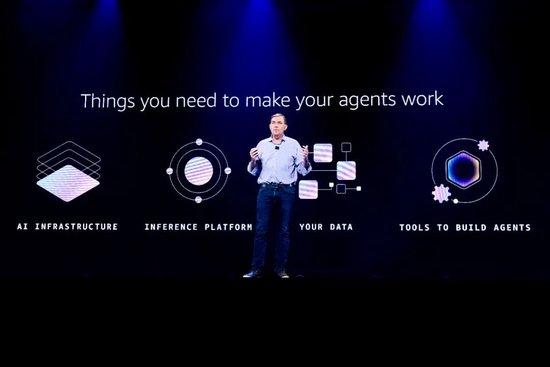
Core Insights - Amazon Web Services (AWS) is focusing on making computing power truly usable and enabling Agents to operate effectively, rather than chasing short-term profits from selling computing power [2][38] - AWS maintains a leading position in the global cloud market with a market share of 37.5%, significantly ahead of its closest competitor [2][39] - The annual recurring revenue (ARR) for AWS is projected to reach $132 billion by December 2025, reflecting a 20% year-over-year growth [2][39] Competitive Landscape - AWS faces intense competition from Microsoft Azure, Google Cloud GCP, Oracle OCI, and CoreWeave, which are securing long-term contracts with major clients through investments and computing power collaborations [3][39] - The concept of "computing power financialization" is creating short-term pressure on AWS's stock and public perception [3][39] Technological Trends - The integration of full-stack AI, including chips and models, is becoming increasingly important for attracting enterprise clients [3][40] - The rise of Agentic AI is identified as a new battleground, with billions of Agents expected to emerge in the future [3][40] AWS's Strategic Response - At the re:Invent 2025 conference, AWS announced new products aimed at helping enterprise clients quickly implement Agents [4][40] - CEO Matt Garman emphasized that valuable Agents require four core components: AI infrastructure, AI inference platforms, data, and Agent development tools [4][40] Cost Efficiency Initiatives - AWS is developing its own AI chips to reduce the total cost of ownership (TCO) for computing infrastructure [8][44] - The newly launched Trainium 3 chip, built on a 3nm process, can produce five times more Tokens per megawatt compared to its predecessor and reduce training costs by up to 50% [9][45] Product Development - AWS has deployed over 1 million Trainium chips, which are expected to generate billions in revenue annually [11][47] - The Amazon Nova 2 series of self-developed models aims to provide cost-effective solutions for enterprises, with a focus on low-cost processing of simpler tasks [12][51] Market Positioning - Amazon Bedrock, AWS's model platform, integrates models from various vendors, allowing enterprises to utilize multiple models efficiently [16][52] - The company is positioning Amazon Bedrock as a significant growth driver, with expectations of it matching the revenue contribution of EC2 in the long term [19][55] Agent Development Tools - AWS launched Amazon Bedrock AgentCore, a standardized toolset for developing and deploying Agents, which has seen over 200,000 SDK downloads shortly after its release [20][56] - The company is also introducing official Agent tools, such as Security Agent and DevOps Agent, to enhance internal operations and customer offerings [23][59] Long-term Vision - AWS is focused on solving current customer pain points rather than pursuing speculative short-term gains, reflecting a pragmatic approach to technology development [32][34] - The company aims to build a comprehensive Agent infrastructure that can drive exponential growth in computing power consumption through user interactions with Agents [26][29]