MiniMax海螺

Search documents
中信建投:AI多模态和世界模型或重塑多个行业的业务逻辑
智通财经网· 2026-01-26 00:07
Core Insights - The report from CITIC Securities highlights the advancements in multimodal technology by leading companies like Google and Kuaishou, addressing challenges in character consistency and physical logic, marking a shift from entertainment to productivity [1][2] - AI-generated content, particularly AI comic dramas, is emerging as a new growth area, with platforms like ByteDance incentivizing high-quality content creation, potentially reshaping advertising and gaming asset production [1][7] Group 1: Company Developments - Google has established strong barriers in long-context understanding and native audio-video integration with models like Veo, Gemini, and Nanobanana [2] - Kuaishou's Keling model integrates multiple creative tasks into a unified engine, achieving a victory ratio of 247% in image reference tasks and 230% in instruction transformation tasks [3] - Alibaba's Tongyi Wanshang 2.6 model introduces commercial role-playing capabilities, ensuring character consistency across different shots and supporting high-definition video generation [4] - Zhizhu's GLM-Image model, developed in collaboration with Huawei, is the first to complete full-process training on a domestic computing platform, addressing industry challenges like Chinese character rendering [5] Group 2: Market Trends and Opportunities - Kuaishou's Keling AI has seen a significant increase in active users, surpassing 12 million, with a 350% growth in paid users, indicating a shift of multimodal AI tools from entertainment to essential productivity tools in industries like film and advertising [6] - The AI comic drama sector is rapidly expanding, with ByteDance implementing aggressive incentive policies to promote high-quality content, reflecting a potential market size growth for short dramas and comic dramas [7][8] - The evolution of multimodal technology is expected to reshape business logic across various industries, including search and marketing, entertainment, and gaming, with advancements in generative AI leading to new commercial opportunities [8]


腾讯研究院AI速递 20251223
腾讯研究院· 2025-12-22 16:08
Group 1: Generative AI Developments - Gemini 3 Flash outperformed Gemini Pro with a score of 78% in SWE-Bench Verified tests, surpassing Pro's 76.2%, and is 3 times faster than 2.5 Pro while reducing token consumption by 30% [1] - MiniMax has open-sourced its VTP (Visual Tokenizer Pre-training Framework), discovering a Scaling Law in AI visual generation, which resolves the paradox of training performance [3] - Tongyi Qwen launched the Qwen-Image-Layered model, which disassembles images into multiple RGBA layers for independent manipulation, enhancing high-fidelity editing capabilities [4] Group 2: Company Updates and Financial Performance - MiniMax is preparing for an IPO in Hong Kong, with a team of 385 people averaging 29 years old and having spent $500 million, which is less than 1% of OpenAI's expenses [5] - MiniMax reported revenue of $53.44 million for the first nine months of 2025, a year-on-year increase of over 170%, with over 70% of revenue coming from overseas [6] Group 3: Technological Innovations - Shanghai Jiao Tong University introduced the LightGen chip, expanding photonic computing into large model semantic media generation, achieving high-resolution image generation and outperforming NVIDIA's A100 by two orders of magnitude [7] - DeepMind's research suggests that AGI may emerge from multiple smaller AGI agents collaborating rather than from a single large model, proposing a four-layer defense framework for distributed risks [8]


爱诗王长虎、谢旭璋:“不会创业” 的创始人,怎么做出用户量第一的 AI 视频产品
晚点LatePost· 2025-06-06 11:05
Core Viewpoint - The article discusses the rapid growth and innovative approach of Aishi Technology, particularly through its product PixVerse, which has gained significant traction in the AI video generation market, especially among younger users [4][6][10]. Group 1: Company Overview - Aishi Technology, founded by Wang Changhu and Xie Xuzhang, has over 60 million global users, with PixVerse achieving over 16 million monthly active users within just six months of launch [4][6]. - The company focuses on both model development and application, catering to both professional video creators and general consumers [4][10]. Group 2: Product Features and User Engagement - PixVerse allows users to create engaging videos easily by uploading photos and selecting templates, leading to viral content shared on platforms like TikTok and Instagram [4][5][6]. - The product has seen significant success, with a template that became popular on the US iOS download charts and videos created with PixVerse surpassing 1 billion views [6][10]. Group 3: Market Strategy and Competition - Aishi Technology aims to penetrate the Chinese market while also targeting global users, believing that the demand for video generation is universal [8][10]. - The company differentiates itself from competitors by leveraging its proprietary video models, which provide a unique user experience compared to existing products [10][11]. Group 4: Technological Advancements - Aishi has released multiple versions of its model, with V3 significantly improving user experience by reducing wait times for video generation to under 10 seconds [6][9][20]. - The company emphasizes the importance of continuous model improvement and user feedback in shaping product development [20][21]. Group 5: Industry Perspective - The video generation industry is still evolving, with Aishi Technology positioned to capitalize on the growing demand for content creation tools [10][22]. - The founders believe that video generation has been undervalued compared to large language models, presenting both a challenge and an opportunity for the company [24][25].

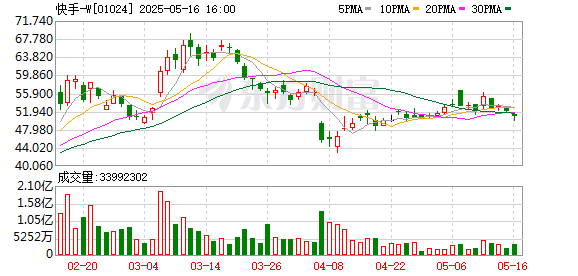
国产AI技术加速重构行业格局 快手可灵系列大模型市场份额超30%
Zheng Quan Ri Bao· 2025-05-16 16:39
Core Insights - Kuaishou's Kling series has captured over 30% market share in the AI video generation sector, showcasing its technological strength and commercialization capabilities [1][4] - The Kling AI model, launched in June 2024, utilizes the DiT (Diffusion Transformer) architecture, offering dual modes of "text-to-video" and "image-to-video," with high-quality output of up to 3 minutes, 1080p, and 30fps [1] - Since its launch, Kling AI has seen rapid growth, surpassing 22 million global users, with monthly active users increasing 25 times and generating over 168 million videos and 344 million images [1] - Kuaishou's commercialization efforts are accelerating, with Kling AI's revenue exceeding 100 million yuan in February 2024, and revenue for the first three months surpassing the total for 2024 [1] Industry Analysis - Dongfang Securities expresses optimism about Kling's ability to empower the main business, significantly reducing short video marketing production costs by 60% to 70%, allowing for increased advertising budgets [2] - The video generation model market is experiencing intense competition, with major players like Tencent, Alibaba, and ByteDance launching their own models [2] - Industry analysts believe that the prospects for domestic video models are promising, with continuous improvements in performance and applications across various sectors, including film, advertising, and education [2] - AI video generation technology is expected to expand into new fields such as healthcare, architecture, and design, providing innovative solutions [3] Market Position - Kuaishou's Kling model has quickly risen to the top of the video generation model category, holding over 30% market share, while competitors like Runway and Tencent also have significant shares [4] - Kuaishou is positioned at a critical juncture in the industry, leveraging AI technology and video models to reshape the market landscape and create additional commercial value [5]