
MyFitnessPal

Search documents
用“养宠”重做工具,一款APP月入300万美元
3 6 Ke· 2026-02-27 02:50
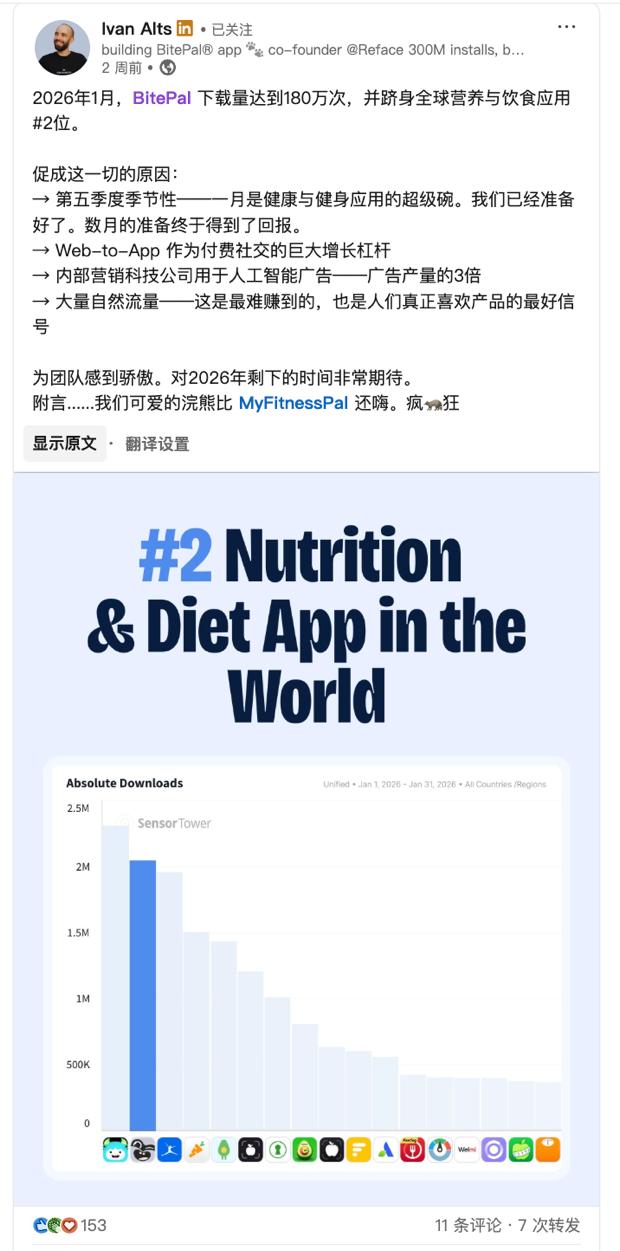
Core Insights - The article discusses the rise of the AI calorie tracking app "BitePal," developed by the Ukrainian team Reface, which achieved 1.8 million downloads in January, ranking as the second most downloaded nutrition app that month [1][5] - "BitePal" has quickly gained traction in a competitive market dominated by established apps like "MyFitnessPal," which has been around for 16 years and generates over $10 million monthly [5][6] - The app differentiates itself by using a gamified approach with a virtual pet, a raccoon, to engage users and reduce the anxiety associated with calorie tracking [10][11] Market Context - "MyFitnessPal" has maintained its dominance through a detailed food database and a high subscription fee of $19.99 per month, targeting hardcore users focused on precise dietary management [6][8] - The emergence of "Cal AI" has shown that AI can lower the barriers to entry for calorie tracking apps, attracting users who previously found traditional methods cumbersome [8][10] - "BitePal" has capitalized on the shortcomings of existing apps by focusing on user experience and psychological comfort, moving away from strict calorie counting to a more balanced nutritional assessment [13][14] Product Features - "BitePal" introduces a cute raccoon that interacts with users, providing a more enjoyable experience compared to traditional calorie tracking apps [11][12] - The app emphasizes nutritional scoring over calorie counting, encouraging users to think about meal quality rather than just calorie intake [14][18] - It incorporates a gamification system similar to "Duolingo," offering daily challenges and rewards to enhance user engagement and retention [16][22] Company Strategy - Reface, originally known for its AI face-swapping app, has pivoted to a multi-product strategy, launching eight applications across various domains, including health and wellness [19][21] - The company aims to tap into the growing health management market, particularly among Gen Z users, by leveraging gamified design to increase user participation [22][23] - "BitePal" is currently the best-performing app in Reface's portfolio, indicating a successful shift in focus from novelty to daily utility [22][23]

Z Product|超10万五星好评!平均年龄仅20岁的AI健康团队研发Cal AI,8个月月收入超200万美金
Z Potentials· 2026-01-21 05:52
Core Insights - The article discusses the rapid growth of the calorie tracking app market, which reached $2.1 billion in 2023 and is projected to grow to $4.7 billion by 2032, driven by increasing health awareness and the prevalence of obesity and chronic diseases [3][4] - Cal AI targets ordinary users with a simplified interface, addressing the pain points of complex existing applications like MyFitnessPal, which often overwhelm users with features [5][6] - The app utilizes advanced AI models, achieving a food recognition accuracy of 90%, which is above the industry average, and focuses on user experience tailored to non-professional users [6][10] Market Trends - The demand for calorie tracking apps is evolving towards simplicity and ease of use, with a shift from fitness enthusiasts to the general public who prefer straightforward experiences [3][6] - Users are increasingly seeking specific features such as precise identification of food types and personalized guidance, prompting developers to create more targeted products [4][6] Product Features - Cal AI offers several key functionalities: food tracking through photo analysis, barcode scanning for nutritional information, weight monitoring with AI suggestions, and hydration and exercise tracking [11][12] - The app employs a free-to-use model with premium features, but users have expressed concerns about hidden subscription costs and the complexity of accessing full functionalities [14][15] Marketing Strategy - Initial marketing efforts focused on collaborations with fitness influencers on platforms like TikTok and Instagram, with a significant budget allocated for advertising [17] - The app's marketing expenditures have reportedly reached over $770,000 monthly, indicating a strong investment in user acquisition [17] Company Background - Cal AI was founded by a small team of four, leveraging the entrepreneurial experience of its founders, who have backgrounds in programming and growth marketing [19][20][21] - The company has achieved significant revenue growth, surpassing $1 million in revenue within four months of launch and stabilizing at over $2 million monthly [24][27] User Engagement - Cal AI boasts high user satisfaction ratings, with scores of 4.8 and 4.7 on App Store and Google Play, respectively, and a 30-day retention rate exceeding 30% [24] - The app's design and user experience are crafted to create emotional connections with users, enhancing engagement and retention [13][14]

马斯克鼓励人们将医疗数据上传到Grok
Xin Lang Cai Jing· 2026-01-11 23:32
Core Insights - Elon Musk claims that within three years, robots will surpass the best human doctors, encouraging users to upload their medical examination results to the platform X for the AI chatbot Grok to learn effective interpretation [1][4][5] Group 1: Grok's Capabilities and Development - Musk has stated that users can upload X-rays or MRIs to Grok, which he claims can provide better medical diagnoses than doctors [1][4] - Grok is still in its early stages but is reportedly quite accurate and is expected to improve over time, with Musk inviting feedback on its performance [5] - In a recent podcast, Musk shared that he submitted an MRI to Grok, which, along with a doctor, did not identify any issues [5] Group 2: Competition and Market Context - Grok faces competition in the AI healthcare space, notably from OpenAI's ChatGPT Health, which allows users to connect their medical records securely [2][5] - OpenAI reported that 40 million users seek health information from its model, with 55% using it to better understand symptoms [2][5] Group 3: Performance and Limitations - Grok's ability to detect medical anomalies has been mixed, with some users reporting successful analyses, while others noted significant misinterpretations [6] - A study from May 2025 indicated that Grok was the most effective AI model in identifying pathologies in 35,711 brain MRI slices compared to Google's Gemini and ChatGPT-4o [6] Group 4: Risks and Concerns - Experts express concerns regarding the accuracy and user privacy of Grok, particularly due to its training on data from a social media platform [3][6]
OpenAI进军医疗领域,GPT新功能可接入多个健康应用
Nan Fang Du Shi Bao· 2026-01-08 19:40
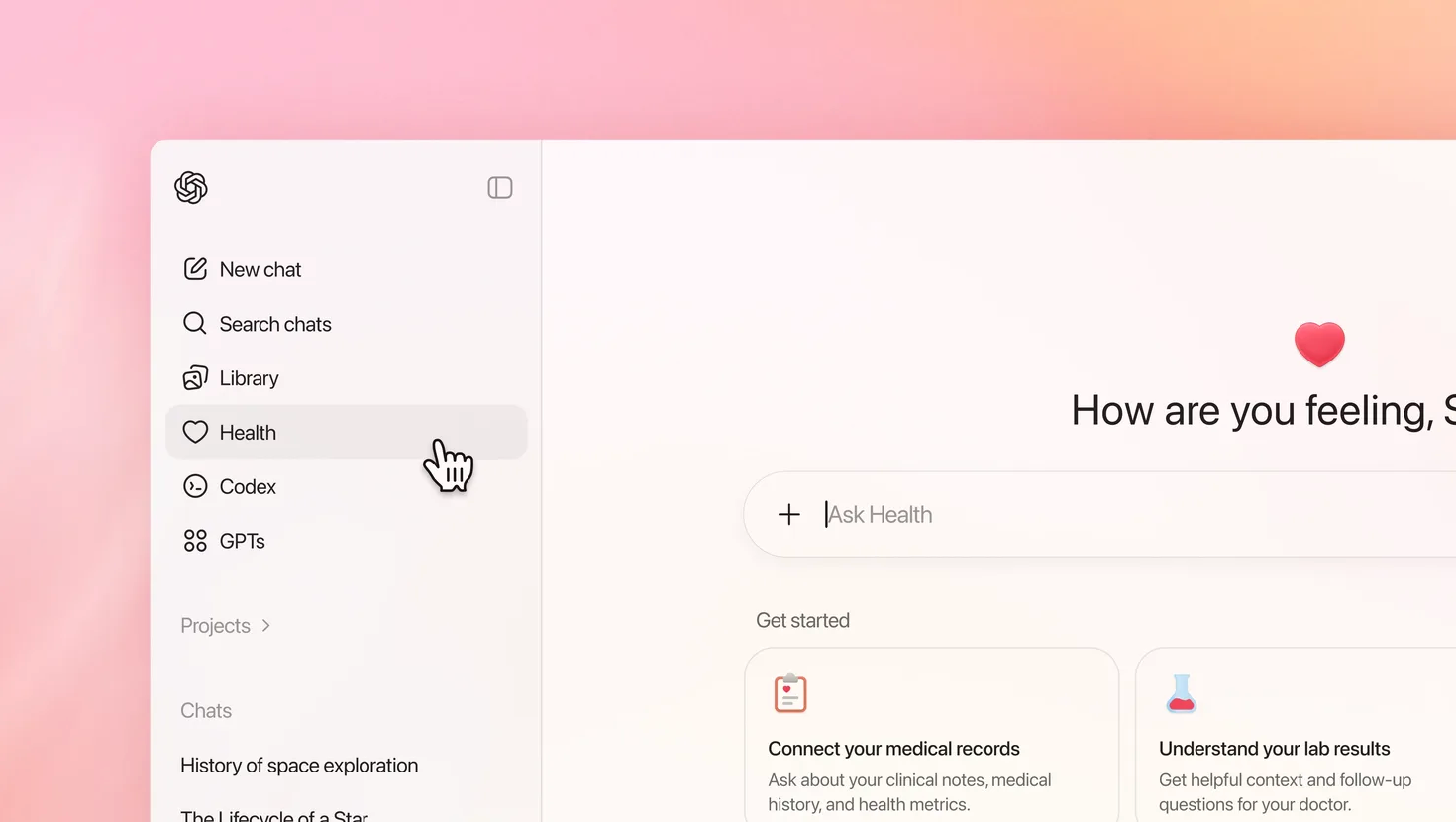
Core Insights - OpenAI has developed the ChatGPT Health feature to address the growing demand for health-related inquiries, with over 230 million users weekly asking health questions on the platform [2] - The feature integrates health data from various sources, including Apple Health and MyFitnessPal, to provide comprehensive health consultations [2] - OpenAI emphasizes that ChatGPT Health is designed to support users in understanding their health rather than replacing medical care, and it cannot be used for diagnosis or treatment [3] Group 1 - The health information landscape is fragmented, making it difficult for users to analyze their health data effectively [2] - OpenAI collaborated with over 260 doctors from multiple countries over two years to develop the ChatGPT Health feature [2] - The model has generated over 600,000 responses across 30 key health areas to improve accuracy and reliability [3] Group 2 - User privacy is a priority, with assurances that conversations in ChatGPT Health will not be used for model training and can be deleted by users [3] - The feature operates as an independent module, ensuring that health-related conversations and data are isolated from other interactions [3] - OpenAI has previously shown commitment to the healthcare sector by investing in several health tech companies and launching the Health Bench benchmark test [4]
From factory floors to offices: Physical AI is ‘going to be massive’
Fortune· 2026-01-08 12:48
Core Insights - The emergence of physical AI represents a significant shift in artificial intelligence, enabling machines to interact with the real world through sensing, thinking, and acting [1][2][3] Group 1: Physical AI Development - Physical AI is expected to be the next major wave of artificial intelligence, as highlighted by Qualcomm's CEO Cristiano Amon [2] - This technology relies on real-time sensor data, allowing machines like robots and self-driving cars to perform complex tasks and adapt to their environments [3] - Qualcomm is positioning itself as a key player in the automotive sector by focusing on power-efficient semiconductor designs that meet the increasing computing needs of modern vehicles [4] Group 2: Robotics and Industry Trends - Qualcomm's advancements in automotive technology are anticipated to translate into success in robotics, with a comprehensive suite of robotics technologies announced at CES [5] - A Deloitte report indicates that robots powered by physical AI are expanding beyond traditional settings, now performing tasks such as inspecting power grids and assisting in surgeries [6] - The report emphasizes that as barriers to deployment are addressed, AI-enabled robots are likely to transition from niche applications to mainstream use [6]



AI医疗新时代开启?OpenAI上线ChatGPT Health功能 提供体检结果解读、饮食及锻炼指导
智通财经网· 2026-01-07 23:48
Core Insights - OpenAI has introduced a new feature in its ChatGPT called ChatGPT Health, aimed at helping users analyze health check results, prepare for medical visits, and seek guidance on diet and exercise [1] - This marks OpenAI's most significant advancement in the healthcare sector to date, allowing connections to electronic health records, wearable devices, and health apps like Apple Health and MyFitnessPal [1] - The feature is currently in a trial phase with a waitlist for users, and broader access is planned in the coming weeks [1] Industry Trends - An increasing number of tech companies are targeting the lucrative healthcare market, betting on advancements in AI to help interpret user health data patterns for personalized medical advice [1] - Concerns have been raised regarding privacy and security risks associated with AI services handling sensitive personal data and providing advice on higher-risk health issues [1] User Engagement - OpenAI reports that over 200 million users inquire about health and wellness-related questions on ChatGPT each week [1] - The company has consulted over 260 doctors in the past two years to refine its AI health functionalities [1] Privacy and Security Measures - OpenAI plans to isolate health conversations from other application areas and enhance privacy features [1] - The service is designed to complement rather than replace doctors' judgments, addressing the limitations of healthcare professionals in terms of time and information processing [2]