
NAND/SSD

Search documents
IDC:AI驱动内存芯片产能结构性重构 2026年技术产品或因供应受限涨价
智通财经网· 2025-12-22 06:05
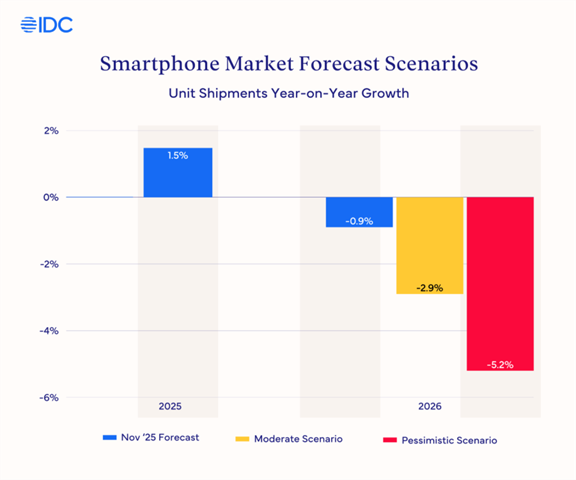
Core Insights - The global semiconductor ecosystem is experiencing an unprecedented memory chip shortage driven by the AI infrastructure boom, leading to adjustments in product strategies and pricing logic for consumer and enterprise devices [1][2] - The demand for AI data centers is outpacing supply, causing a significant increase in DRAM prices, with the shortage expected to persist until 2027 [1][3] - IDC maintains its official forecasts but highlights potential downside risks for the smartphone and PC markets due to the ongoing memory shortage [1] Group 1: Causes of Shortage - The memory market is undergoing a structural transformation driven by AI, with demand growth significantly outpacing supply [2] - Manufacturers are reallocating capacity from consumer electronics to higher-margin AI-specific memory solutions, limiting the supply of traditional DRAM and NAND used in smartphones and PCs [2][3] - The shift in focus towards high-bandwidth memory (HBM) and fifth-generation DDR (DDR5) for AI data centers is exacerbating the supply constraints for general-purpose memory modules [2][3] Group 2: Impact on Device Markets - The smartphone market, particularly for Android manufacturers, is facing severe challenges, with rising memory costs potentially leading to price increases and reduced configurations [5][6] - The cost structure of smartphones heavily relies on memory, with mid-range models seeing memory costs account for 15%-20% of BOM, while high-end models account for 10%-15% [5] - The impact of the shortage is asymmetric, with low-end manufacturers suffering more due to thin profit margins, while high-end companies like Apple and Samsung have structural advantages to mitigate the impact [6] Group 3: Market Size and Price Predictions - The global smartphone market is expected to experience a contraction in scale alongside rising average selling prices (ASP), with a moderate scenario predicting a 2.9% decline in market size and a 3%-5% increase in ASP for 2026 [8] - In a pessimistic scenario, the market size could decline by 5.2% with ASP rising by 6%-8%, particularly affecting the low-end market where profit margins are already minimal [8] - Despite the anticipated downturn in 2026, manufacturers are likely to stock up in advance, leading to potentially better-than-expected performance in Q4 2025 [8] Group 4: PC Market Disruptions - The PC market is facing a disruptive impact due to the memory shortage coinciding with the end of the Windows 10 lifecycle and the promotion of AI PCs [9][10] - Major PC manufacturers are signaling price increases of 15%-20% in response to rising costs, with larger firms likely to gain market share from smaller regional brands [10] - The shortage may hinder the growth narrative for AI PCs, which require larger memory configurations, leading to potential price increases and reduced profit margins for manufacturers [11] Group 5: PC Market Size and Price Forecasts - IDC has not adjusted its official PC market forecasts but presents two downside scenarios for 2026, with a moderate scenario predicting a 4.9% decline in market size and a 4%-6% increase in ASP [13] - In a pessimistic scenario, the market size could decline by 8.9% with ASP rising by 6%-8%, reflecting the ongoing supply constraints [13][14] - Similar to the smartphone market, PC channel partners are expected to stock up to mitigate the impact of future price increases, leading to better-than-expected performance in Q4 2025 [14]

存储的超级周期,还能上车吗?
Hu Xiu· 2025-10-26 02:04
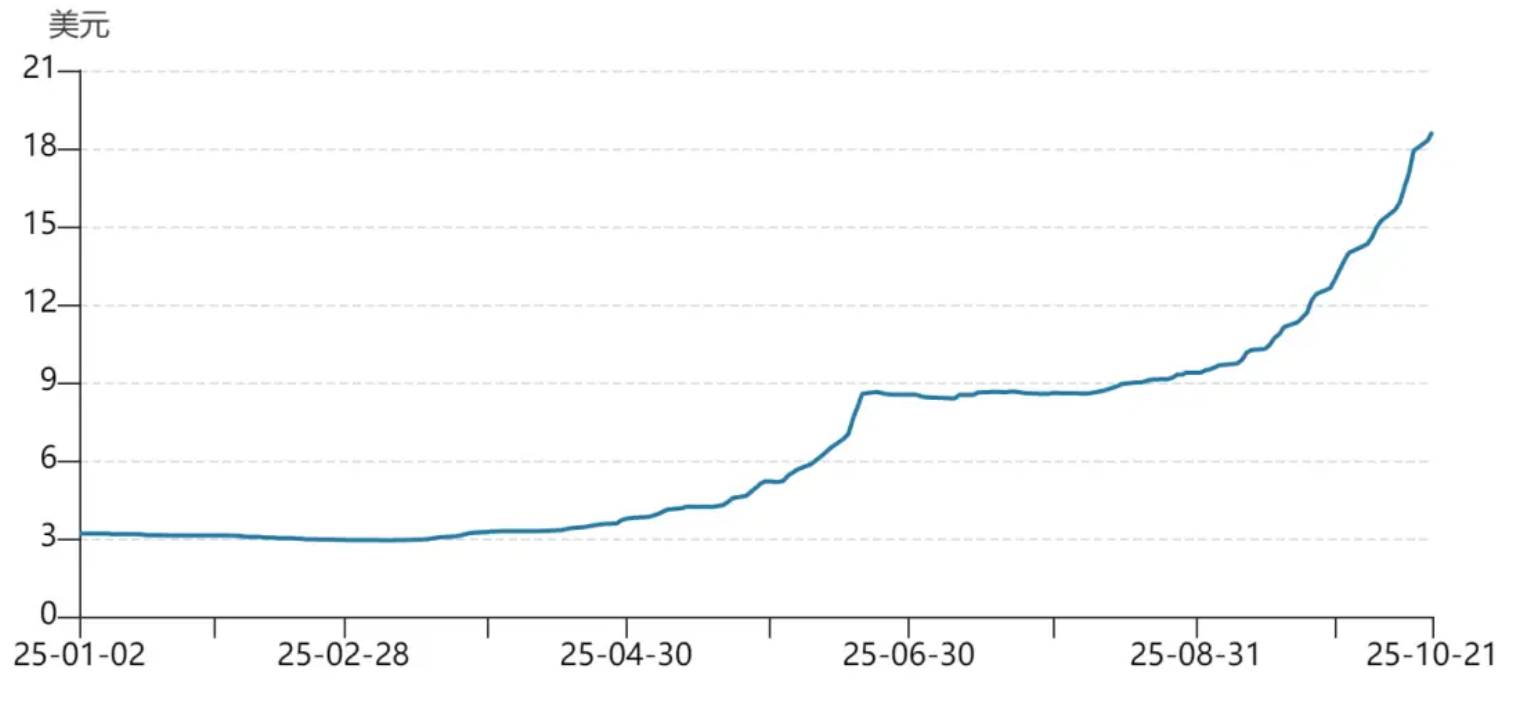
Core Viewpoint - The storage chip market is experiencing a significant price surge, driven by the demand from AI applications, leading to a "storage super cycle" as predicted by Morgan Stanley [3][5][34]. Group 1: Market Dynamics - As of October 21, 2023, the average spot price of DRAM:DDR4 has increased by 484%, reaching $18.63 [1]. - The last cycle ended in September 2023, and a new upward cycle has begun due to strong demand for large model training [5][6]. - The storage chip industry is characterized by cyclical demand and supply, typically alternating every 3-4 years [3][6]. Group 2: Beneficiaries of the Cycle - The primary beneficiaries of the current cycle are HBM (High Bandwidth Memory) and DRAM, as they are crucial for AI performance [7][10]. - HBM is a high-end variant of DRAM, offering significantly higher performance and price, with projections indicating a market size of $50-60 billion by 2026 and $100 billion by 2030 [8][9]. - Major players in the DRAM market, including Micron, Samsung, and SK Hynix, control over 90% of the market share [10]. Group 3: Geopolitical Implications - The rising prices of storage chips are beneficial for the U.S. and South Korea but pose challenges for China, which relies on these technologies for AI development [9][10]. - U.S. pressure on South Korea to restrict HBM exports to China could hinder China's progress in AI model training [10][12]. Group 4: Domestic Market Developments - China is accelerating efforts to develop domestic storage chip capabilities, with policies favoring local manufacturers [13][14]. - Companies like Shannon Semiconductor and GigaDevice are making strides in the enterprise DRAM sector, while consumer-grade DRAM remains competitive [16][17]. Group 5: Valuation Insights - A comparison of valuations shows that A-share storage companies have significantly higher P/E ratios than their U.S. counterparts, indicating a premium that may not be justified by performance [21][22]. - Despite rising prices, many domestic firms have not yet seen corresponding profit increases, suggesting that current stock price increases are driven more by market sentiment than by actual performance [23][24]. Group 6: Future Outlook - Micron's strong performance and optimistic guidance for future earnings highlight the potential for continued growth in the storage sector [28][30]. - The ongoing demand for AI infrastructure and the potential for a prolonged storage cycle could lead to further valuation adjustments for companies in this space [32][33].

BERNSTEIN:美国半导体 - 从关税低迷中觉醒之时
2025-07-14 00:36
Summary of Key Points from the Conference Call Industry Overview - The focus is on the U.S. semiconductor industry and semiconductor capital equipment, particularly in light of potential new tariffs announced by the Trump administration targeting imports from several countries including Japan, South Korea, Thailand, and Malaysia [1][3][13]. Key Insights and Arguments - **Tariff Announcement**: New tariffs on imports to the U.S. are set to begin on August 1, with rates generally aligning with previous reciprocal rates [1][3][14]. - **Import Statistics**: In 2024, the U.S. imported $148 billion from Japan and $132 billion from South Korea, with vehicles, machinery, and electrical equipment making up approximately 70% of these imports [2][16][21]. - **Semiconductor Imports**: The U.S. imported around $45 billion in semiconductors in 2024, which could rise to $82 billion when including NAND/SSDs and photovoltaics [3][47][51]. - **Potential Impact of Tariffs**: The actual impact of the new tariffs remains uncertain, as it is unclear if they will be implemented or how long they will last. This uncertainty may lead to increased market volatility [4][3]. Additional Important Information - **Sectoral Tariffs**: The new tariffs are separate from potential sectoral tariffs under Section 232, which is currently under investigation for semiconductor imports [3][4]. - **Investor Sentiment**: There is a belief that investors may have become desensitized to tariff discussions, but the upcoming headlines regarding tariffs could reignite interest and concern [3][4]. - **Market Performance Ratings**: Various semiconductor companies have been rated based on their expected performance, with AMD, ADI, and INTC rated as Market-Perform, while AVGO and NVDA are rated as Outperform due to strong growth prospects [6][8][10][9]. Conclusion - The U.S. semiconductor industry is facing potential new tariffs that could impact import dynamics and market volatility. The import statistics highlight the significant role of Japan and South Korea in the U.S. semiconductor supply chain, while the uncertainty surrounding the tariffs may affect investor sentiment and market performance in the sector [1][3][4][6].


