NVIDIA Jetson Orin

Search documents
Kepler Deploys First Space-Based, Scalable Cloud Infrastructure Powered by NVIDIA
Globenewswire· 2026-03-16 20:35
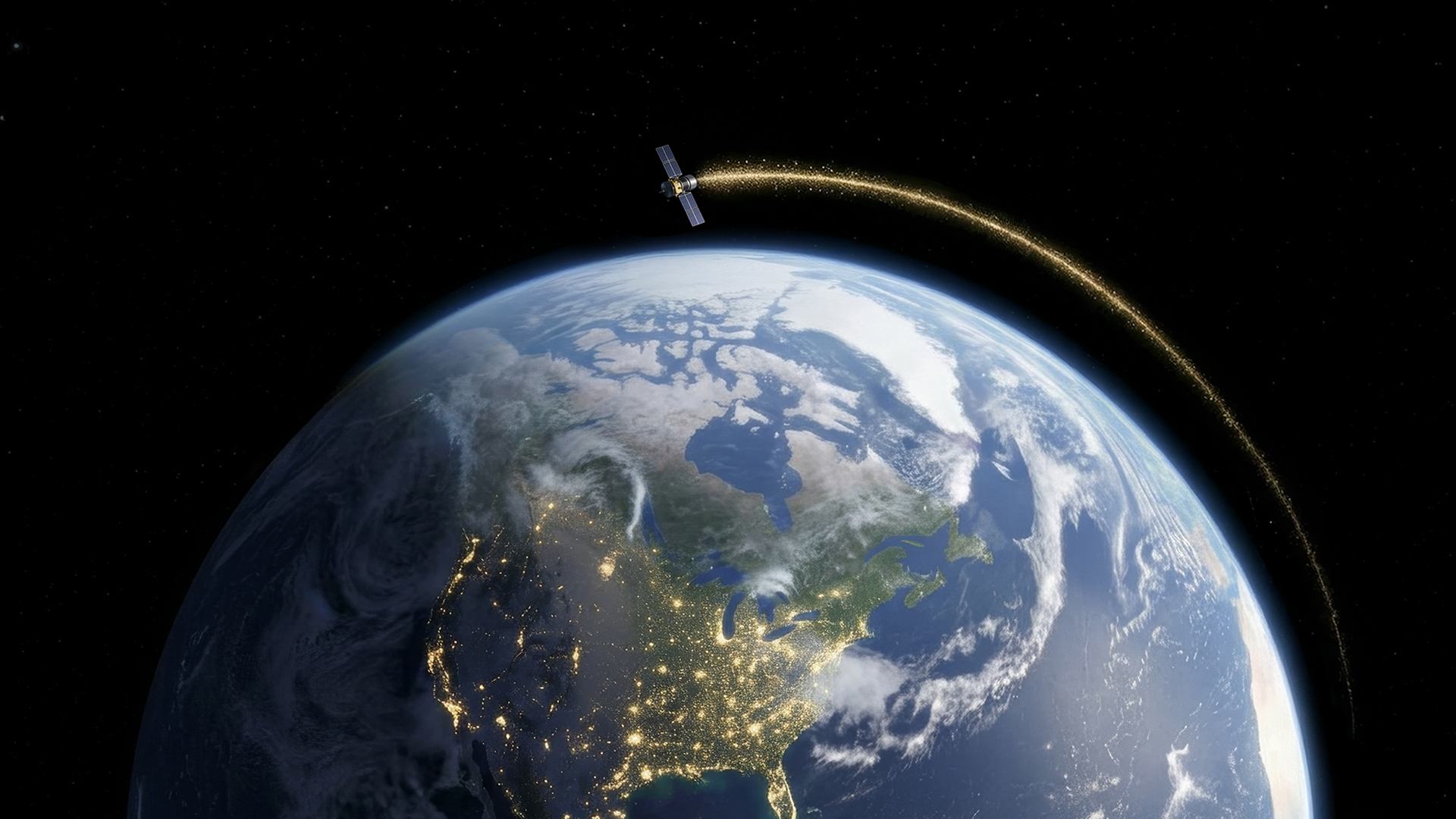
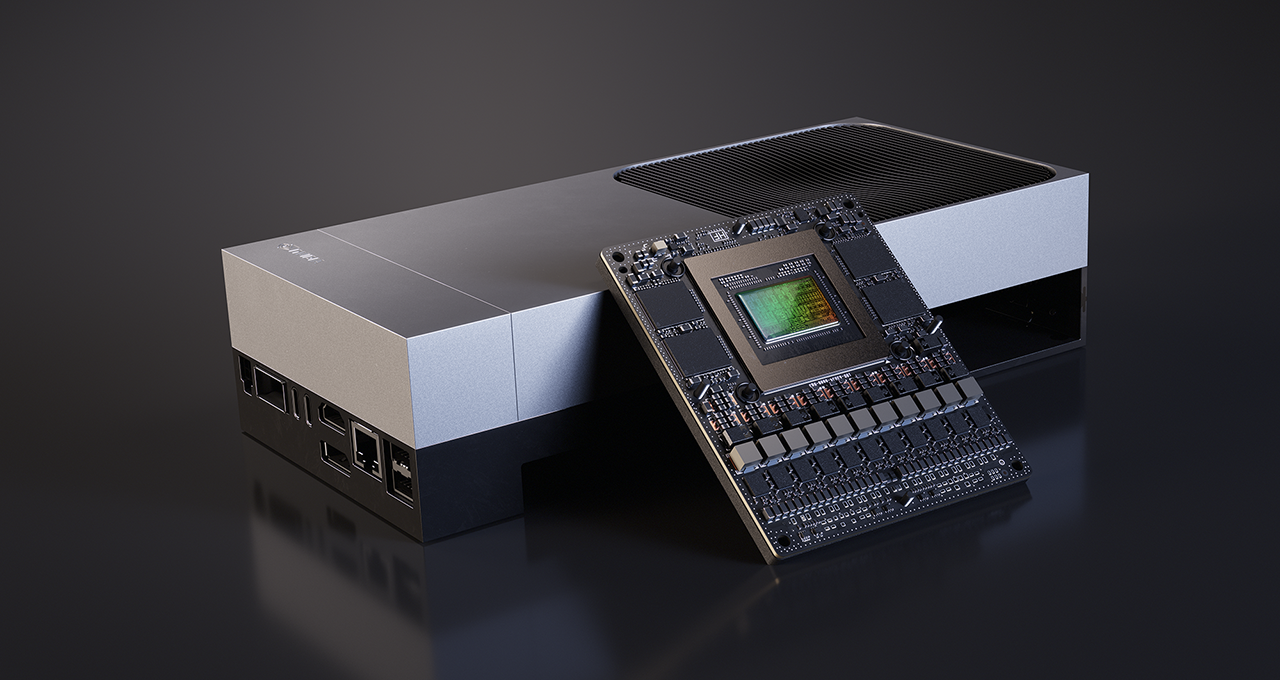
Core Insights - Kepler Communications has launched the world's first commercially operational optical data relay network with distributed on-orbit computing capabilities, enhancing its service offerings beyond mere connectivity to include scalable, cloud-like processing in space [1][2]. Group 1: Network Capabilities - The Kepler Network integrates optical connectivity, distributed on-orbit computing, and secure payload hosting into a unified space-based infrastructure, enabling real-time data transport and advanced applications such as AI-driven Earth observation analytics and autonomous network operations [2][3]. - The network utilizes NVIDIA-powered edge computing to process data in space, allowing customers to generate insights at the edge and reduce downlink requirements, thus facilitating scalable, cloud-native workloads across the constellation [2][3]. Group 2: On-Orbit Compute Deployment - The initial on-orbit compute capability is powered by 40 NVIDIA Jetson Orin modules distributed across 10 satellites, marking the first integration of constellation-scale edge computing within a commercially operational optical data relay network [3][4]. - Each satellite acts as a compute-enabled node, supporting AI and other accelerated workloads, and is interconnected through Kepler's real-time optical communications network [3][4]. Group 3: Architectural Advantages - The architecture allows for both single-node execution and clustered, distributed computing models, enabling dynamic scaling of workloads across the constellation [4]. - In the event of a node failure, workloads can be seamlessly shifted to other nodes, ensuring continuity of service [4]. Group 4: Strategic Vision - The CEO of Kepler Communications emphasized that this architecture alleviates long-standing constraints in space operations, enabling real-time data processing and decision-making in orbit, which enhances resilience and supports new mission architectures for customers [5]. - The GPU-enabled on-orbit compute platform is designed to support multiple concurrent customers with secure isolation between workloads, facilitating various in-space applications [5]. Group 5: Company Overview - Kepler Communications operates the first commercial optical data relay constellation with 33 satellites launched to date, achieving significant milestones in space communications and on-orbit computing capabilities [6]. - The company is headquartered in Toronto, Canada, and aims to enable communications for the future space economy [6].



NVIDIA Launches Space Computing, Rocketing AI Into Orbit
Globenewswire· 2026-03-16 20:03
Core Insights - NVIDIA's latest accelerated computing platforms are revolutionizing space innovation by enabling AI compute capabilities in orbital data centers, geospatial intelligence, and autonomous space operations [1][6] Group 1: Product Innovations - The NVIDIA Space-1 Vera Rubin Module offers up to 25 times more AI compute for space-based inferencing compared to the NVIDIA H100 GPU, enhancing capabilities for orbital data centers and advanced geospatial intelligence [3] - NVIDIA's IGX Thor and Jetson Orin platforms provide energy-efficient, high-performance AI inference and data processing, facilitating edge computing in space [4][12] - The NVIDIA RTX PRO 6000 Blackwell Server Edition GPU delivers up to 100 times faster performance for geospatial intelligence processing compared to traditional CPU-based systems [5][19] Group 2: Industry Applications - Industry leaders such as Aetherflux, Axiom Space, and Kepler Communications are leveraging NVIDIA's platforms for next-generation space missions, enhancing real-time data processing and connectivity in space [7][8][17] - The integration of NVIDIA's technology allows companies to manage and route data intelligently across satellite constellations, improving efficiency and reducing latency [8] - The rapid growth of the commercial space industry is driving demand for real-time data processing capabilities in orbit, which NVIDIA's platforms are designed to meet [9] Group 3: Future Potential - The NVIDIA Space-1 Vera Rubin Module enables large language models and advanced foundation models to operate directly in space, unlocking on-orbit analytics and autonomous scientific discovery [10] - NVIDIA's platforms are engineered for size, weight, and power constraints, making them suitable for mission-critical edge environments in space [11][17] - The ability to process sensor data locally on spacecraft enhances responsiveness and optimizes bandwidth use, complementing ground control systems [11]
Serve Robotics Up 13%: NVIDIA Loves It, Analysts See 67% More Upside
247Wallst· 2026-03-11 15:27
Core Insights - Serve Robotics (SERV) shares increased by 13% following a strong Q4 2025 revenue report, with sales reaching $882,000, surpassing estimates and indicating significant growth potential for the company [1] - NVIDIA endorsed Serve Robotics' platform at CES, enhancing its credibility and attracting analyst attention, with an average one-year price target of $18.80 from eight analysts [1] Financial Performance - Q4 2025 revenue was $882,000, exceeding the consensus estimate of $736,960, reflecting a year-over-year growth of 401.59% [1] - Full-year FY2025 revenue totaled $2.651 million, also above the consensus estimate of $2.506 million [1] - The company reported an EPS loss of $0.34 for Q4, attributed to scaling operations from 100 to 2,000 robots across 20 U.S. cities [1] Growth Drivers - Serve Robotics raised its 2026 revenue guidance to approximately $26 million, indicating a target of roughly 10x growth over FY2025 [1] - The acquisition of Diligent Robotics for $29 million adds the Moxi hospital assistant robot to Serve's offerings, creating a recurring revenue stream in healthcare [1] - Partnerships with Uber Eats and DoorDash cover 80% of the U.S. food delivery market, enhancing revenue potential [1] Operational Expansion - Daily active robots increased from 57 in Q4 2024 to 547 in Q4 2025, with merchant partners growing from approximately 400 to over 4,500 [1] - The introduction of the Gen3 robot offers a 65% reduction in unit costs compared to previous models, supporting a credible sub-$1 delivery cost target [1] Market Outlook - Analysts are optimistic about Serve Robotics, with a consensus Buy rating and significant upside potential noted [1] - The upcoming earnings call will provide insights into the integration of Diligent Robotics and the pace of city expansions, which are critical for achieving the 2026 revenue target [1]

人形机器人的落地难题,竟被一顿「九宫格」火锅解开?
机器人大讲堂· 2025-11-26 08:06
Core Insights - The article emphasizes that for embodied intelligence to achieve large-scale application, leading chip companies like Intel must overcome challenges in computing architecture [1][3]. Group 1: Challenges in Embodied Intelligence - Recent demonstrations of humanoid robots, such as Tesla's Optimus, have faced criticism for their slow responses and reliance on remote control, highlighting the gap between theoretical capabilities and practical applications [3][4]. - The primary barrier to the deployment of humanoid robots in production environments is the computing power platform, which is currently inadequate for the complex tasks required [4][5]. - The existing humanoid robots typically use a "brain + cerebellum" architecture, where the "brain" handles complex modeling and understanding, while the "cerebellum" manages real-time control tasks [4][5]. Group 2: Computing Power Requirements - The demand for computing power in robotics has increased exponentially due to the integration of action generation models, multi-modal perception, and large model inference [4][5]. - Many companies are resorting to a "two-system" approach, using different chips for the "brain" and "cerebellum," which complicates communication and coordination [4][5]. - The economic aspect of computing power is crucial, as manufacturers need to consider return on investment (ROI) alongside performance metrics like stability, safety, cost, and energy consumption [5]. Group 3: Intel's Solution - Intel proposes a "brain-cerebellum fusion" solution using a single System on Chip (SoC) that integrates CPU, GPU, and NPU, allowing for unified architecture and improved efficiency [6][8]. - The Core Ultra processor achieves approximately 100 TOPS of AI computing power while maintaining similar power consumption levels, enabling faster responses and enhanced privacy [8][9]. - The NPU is designed for lightweight, always-on tasks, ensuring low power consumption and zero-latency experiences, while the CPU has been optimized for traditional visual algorithms and motion planning [9][10]. Group 4: Software Stack and Ecosystem - Intel provides a comprehensive software stack that includes operating systems, drivers, SDKs, and real-time optimizations, allowing developers to start without building from scratch [10][11]. - The oneAPI framework enables seamless integration across CPU, GPU, NPU, and FPGA, facilitating collaboration between existing and new AI hardware [12][13]. - Intel's approach is characterized by openness and flexibility, allowing companies to adapt their systems without being locked into a single vendor's ecosystem [15][16].

人形机器人的落地难题,竟被一顿「九宫格」火锅解开?
机器之心· 2025-11-24 07:27
Core Viewpoint - The article discusses the challenges and advancements in embodied intelligence, emphasizing the need for leading chip companies like Intel to overcome computational architecture barriers for large-scale applications [2][8]. Group 1: Challenges in Embodied Intelligence - Recent demonstrations of humanoid robots, such as Tesla's Optimus and Russia's AI robot "Eidol," have faced criticism for their performance, highlighting the gap between theoretical capabilities and practical applications [3][4][7]. - The primary obstacle for these robots entering production lines is the computational platform, which is identified as a significant barrier to the deployment of embodied intelligence [9][12]. - Current humanoid robots typically use a "brain + cerebellum" architecture, where the "brain" handles complex modeling tasks, while the "cerebellum" manages real-time control, requiring high-frequency operations [9][10]. Group 2: Computational Requirements - The demand for computational power has surged due to the integration of motion generation models and multimodal perception, with many companies struggling to meet the required performance levels [10][11]. - Companies often resort to using multiple systems for different tasks, leading to inefficiencies and delays in communication, which can result in operational failures [10][11]. - The return on investment (ROI) is a critical consideration for manufacturers, necessitating robots that are not only effective but also stable, safe, cost-efficient, and energy-efficient [10][11]. Group 3: Intel's Solutions - Intel proposes a "brain-cerebellum fusion" solution using a single System on Chip (SoC) that integrates CPU, GPU, and NPU, allowing for unified intelligent cognition and real-time control [13][14]. - The Core Ultra processor achieves approximately 100 TOPS of AI computing power while maintaining similar power consumption levels, enabling faster responses and improved privacy [17]. - The integrated GPU provides 77 TOPS of AI computing power, capable of handling large-scale visual and modeling tasks effectively [18]. Group 4: Software and Ecosystem - Intel offers a comprehensive software stack that includes operating systems, drivers, SDKs, and real-time optimizations, facilitating easier development for hardware manufacturers [24][26]. - The oneAPI framework allows developers to write code once and run it across various hardware platforms, promoting interoperability and efficiency [27]. - Intel's open approach to technology enables companies to adapt existing systems without being locked into specific vendors, fostering innovation in the embodied intelligence sector [31].
NVIDIA Blackwell-Powered Jetson Thor Now Available, Accelerating the Age of General Robotics
Globenewswire· 2025-08-25 15:00
Core Viewpoint - NVIDIA has launched the Jetson AGX Thor developer kit and production modules, aimed at enhancing robotics across various industries, including manufacturing, logistics, transportation, healthcare, agriculture, and retail [1][15]. Product Overview - Jetson Thor is designed to power millions of robots, featuring an NVIDIA Blackwell GPU and 128GB of memory, delivering up to 2,070 FP4 teraflops of AI compute within a 130-watt power envelope [3][16]. - Compared to its predecessor, Jetson Orin, Jetson Thor offers up to 7.5 times higher AI compute and 3.5 times greater energy efficiency, enabling the execution of complex generative AI models [4][16]. Industry Adoption - Early adopters of Jetson Thor include prominent companies such as Agility Robotics, Amazon Robotics, Boston Dynamics, Caterpillar, Figure, Hexagon, Medtronic, and Meta, with others like John Deere and OpenAI evaluating its capabilities [2][8]. - The platform has attracted over 2 million developers and a growing ecosystem of over 150 hardware, software, and sensor partners since its inception in 2014 [7][16]. Technological Impact - Jetson Thor addresses significant challenges in robotics by enabling real-time, intelligent interactions between robots and their environments, which is critical for applications in humanoid robotics, agriculture, and surgical assistance [5][16]. - The system supports any popular AI framework and generative AI model, fully compatible with NVIDIA's software stack from cloud to edge, enhancing its utility in various applications [6][16]. Market Availability - The NVIDIA Jetson AGX Thor developer kit is currently available for purchase starting at $3,499, with production modules accessible through worldwide distribution partners [10][16].
AEYE(LIDR) - 2025 Q2 - Earnings Call Transcript
2025-07-31 22:00
Financial Data and Key Metrics Changes - The company reported a GAAP net loss of $9,300,000 or $0.48 per share in Q2 2025, an increase from a net loss of $8,000,000 or $0.46 per share in Q2 2024 [22] - Non-GAAP net loss was $6,700,000 or $0.35 per share in Q2 2025, compared to a non-GAAP net loss of $5,500,000 or $0.31 per share in the prior quarter [22] - Cash burn decreased to $7,100,000 in Q2 2025 from $8,100,000 in Q1 2025, despite one-time expenses [20][22] - The company ended the quarter with cash, cash equivalents, and marketable securities of $19,200,000, which has since more than tripled [22][23] Business Line Data and Key Metrics Changes - The company has signed six revenue-generating contracts in Q2 2025, tripling the number of contract wins from two in the previous quarter [19][40] - The sales funnel has grown significantly, leading to 30 new potentially high-value customer engagements [7][19] - The launch of Optus, a next-generation platform, has been deployed to multiple customers, enhancing the company's ability to scale efficiently [7][12] Market Data and Key Metrics Changes - The company is seeing strong traction in various sectors including defense, smart infrastructure, rail, trucking, aviation, and security, indicating a diverse market presence [16][40] - The integration with NVIDIA's DRIVE AGX ecosystem is expected to accelerate OEM collaborations and expand market reach [17][30] Company Strategy and Development Direction - The company aims to transition from product development to active sales and deployment, focusing on delivering differentiated products that gain market traction [25] - The capital light financial strategy allows the company to maintain low operating costs while driving significant scale [13][20] - The focus on physical AI and the integration of third-party software solutions through Optus is expected to enhance market opportunities [12][70] Management's Comments on Operating Environment and Future Outlook - Management expressed confidence in the pipeline, with over 100 potential customers actively engaged and 30 in advanced negotiations [19][60] - The company anticipates modest top-line revenue growth for the remainder of the year but emphasizes the importance of accelerating customer engagements [19] - Management highlighted the importance of maintaining a disciplined approach to capital allocation while scaling operations [23][86] Other Important Information - The company has secured a $30,000,000 opportunity with a top global transportation OEM, expected to contribute to revenue this year [6][48] - The total potential liquidity, including cash and credit facilities, is approximately $126,000,000, providing a strong foundation for future growth [23][84] Q&A Session Summary Question: Can you provide more details on the Navidion integration? - The integration with NVIDIA has positioned the company at the top of performance benchmarks, simplifying conversations with OEMs and enhancing credibility [29][30] Question: Can you elaborate on Optus and its role in the broader strategy? - Optus combines sensing and analytics, allowing for tailored AI solutions and rapid deployment across various markets, filling the gap while automotive ramps up [34][35] Question: What is the status of the customer pipeline? - The company has over 100 engaged customers, with 30 in advanced negotiations, and is seeing traction across diverse industries [40][60] Question: Are there additional deliverables for the $30,000,000 opportunity? - The company is on the customer's timeline for integration and deployment, actively working on the project [48][49] Question: Can you provide insight into the sales and marketing expenses? - The increase in sales and marketing expenses is primarily due to reallocating funds from G&A and R&D, rather than new incremental spending [53] Question: What does "physical AI" mean in the context of the company's strategy? - Physical AI refers to the interaction of AI and sensing with the real world, extending beyond automotive applications [70] Question: Is the company looking to partner with defense contractors? - The company is open to partnerships with defense contractors and is actively pursuing opportunities in that sector [76][81]

YUAN Unveils Next-Gen AI Robotics Powered by NVIDIA for Land, Sea & Air
Prnewswire· 2025-05-16 16:29
Group 1: Core Innovations - YUAN is redefining real-time video analytics and autonomous decision-making with its Pandora NX Super and AIR NX Super platforms, built on the NVIDIA Jetson Orin platform [1] - The Smart Sea Patrol solution enhances maritime safety through real-time threat detection and 360-degree monitoring, integrating multi-sensor data for rapid hazard identification [3] - Smart Farming solutions utilize NVIDIA Isaac Sim for precise crop monitoring and resource optimization, enabling rapid pest detection and targeted spraying [4] Group 2: Advanced Applications - The Smart Drone, powered by Jetson Orin NX, provides high-resolution aerial inspections and excels in infrastructure monitoring and emergency response [5] - YUAN's solutions enable real-time edge AI and multi-sensor fusion, with the upcoming ARC AI Platform aimed at enhancing humanoid robotics [6] - YUAN will showcase its next-gen AI robotics at COMPUTEX 2025, highlighting innovations for land, sea, and air [6]

Foresight Announces the Integration of NVIDIA Jetson Orin into its 3D Perception Systems
Globenewswire· 2025-03-18 12:05
Core Insights - Foresight Autonomous Holdings Ltd. integrates NVIDIA Jetson Orin platforms into its 3D perception systems to enhance real-time perception, obstacle detection, and energy efficiency for autonomous drones and unmanned aerial vehicles (UAV) [1][2][4] Group 1: Technology Integration - The collaboration utilizes NVIDIA Jetson Orin Nano and AGX Orin platforms to improve Foresight's 3D perception systems across various industries, focusing on autonomous drones and UAVs [2][3] - The NVIDIA Jetson Orin Nano is designed for compact drones, providing robust AI performance and energy efficiency while minimizing weight [3] - The NVIDIA Jetson AGX Orin can deliver up to 275 trillion operations per second (TOPS), enabling real-time data processing and advanced obstacle detection [3] Group 2: Application and Performance - Foresight's 3D perception systems utilize both visible light and thermal long-wave infrared cameras, allowing for comprehensive environmental perception in challenging conditions such as low-light environments and extreme weather [5] - The technology is particularly beneficial for applications requiring reliable environmental understanding, including search and rescue missions and agricultural monitoring [5] Group 3: Company Overview - Foresight Autonomous Holdings Ltd. develops smart multi-spectral vision software solutions and cellular-based applications through its subsidiaries, focusing on both "in-line-of-sight" and "beyond-line-of-sight" accident-prevention solutions [6][7] - The company's vision solutions include automatic calibration modules and dense 3D point cloud applications across various markets, including automotive and defense [7]