PPU AI芯片

Search documents
阿里“平头哥”上市猜想引关注背后:从内部走向公开市场 巨头造“芯”暗战升级
Sou Hu Cai Jing· 2026-01-25 13:23
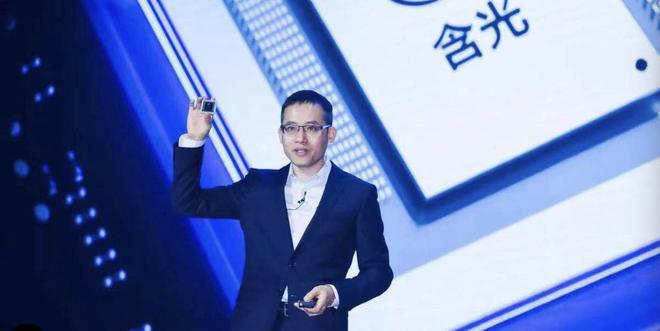
Core Viewpoint - Alibaba Group is preparing to spin off its semiconductor company, PingTouGe, for an independent IPO, following internal restructuring to create an employee-owned business entity [3][16]. Company Development - PingTouGe, established nearly 8 years ago, has remained relatively low-profile until recent news of its potential IPO stirred interest in the tech and investment circles [3][4]. - The company has developed several key products, including the Yitian processor, Zhenyue SSD controller chip, and Han Guang AI chip, with the latter achieving a peak performance of 78,563 IPS and energy efficiency of 500 IPS/W [4][5]. - The Zhenyue 510 SSD controller chip has been deployed at scale in Alibaba Cloud's EBS and is utilized in various AI training and online transaction scenarios [6]. Market Position and Strategy - PingTouGe is gradually moving beyond Alibaba, initiating external sales and expanding its market presence [7][11]. - The company has recently been awarded contracts, including a significant project with China Unicom, providing 1,945P of computing power, which constitutes 54% of the total project [8]. - PingTouGe's PPU AI chip has been reported to surpass some parameters of NVIDIA's A800 and is comparable to the H200, indicating its competitive position in the AI chip market [8]. Industry Context - The domestic AI chip industry is entering a phase of concentrated IPOs, with PingTouGe's potential listing seen as part of a broader trend of increasing self-sufficiency in AI chip production in China [3][13]. - The competitive landscape is intensifying, with major players like Baidu and Tencent also accelerating their AI chip initiatives and pursuing independent listings [15][16]. - The push for domestic AI chip development is viewed as a long-term trend, with current market conditions seen as optimal for the growth of local chip manufacturers [13].

“平头哥”新动作!深度拆解阿里八年“造芯”路
Mei Ri Jing Ji Xin Wen· 2026-01-25 05:59
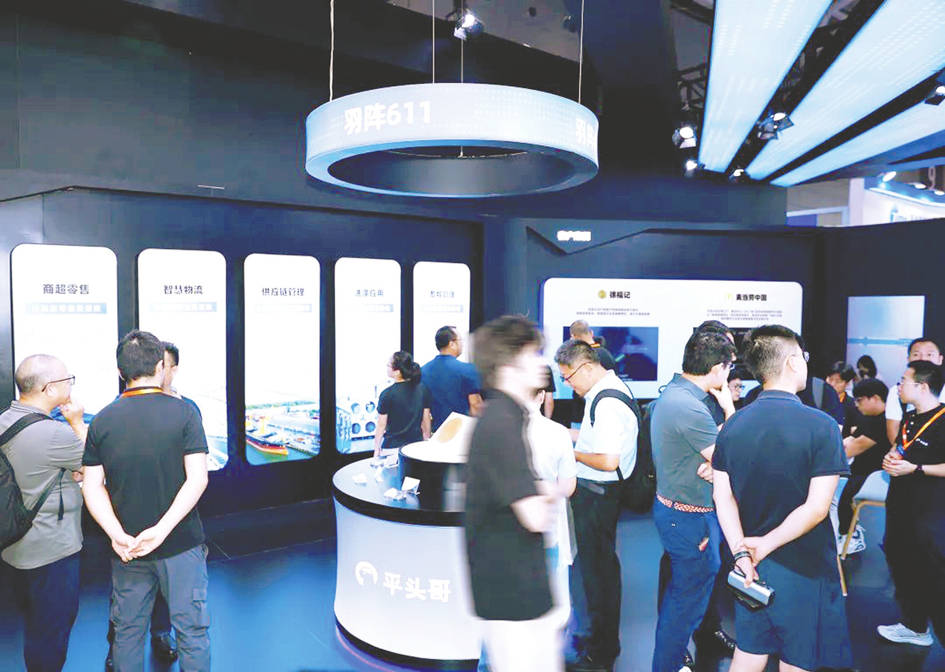
Core Viewpoint - Alibaba Group is preparing to push its semiconductor company, Pingtouge, towards an independent IPO after internal restructuring, highlighting the growing importance of AI chip manufacturing in China [2][14][17]. Group 1: Company Overview - Pingtouge, established nearly eight years ago, has remained relatively low-profile until recent news of its potential IPO [2][4]. - The company is located in the Zhangjiang Artificial Intelligence Industrial Park in Shanghai, surrounded by major tech firms like IBM and COMAC [2]. - Pingtouge's name, derived from the honey badger, symbolizes resilience and determination in overcoming technological barriers [3]. Group 2: Product Development - Pingtouge has developed several key products, including the "Hanguang 800" AI chip, which boasts a peak performance of 78,563 IPS and energy efficiency of 500 IPS/W, equating to the power of ten GPUs [4]. - The latest product, the "Zhenyue 510" enterprise SSD controller chip, has been deployed at scale in Alibaba Cloud's EBS and is used in various AI applications [4][5]. - The company is also expanding its "Yuzhen" series chips into logistics and supply chain management, enhancing operational efficiency [5][6]. Group 3: Market Position and Strategy - Pingtouge is transitioning from being an internal supplier for Alibaba to an independent market player, indicating a shift in its business strategy [6][12]. - The company is positioned to capitalize on the growing domestic AI chip market, especially as U.S. restrictions on companies like NVIDIA create opportunities for local manufacturers [3][14]. - Pingtouge's recent developments suggest it is ready to compete with international players, with reports indicating its new AI chip surpasses some NVIDIA models in key performance metrics [7][14]. Group 4: Industry Context - The AI chip market in China is entering a phase of concentrated IPO activity, with several companies, including Pingtouge, looking to capitalize on this trend [3][14]. - The push for domestic AI chip production is seen as a long-term necessity, with current market conditions viewed as optimal for growth [14][15]. - Major tech companies, including Baidu and Tencent, are also accelerating their AI chip initiatives, indicating a competitive landscape among Chinese tech giants [15][16].


加速构建AI芯片生态闭环?阿里旗下芯片公司平头哥被传将独立上市
Jin Rong Jie· 2026-01-23 10:01
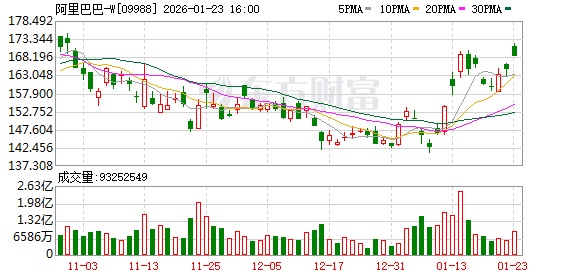
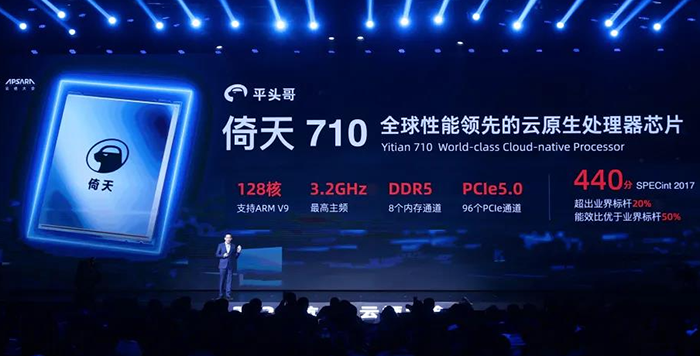
Group 1 - Alibaba is planning to restructure its semiconductor company T-Head and support its future independent listing, which led to a more than 5% increase in Alibaba's stock price in pre-market trading [1] - T-Head Semiconductor was established in September 2018, integrating the previously acquired Zhongtian Micro Systems and Alibaba's internal chip team, offering a full-stack product system covering both cloud and terminal applications [1] - T-Head has launched several chips, including the Yitian 710 server chip and the Hanguang 800 AI inference chip, achieving a comprehensive layout from design to application [1] Group 2 - The split plan for T-Head is seen as a significant step in Alibaba's acceleration of its AI self-research system, with Alibaba's CEO announcing an investment of over 380 billion yuan in cloud and AI hardware infrastructure over the next three years [3] - T-Head, as Alibaba's AI chip developer, is expected to become a key support for Alibaba's long-term competitiveness in the AI era, with the spin-off providing greater flexibility in incentive mechanisms, financing capabilities, and external collaborations [3]
阿里旗下芯片公司被指将上市,曾一年造出据称全球最强AI芯片
2 1 Shi Ji Jing Ji Bao Dao· 2026-01-22 11:58
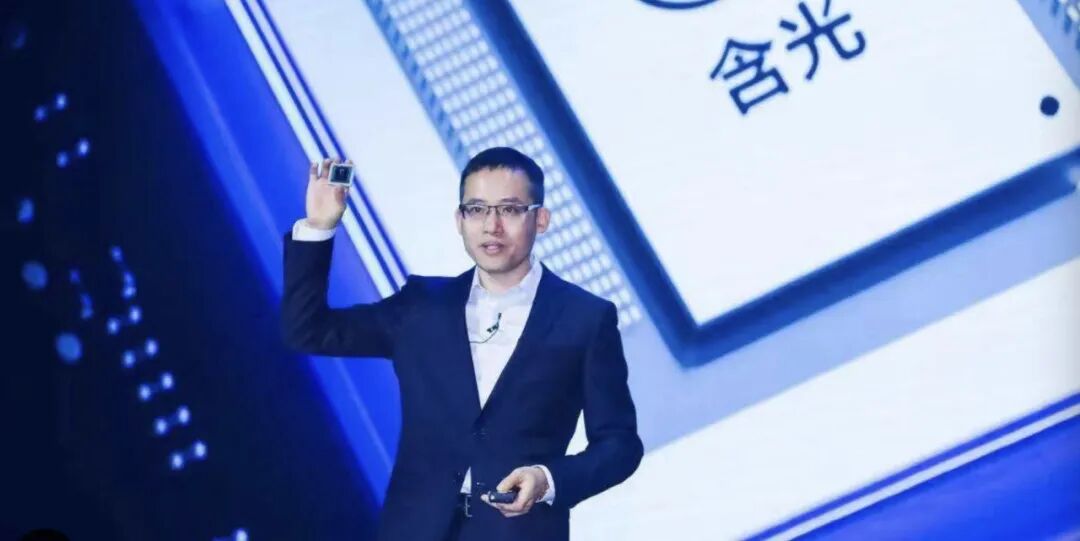
Core Viewpoint - Alibaba's semiconductor subsidiary T-Head is reportedly planning to go public, which has led to a significant increase in Alibaba's stock price, rising over 5% in pre-market trading [1]. Group 1: Company Developments - T-Head, established in September 2018, is Alibaba's fully-owned semiconductor business, focusing on a comprehensive product line that includes data center chips and IoT chips, achieving end-to-end design coverage [4]. - The company has made rapid advancements in chip development, with its first self-developed chip launched in September 2019, showcasing significant performance improvements over competitors [3][5]. - T-Head's AI chip, the含光800, has demonstrated exceptional performance, achieving a processing capability equivalent to 10 GPUs and significantly reducing processing time for image recognition tasks [5][6]. Group 2: Market Impact - The news of T-Head's potential IPO has been perceived positively in the market, leading to a notable increase in Alibaba's stock price, indicating investor confidence in the company's semiconductor ambitions [1]. - The successful launch of the 含光800 AI chip has positioned T-Head as a competitive player in the semiconductor industry, with plans to offer AI computing power through Alibaba Cloud, enhancing its market presence [6][7]. Group 3: Competitive Landscape - T-Head's advancements in chip technology are part of a broader trend in the semiconductor industry, where companies like Baidu are also pursuing IPOs for their AI chip divisions, indicating a growing interest in this sector [7].
阿里旗下芯片公司被指将上市,曾一年造出据称全球最强AI芯片
21世纪经济报道· 2026-01-22 11:40
Core Viewpoint - Alibaba's semiconductor subsidiary T-Head is reportedly planning to go public, leading to a significant increase in Alibaba's stock price, which rose over 5% in pre-market trading [1]. Group 1: Company Overview - T-Head, established in September 2018, is Alibaba's fully-owned semiconductor business, focusing on a comprehensive product line that includes data center chips and IoT chips, covering the entire chip design chain [3]. - The company has made rapid advancements in chip development, with its first self-developed chip launched in September 2019, and has since introduced several key products, including the AI chip PPU and the Yitian 710 server chip [4][5]. Group 2: Product Development and Performance - T-Head's AI chip, the Hanguang 800, was showcased at the 2019 Cloud Summit, achieving a performance of 78,563 IPS in the ResNet-50 test, which is four times better than the best AI chip at that time [4]. - The Hanguang 800's computing power is equivalent to ten GPUs, and it has been integrated into Alibaba's core business, significantly improving processing times for tasks such as image recognition [5]. Group 3: Market Context - The news of T-Head's potential IPO comes amid other significant developments in the semiconductor industry, such as Baidu's Kunlun chip company also preparing for an IPO with a potential fundraising target of around $1 billion [6].
阿里旗下芯片公司将上市?来认识一下这位“平头哥”
2 1 Shi Ji Jing Ji Bao Dao· 2026-01-22 11:11
Core Viewpoint - Alibaba's semiconductor subsidiary, T-Head, is reportedly planning to go public, which has positively impacted Alibaba's stock price, increasing by over 5% in pre-market trading [2] Group 1: Company Developments - T-Head, established in September 2018, is Alibaba's dedicated semiconductor business, focusing on a full-stack product series that includes data center chips and IoT chips, achieving end-to-end design coverage [2] - The company has rapidly advanced its research and development, with significant products like the AI chip PPU and the Yitian 710 server chip, among others, forming a comprehensive product line [3] - The Hanguang 800 AI chip, claimed to be the world's strongest, has demonstrated a performance four times better than its closest competitor in the ResNet-50 test, achieving 78,563 IPS and an energy efficiency of 500 IPS/W [3][4] Group 2: Product Performance and Applications - The Hanguang 800 chip's computing power is equivalent to ten GPUs, and it can process nearly 78,000 images per second, significantly enhancing efficiency in applications such as real-time traffic video processing [4] - In practical applications, the Hanguang 800 reduces the time required for image recognition from one hour to five minutes for Alibaba's product library, showcasing its effectiveness in handling large-scale data [4] - The AI cloud service based on the Hanguang 800 has been launched, offering a 100% improvement in cost-performance compared to traditional GPU computing [4]