QQ宠物

Search documents
电子宠物大爆发的背后:AI机器人能陪人慢慢到老吗?
3 6 Ke· 2026-01-12 07:10
Core Insights - The electronic pet market is experiencing a resurgence, driven by the emotional companionship needs of younger generations [1][3] - The evolution of electronic pets reflects a shift from simple digital interactions to more sophisticated AI-driven companions that can engage in emotional exchanges [9][34] Group 1: Evolution of Electronic Pets - The first electronic pet, Tamagotchi, was launched in 1996 and became a cultural phenomenon among the 80s and 90s generations [3][5] - Sony's AIBO, introduced in 1999, was a pioneer in robotic pets, featuring advanced interaction capabilities and self-learning abilities [10] - Recent products like Moflin and LOVOT combine AI with plush designs, offering emotional responses and interactive features that enhance user engagement [12][13] Group 2: Market Dynamics - The demand for electronic pets is fueled by urbanization and an increase in single-person households in China, which rose from 67.09 million in 2010 to 125 million in 2020 [20][22] - The pet economy is thriving, with China's urban pet consumption market projected to grow from 97.8 billion to over 300 billion yuan from 2015 to 2024, reflecting a compound annual growth rate of 12.98% [24] - Electronic pets serve as ideal alternatives for individuals unable to care for real pets, providing companionship without the responsibilities of traditional pet ownership [26][27] Group 3: Emotional Connection and AI Integration - AI-enabled electronic pets offer personalized emotional support, adapting to user interactions and preferences through advanced algorithms [27][32] - The emotional connection fostered by these pets is significant, as they can recognize and respond to user emotions, enhancing the sense of companionship [32][33] - The global AI pet market is valued at $1.19 billion in 2023, with projections to reach $3.51 billion by 2030, indicating a robust growth trajectory [34] Group 4: Future Prospects - The companion robot market is expected to grow from 75 billion yuan in 2023 to 304.3 billion yuan by 2029, with a remarkable annual growth rate of 25.56% [36] - The aging population in China presents a significant opportunity for companion robots, with an estimated 310 million people aged 60 and above by 2024 [36] - Technological advancements and cost reductions are likely to increase the penetration of companion robots in various sectors, including healthcare and education [38]



智能陪伴产品的崛起,我们为何会爱上“机器灵魂”?
Hu Xiu· 2025-08-14 01:06
Group 1 - The core idea of the article revolves around the increasing need for emotional companionship in a technologically advanced yet socially isolating world, highlighting the rise of smart companionship products as a solution to human loneliness [3][19][105] - Smart companionship products are defined as interactive toys or devices that integrate artificial intelligence and emotional design, capable of responding to users and providing a sense of being understood [6][22] - The evolution of smart companionship products has been driven by a deep-rooted human desire for connection, which has persisted despite technological advancements that have led to increased individual isolation [9][15][105] Group 2 - The article discusses the historical development of smart companionship products, tracing their evolution from early chatbots like ELIZA to modern AI-driven robots like LOVOT and Moflin [24][70][55] - Key innovations in smart companionship products include emotional simulation, interactive design, and the ability to create a sense of responsibility and emotional attachment in users [22][102][103] - The user demographics for smart companionship products are diverse, ranging from children to elderly individuals, each with unique motivations for seeking companionship [72][104][80] Group 3 - The market for smart companionship products is projected to grow significantly, with estimates suggesting a market size of $25 billion by 2025, driven by advancements in AI and sensor technology [55][90] - The article emphasizes the importance of emotional connection over technological complexity in the design of smart companionship products, suggesting that products should evoke feelings of being needed and understood [102][103] - The rise of smart companionship products is seen as a response to the increasing loneliness in modern society, with these products serving as a bridge to fulfill emotional needs [105][90]
人类如何造出“哆啦A梦”,回看智能陪伴产品发展史
3 6 Ke· 2025-08-14 00:06
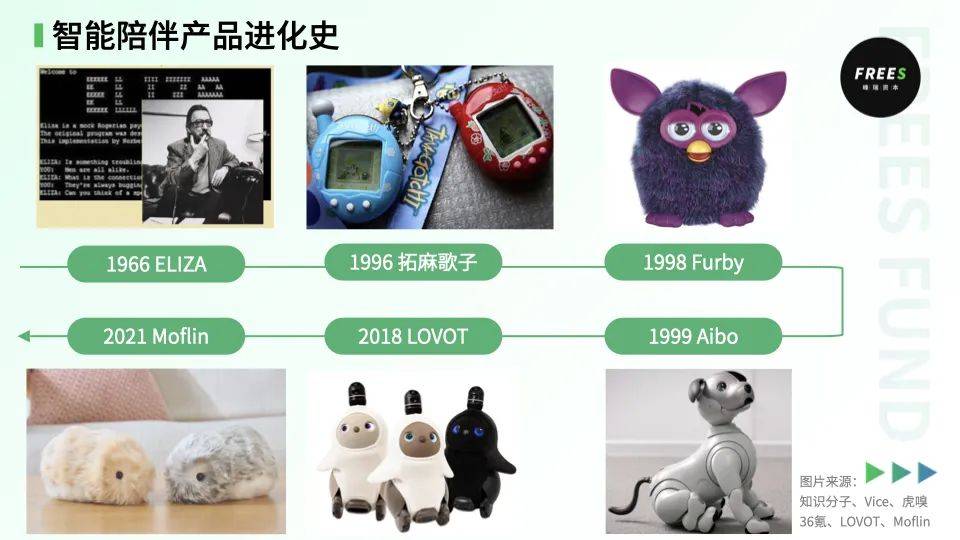
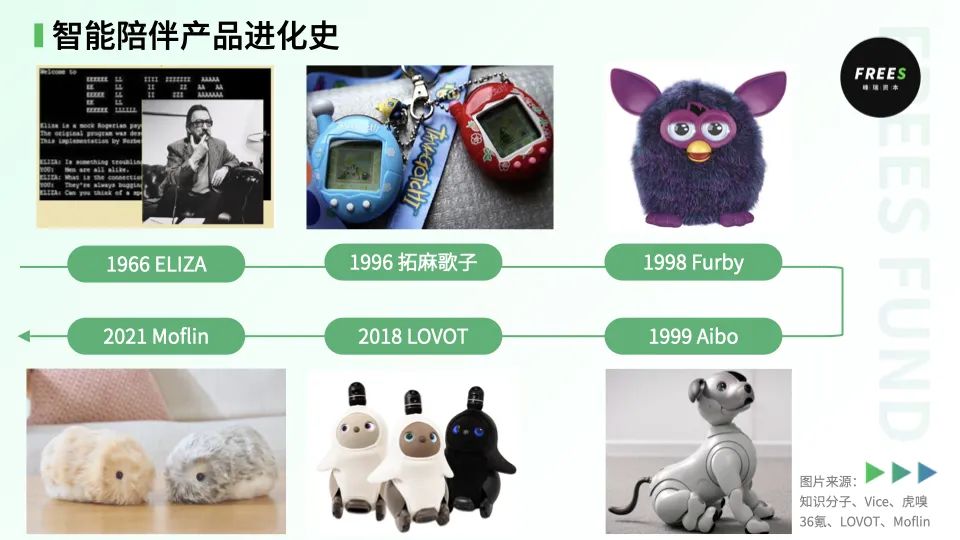
Group 1 - The core concept of the article revolves around the emotional connection between humans and intelligent companions, highlighting the increasing need for virtual companionship in a technologically advanced yet socially isolating world [1][3][12] - Intelligent companion products are defined as interactive toys or devices that integrate artificial intelligence and emotional design, capable of responding to users and providing emotional support [3][5] - The evolution of intelligent companion products reflects a deep-rooted human desire for connection, stemming from evolutionary psychology and the innate need for social belonging [4][7][12] Group 2 - The article discusses the historical development of intelligent companion products, starting from early chatbots like ELIZA to modern AI-driven robots like LOVOT and Moflin, showcasing the technological advancements and changing user expectations [15][34][42] - The rise of intelligent companion products is attributed to a societal shift towards increased loneliness, with these products serving as a remedy for emotional voids in people's lives [7][12][64] - The user demographics for intelligent companion products are diverse, ranging from children to elderly individuals, each with unique motivations for seeking companionship [44][46][63] Group 3 - The article emphasizes that the appeal of intelligent companion products lies not in their complexity but in their ability to evoke feelings of being needed and understood, often through carefully designed interactions [15][61][62] - The success of products like Tamagotchi and Furby illustrates the importance of creating emotional bonds through perceived vulnerability and the illusion of understanding [19][25][62] - The current market for intelligent companion products is projected to grow significantly, with AI-related toys expected to capture a substantial share of the market by 2025 [34][51]
全球首个256级QQ诞生!这波“青春通关”太炸了
Sou Hu Cai Jing· 2025-06-08 09:29
Core Points - The emergence of the first 256-level QQ account, created by a user named "爱芥末," has sparked nostalgia among users from the 80s and 90s, reminiscent of their youth [1][3] - QQ levels were once a significant status symbol in the internet culture, comparable to flaunting luxury cars or houses today [3] - The user "爱芥末" leveraged a combination of a long-standing account, continuous membership, and various acceleration packages to achieve this milestone [3] Summary by Categories User Achievement - "爱芥末" became the first user to reach 256 levels on QQ, unlocking a special "time penguin" icon [1] - The account was originally registered around 2000 and was passed down from the user's father, who owned an internet café, allowing for continuous online presence [3] Cultural Significance - The achievement has triggered a wave of nostalgia, with users sharing their own QQ level experiences and reminiscing about past internet culture [3] - The 256-level account symbolizes more than just a gaming achievement; it represents a time capsule of internet memories and experiences for many users [3] Community Reaction - The news has led to humorous and nostalgic comments from users, reflecting on their own past efforts to level up their QQ accounts [3] - The community's engagement highlights the lasting impact of QQ on the lives of its users, serving as a reminder of their digital adolescence [3]

从像素到体温,电子宠物如何制造情感羁绊?
红杉汇· 2025-04-09 15:22
Core Viewpoint - The article discusses the evolution of electronic pets, highlighting their transition from simple virtual interactions to advanced AI-driven companions that provide emotional support and personalized experiences [2][12]. Group 1: Historical Development - Electronic pets gained popularity in the late 1990s, starting with the launch of Tamagotchi in 1996, which required users to care for a virtual pet to keep it healthy and happy [4][6]. - The introduction of Digimon in 1997 added a competitive element to electronic pets, allowing users to train and battle their digital creatures, thus broadening the appeal [6][8]. - Subsequent advancements included touch screens and voice recognition, exemplified by Nintendo's Nintendogs in 2005, which allowed for more interactive and personalized pet care experiences [8][9]. Group 2: Technological Advancements - The early 2000s saw attempts to incorporate sensors and basic AI into electronic pets, with Sony's AIBO being a notable example, featuring voice recognition and the ability to learn from user interactions [12][14]. - By 2017, AIBO was reintroduced with enhanced emotional expression and personalized interaction capabilities, showcasing the potential for high-end robotic pets [16][19]. - Recent developments have led to AI pets like Vector and LOVOT, which utilize advanced AI to understand user behavior and provide emotional responses, marking a shift towards deeper companionship [17][19]. Group 3: Market Trends and Consumer Demand - The AI pet robot market has experienced explosive growth, with products that combine aesthetic appeal and intelligent interaction becoming increasingly popular [21][23]. - Modern electronic pets offer the advantage of low maintenance compared to real pets, while also providing emotional support through AI-driven interactions [21][25]. - The pricing of AI pets varies significantly based on technology used, with high-end models potentially costing thousands of dollars, indicating a market for both luxury and accessible options [25][26].