R5

Search documents
一年狂揽60亿融资,13大玩家厮杀无人配送,阿里京东美团都入局了
3 6 Ke· 2026-02-05 03:02
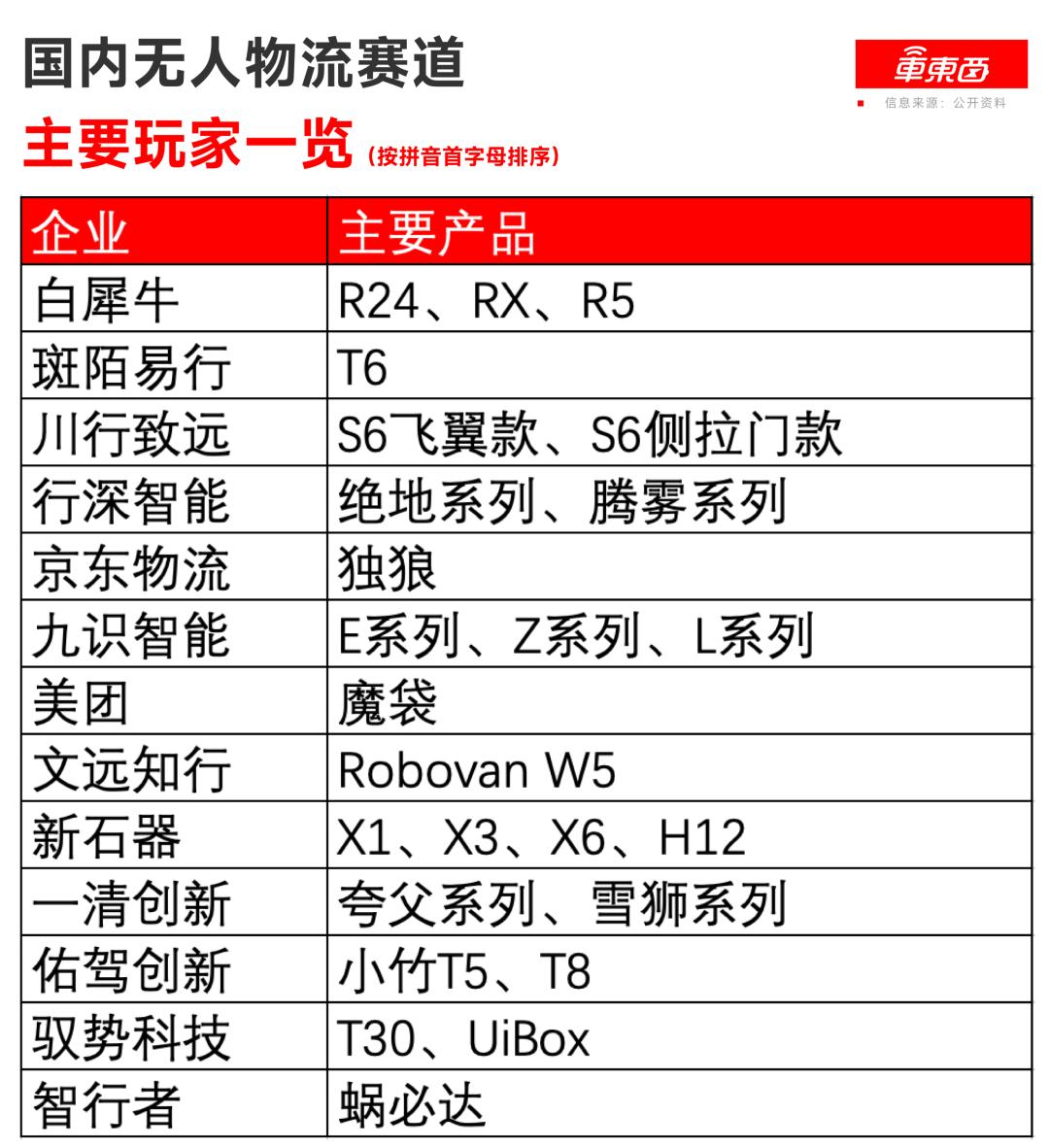
Core Insights - The L4 autonomous logistics sector is experiencing rapid growth, with 2026 expected to be a pivotal year for commercialization and widespread adoption [1][20] - Major players in the domestic autonomous logistics market have secured significant funding, indicating strong investor interest and confidence in the sector's potential [7][8] Industry Overview - The L4 autonomous logistics market is projected to reach a scale of 100,000 vehicles by 2026, with a long-term forecast of 750,000 vehicles by 2030 [10] - The market is currently dominated by over 13 key players, including New Stone, White Rhino, Youjia Innovation, and Jiushi Intelligent, with New Stone leading in delivery volume [2][4] Funding and Investment - In 2025, the autonomous driving sector in China saw total financing exceed 58.2 billion yuan, with the logistics segment attracting approximately 5.8 billion yuan, accounting for about 10% of the total [7][8] - Notable funding rounds include New Stone raising over 600 million USD (approximately 4.2 billion yuan) and White Rhino securing over 100 million USD [8] Market Dynamics - The industry is witnessing a shift towards lower hardware costs due to advancements in technology and increased competition, which may lead to lower vehicle prices [14][16] - Despite the growth, concerns about profitability persist, as many players face challenges in achieving sustainable cash flow amidst rising competition [14][16] Regulatory Environment - The regulatory landscape for autonomous logistics vehicles is still evolving, with local standards varying significantly, which complicates market entry and operational consistency [16][17] - Government support for smart logistics and AI is crucial for the sector's growth, providing a favorable environment for L4 autonomous delivery vehicles [10][11] Conclusion - The L4 autonomous logistics sector is at a critical juncture, with the potential for large-scale deployment and commercialization, but it must navigate challenges related to profitability, regulatory compliance, and market demand [19][20]


Where Will Rivian Be in 2028, and Is It a Buy Now?
The Motley Fool· 2025-09-17 11:45
Core Viewpoint - Rivian Automotive is at a critical juncture, with potential for long-term growth hinging on its ability to scale production and introduce new models, particularly the R2 and R3, which aim to capture a broader market segment [1][2][14]. Group 1: Current Status and Challenges - Rivian has had a relatively uneventful year in 2023, with no new vehicle launches, which can be seen as a positive since it indicates stability amidst industry challenges [1]. - The company has experienced slowing delivery growth and signs of waning demand, raising questions about its future performance [3]. - Rivian's immediate goal is to achieve consistent positive gross profits, which is complicated by the expiration of the $7,500 federal tax credit and tariff uncertainties [6]. Group 2: Future Product Launches - The R2 model is set to begin production in 2026, targeting a more affordable SUV segment with a starting price around $45,000 before shipping [5]. - Following the R2, the R3 is expected to have an even lower price point, likely under $40,000, and will feature a design appealing to younger buyers [7][9]. - The R3's production and deliveries are scheduled to start in mid-2028, as the company prioritizes the R2 to optimize costs [9]. Group 3: Strategic Partnerships and Growth Potential - Rivian's commercial vans, initially produced exclusively for Amazon, are now available to other large fleet buyers, which could enhance scale and credibility [11][12]. - Securing additional large customers for its commercial vehicles could significantly impact Rivian's growth trajectory in the near term [12]. Group 4: Financial Outlook - In approximately three years, Rivian aims to improve production efficiency and cut costs to achieve positive gross margins and potentially turn a profit [13][14]. - The introduction of the R2 and R3 models is expected to drive revenue growth, with projections indicating a significant increase in revenue within a year if cost-cutting measures are successful [14].

给电动车二次生命,宝马、本田、福特联手搞事情
汽车商业评论· 2025-07-24 16:31
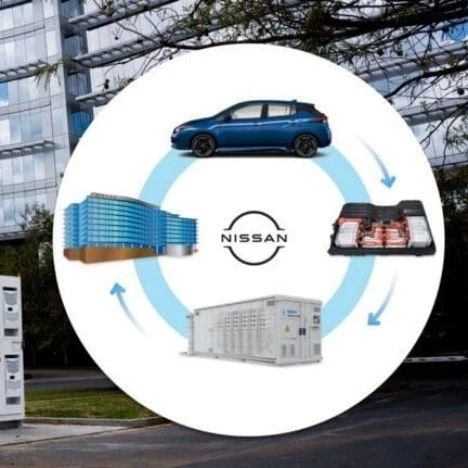
Core Viewpoint - The article discusses the growing importance of Vehicle-to-Grid (V2G) technology in enhancing the efficiency of electric vehicles (EVs) and promoting sustainable energy development, highlighting ChargeScape's collaboration with PSEG Long Island as a significant step in this direction [2][4][5]. Group 1: ChargeScape and V2G Technology - ChargeScape, a startup formed by BMW, Honda, Ford, and Nissan, is at the forefront of integrating EVs into the energy grid through V2G technology [2][4]. - The collaboration with PSEG Long Island marks the first time EVs are included in the utility's demand response program, aiming to intelligently manage the charging behavior of over 6,000 EV owners during peak electricity demand [4][7]. - The AI-driven platform by ChargeScape will optimize charging times and intensity, alleviating grid pressure while providing economic incentives to participants [5][7]. Group 2: Benefits and Challenges of V2G - V2G technology can dynamically adjust EV charging to prevent grid overload, thus enhancing grid stability and efficiency [5][8]. - Concerns about battery degradation due to V2G usage are being addressed, with studies indicating that controlled charging can actually prolong battery life [8]. - The potential for reusing retired EV batteries in energy management is highlighted, as these batteries can support the grid during peak demand periods [10][12]. Group 3: Global Implementation and Regulatory Environment - Utrecht has launched the first large-scale V2G car-sharing service in Europe, demonstrating the need for collaboration among automakers, charging infrastructure providers, energy companies, and local governments for successful V2G implementation [15][16]. - Renault has initiated V2G practices in France, emphasizing the need for unified regulations in Europe to unlock the full potential of V2G technology [17]. - In China, while the rapid adoption of EVs is noted, the implementation of V2G technology faces challenges due to differences in market conditions and regulatory environments compared to the US and Europe [18][19].