
RX

Search documents
一年狂揽60亿融资,13大玩家厮杀无人配送,阿里京东美团都入局了
3 6 Ke· 2026-02-05 03:02
Core Insights - The L4 autonomous logistics sector is experiencing rapid growth, with 2026 expected to be a pivotal year for commercialization and widespread adoption [1][20] - Major players in the domestic autonomous logistics market have secured significant funding, indicating strong investor interest and confidence in the sector's potential [7][8] Industry Overview - The L4 autonomous logistics market is projected to reach a scale of 100,000 vehicles by 2026, with a long-term forecast of 750,000 vehicles by 2030 [10] - The market is currently dominated by over 13 key players, including New Stone, White Rhino, Youjia Innovation, and Jiushi Intelligent, with New Stone leading in delivery volume [2][4] Funding and Investment - In 2025, the autonomous driving sector in China saw total financing exceed 58.2 billion yuan, with the logistics segment attracting approximately 5.8 billion yuan, accounting for about 10% of the total [7][8] - Notable funding rounds include New Stone raising over 600 million USD (approximately 4.2 billion yuan) and White Rhino securing over 100 million USD [8] Market Dynamics - The industry is witnessing a shift towards lower hardware costs due to advancements in technology and increased competition, which may lead to lower vehicle prices [14][16] - Despite the growth, concerns about profitability persist, as many players face challenges in achieving sustainable cash flow amidst rising competition [14][16] Regulatory Environment - The regulatory landscape for autonomous logistics vehicles is still evolving, with local standards varying significantly, which complicates market entry and operational consistency [16][17] - Government support for smart logistics and AI is crucial for the sector's growth, providing a favorable environment for L4 autonomous delivery vehicles [10][11] Conclusion - The L4 autonomous logistics sector is at a critical juncture, with the potential for large-scale deployment and commercialization, but it must navigate challenges related to profitability, regulatory compliance, and market demand [19][20]


丰田25年销量1053万辆,连续6年世界第一
3 6 Ke· 2026-01-29 09:29
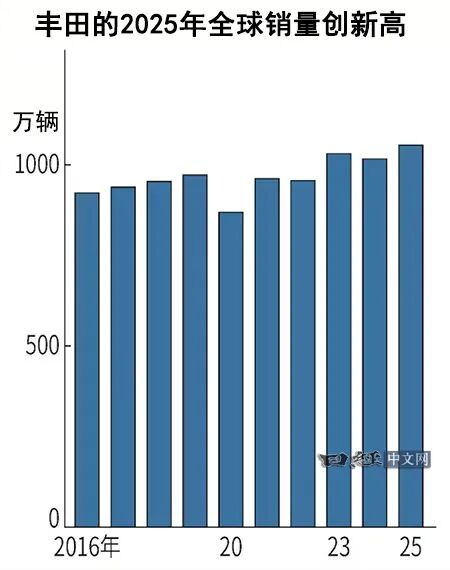
Group 1 - The core viewpoint of the articles highlights Toyota's record global sales growth, achieving a total of 11.32 million vehicles sold, surpassing Volkswagen Group's 8.98 million vehicles, marking Toyota as the world's top automaker for six consecutive years [1][5] - In the United States, sales increased by 8% to 2.52 million vehicles, driven by strong demand for models like Camry and Sienna, with hybrid vehicle sales reaching approximately 1.11 million, a 20% increase [1][2] - In China, sales saw a slight increase to 1.78 million vehicles, supported by promotional policies linked to government subsidies, although growth is expected to slow down as subsidy strength diminishes [1][2] Group 2 - The sales of hybrid and electric vehicles grew by 10% to 4.99 million units, accounting for 47% of total sales, with hybrid sales increasing by 7% to 4.43 million units and pure electric vehicle sales rising by 42% to 199,137 units [2] - The luxury brand Lexus experienced a 4% sales increase, reaching a record high of 882,231 vehicles, with strong performance from SUV models like RX and NX in North America [5] - Toyota's global production is projected to grow by 5% to 9.96 million units, recovering from production halts due to regulatory issues and recalls in Japan and the United States [5][6] Group 3 - Exports from Japan to overseas markets increased by 7% to 2.03 million vehicles, with exports to the United States rising by 14% to 615,204 vehicles, contributing to overall growth [6] - The U.S. government imposed a 25% tariff on Japanese cars in April 2025, which was later reduced to 15% in September, leading to an estimated tariff cost of 1.45 trillion yen for Toyota in the fiscal year ending March 2026 [6]

丰田25年销量1053万辆,连续6年世界第一
日经中文网· 2026-01-29 08:00
Group 1 - Toyota's sales in the U.S. increased by 8%, reaching 2,518,071 units, driven by strong sales of models like the Camry and Sienna [2] - Global sales for Toyota reached a record high of 11,322,575 units, growing by 5% year-over-year, surpassing Volkswagen Group's 8.98 million units [2] - In China, sales slightly increased to 1,784,396 units, supported by promotional policies linked to government subsidies, although growth is slowing due to reduced policy strength [2] Group 2 - Sales of hybrid and electric vehicles grew by 10%, totaling 4,994,894 units, accounting for 47% of total sales [4] - Hybrid vehicle sales increased by 7% to 4,433,503 units, while pure electric vehicle sales surged by 42% to 199,137 units [4] Group 3 - Lexus, Toyota's luxury brand, saw a 4% increase in sales, reaching a record high of 882,231 units, with strong performance from SUV models like the RX and NX in North America [7] - Toyota's global production is projected to grow by 5% to 9,959,904 units, recovering from production halts due to certification violations and recalls [7] - Exports from Japan increased by 7% to 2,031,460 units, with a 14% rise in exports to the U.S. [7]
丰田的“定力”与雷克萨斯的“复利”
Mei Ri Jing Ji Xin Wen· 2026-01-21 13:06
Core Insights - The Chinese automotive market is becoming increasingly complex, with some brands struggling to maintain their positions while others demonstrate resilience, indicating a shift in competition from "traffic" and "volume" to "value" and "stability" for 2026 and beyond [1][9] - Companies must adapt to a multi-dimensional competitive landscape, focusing on the entire value chain, including R&D, manufacturing, supply chain, delivery, user operations, digital asset management, and capital efficiency [1][9] - The market is beginning to favor companies that exhibit long-term strategic stability and can navigate technological shifts, changing consumer perceptions, and market cycles [1][9] Industry Trends - In 2025, Toyota's sales in China reached 1.78 million units, showing positive growth and maintaining a solid market base, while Lexus was the only luxury brand to achieve sales growth, exceeding 180,000 units [2][7] - The market is increasingly selecting high-quality brands with "anti-dip" attributes, which focus on long-term value rather than short-term market fluctuations [2][9] - The shift from a "flow era" to a "stock era" in the automotive industry emphasizes the importance of companies with "value stability" [9] Company Strategies - Toyota's approach to long-term value is exemplified by its commitment to "safety, reliability, and quality," which has built a strong brand reputation over decades [4][5] - The company is entering a "inheritance and evolution" phase, emphasizing deep localization in its management and R&D processes, including the establishment of a local chief engineer system to better meet Chinese consumer needs [5][6] - Toyota's multi-path technology strategy, which includes hybrid, pure electric, and plug-in hybrid options, reflects a commitment to risk management and respect for diverse consumer demands [6] Luxury Market Dynamics - Lexus's sales performance in 2025 illustrates a "value over price" approach, appealing to rational consumers who prioritize long-term ownership value [7][8] - The brand's success is attributed to its strong reputation built over 20 years in the Chinese market, with over 2.2 million cumulative sales and a significant number of loyal customers [7][8] - Lexus's product matrix, which includes models like ES, NX, and RX, showcases its ability to meet diverse consumer needs while maintaining a focus on quality and luxury [8] Conclusion - The automotive industry's evolution highlights the importance of long-term strategies and genuine value creation, as companies that prioritize sustainable practices and customer trust are more likely to succeed in a volatile market [9]

丰田召回部分进口及国产汽车
Ge Long Hui· 2025-12-15 04:07
Core Viewpoint - Toyota Motor (China) Investment Co., Ltd. and its subsidiaries have announced a recall plan for various models due to safety concerns related to the panoramic monitoring system control program [1] Group 1: Recall Details - Toyota Motor (China) Investment Co., Ltd. will recall a total of 19,161 imported Lexus vehicles and 36,275 imported Toyota vehicles produced between March 31, 2021, and September 12, 2025 [1] - FAW Toyota Motor (Chengdu) Co., Ltd. will recall 28,654 domestic Prado vehicles produced between July 16, 2024, and September 27, 2025 [1] - GAC Toyota Motor Co., Ltd. will recall 1,363 domestic Corolla vehicles, 1,566 domestic bZ4X vehicles, and 3,302 domestic Platinum 4X vehicles produced between March 30, 2023, and August 29, 2025 [1] - FAW Toyota Motor Co., Ltd. will recall 2,417 domestic bZ4X vehicles, 1,061 domestic Corolla vehicles, and 1 domestic Asian Lion vehicle produced between September 7, 2022, and February 27, 2025 [1] Group 2: Safety Concerns - The recall is initiated due to a design flaw in the panoramic monitoring system control program, which may cause the panoramic image to misalign, freeze momentarily, or fail to display when the driver attempts to reverse immediately after starting the vehicle [1] - This issue poses a safety risk as it affects the driver's ability to judge the surrounding environment [1] Group 3: Remedial Actions - Toyota and its subsidiaries will provide free upgrades to the panoramic monitoring system control program for the recalled vehicles to eliminate the safety hazard [1]