RiboGalSTAR™平台

Search documents
70亿美元潜在交易总额,中国小核酸被全球药企抢了
新财富· 2026-03-10 08:05
Core Insights - The article discusses three significant business development (BD) deals in the small nucleic acid sector in China, highlighting a strategic shift in global pharmaceutical companies' evaluation of Chinese small nucleic acid assets [3][4][5][7]. Group 1: Overview of Recent Transactions - On February 2, 2026, Saintin Biotech entered a global R&D collaboration with Roche's Genentech, receiving a $200 million upfront payment and potential milestone payments up to $1.5 billion [3]. - On February 11, 2026, Rebio Biotech signed a global exclusive licensing agreement with Madrigal, securing a $60 million upfront payment with a total potential value of $4.4 billion [4]. - On February 23, 2026, Frontier Biotech announced an exclusive licensing agreement with GSK, receiving a $40 million upfront payment and a potential total value close to $1 billion [5]. Group 2: Strategic Implications of the Transactions - The rapid succession of these deals indicates that global pharmaceutical companies are reassessing the strategic value of Chinese small nucleic acid assets, moving beyond mere opportunistic licensing [7]. - The core of these transactions lies not in individual products but in the underlying platform capabilities, which are crucial for expanding into new therapeutic areas [10][11]. Group 3: Historical Context and Comparison - The article compares the current transactions to early RNAi industry deals, noting that the upfront payments for Chinese companies are significantly higher than those in the early 2000s, reflecting a shift in perceived value and confidence in technology [13][18]. - The historical context shows that early RNAi deals were primarily exploratory, while current transactions are based on established technology and the ability to produce competitive products [19][20]. Group 4: Risk and Payment Structures - The payment structures of the recent deals show a trend towards backend-weighted milestone payments, indicating that buyers are willing to take on more risk as they recognize the maturity of the technology [24][25]. - Saintin Biotech's high upfront payment suggests strong confidence in the maturity and quality of its LEAD™ platform, which is seen as a critical technology for future developments [26]. Group 5: Strategic Positioning of Global Pharma - The article highlights that global pharmaceutical companies are not merely testing the waters but are strategically positioning themselves to leverage small nucleic acid technologies as essential resources for future competition [28][32]. - Companies like Madrigal and Genentech are actively seeking to build technological moats and enhance their treatment capabilities through these partnerships, indicating a shift from passive to active engagement in the market [29][30]. Group 6: Innovation and Intellectual Property - The article emphasizes the importance of independent intellectual property systems for small nucleic acid platforms, which allow Chinese companies to compete effectively in the global market [36][37]. - The ability of Chinese firms to navigate existing patent landscapes and develop new delivery technologies is crucial for their competitive positioning [38]. Group 7: Conclusion on Market Dynamics - The rapid evolution of Chinese small nucleic acid companies from followers to key technology providers reflects a significant shift in the global innovation landscape, with these firms now being recognized for their differentiated capabilities [41][42].




瑞博生物-B(06938.HK)与Madrigal达成全球授权协议 首付款6000万美元 里程碑付款最高44亿美元
Ge Long Hui· 2026-02-11 10:06
Core Viewpoint - Ribocure Pharmaceuticals AB, a subsidiary of Ribocure, has entered into an exclusive global licensing agreement with Madrigal Pharmaceuticals for the development of six preclinical siRNA therapies targeting metabolic dysfunction-related fatty liver disease (MASH) [1][2] Group 1: Agreement Details - The agreement grants Madrigal exclusive global rights to utilize Ribocure's RiboGalSTAR™ and siRNA chemical modification platforms for the development, production, and commercialization of several preclinical single-target and dual-target siRNA assets [1] - Ribocure will receive an upfront payment of $60 million, with potential milestone payments totaling up to $4.4 billion, in addition to potential royalties on net sales [1] - The milestone payments are contingent upon the achievement of certain development, regulatory, and commercialization milestones, indicating uncertainty regarding the final amount Ribocure may receive [1] Group 2: Strategic Implications - This collaboration will leverage the company's proven liver-targeting RiboGalSTAR™ platform to develop new therapies for MASH, marking a significant milestone in the company's path to becoming a global leader in innovative siRNA [2] - The partnership aims to accelerate the company's global development and commercialization strategy, addressing unmet medical needs for MASH patients with more targeted and effective therapies [2]
这家投资机构十年六轮耐心陪伴,小核酸药物龙头IPO了
母基金研究中心· 2026-01-09 10:15
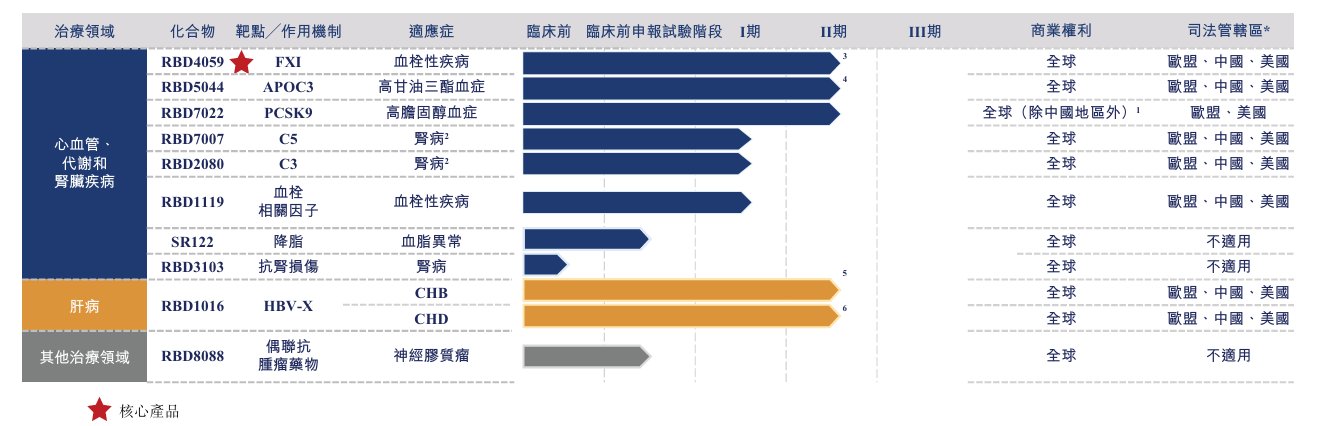
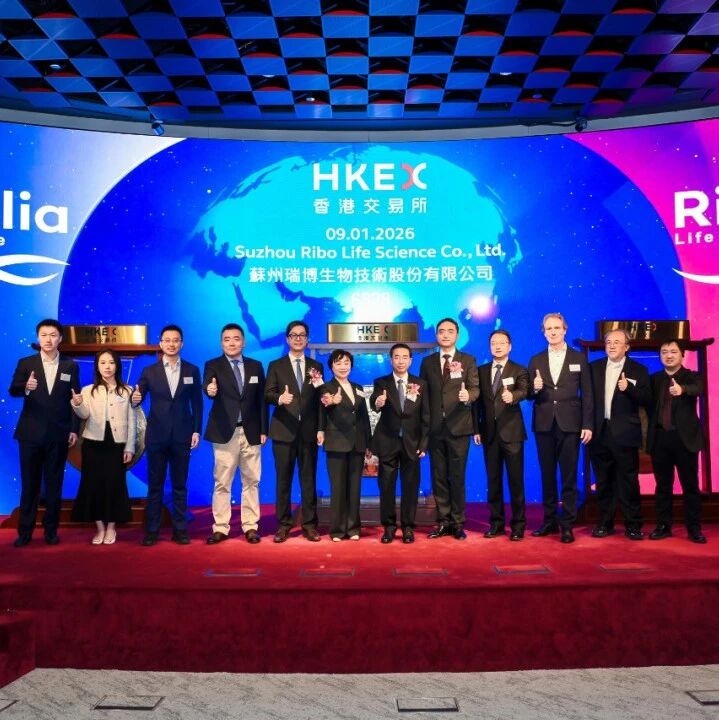
Core Viewpoint - Ribo Life Science, a leader in the small nucleic acid pharmaceutical field, successfully listed on the Hong Kong Stock Exchange, achieving a market capitalization exceeding HKD 13 billion, representing over 30 times growth compared to its valuation after the A-round investment by Panlin Capital [1][5]. Company Overview - Ribo Life Science was founded in 2007 and is a pioneer in small nucleic acid (siRNA) drug research and development in China, establishing a comprehensive platform for small nucleic acid drug development [7]. - The company focuses on iterative research and development of small nucleic acid chemical modifications and drug delivery technologies, supporting all stages from early research to commercialization [7]. Product Pipeline - Ribo Life Science has developed a robust product pipeline, including: - RBD4059, a siRNA drug targeting FXI for treating thrombotic diseases, which has completed all subject enrollments in Phase IIa clinical trials [8]. - RBD5044, targeting APOC3 for treating hypertriglyceridemia, has received EU approval for Phase II clinical trials [8]. - RBD7022, targeting PCSK9 for treating hypercholesterolemia, has completed Phase I trials in China and is advancing to Phase II trials [8]. - RBD1016, targeting HBV for chronic hepatitis B treatment, is in Phase II trials and has received orphan drug designation from the EMA [10]. Globalization and Commercialization Strategy - Ribo Life Science integrates local R&D advantages with international expertise, establishing a world-class small nucleic acid drug development system [12]. - The company has multiple R&D centers in Suzhou, Beijing, and Europe, and successfully completed a USD 33 million equity financing for its overseas R&D center in Sweden [12]. Strategic Partnerships - In December 2023, Ribo Life Science entered into a licensing and collaboration agreement with Qilu Pharmaceutical for the development and commercialization of RBD7022 in Greater China, receiving over RMB 700 million in upfront and milestone payments [13]. - The company also signed a collaboration agreement with Boehringer Ingelheim to develop innovative therapies for NASH/MASH using its proprietary RiboGalSTAR™ technology, with a total transaction value exceeding USD 2 billion [13]. Investment Journey - Panlin Capital has been a key investor in Ribo Life Science since its A-round financing in 2015, providing crucial support during challenging times in the small nucleic acid industry [5][14]. - The investment journey includes six rounds of funding, demonstrating a commitment to supporting the company's growth and innovation in the biopharmaceutical sector [14][19].
透视瑞博生物-B(06938)进阶之路:硬核技术壁垒 + 管线多元化,商业化前景可期
智通财经网· 2026-01-09 04:48
Core Insights - Alnylam's growth path is mirrored by China's small nucleic acid drug pioneer, Rebio Biotech, which recently went public on the Hong Kong Stock Exchange, raising over HKD 1.8 billion with a strong demand from investors [1][11] - The global small nucleic acid drug market is projected to grow from USD 2.7 billion in 2019 to USD 5.7 billion by 2024, with a compound annual growth rate (CAGR) of 16.2%, and expected to reach USD 20.6 billion and USD 54.9 billion by 2029 and 2034, respectively [2] - Rebio Biotech has established a robust technical platform and delivery system, addressing key challenges in the industry and creating a strong competitive moat [3][4] Company Overview - Rebio Biotech is recognized as a leader in China's small nucleic acid field, with a comprehensive technology platform and a rapidly advancing pipeline [1][11] - The company has developed the RiboGalSTAR™ delivery technology, which enhances the efficacy and safety of siRNA drugs, addressing a critical challenge in the industry [3][4] - The company has invested significantly in R&D, with expenditures of CNY 315 million, CNY 280 million, and CNY 135 million projected for 2023, 2024, and the first half of 2025, respectively [4] Pipeline and Product Development - Rebio Biotech has created one of the largest siRNA drug pipelines globally, with seven self-developed drug assets in clinical trials targeting various diseases [5][7] - The core product, RBD4059, is the world's first siRNA drug for treating thrombotic diseases, currently advancing rapidly through clinical development [7][8] - The company also has two additional drugs targeting hypertriglyceridemia and hypercholesterolemia, which could provide synergistic effects in lipid management [8] Market Potential and Financial Outlook - The company is expected to achieve revenue of CNY 143 million in 2024, with a projected growth to CNY 103 million in the first half of 2025, reflecting a year-on-year increase of 56.57% [9] - As the core pipeline progresses towards commercialization, Rebio Biotech's growth potential is anticipated to be realized, leading to a path towards profitability [10][11]