
小核酸技术

Search documents
70亿美元潜在交易总额,中国小核酸被全球药企抢了
新财富· 2026-03-10 08:05
Core Insights - The article discusses three significant business development (BD) deals in the small nucleic acid sector in China, highlighting a strategic shift in global pharmaceutical companies' evaluation of Chinese small nucleic acid assets [3][4][5][7]. Group 1: Overview of Recent Transactions - On February 2, 2026, Saintin Biotech entered a global R&D collaboration with Roche's Genentech, receiving a $200 million upfront payment and potential milestone payments up to $1.5 billion [3]. - On February 11, 2026, Rebio Biotech signed a global exclusive licensing agreement with Madrigal, securing a $60 million upfront payment with a total potential value of $4.4 billion [4]. - On February 23, 2026, Frontier Biotech announced an exclusive licensing agreement with GSK, receiving a $40 million upfront payment and a potential total value close to $1 billion [5]. Group 2: Strategic Implications of the Transactions - The rapid succession of these deals indicates that global pharmaceutical companies are reassessing the strategic value of Chinese small nucleic acid assets, moving beyond mere opportunistic licensing [7]. - The core of these transactions lies not in individual products but in the underlying platform capabilities, which are crucial for expanding into new therapeutic areas [10][11]. Group 3: Historical Context and Comparison - The article compares the current transactions to early RNAi industry deals, noting that the upfront payments for Chinese companies are significantly higher than those in the early 2000s, reflecting a shift in perceived value and confidence in technology [13][18]. - The historical context shows that early RNAi deals were primarily exploratory, while current transactions are based on established technology and the ability to produce competitive products [19][20]. Group 4: Risk and Payment Structures - The payment structures of the recent deals show a trend towards backend-weighted milestone payments, indicating that buyers are willing to take on more risk as they recognize the maturity of the technology [24][25]. - Saintin Biotech's high upfront payment suggests strong confidence in the maturity and quality of its LEAD™ platform, which is seen as a critical technology for future developments [26]. Group 5: Strategic Positioning of Global Pharma - The article highlights that global pharmaceutical companies are not merely testing the waters but are strategically positioning themselves to leverage small nucleic acid technologies as essential resources for future competition [28][32]. - Companies like Madrigal and Genentech are actively seeking to build technological moats and enhance their treatment capabilities through these partnerships, indicating a shift from passive to active engagement in the market [29][30]. Group 6: Innovation and Intellectual Property - The article emphasizes the importance of independent intellectual property systems for small nucleic acid platforms, which allow Chinese companies to compete effectively in the global market [36][37]. - The ability of Chinese firms to navigate existing patent landscapes and develop new delivery technologies is crucial for their competitive positioning [38]. Group 7: Conclusion on Market Dynamics - The rapid evolution of Chinese small nucleic acid companies from followers to key technology providers reflects a significant shift in the global innovation landscape, with these firms now being recognized for their differentiated capabilities [41][42].




石药集团20260302
2026-03-03 02:52
Summary of the Conference Call for 石药集团 (Shijiazhuang Pharmaceutical Group) Company Overview - **Company**: 石药集团 (Shijiazhuang Pharmaceutical Group) - **Industry**: Pharmaceutical and Biotechnology Key Points Innovation Pipeline and Collaborations - The innovation pipeline of 石药集团 is entering a monetization phase, focusing on oncology, weight loss/metabolism, and small nucleic acids [2][4] - A significant collaboration with AstraZeneca has been established, valued at $18.5 billion, with an upfront payment of $1.2 billion, enhancing the company's global transaction capabilities and milestone expectations [2][4] - The company has made substantial investments in small molecules, ADCs, and biopharmaceuticals, with several projects positioned at the forefront of global research and development [2][4] Clinical Development Highlights - **EGFR ADC (6,010)**: Demonstrates potential Best-in-class characteristics in treating EGFR mutation non-small cell lung cancer and other indications, with a broad ADC profile covering various solid tumors. Data readouts for combination therapies are expected in 2026 [2][6] - **CD47/CD20 Bispecific Fusion Protein (601)**: Shows promising efficacy and safety in hematological malignancies and is expected to expand into B-cell related autoimmune diseases [2][7] - **PD-1/L15 Fusion Protein (108)**: Targets non-muscle invasive bladder cancer, focusing on patients unresponsive to BCG therapy, with data expected in 2026 [2][8] Strategic Collaborations - The collaboration with AstraZeneca in the GLP-1 space is characterized as a platform collaboration, which includes ongoing projects and potential future initiatives, enhancing the predictability of revenue from research and development milestones [2][9] - The GLP-1 project, specifically the long-acting semaglutide, is progressing rapidly, with a focus on dual-action long-acting designs [3][9] Market Position and Valuation - The recent market correction in the Hong Kong and A-share innovative drug sectors has made some high-quality innovative drug companies, including 石药集团, more attractive in terms of valuation [4] - The company is positioned as a leading innovative drug asset in China, with a market capitalization around 100 billion RMB, and is considered to have a favorable price-to-earnings (PE) ratio [4][12] - The valuation method used is PE, with a target price set at HKD 16.58, and a rating of "Buy" [12] Small Nucleic Acid Development - 石药集团 has established a strong presence in the small nucleic acid field, with approximately 14 projects in clinical and preclinical stages, covering various therapeutic areas [11] - The company is recognized for its end-to-end industrialization capabilities in nucleic acid research and production [11] Cardiovascular and Metabolic Pipeline - The company has a comprehensive layout in cardiovascular and metabolic diseases, including hypertension, hyperlipidemia, and diabetes, with innovative targets such as LPA and MAOB [10] - The LPA collaboration with AstraZeneca is valued at nearly $2 billion and is currently in clinical phase I [10] Future Outlook - The focus for 2026 includes a significant number of early clinical data readouts from assets entering clinical trials in 2024 and 2025, which could enhance the company's global competitiveness and attractiveness for external collaborations [5][12] This summary encapsulates the key insights and developments discussed during the conference call, highlighting the strategic direction and potential of 石药集团 in the pharmaceutical industry.
海通国际:维持石药集团(01093)“优于大市”评级 目标价13.07港元
智通财经网· 2026-02-25 06:21
Core Viewpoint - Haitong International reports that the main business revenue and profit of CSPC Pharmaceutical Group (01093) have bottomed out, with expectations of returning to an upward cycle by 2026 and benefiting from the launch of oncology and metabolic innovative products starting in 2027 [1] Group 1: Financial Projections - The potential milestone revenue for CSPC Pharmaceutical Group is estimated at $5.8 billion (approximately RMB 40.6 billion), which is expected to enhance the company's profits over the next 3-5 years [1] - Haitong International has adjusted the revenue forecasts for FY25, FY26, and FY27 to RMB 26.7 billion, RMB 28.9 billion, and RMB 30.6 billion respectively [5] - The net profit forecasts for FY25, FY26, and FY27 have been adjusted to RMB 4.4 billion, RMB 4.6 billion, and RMB 5.3 billion respectively [6] Group 2: Research and Development Capabilities - CSPC Pharmaceutical Group has completed seven external cooperation transactions in the past two years, with total upfront payments of $1.71 billion and potential milestone amounts exceeding $30 billion [1] - The company has established a strong research and development platform, evidenced by collaborations with AstraZeneca, indicating its global influence and value [1] - The company is recognized for its small nucleic acid platform, which covers popular liver delivery targets and is ahead of domestic peers in development [2] Group 3: Product Pipeline and Market Potential - The SYS6010 (EGFR-ADC) has accumulated clinical data from over a thousand patients, showing potential as a best-in-class product [3] - The company has initiated a Phase III clinical trial for SYS6010 in China and plans to advance global Phase III trials within the year [3] - CSPC has received the first clinical approval in China for its in vivo CAR-T product, SYS6055, which is expected to have advantages in cost, accessibility, and immediacy compared to traditional CAR-T products [4]
超10亿美元!前沿生物牵手GSK,小核酸赛道再升温
2 1 Shi Ji Jing Ji Bao Dao· 2026-02-24 06:07
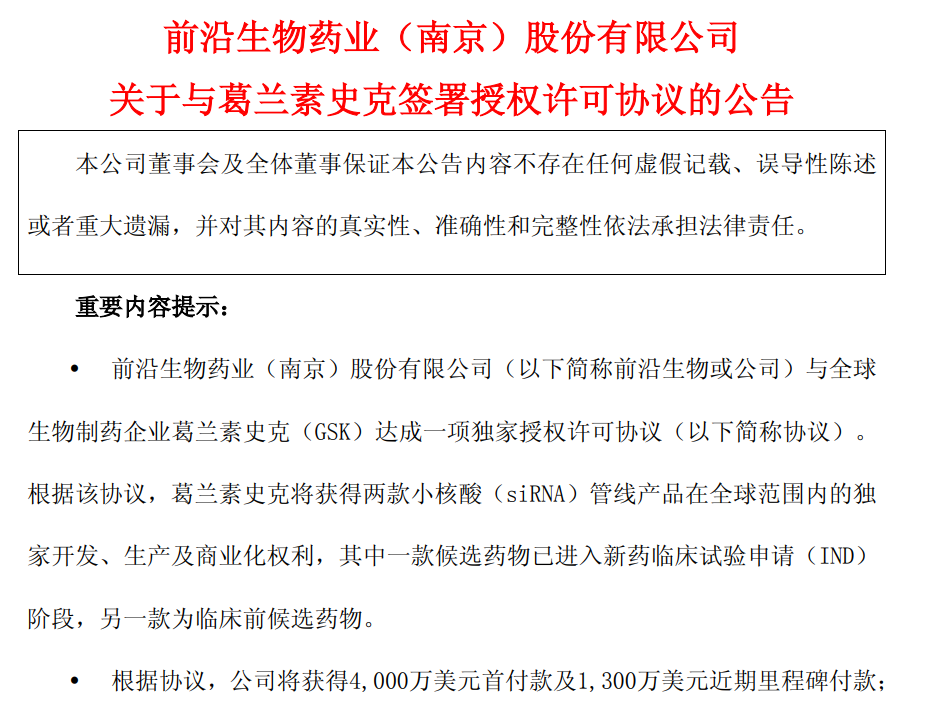
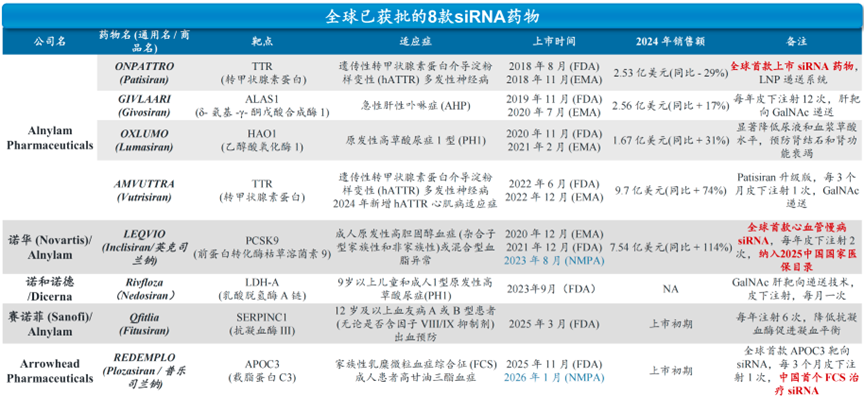
Core Viewpoint - Frontier Biotech has entered into a significant exclusive licensing agreement with GlaxoSmithKline (GSK) for two small nucleic acid (siRNA) pipeline products, which is expected to enhance the company's cash flow and support its research and development efforts amid ongoing losses since its IPO in 2020 [1][8]. Company Summary - Frontier Biotech announced an exclusive licensing agreement with GSK on February 23, granting GSK global rights for the development, production, and commercialization of two siRNA products [1]. - The agreement includes an upfront payment of $40 million and a milestone payment of $13 million, with potential total payments reaching up to $950 million based on successful development and commercialization milestones [1]. - The company has been facing financial challenges, with a reported net loss of 260 million yuan in 2021, despite a 59.75% increase in sales volume of its core product, Aikening [6][8]. - Frontier Biotech's revenue primarily comes from Aikening and other products, with a projected revenue of 140 to 145 million yuan in 2025, indicating a year-on-year growth of 8.13% to 11.99% [8]. Industry Summary - The global small nucleic acid market is expected to grow significantly, projected to reach $39.2 billion by 2029, indicating a vast growth potential in this therapeutic area [8]. - As of December 2025, there are 29 small nucleic acid drugs on the market, with notable sales performance from Novartis's siRNA drug Leqvio, which reported sales of $1.198 billion in 2025, a 57% increase [9]. - The small nucleic acid sector is experiencing increased transaction activity, with potential total transaction values in the field expected to reach $36.5 billion by 2025 [9]. - Chinese pharmaceutical companies are actively engaging in international collaborations and mergers to enhance their presence in the small nucleic acid space, with significant partnerships and acquisitions reported [10][11]. - The industry is facing challenges, including a gap in the number of products developed by Chinese teams compared to global counterparts, particularly in late-stage clinical trials [12].
百心安-B获机构关注,股价短期承压
Jing Ji Guan Cha Wang· 2026-02-21 02:34
Group 1 - The core viewpoint of the report is that Huaxin Securities recognizes Baixinan-B (02185.HK) as a noteworthy stock in the high-value consumables export sector of the medical device industry, indicating its potential for overseas market expansion [1][2] - The report highlights that the pharmaceutical industry is focusing on changes in raw material supply, collaborations in the GLP-1 weight loss sector, and breakthroughs in small nucleic acid technology, suggesting that Baixinan-B may indirectly benefit from these industry innovations [1][2] Group 2 - Recent stock performance shows that Baixinan-B's share price decreased by 3.20% over the past week (February 16 to February 20, 2026), with closing prices of 5.50 HKD on February 16 (down 2.14%) and 5.44 HKD on February 20 (down 1.09%) [3] - Technical indicators as of February 20 indicate that the stock price is below the 5-day, 10-day, and 20-day moving averages, with a negative MACD histogram suggesting short-term weakness; however, the lower Bollinger Band (5.256 HKD) provides some support, and the KDJ indicator shows the J line at 29.5, nearing the oversold region [3] - On February 20, retail funds saw a net inflow of 80,403 HKD, while there was no significant activity from institutional investors, and the turnover rate was only 0.02%, indicating a lack of market activity [3]
成都先导拟以2400万元增资先衍生物
Bei Jing Shang Bao· 2026-02-10 12:25
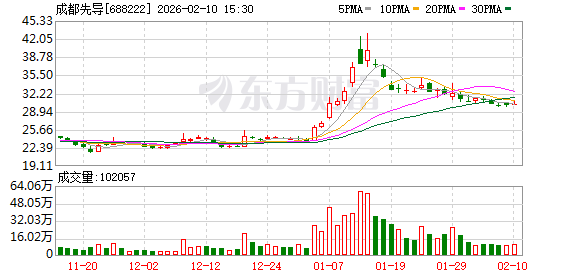
Group 1 - The core point of the article is that Chengdu XianDao (688222) plans to invest 24 million yuan in Chengdu XianYan Biological Technology Co., Ltd. at a pre-investment valuation of 450 million yuan [2] - Chengdu XianYan is a subsidiary and related party of Chengdu XianDao, with a registered capital of 17.2408 million yuan, and aims to raise no more than 150 million yuan for its development [2] - The company has established an innovative technology system including novel small nucleic acid modification technology, extrahepatic delivery technology, and single-molecule dual-target regulation technology, focusing on chronic disease treatment [2] Group 2 - The investment will increase Chengdu XianDao's stake in Chengdu XianYan, which currently holds 23.2% of the equity, with the final ownership percentage to be determined based on the total financing amount and the new registered capital [2]

国泰海通证券:创新药板块风险偏好明显修复 政策、并购与研发共振催化结构性机遇
Zhi Tong Cai Jing· 2026-02-06 03:46
Group 1: Core Insights - The innovative drug industry is experiencing a recovery in risk appetite due to the implementation of policies, a rebound in global mergers and acquisitions (M&A), and positive clinical data [1] - The biotechnology and pharmaceutical sectors in the US stock market have shown significant strength, with improved investor sentiment towards innovative drug investments for 2026 [1] Group 2: Oncology - The PD-1/VEGF dual antibody has transitioned from "mechanism validation" to a stage of "clinical and industrial resonance," with multiple multinational corporations (MNCs) advancing global Phase III trials for high-value indications like NSCLC [2] - Key Phase III data for the Pan-RAS precision therapy is expected to be released in 2026, marking a significant milestone for treatments targeting pancreatic cancer and NSCLC [2] Group 3: Weight Management - The self-pay market is becoming a crucial source for the GLP-1 market expansion, as high out-of-pocket costs limit insurance coverage for obesity indications in the US [3] - The combination of small nucleic acids with GLP-1 may lead to a paradigm shift in weight management treatments, evolving from a "single hormone-driven" approach to a "multi-pathway regulation" strategy [3] Group 4: Autoimmunity - The reliance of MNCs on a few blockbuster products is increasing revenue concentration risk, with opportunities arising from new antibody platforms expected to yield dense POC data in 2026 [3] - The trend towards oral formulations in autoimmune diseases is becoming clearer, with various technological routes such as BTK, TYK2/JAK, and oral PROTAC showing potential for competitive differentiation [3] Group 5: CNS - The primary investment focus in the CNS field is on the early intervention of Aβ monoclonal antibody treatments, with key Phase III data from Eli Lilly's Donanemab expected to catalyze market opportunities [4] - Next-generation Aβ therapies, such as Roche's Trontinemab, aim to enhance efficacy and safety through lower doses and shorter treatment durations, potentially raising the ceiling for Alzheimer's disease treatments [4]

沉默的基因,百亿的战争:小核酸技术破壁敲开药物新世界大门丨黄金眼
Quan Jing Wang· 2026-02-05 01:42
Group 1 - The "small nucleic acid" sector is gaining significant attention and investment, moving from laboratory research to the forefront of the industry [1] - Traditional drugs struggle with over 80% of disease-related targets being "undruggable," while small nucleic acid drugs offer a new approach by targeting the "blueprints" of disease-causing genes [2][3] - Small nucleic acid drugs, such as ASO and siRNA, can silence or regulate the expression of pathogenic genes, providing new treatment pathways for diseases like spinal muscular atrophy [4] Group 2 - The delivery system is a critical bottleneck for the development of small nucleic acid drugs, with recent advancements enabling targeting beyond the liver to other organs [5] - The FDA has approved 19 small nucleic acid drugs globally, with ASO and siRNA making up 38% and 32% of the development focus, respectively [5] - The pipeline for siRNA drugs is expanding into chronic diseases and CNS disorders, with significant applications in metabolic and cardiovascular diseases [6] Group 3 - The global market for small nucleic acid drugs is projected to grow from $2.7 billion in 2019 to $5.7 billion in 2024, with a compound annual growth rate (CAGR) of 16.2% [8] - The siRNA market share is expected to increase significantly, from $200 million in 2019 (7% share) to $2.4 billion in 2024 (44.5% share) [9] - Chinese companies are increasingly recognized for their innovation in small nucleic acids, with significant licensing deals and collaborations, marking a shift from following to competing in the global market [13] Group 4 - Notable acquisitions, such as Novartis's $12 billion purchase of Avidity, highlight the strategic importance of small nucleic acid platforms in drug delivery [8] - Companies like Be Better Med and Frontier Bio are developing diverse pipelines targeting various diseases, including hypertension and metabolic disorders [16][17] - The rise of small nucleic acids signifies a paradigm shift in drug discovery, moving from protein-based approaches to rational design based on genetic sequences [19]

是时候布局大消费反转了吗?
Hua Er Jie Jian Wen· 2026-02-03 11:37
Group 1: Consumer Sector Overview - Despite macroeconomic uncertainties, the consumer sector is undergoing a deep adjustment phase, with leading companies showing structural resilience and positive signals emerging in several sub-sectors [1] - The investment logic in the consumer sector has shifted from Beta-driven to Alpha-exploration, focusing on leading companies with scale barriers, brand influence, and operational efficiency [1] Group 2: Alcohol Industry - The overall sales of the liquor industry are experiencing a double-digit decline, but Kweichow Moutai is outperforming market expectations, with significant pre-holiday demand and double-digit growth in several key markets [2] - Moutai's traditional channel shipment progress is at 25%, with historical low inventory levels, leading to a steady price recovery to nearly 1700 yuan, confirming the price bottom [2] - The trend of increasing industry concentration continues, with leading brands expected to achieve year-on-year growth despite macroeconomic pressures [2] Group 3: Snack Industry - The bulk snack channel is rapidly replacing traditional retail formats, with a market size exceeding 129.7 billion yuan and a compound annual growth rate of 77.9% from 2019 to 2024 [3] - The market is highly concentrated, with leading brands "Mingming Hen Mang" and "Wancheng" holding over 75% market share, and "Mingming Hen Mang" alone accounting for approximately 43% [3] - The operational efficiency of leading companies is expected to enhance market penetration, benefiting from scale effects and further increasing industry concentration [3] Group 4: Pharmaceutical Industry - The investment opportunities in the pharmaceutical sector are increasingly structural, with the innovative drug industry chain remaining a core focus, particularly in areas like immunotherapy and small nucleic acid technology [4] - The CXO sector is experiencing a steady recovery, with improved overseas biotech financing conditions and a structural rebound in domestic CRO demand [4] - The medical device sector is expected to benefit from recovering hospital demand and improving inventory cycles, with domestic companies likely to gain market share due to expanding procurement policies [5] Group 5: Agriculture and Livestock - The pig farming industry is undergoing capacity reduction, with the number of breeding sows decreasing to 39.61 million by the end of 2025, leading to a potential price recovery supported by seasonal demand [7] - The poultry farming sector is facing tight supply due to previous overseas breeding restrictions, while the yellow feather chicken market is entering a growth phase with low historical breeding costs [7] - The planting sector is benefiting from agricultural cycle rotations and policy support, with the domestic transgenic corn industry expected to expand, favoring leading seed companies with strong R&D capabilities [7]

华安证券:小核酸递送技术突破及适应症延伸 建议持续关注siRNA赛道
智通财经网· 2026-01-19 07:35
Core Insights - The report from Huazhong Securities highlights breakthroughs in small nucleic acid technology and its application in rare diseases, cardiovascular diseases, significant metabolic areas, CNS, and even oncology, indicating a growing investment opportunity in the siRNA sector [1] Group 1: Key Events - Novartis plans a major investment in small nucleic acids by 2025, with three business development (BD) transactions and a $12 billion acquisition, reflecting significant industry impact [1] - Novartis's product Inclisiran achieved $555 million in sales in the first half of 2025, a 66% year-on-year increase, and its Swiss base received an $80 million investment to expand siRNA production [1] - Domestic company Bewang Pharmaceutical's $5 billion out-licensing deal with Novartis sets a record for non-oncology BD transaction amounts [1] Group 2: Technological Advancements - Delivery technology is advancing from liver-targeting to cross-brain and lung-targeting, indicating breakthroughs in extrahepatic targeting [2] - The range of indications is expanding from rare diseases and cardiovascular conditions to significant metabolic areas, CNS, and oncology [2] Group 3: Drug Target Layout - Established targets include Inclisiran (PCSK9), which opened the siRNA application in cardiovascular fields, with emerging targets like INHBE and ALK7 showing promising initial data in obesity [3] - New targets such as ApoC3, Lpa, and ANGPTL3 are becoming standard for drug companies in lipid regulation treatments, while AGT and FXI are deepening applications in hypertension and thrombotic diseases [3] - The siRNA application scope is continuously expanding with new developments in diseases related to complement and kidney conditions [3]

