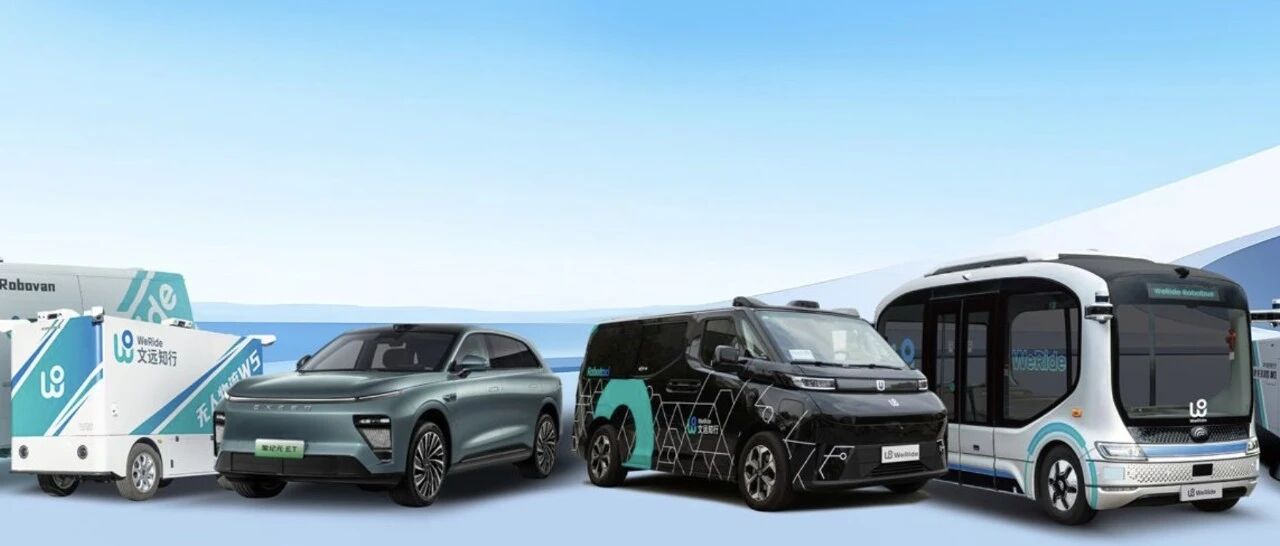
Robovan(自动驾驶货运车)

Search documents
文远知行创始人韩旭:从示范到规模商用自动驾驶企业的破局之路
Zhong Guo Jing Ji Wang· 2025-12-11 01:50
Core Viewpoint - The "14th Five-Year Plan" serves as a precise navigation map for the Chinese technology industry, particularly highlighting four key concepts: new quality productivity, new type of national system, new security pattern, and Chinese-style modernization, which align closely with the development of the autonomous driving industry [2][3]. Group 1: New Quality Productivity - Autonomous driving exemplifies new quality productivity by leveraging cutting-edge technologies such as AI, big data, and IoT to revolutionize transportation, urban sanitation, and logistics efficiency [3]. - The plan emphasizes the full implementation of the "AI+" initiative and promotes deep integration of innovation chains, industry chains, capital chains, and talent chains, facilitating the technological iteration and commercialization from Level 2 (partial automation) to Level 4 (high automation) [3][4]. - The autonomous driving services, including Robotaxi, Robobus, and Robovan, significantly enhance travel efficiency, reduce operational costs, and create new employment opportunities, aligning with the plan's focus on high-level technological self-reliance [3][4]. Group 2: New Type of National System - The new type of national system provides crucial support for overcoming key core technologies in the autonomous driving industry, which is complex and involves multiple foundational elements such as chips, operating systems, high-precision maps, and sensors [4]. - The system is characterized by market-based mechanisms guided by national strategies, enabling coordinated resource integration to tackle critical challenges [4]. - National-level coordination accelerates infrastructure development and standardization, creating a conducive environment for the large-scale deployment of autonomous driving technologies [4]. Group 3: New Security Pattern - Safety is paramount in autonomous driving, encompassing functional safety, expected functional safety, network security, data security, and national-level technology and supply chain security [4]. - The heightened national focus on safety will drive the establishment of stricter and unified safety standards and certification systems, purging non-compliant entities from the market [4]. - Policies addressing data security will lead to improved data governance frameworks, enhancing public trust, which is essential for large-scale commercialization [4]. Group 4: Chinese-style Modernization - The development of autonomous driving is integral to the journey of Chinese-style modernization, with the country's vast transportation and logistics demands providing an ideal testing ground for world-class autonomous driving technologies [5][6]. - The emphasis on new urbanization, rural revitalization, and a strong transportation nation within the plan supports diverse application scenarios for autonomous driving, contributing to modernization efforts [5][6]. Group 5: Future Industry Integration - The "14th Five-Year Plan" encourages forward-looking layouts in future industries, with 6G and brain-computer interfaces highlighted as key areas that can synergize with autonomous driving [7][8]. - 6G technology is crucial for achieving high-level vehicle-road collaboration, enabling real-time awareness of dynamic environments and enhancing safety [7]. - Brain-computer interfaces offer unique applications in semi-autonomous driving scenarios, allowing for emergency control and improved interaction within smart cabins [8]. Group 6: Breakthroughs in Commercialization - The next five years are expected to be pivotal for achieving significant breakthroughs in Level 4 autonomous driving commercialization, focusing on three main areas: establishing unified access standards, clarifying liability, and opening typical scenarios for commercialization [9]. - A national-level initiative to create a unified certification system for Level 4 autonomous driving will facilitate large-scale operational networks [9]. - Clear legal frameworks for accident liability are essential to remove barriers to commercialization, while the systematic opening of urban public transport and logistics scenarios will enhance technology iteration and business model validation [9]. Group 7: Industry Outlook - The planning suggestions are viewed as both a compass and an accelerator for the autonomous driving industry, with expectations for a historic leap from demonstration operations to large-scale commercialization in the next five years [10].

从“掐架”到双双赴港,你打的无人车正在港股集体上市!
Sou Hu Cai Jing· 2025-10-24 14:33
Core Insights - WeRide Inc. is a leading player in the autonomous driving sector, aiming to deploy driverless vehicles in over 30 cities globally, including Robotaxi services in cities like Guangzhou and Abu Dhabi [5][9] - The company has recently completed its IPO on NASDAQ and is seeking a dual primary listing on the Hong Kong Stock Exchange, potentially becoming the first Robotaxi stock in Hong Kong [5][12] - Despite a significant increase in revenue from its Robotaxi business, WeRide has accumulated substantial losses since its inception, totaling approximately 9.4 billion RMB [5][12] Financial Performance - WeRide's Robotaxi business revenue surged over 800% year-on-year in the latest quarter, contributing 36.1% to total revenue, which reached 127 million RMB, a 60.8% increase year-on-year [9][12] - The company has faced continuous revenue decline over the past three years, with reported revenues of 528 million RMB in 2022, 402 million RMB in 2023, and 200 million RMB in the first half of 2025 [12] - Cumulative losses since 2017 have reached 9.4 billion RMB, highlighting the financial challenges faced by the company [12][20] Business Strategy - WeRide has developed a unique commercial engine centered around its "WeRide One" technology platform, designed for L4-level autonomous driving, adaptable to various vehicle types and applications [7][9] - The company has diversified its product offerings into a "1+5" matrix, including Robotaxi, Robobus, Robovan, Robosweeper, and Advanced Driver Assistance Systems (ADAS) to mitigate risks associated with the lengthy commercialization cycle of Robotaxi [9][12] - Partnerships with major players like Uber and GAC Group have been established to enhance operational capabilities and market reach [13][20] Market Position and Competition - WeRide holds the largest autonomous taxi fleet in the Middle East, with operations in Abu Dhabi and Riyadh, and has plans for commercial operations in Dubai by 2026 [10][12] - The competitive landscape includes other autonomous driving companies like Pony.ai, which also aims for a public listing and has shown strong revenue growth, indicating a competitive market environment [14][20] - The ongoing rivalry has led to public exchanges between executives of WeRide and competitors, reflecting the intense competition in the autonomous driving sector [15][20]
4年亏损68亿!市值缩水32%后,文远知行赴港再上市
Feng Huang Wang Cai Jing· 2025-10-17 03:12
Core Viewpoint - The company, Wenyan Zhixing, is making significant progress towards its listing in Hong Kong, having received approval from the China Securities Regulatory Commission for its overseas issuance plan, aiming to issue up to 102 million ordinary shares on the Hong Kong Stock Exchange [2][4]. Financial Performance - Wenyan Zhixing has experienced a decline in revenue and continued losses, with total losses exceeding 6.8 billion yuan over four years. Revenue peaked in 2022 at 528 million yuan but has since declined for two consecutive years, with decreases of 23.86% and 10.2% [5][6]. - The company's net losses have expanded over the years, with figures of 1.007 billion, 1.298 billion, 1.982 billion, and 2.517 billion yuan from 2021 to 2024, respectively. Although the net loss narrowed to 791 million yuan in the first half of 2025, profitability remains in question [5][6]. Revenue Breakdown - Revenue is categorized into product income and service income, with product income's gross margin at 17.3% and service income's gross margin at 47.6%. However, the contribution of service income has been decreasing, from 86.51% in 2022 to 65.29% in the first half of 2025 [7][9]. - The company relies heavily on specific large clients for revenue, with the top two clients accounting for 52.4% of total revenue as of June 30, 2024. This high client concentration poses risks to revenue stability [11][12]. Competitive Landscape - The competition in the autonomous driving sector is intensifying, with pressure from both peer companies and major automotive manufacturers accelerating their self-research efforts. Wenyan Zhixing faces challenges from competitors like Xiaoma Zhixing and Baidu's Apollo, which have made significant advancements in commercializing autonomous driving [13][17]. - Despite having a higher gross margin compared to Xiaoma Zhixing, Wenyan Zhixing's revenue scale is smaller, with a market capitalization significantly lower than its competitors, reflecting differing market confidence in their future prospects [15][17].

4年亏损68亿!市值缩水32%后,文远知行赴港再上市
凤凰网财经· 2025-10-17 02:59
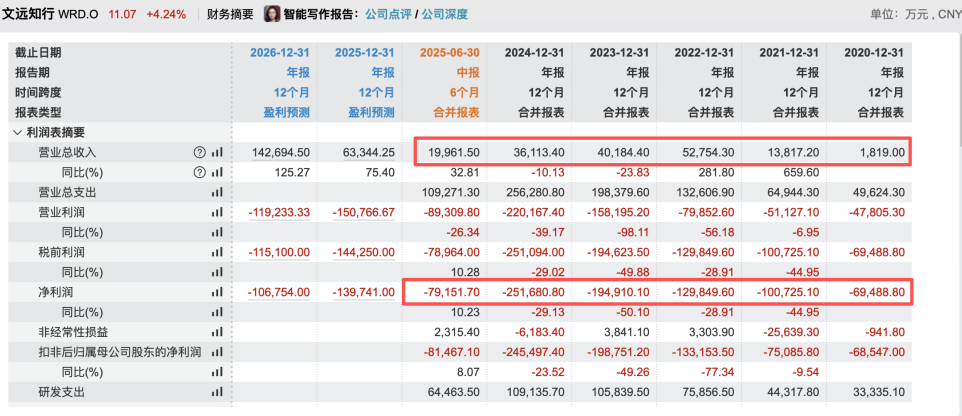
Core Viewpoint - The article discusses the recent developments regarding Wenyan Zhixing's plan to list on the Hong Kong Stock Exchange, highlighting its financial struggles and challenges in the autonomous driving sector. Financial Performance - Wenyan Zhixing plans to issue up to 102 million ordinary shares for its listing in Hong Kong, having previously listed on NASDAQ as the "first global autonomous driving stock" [2] - The company's stock price has declined significantly from its initial listing, dropping from $19.8 to $11.07, resulting in a market cap reduction of 32% [3] - Over the past four years, Wenyan Zhixing has reported cumulative losses exceeding 6.8 billion yuan, with revenues declining consecutively after peaking in 2022 [5][4] - The company’s revenue figures from 2021 to 2024 were 138 million, 528 million, 402 million, and 361 million yuan, with a revenue drop of 23.86% and 10.2% in the last two years [5] - Research and development expenses have been substantial, totaling 3.351 billion yuan from 2021 to 2024, representing over 300% of annual revenues in some years [7] Revenue Structure - Wenyan Zhixing's revenue is divided into product and service income, with product gross margins at 17.3% and service gross margins at 47.6% [8] - The contribution of service revenue has been decreasing, from 35.98% in 2022 to 65.29% in the first half of 2025, while product revenue has increased from 13.49% in 2023 to 34.71% in 2025 [10] - The company relies heavily on a few major clients, with the top two clients accounting for 52.4% of total revenue as of mid-2024 [11][13] Competitive Landscape - The competition in the autonomous driving sector is intensifying, with major players like Waymo, Xiaoma Zhixing, and Baidu Apollo leading the market [16][20] - Wenyan Zhixing faces challenges not only from other autonomous driving companies but also from traditional automakers that are advancing their own self-driving technologies [20] - The shift in industry dynamics emphasizes the need for sustainable revenue models and profitability, moving away from reliance on technology and funding [21]