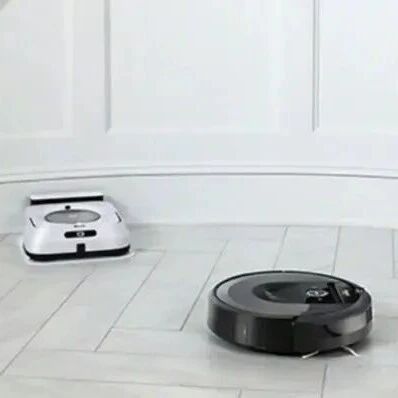
Roomba系列

Search documents
扫地机器人“鼻祖”谢幕,中国品牌占据C位
Qi Lu Wan Bao· 2026-02-13 11:30
Core Viewpoint - The global smart cleaning industry is undergoing a historic transformation, with Chinese brands dominating the market following the decline of iRobot, the pioneer of robotic vacuum cleaners [1][6]. Group 1: Market Dynamics - iRobot, once holding over 80% market share at its peak, has seen its share plummet to 7.9% by Q3 2025, with total liabilities reaching $508 million and cash flow nearly depleted [1]. - Chinese brands such as Ecovacs, Roborock, and others have captured over 65% of the global market share, with significant presence in various regions, including the U.S. and Europe [2][6]. - The online sales revenue of China's robotic vacuum industry reached 16.6 billion yuan in the first ten months of 2025, marking a 17% year-on-year increase [2]. Group 2: Technological Advancements - The industry has evolved from basic cleaning functions to incorporating AI and embodied intelligence, allowing products to understand complex user intentions [3][4]. - Innovations such as the "active water roller" technology have addressed core cleaning issues, with the market for these products expected to exceed 80% share by 2026 [3]. Group 3: Cross-Industry Expansion - Chinese brands are transitioning from single cleaning device manufacturers to comprehensive smart ecosystem enterprises, with companies like Roborock and Ecovacs expanding into various home appliance categories [4][5]. - Roborock plans to launch a range of smart home products, including air conditioners and refrigerators, while Ecovacs is diversifying into window cleaning robots and air purifiers [5]. Group 4: Competitive Landscape - The entry of cross-industry players, such as DJI with its ROMO robotic vacuum, intensifies competition, indicating a shift from traditional home appliance logic to robotic logic [5][6]. - The ongoing competition is characterized by technological innovation and global capabilities, with Chinese brands leading in R&D investment and market adaptability [6].


明年将发债支持国补,摩尔线程回应拿钱理财 | 财经日日评
吴晓波频道· 2025-12-16 00:30
Group 1: National Policies and Economic Measures - The Ministry of Finance plans to issue 1.5 billion yuan in special long-term bonds in 2024 to support consumer subsidies for vehicle trade-ins and related appliances, with an additional 3 billion yuan expected in 2025 [2] - The "national subsidy" policy has positively impacted domestic consumption over the past two years, with consumer goods trade-ins generating over 2.5 trillion yuan in sales from January to November, benefiting over 360 million people [2] - The coverage of the "national subsidy" policy is expected to continue expanding, particularly for durable consumer goods like refrigerators and televisions [2] Group 2: Real Estate Market Trends - In November, the sales prices of new residential properties in major cities showed a month-on-month decline, with first-tier cities down 0.4% and second and third-tier cities down 0.3% and 0.4% respectively [4] - The introduction of "home purchase interest subsidies" in several cities has led to a short-term increase in new home transactions by over 15% [4] - The real estate market is experiencing a downturn, with second-hand homes showing stronger sales performance compared to new homes due to price reductions by individual landlords [4][5] Group 3: Industrial Growth and Economic Indicators - In November, the industrial added value for large-scale enterprises grew by 4.8% year-on-year, with a month-on-month increase of 0.44% [6] - High-tech manufacturing sectors, such as 3D printing and industrial robotics, saw significant growth, with production increasing by 100.5% and 20.6% respectively [6] - The overall industrial growth rate is being constrained by weak demand and ongoing adjustments in the real estate market, leading to a cautious economic recovery [6] Group 4: Corporate Debt and Financial Challenges - Vanke's attempt to extend the maturity of a 2 billion yuan bond faced obstacles, as none of the proposed extension plans received the required 90% approval from bondholders [7][8] - The company is at risk of default if an agreement is not reached within the grace period following the bond's maturity [7] - Vanke's financial struggles are compounded by reduced support from state-owned shareholders, indicating a challenging path ahead for the company [8] Group 5: Technology and Market Developments - iRobot has filed for Chapter 11 bankruptcy protection, facing significant financial difficulties with liabilities exceeding 500 million dollars and cash reserves of only 24.8 million dollars [9][10] - The company, once a leader in the robotic vacuum market, has struggled to keep up with competitors offering better technology at lower prices [10] - Samsung is in discussions with AMD regarding potential collaboration on 2nm chip manufacturing, aiming to enhance its position in the high-end semiconductor market [11]



扫地机器人鼻祖要破产了
盐财经· 2025-12-15 10:10
本文转载自界面新闻 值班 编辑| 江江 视觉 | 诺言 界面新闻获悉,当地时间12月14日,"扫地机器人鼻祖"iRobot正式向美国特拉华州法院提交第11章破产 保护申请。 根据iRobot公告,其与公司有担保债权人及主要代工厂——深圳杉川机器人有限公司(Shenzhen PICEA Robotics Co., Ltd.)和香港杉川有限公司(Santrum Hong Kong Co., Limited,二者合称 "Picea")达成 《重组支持协议》。Picea在中国和越南设有研发及生产基地,在全球拥有超过7000名员工。 依据《重组支持协议》条款,Picea将获得iRobot公司100%的股权。iRobot方面表示,这一安排将大幅优 化iRobot的资产负债表,确保公司能维持正常运营,并保留其全球业务布局。 iRobot首席执行官加里·科恩(Gary Cohen)称:"此次交易将强化我们的财务状况,确保为消费者、客户 及合作伙伴提供业务连续性保障。" 该公司强调,在破产程序推进期间,iRobot将维持正常业务运营,公司应用程序功能、客户服务计划、 全球合作伙伴关系、供应链合作及在途产品支持不会受到影响。为保 ...