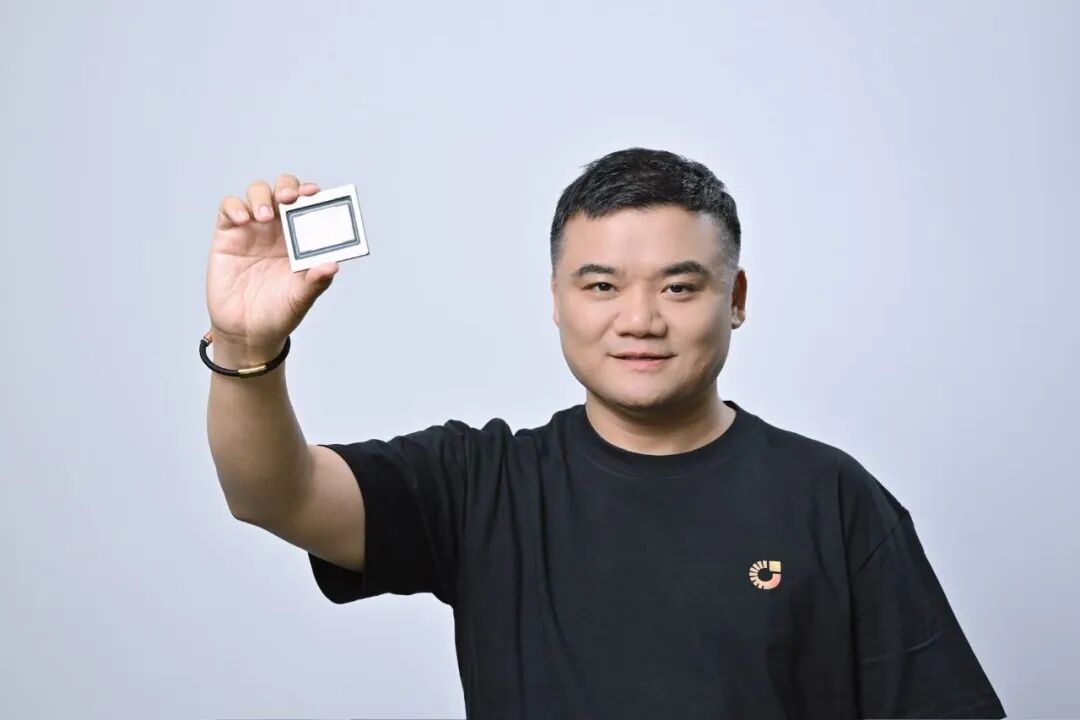
S1芯片

Search documents
曦望1年内累计获得近30亿元融资,以差异化路径「重写中国AI产业损益表」
IPO早知道· 2026-01-23 11:50
Core Viewpoint - The article highlights the significant advancements and funding achievements of Sunrise, a leading GPU chip company focused on AI inference, emphasizing its unique approach to reducing inference costs and its strategic partnerships in the industry [4][10]. Funding and Investment - Sunrise has completed nearly 3 billion yuan in financing within a year, supported by a diverse range of investors, including state-owned capital and prominent venture capital firms [4][5]. - The company aims to utilize the funds for the development of next-generation inference GPUs, large-scale production, and ecosystem building [5]. Team and Expertise - The leadership team includes experienced professionals from major tech companies, with the co-CEOs having extensive backgrounds in chip development and commercialization [6]. - The team consists of approximately 300 members, primarily sourced from leading firms like NVIDIA and AMD, with an average of 15 years of industry experience among core technical staff [6]. Differentiation Strategy - Sunrise differentiates itself by focusing on native architecture reconstruction for inference scenarios, optimizing various technical aspects to lower the cost per token for inference [8][9]. - The company has developed over 200 core patents and has a successful track record of chip development, emphasizing its commitment to innovation [8]. Product Development and Performance - By 2025, Sunrise's large model inference performance is expected to rank among the top tier, with existing products demonstrating superior performance in mainstream inference tasks [9]. - The company has successfully launched a one-stop MaaS platform, facilitating the integration of various multimodal models and lowering the barriers for AI applications [9]. Market Position and Future Goals - Sunrise aims to redefine the economic landscape of the AI industry in China by significantly reducing inference costs and enhancing service stability [10][12]. - The company plans to launch its flagship S3 chip in 2026, targeting a substantial reduction in token costs and energy consumption, aiming for a new industry benchmark [12]. - Future strategies include expanding product applications across various industries and fostering collaboration within the ecosystem to enhance the accessibility of AI capabilities [13].

GPU创企曦望一年融资30亿:出身商汤,押注推理
Guan Cha Zhe Wang· 2026-01-22 13:13
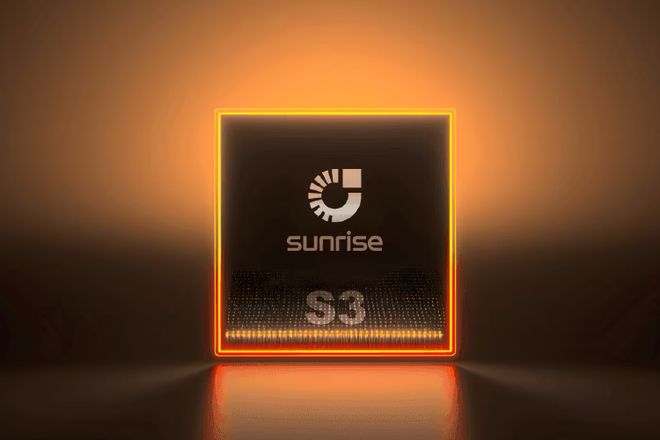
Group 1 - The company Sunrise has completed nearly 3 billion yuan in financing within a year, with investors including SANY Group's Huaxu Fund, Paradigm Intelligence, and IDG Capital [1] - The funds raised will be used for the development of the next generation of inference GPUs, large-scale production, and ecosystem building [1] - Sunrise was established in 2020 as a spin-off from SenseTime's chip division, focusing on high-performance GPUs and multimodal scene inference chips [1] Group 2 - The core team consists of over 200 employees, with more than 80% being technical and R&D personnel, many of whom come from leading companies like AMD and Huawei [1] - Co-CEO Wang Yong has over 20 years of experience in the chip industry, having previously worked at AMD and Baidu [2] - Co-CEO Wang Zhan, a founding member of Baidu, has significant experience in the field [2] Group 3 - Unlike traditional GPU manufacturers like NVIDIA that pursue "training and inference integration," Sunrise focuses solely on "pure inference" [4] - The company aims to reduce inference costs by 90% and provide stable services, positioning itself as a transformative player in the AI industry [4] - Sunrise has invested a total of 2 billion yuan in R&D over the past few years, developing a product matrix of three generations of chips [4] Group 4 - The S1 chip, launched in 2020, is China's first visual inference chip and has been licensed to major clients like Sony and Xiaomi [4] - The upcoming S2 chip, set for mass production in 2024, will compete with mainstream A/H series GPUs and be compatible with the CUDA ecosystem [4] - The S3 chip, expected in 2026, aims to achieve significant reductions in cost and energy consumption, targeting a new industry benchmark of "one cent per million tokens" [5]

消息称曦望完成近30亿元融资,将用于下一代推理GPU研发
Sou Hu Cai Jing· 2026-01-22 12:15
Company Overview - XiWang, an AI inference GPU chip company, successfully completed nearly 3 billion yuan in financing over the past year [1] - The company was established in 2020 and originated from the chip division of SenseTime [3] - The core team includes co-CEOs Wang Yong and Wang Zhan, with backgrounds in AMD, Baidu, and other leading tech firms [3] Financing Details - The financing attracted numerous industry investors and well-known venture capital firms, including SANY Group's Huaxu Fund, IDG Capital, and others [3] - The funds will be used for the R&D of the next-generation inference GPU, large-scale production, and ecosystem development [3] Product Development - XiWang has invested 2 billion yuan in R&D over the past few years, resulting in a product matrix of three generations of chips [4] - The S1 chip, launched in 2020, is the first domestic visual inference chip, compatible with over a thousand computer vision models [4] - The upcoming S2 chip, set for mass production in 2024, aims to compete with mainstream A/H series GPUs and supports the CUDA ecosystem [4] - The S3 chip, expected in 2026, is touted as the "king of inference cost-performance," significantly reducing costs and energy consumption [4] Industry Trends - The domestic GPU industry is entering a phase of accelerated capitalization, with several companies like MuXi and MoEr Thread having recently gone public [4] - Notable stock price increases were observed for MuXi and MoEr Thread, with gains of 692.95% and 425.46% on their respective debut days [4] - Other companies, including SuiYuan Technology and Hanbo Semiconductor, are also pursuing IPOs, indicating a robust market interest [4]
首发丨曦望完成近30亿元战略融资,All-in推理GPU
投中网· 2026-01-22 07:07
Core Insights - The article highlights the transition of the AI industry from "training dividends" to "inference dividends," as evidenced by the significant investment in the company Sunrise, which focuses on inference GPU chips [2][4]. Group 1: Investment and Market Trends - Sunrise has completed nearly 3 billion yuan in strategic financing within a year, with investments from various industry players and well-known VC/PE institutions [2]. - The funding will primarily be used for the development of the next generation of inference GPUs, large-scale production, and ecosystem building [2]. Group 2: Company Background and Team - Founded in 2020, Sunrise originated from the chip department of SenseTime and has a deep understanding of model evolution, operator optimization, and customer needs [4]. - The core team consists of experienced professionals from companies like AMD, Baidu, and SenseTime, with an average of 15 years in the industry [4]. Group 3: Product Development and Innovation - Sunrise has developed three generations of chips, with a focus on reducing inference costs and improving efficiency, rather than competing on general GPU parameters [6]. - The company has invested 2 billion yuan in R&D over the past few years and holds over 200 core patents [6]. Group 4: Strategic Positioning - The company aims to significantly reduce inference costs and provide stable services, positioning itself as a "profit and loss optimizer" for the AI industry [8]. - Sunrise's focus on real-world economic metrics rather than just technical specifications differentiates it from other domestic chip manufacturers [8]. Group 5: Future Goals and Industry Impact - The goal is to drastically lower the cost and accessibility of large model inference, thereby unlocking the full potential of AGI [9]. - Sunrise's rise signifies a shift in the domestic AI chip landscape from "catching up" to "leading through differentiation" [9].
商汤分拆的AI芯片公司,为何全盘押注模型推理市场?
Nan Fang Du Shi Bao· 2025-11-25 06:45
Core Viewpoint - Domestic AI chip companies like Sunrise are focusing on the inference chip market, differentiating themselves from competitors like Nvidia by targeting specific market segments rather than attempting to cover both training and inference simultaneously [2][4]. Company Overview - Sunrise, spun off from SenseTime's chip division, aims to establish itself in the inference chip market, having completed its first round of external financing by the end of 2024 and raised nearly 1 billion yuan in July 2023 [2][3]. - The company is led by Xu Bing, co-founder of SenseTime, and has a management team with backgrounds from Baidu [2]. Product Development - Sunrise has launched three generations of inference chips: - The first-generation S1 chip, launched in 2020, focuses on visual inference and has sold over 20,000 units [3]. - The second-generation S2 chip, set to begin production in September 2024, claims to achieve performance close to 80% of Nvidia's A100 [3]. - The third-generation S3 chip is expected to be officially launched in May 2025, optimized for large model inference and supporting low-precision data formats [3]. Market Trends - The demand for inference computing power is rising due to the accelerated adoption of AI applications, prompting Sunrise to focus on this segment [4]. - The industry is witnessing a shift towards high-performance inference chips, as the market for high-performance training chips is perceived to be limited [4]. Strategic Partnerships - To reduce customer migration costs, Sunrise has chosen to be compatible with Nvidia's CUDA parallel computing framework, facilitating easier adoption for developers [5]. - The company has established partnerships with various industry players, including SANY Group, Fourth Paradigm, Midea Group, and others, ensuring customer engagement from the design phase [5]. Design Considerations - Achieving a balance between computing power and memory bandwidth is crucial for optimizing the cost-performance ratio of inference chips [5]. - Sunrise emphasizes the importance of aligning chip design with target computing tasks to avoid inefficiencies that could lower the chip's value proposition [5].
商汤拆分芯片业务始末:百度创始成员加入,半年已融15亿
36氪· 2025-09-19 13:42
Core Viewpoint - The article discusses the emergence of AI chip startups in China, focusing on the establishment of "曦望" (Sunrise) as a subsidiary of商汤 (SenseTime) to develop large model inference chips, aiming to reduce inference costs significantly and capitalize on the growing AI chip market [4][7][9]. Company Overview - "曦望" was formed as part of商汤's "1+X" strategy, which involves splitting off high-potential but resource-intensive chip development into an independent entity [5][9]. - The company aims to leverage商汤's five years of experience in chip development to accelerate its growth and market entry [11][13]. Leadership and Team - 王湛, a former key figure at百度 (Baidu), has joined "曦望" as co-CEO, bringing extensive experience in managing large teams and product development [5][6]. - The executive team includes王勇, who has 20 years of chip industry experience, and the team has grown by 50% to nearly 200 members, with many coming from major tech companies [12][13]. Financial Investment and Product Development -商汤 has invested over 1.1 billion yuan in chip development over the past five years, with "曦望" raising over 1.5 billion yuan in recent funding rounds [13][14]. - "曦望" has successfully produced two chips: the S1 chip for cloud-edge visual inference and the S2 chip for large model inference, with plans for the S3 chip to reduce inference costs by 90% [14][15][17]. Market Context and Competitive Landscape - The Chinese AI chip industry is at a pivotal moment, with companies like寒武纪 (Cambricon) and others gaining significant market traction [9][22]. - The article highlights the importance of timing in entering the AI chip market, suggesting that "曦望" is well-positioned to capitalize on the current market dynamics [24][25]. Strategic Focus and Future Outlook - "曦望" aims to focus on specific market segments and leverage its relationship with industry capital to ensure successful product commercialization [18][19]. - The company believes that the future of AI chips will hinge on integrated hardware and software capabilities, as well as the ability to predict market trends [25].

商汤拆分芯片业务始末:百度创始成员加入,半年已融15亿
3 6 Ke· 2025-09-19 01:58
Core Insights - The article discusses the strategic move of Wang Zhan, a former key figure at Baidu, to join SenseTime's chip venture "Xiwang" as co-CEO, highlighting the growing importance of AI chip development in China [1][2][4] - SenseTime has invested over 1.1 billion yuan in chip research and development over the past five years, with the aim of establishing a strong foothold in the AI chip market [4][6] - The year 2025 is identified as a pivotal year for China's AI chip industry, with significant market opportunities emerging as domestic companies seek to compete with global leaders like NVIDIA [4][11] Company Overview - Wang Zhan has a rich background in the tech industry, having managed a team of 8,000 at Baidu and played a crucial role in the company's search and commercialization efforts [2][4] - The "Xiwang" team has grown by 50% to nearly 200 members, with a leadership team that includes experienced professionals from major tech companies like AMD and Intel [5][6] - The company has successfully produced two chip models: the S1 chip for cloud-edge visual inference and the S2 chip for large model inference, with over 10,000 units shipped [6][8] Market Context - The Chinese AI chip market is experiencing a surge, with several domestic companies like Cambricon and Moore Threads gaining traction and achieving significant revenue growth [4][11] - The article emphasizes the shift from a "burning money" phase to a "commercialization" phase in the industry, indicating a maturation of the market [4][11] - Wang Zhan believes that the timing of "Xiwang's" establishment is advantageous, as the market is now ready for large-scale commercialization of AI chips [11][12] Product Development - The upcoming S3 chip is expected to reduce inference costs by tenfold and is set to launch in 2026, showcasing the company's commitment to innovation [8][12] - "Xiwang" aims to achieve 100% proprietary intellectual property in its chip designs, which is seen as crucial for competitive advantage [8][12] - The company is focusing on specific market segments rather than general-purpose chips, aligning with industry trends that favor specialized solutions [11][12] Funding and Investment - "Xiwang" has raised over 1.5 billion yuan in funding in recent months, with 70% of its investors being industry capital, which helps in aligning product development with market needs [6][10] - The strategic partnerships with industry players are intended to facilitate smoother transitions from chip development to commercialization [10][12]