Skill

Search documents
GEO已死,AEO是答案
虎嗅APP· 2026-03-16 14:17
Core Viewpoint - The article discusses the transition from GEO (General Engine Optimization) to AEO (Agent Engine Optimization) in the context of the evolving internet landscape, emphasizing that the era of GEO is ending and AEO is emerging as the new paradigm for optimizing interactions with intelligent agents [5][7]. Group 1: Paradigm Shift - The shift from "eye-catching" to "distribution capability" signifies a fundamental change in how services are optimized for intelligent agents rather than human users [8][9]. - AEO focuses on enhancing the probability that services are discovered, understood, activated, and executed correctly by agents, moving away from traditional website optimization [9][10]. Group 2: Limitations of GEO - GEO is seen as a last-ditch effort of the traditional search era, revealing its limitations in the face of the intelligent agent internet, where the focus is on execution rather than mere visibility [11][12]. - The future commercial logic prioritizes being "hired" by agents over merely being "searchable," indicating a shift in value creation [13]. Group 3: Insights from Moltbook - Moltbook's success highlights the potential of Agent-to-Agent (A2A) social networks, where humans take a backseat as directive leaders while agents become the main actors [14][15]. Group 4: AEO Principles - To succeed in AEO, services must abandon human-centric thinking and restructure communication protocols for agents, focusing on context, semantic density, and deterministic logic [17][18]. - The competition will center on the ability to be recognized and installed by agents, with a shift in the conversion funnel from websites to agent task planning flows [18][19]. Group 5: Skill as the Focus - Skills have emerged as the standard carrier for AEO, distinguishing themselves from APIs and MCPs by being designed specifically for agent use [21][22]. - A successful Skill must be smooth, contextually efficient, and capable of self-correction, ensuring that agents can execute tasks effectively [23][24]. Group 6: Future of the Internet - The future internet will transition from "humans searching for information" to "agent collaborative networks," rendering traditional traffic-driven growth strategies obsolete [26][27].


Agent 热潮年度回望:一切火爆早有预兆
3 6 Ke· 2026-02-09 08:00
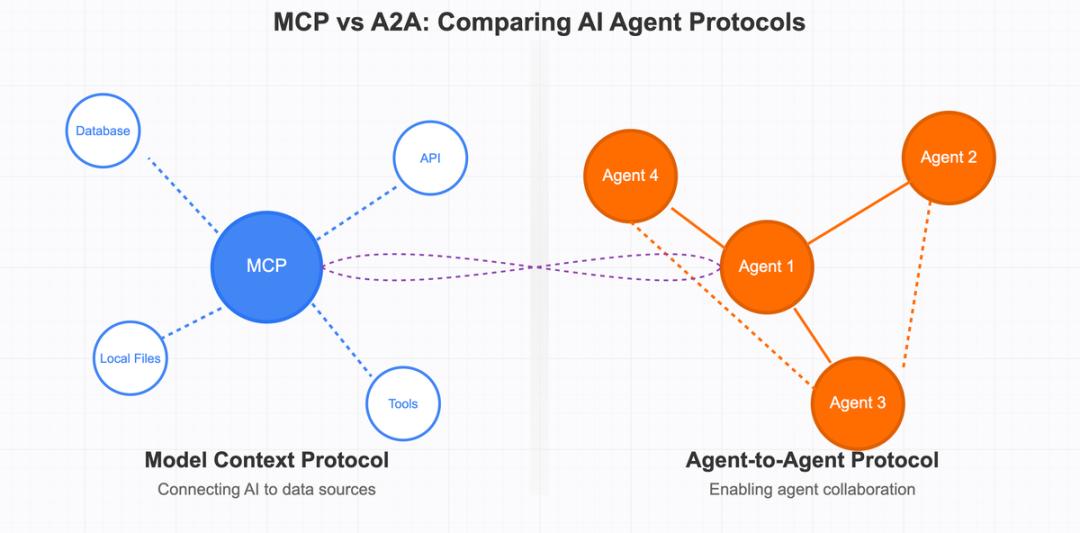
Core Insights - The article discusses the rapid acceleration of AI agents since the beginning of 2026, highlighting key variables that have driven this concentrated explosion in the field [1] - It draws parallels between the current excitement around AI agents and the early discussions surrounding the internet in 1999, emphasizing a shift in organizational structures and the role of humans [2] - The narrative indicates a transition from excitement to a more grounded understanding of the practical challenges and engineering details involved in deploying AI agents in real-world environments [4][5] Group 1: Development and Challenges of AI Agents - The past year has been termed the "Year of the Agent," marking a paradigm shift where models are not just for conversation but can actively perform tasks, plan, and even write code [4] - Despite initial excitement, real-world applications reveal challenges such as model drift, unclear permission boundaries, and unpredictable costs, making them unsuitable for serious workflows [4] - The complexity of integrating agents into existing systems is highlighted, as they face diverse toolsets and commercial boundaries, complicating the establishment of standardized protocols [6][7] Group 2: Protocol and Architecture - The first systematic attempts in the agent direction stem from protocols like MCP and A2A, aiming to create unified interfaces for model integration and cross-platform collaboration [6][7] - The article emphasizes the importance of establishing a layered architecture for agents, where a cognitive core handles understanding and planning, while execution capabilities are clearly defined and controlled [9][10] - The shift from creating specialized agents for each scenario to a more modular approach allows for reusable execution capabilities, enhancing efficiency and governance [10][11] Group 3: Skills and Density - The concept of "skills" has evolved from simple plugins to a more structured framework where skills are defined as callable, constrained, and auditable actions within a system [11][17] - The article posits that the density of skills—how many high-quality skills are available—will determine the effectiveness of AI agents, as a higher density allows for more complex problem-solving capabilities [19][20] - The comparison to the mobile internet era suggests that the true value lies not in the number of skills but in their interconnectivity and ability to be reused across different models and systems [20] Group 4: Memory and Continuity - The introduction of memory is seen as a crucial advancement, allowing agents to maintain context and continuity across tasks, which is essential for long-term collaboration [22][25] - The article distinguishes between different types of memory, emphasizing the need for persistent memory that encompasses task status, long-term context, and decision history [23][24] - This capability transforms agents from being one-time tools to systems that can accumulate organizational knowledge and provide ongoing value [25] Group 5: The Role of Open Source Models - The rise of open-source large models in China is highlighted as a significant factor in changing the power dynamics within the AI landscape, enabling developers to integrate these models into real workflows [26][29] - The article notes that local deployment of models allows for greater control and customization, particularly in sensitive industries like healthcare and finance [29][30] - Open-source models lower barriers to experimentation and innovation, facilitating the development of vertical agents tailored to specific industry needs [30]
闭门探讨:130位AI创业者,对Clawdbot和下一代AI产品的39条思考
Founder Park· 2026-02-05 12:52
Core Insights - Clawdbot, now known as OpenClaw, has become a phenomenon, assisting investors in project discovery and transactions, with a focus on personal agents and local agents as key trends for 2026 [2] - A closed-door event hosted by Founder Park gathered over 130 AI entrepreneurs from various sectors to discuss Clawdbot's capabilities and its potential impact on the AI landscape [2] Group 1: AI Evolution and Capabilities - Clawdbot represents a significant breakthrough in AI autonomy, allowing for self-iteration and skill creation without boundaries, enhancing its ability to evolve [4][5] - The platform's ability to autonomously explore tasks every four hours contributes to its proactive nature, enabling it to perceive environmental changes and create new skills [4] - Clawdbot's rapid evolution has led to a level of sophistication that is both impressive and somewhat alarming, indicating its potential to self-evolve effectively [5] Group 2: Skills as the New Applications - The emergence of Skills as a new form of applications signifies a shift in user interaction, where users can engage with products through various IM platforms without needing to open specific apps [7][8] - The future of product value will hinge on the successful execution of Skills, with monetization focusing on individual Skill interactions rather than entire app subscriptions [12] - Skills are expected to become standardized across platforms, leading to a competitive landscape centered around optimizing Skill discoverability and interaction [13][14] Group 3: Memory and Context Management - Memory is viewed as a crucial component for self-evolving agents, enabling them to optimize their skills continuously [9][10] - The concept of "Memory as a File System" suggests a future where agents can efficiently manage context and information retrieval, enhancing their operational capabilities [10] - Effective feedback loops are necessary for guiding agents' evolution, ensuring they align with user preferences and work styles [10] Group 4: AI Interaction Dynamics - The limitations of human interaction bandwidth highlight the need for AI-to-AI interactions, which can significantly enhance information exchange efficiency [11][12] - Clawdbot's ability to facilitate AI interactions opens up numerous application possibilities across various domains, including social and content platforms [12][13] Group 5: Integration into Daily Workflows - Clawdbot's integration into IM platforms allows for seamless task management and interaction, transforming how users engage with AI in their daily workflows [14][15] - The potential for Clawdbot to create new social and trading platforms illustrates its versatility and the broad range of applications it can support [15][16] Group 6: Security and Challenges - Current security measures for Clawdbot are inadequate, necessitating improvements in sandboxing and backup mechanisms to protect user data [18][19] - The high token consumption and inefficient file retrieval processes present significant challenges that need to be addressed for Clawdbot's long-term viability [20][21] Group 7: Future Outlook - Clawdbot may evolve into a mainstream AI application by 2026, potentially becoming an open-source operating system that fosters rapid innovation and user-driven development [21][23] - The platform's ability to allow users to create and publish Skills quickly could disrupt traditional software development paradigms, leading to unprecedented rates of evolution in AI applications [21]

这可能是今年门槛最低的黑客松比赛,速来!
Founder Park· 2026-01-26 04:07
Core Insights - The article highlights the rising popularity of the Skill concept, which has quickly surpassed other concepts like Agent and MCP, becoming a sought-after feature across various products [2] - Skill aims to package expert work SOPs into reusable resource bundles that are easy to share and implement, requiring no coding or complex workflows, thus lowering the barrier for creation [3] Group 1: Skill Development and Opportunities - The collaboration between Founder Park and Kouzi to host a Skill recruitment competition encourages sharing best SOP practices, promoting skills as a fluid exchange resource [5] - The competition features two tracks: Workplace and Marketing Creation, allowing participants to develop Skills that enhance efficiency and creativity in their respective fields [7][10] - The Workplace track focuses on transforming daily work methodologies and complex processes into reusable Skills to improve workflow experiences [9] Group 2: Skill Application Areas - The Financial Professional Analysis track aims to create Skills that meet core needs for consistency, auditability, and strong decision support, such as financial report analysis and industry tracking [11] - The Geek track invites developers to create Skills that emphasize visual impact, technical innovation, and interactive experiences [12] - Skills should support various scenarios, including dynamic visual libraries and creative coding interactions, enhancing usability and engagement [14][15] Group 3: Competition Rewards and Timeline - Selected Skills will be featured in the Kouzi Skill Store and receive traffic support for broader user reach, along with potential monetization opportunities for developers [17][18] - The competition runs from now until February 9, 2024, with a structured timeline for submission, evaluation, and reward distribution [23][26]