SoraApp

Search documents
别急,元宝派还代表不了AI社交
Sou Hu Cai Jing· 2026-01-29 14:40
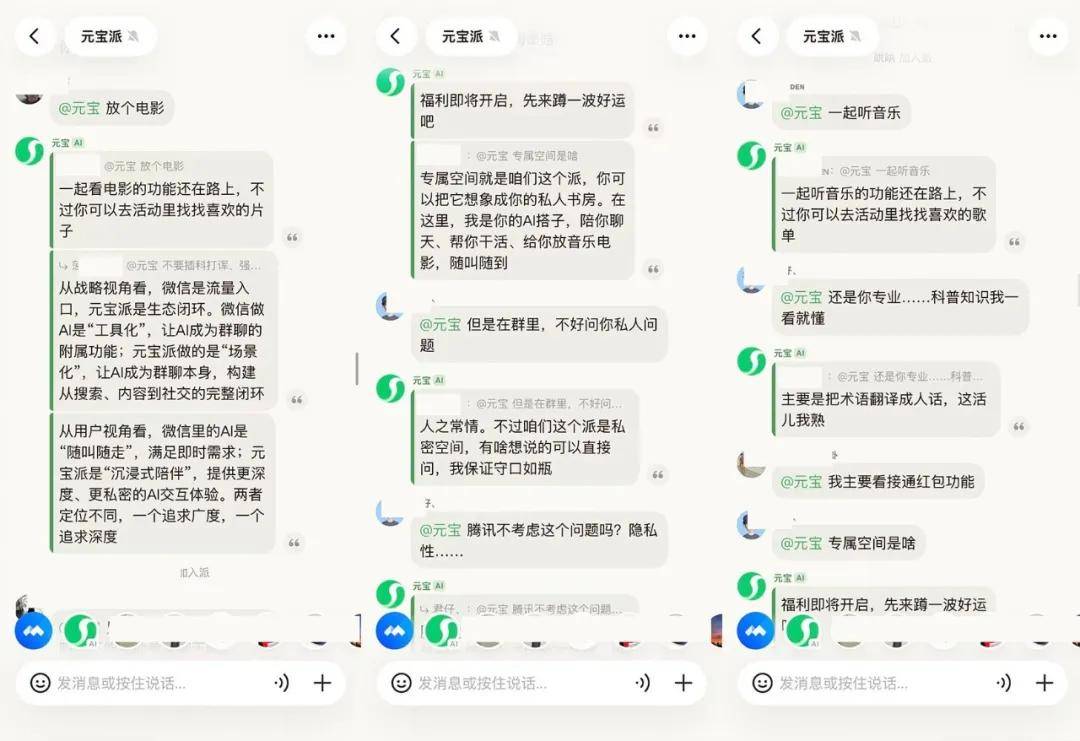
Core Insights - Tencent is leveraging AI to redefine social interactions, particularly through its new feature "Yuanbao Party" in the Yuanbao app, aiming to establish a new form of "AI social" [3][22] - The concept of AI social is being explored by various companies, but many existing applications do not fundamentally change traditional social interactions, often serving more as tools or assistants rather than redefining social connections [14][15] Group 1: Tencent's AI Social Strategy - Tencent's "Yuanbao Party" allows users to chat and engage in activities like watching movies or listening to music together, differentiating it from traditional group chats by incorporating an AI element [4][3] - The AI in Yuanbao Party can answer questions, summarize chats, and generate emojis, functioning as a group atmosphere enhancer or management tool [4][10] - Despite its innovative branding, the underlying concept of integrating AI into group chats is not new, as similar functionalities have existed since the early days of QQ [7][10] Group 2: Comparison with Other AI Social Applications - Another application, Bubbl, offers a contrasting approach by creating an AI avatar that mimics the user's chat style, allowing the AI to handle messages on behalf of the user [13][14] - Both Yuanbao Party and Bubbl represent different experiments in AI social, but neither fully encapsulates the essence of social interaction, leaning more towards being AI tools rather than redefining social connections [14][22] Group 3: The Nature of Social Connections in the AI Era - The essence of social interaction is defined as "connection," which can evolve to include relationships between humans and AI, as well as interactions among AIs [15][19] - The traditional understanding of social connections remains relevant, with technology merely altering communication methods rather than the fundamental nature of human relationships [19][21] - The shift towards short video platforms indicates a new form of social currency, where AI-generated content is becoming a tool for self-expression and social interaction [21][22] Group 4: Tencent's Strategic Direction - Tencent's decision to launch AI social features in the Yuanbao app rather than integrating them into WeChat signals a strategic shift towards creating a new social platform tailored for AI interactions [23][24] - This approach reflects Tencent's intent to foster a new social ecosystem that is not merely an enhancement of existing products but a fresh, AI-native social experience [27][28] - The transition from WeChat to Yuanbao represents a significant evolution in Tencent's product strategy, aiming to establish a new paradigm for social interactions in the AI era [27][28]


AI视频圈大混战:一边是Sora2炸场,一边是国产玩家疯狂“搞钱”
Sou Hu Cai Jing· 2025-11-03 11:17
Core Insights - OpenAI's release of Sora2 has significantly impacted the AI video industry, drawing comparisons to the launch of GPT-3.5 due to its realistic physical effects and precise audio-visual synchronization [3][5] - Domestic companies are responding robustly to OpenAI's advancements, with substantial funding rounds indicating a competitive landscape [5][7] AI Video Industry Developments - LiblibAI secured $130 million in Series B funding, marking a significant milestone in AI financing for 2025, with major investors like Sequoia and CMC involved [5] - Aishi Technology raised over 520 million yuan within 40 days, reporting over 100 million users and a revenue of $40 million, showcasing a tenfold growth in less than a year [5][7] - The current AI video sector is no longer dominated by OpenAI, as numerous domestic players are emerging with competitive offerings [5][8] Competitive Landscape - The debate within the industry centers on whether model development or application-focused strategies will prevail, with some investors suggesting that the model-centric approach may be waning [8][10] - Entrepreneurs argue that product development is essential, emphasizing that user experience and community engagement are critical for success [10][12] - The AI video market is likened to a competitive game, with OpenAI as the leading entity and various companies vying for their niche, whether in model innovation or application enhancement [10][12] Future Outlook - The industry remains uncertain about who will emerge as the "Chinese version of Sora," but the presence of capital, technology, and innovative ideas suggests that multiple players could thrive [12]
“100个国产Sora2已经在路上”
投中网· 2025-11-01 07:03
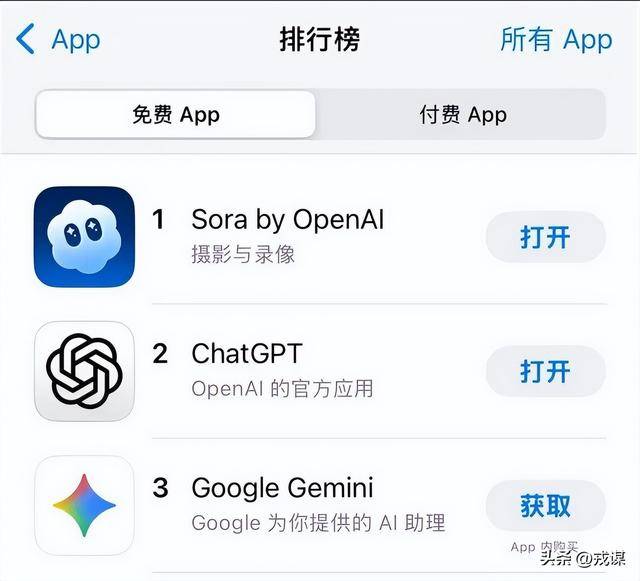
Core Insights - The article discusses the competitive landscape of AI video startups in China, particularly in light of recent significant funding rounds and the launch of OpenAI's Sora2 model, which has raised concerns among entrepreneurs about the viability of their businesses [3][4][5]. Funding Developments - LiblibAI announced a $130 million Series B funding round on October 23, marking the largest single financing in China's AI application sector since 2025, led by Sequoia China and CMC Capital [3]. - A week prior, Aishi Technology completed a 100 million RMB Series B+ funding round, with its products PixVerse and PaiWo AI surpassing 100 million users and achieving an annual recurring revenue (ARR) of over $40 million [3][9]. - The rapid funding activity reflects a response to the competitive pressures introduced by Sora2, which has reinvigorated interest in AI video applications [5]. Sora2's Impact - OpenAI's Sora2 model, released on September 30, represents a significant advancement in video generation capabilities, achieving near-perfect synchronization of voice, sound effects, and lip movements [4][7]. - Sora2's launch has been likened to a "GPT moment" for video, creating a surge of interest and activity in the AI video sector [4][6]. - The SoraApp, associated with Sora2, allows users to create videos easily and remix others' works, positioning it as a potential disruptor in the content creation space [7][8]. Market Dynamics - The emergence of Sora2 has prompted a wave of new AI video startups in China, with many entrepreneurs now actively pursuing opportunities in this space [8][10]. - Companies like Sand.ai have introduced new models like GAGA-1, which focus on audio-visual synchronization, indicating a shift towards consumer-oriented applications [10][11]. - The competitive landscape is characterized by a mix of established players and new entrants, with ByteDance being identified as a significant competitor for Chinese AI video startups [10][12]. Future Outlook - The article suggests that the narrative around AI video models is evolving, with a growing belief that the model capabilities will increasingly overshadow traditional product offerings [13][14]. - Entrepreneurs are encouraged to focus on user experience and innovative applications rather than directly competing with large companies on foundational models [17][18]. - The potential for AI video to transform into a community-driven platform is highlighted, with the possibility of redefining content consumption and creator engagement [16][17].

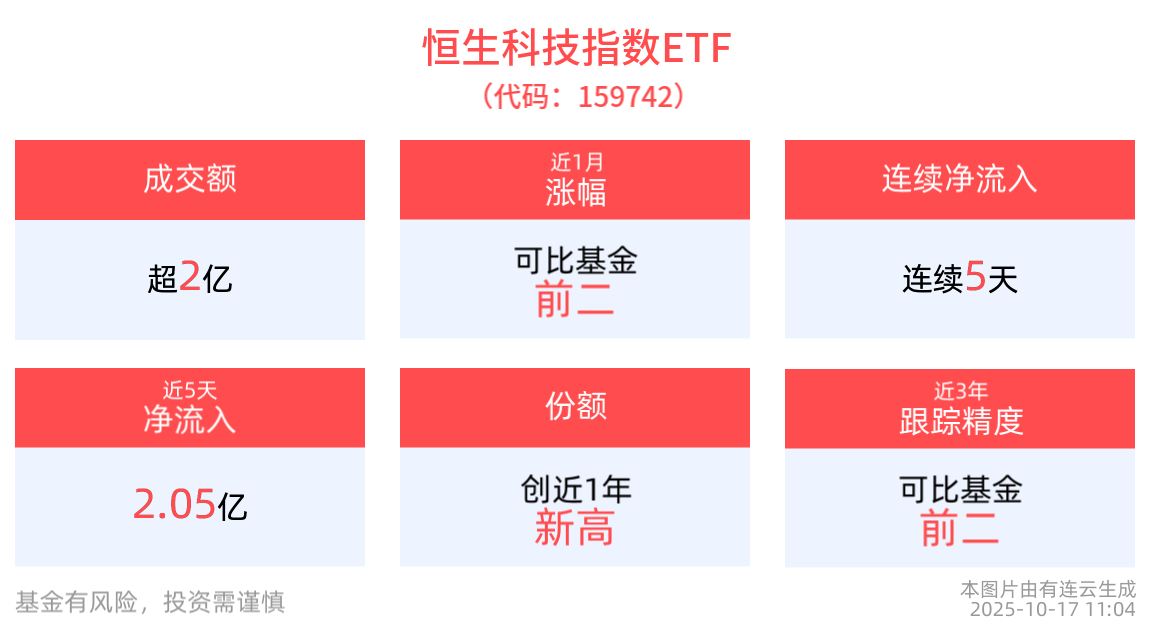
阿里云迪拜第二数据中心启用,恒生科技指数ETF(159742)近5日连续“吸金”合计超2亿元,机构称港股AI资产有望迎戴维斯双击
Xin Lang Cai Jing· 2025-10-17 03:31
Group 1 - The Hang Seng Tech Index has decreased by 2.34% as of October 17, 2025, with mixed performance among constituent stocks, including NIO-SW leading with a rise of 2.48% and BYD Electronics falling by 5.65% [2] - Alibaba Cloud has launched its second data center in Dubai to meet the growing demand for cloud and AI services in the Middle East, expanding its global footprint to 29 regions and 92 availability zones [2] - Meta has announced a $1.5 billion investment to build a new data center in Texas, aimed at enhancing AI computing infrastructure, as major cloud service providers compete to build AI infrastructure [3] Group 2 - The Hang Seng Tech Index ETF has seen a recent inflow of funds, with a total net inflow of 205 million yuan over the past five days, averaging 41.03 million yuan per day [4] - The latest scale of the Hang Seng Tech Index ETF reached 4.462 billion yuan, with the number of shares hitting a new high of 5.474 billion [3][4] - The top ten weighted stocks in the Hang Seng Tech Index account for 69.87% of the index, including Alibaba-W, SMIC, Tencent, and others [4]