
T1000碳纤维

Search documents
【新华社】创新催生新产业、新模式、新动能
Xin Hua She· 2026-02-27 01:44
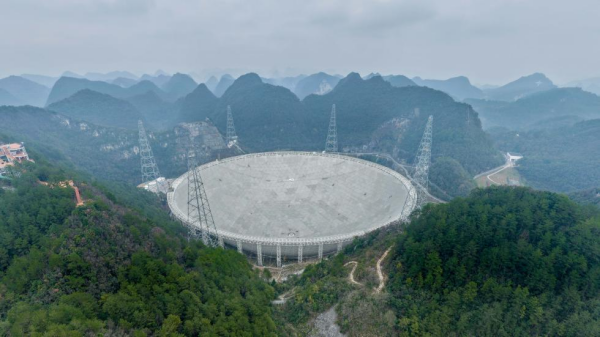
Core Insights - The article emphasizes the importance of technological and industrial innovation as a fundamental path to developing new productive forces in China, highlighting the integration of innovation in various sectors [4][7]. Group 1: Technological Innovations - The "China Sky Eye" (FAST) has made significant breakthroughs in studying fast radio bursts, capturing critical signals that contribute to understanding cosmic phenomena [5]. - The development of high-performance carbon fiber, referred to as "black gold," has transitioned from foreign dependency to domestic production, marking a significant achievement in material science [9][10]. - The launch of the 3D scientific computer "Tianqiong" represents a leap in computational technology, outperforming traditional systems by 2 to 4 orders of magnitude [12][13]. Group 2: Integration of Innovation and Industry - The integration of technological innovation with industrial application is evident in various sectors, including aerospace, renewable energy, and low-altitude economy, showcasing a shift from "catching up" to "keeping pace" in high-performance materials [10]. - The article highlights the necessity of transforming traditional industries through new technologies, promoting high-end, intelligent, and green development [11]. - The government's emphasis on strengthening the role of enterprises in technological innovation is crucial for fostering a robust ecosystem that supports the transition from scientific research to industrial application [14].


山西培育壮大现代煤化工产业
Zhong Guo Hua Gong Bao· 2026-02-04 02:34
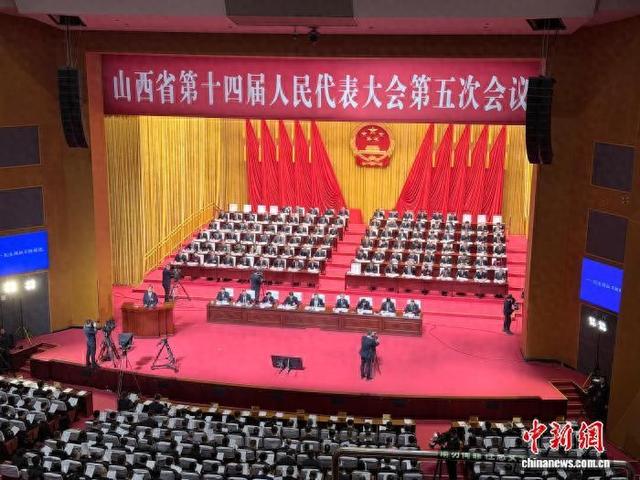
Core Insights - Shanxi Province is focusing on the development of modern coal chemical industry and energy transformation during the 14th Five-Year Plan period, aiming for high-quality development [1][2] - The province's unconventional natural gas cumulative production reached 75 billion cubic meters, with significant advancements in coal-based technology and a 50% market share in coal gasification products [1] - Shanxi plans to increase unconventional natural gas production to 30 billion cubic meters by 2030 and aims to create a trillion-level industrial chain [1] Group 1 - Shanxi will actively explore high-value utilization of quality and rare coal types and accelerate the construction of projects such as coal-to-olefins and deep processing of coking products [2] - The province aims to expand the application market for T800 and T1000 carbon fibers, establishing a leading domestic high-performance carbon fiber industry base [2] - Shanxi is pushing for a breakthrough in unconventional natural gas production, targeting over 20 billion cubic meters, while promoting comprehensive utilization of gas [2] Group 2 - The province is accelerating the upgrade of coking and chemical industries, focusing on low-carbon and product-oriented development [2] - Shanxi has implemented 11 key projects in coal chemical and coalbed methane sectors to promote energy transformation [1] - The province's advanced coking capacity has reached 100%, indicating a significant shift towards higher-end coal products [1]
传统能源大省的科技转型:山西系统布局实验室体系与人才战略
Xin Lang Cai Jing· 2026-02-02 12:50
Group 1 - The core viewpoint of the article highlights the significant advancements in technological innovation in Shanxi Province during the "14th Five-Year Plan" period, including breakthroughs in new technologies and products such as hand-tear steel and polar renewable energy systems [1][3] - Shanxi's innovation system has been systematically strengthened, with over 4,500 high-tech enterprises and a notable increase in the number of academicians, indicating a positive talent aggregation effect [3] - The government report sets quantitative goals for the "15th Five-Year Plan," aiming to increase the number of national laboratories by 2 to 4, with annual R&D expenditure growth of over 10%, and a target of 60 billion yuan in technology contract transaction volume by 2030 [3] Group 2 - The action plan for 2026 includes the establishment of 20 provincial key laboratories, technology innovation centers, and engineering research centers, as well as 70 doctoral innovation stations [3] - Shanxi aims to cultivate over 1,400 new high-tech enterprises annually and actively pursue major national science and technology projects related to coal and smart grids [3] - The province will enhance talent attraction initiatives through branding efforts like "People in Shanxi Enjoy Beautiful Scenery" and "Wisdom Gathers in Shanxi," focusing on providing robust support for talent [4]
科学与健康|从“无米下炊”到“高端迭代”:我国高性能碳纤维的创新跨越
Xin Hua She· 2026-01-15 02:25
Core Viewpoint - The successful production of T1000-grade high-performance carbon fiber in Shanxi represents a significant advancement in China's material industry, marking a transition from reliance on foreign technology to self-sufficiency and innovation in high-end materials [2][5]. Group 1: Technological Development - The development of carbon fiber in China began in the 1970s, with significant advancements made over the decades, including the production of T700 and T800 grades, leading to a rapid increase in domestic demand and production [3]. - The research team aimed to tackle higher technical challenges starting in 2016, focusing on the development of dry-spinning wet-method carbon fiber technology, which involved extensive research and collaboration over eight years [3]. - The T1000-grade carbon fiber has a single filament diameter less than one-tenth that of a human hair, with a tensile strength exceeding 6600 MPa, capable of lifting approximately 200 kilograms [3]. Group 2: Industrial Impact - The first phase of the thousand-ton high-performance carbon fiber project was completed in just one and a half years, showcasing effective collaboration between researchers and engineers to align laboratory results with industrial needs [5]. - The successful production of T1000-grade carbon fiber signifies a crucial leap for China from "catching up" to "keeping pace" in the high-performance carbon fiber sector, filling a gap in domestic high-end production capacity [5]. - This innovation provides a foundational material for critical sectors such as aerospace, new energy, and low-altitude economy, reinforcing China's commitment to maintaining control over key technological developments [5].
中国碳纤维绝地反击:日美不卖,中国山西造
3 6 Ke· 2025-12-23 07:33
Core Viewpoint - China's advancements in high-end carbon fiber technology have transformed the country from being dependent on foreign suppliers to becoming a major player in the global market, now holding half of the world's production capacity [1][19]. Group 1: Historical Context - Carbon fiber is described as crucial as semiconductors, with properties that make it significantly lighter and stronger than steel, and capable of withstanding extreme temperatures [1][2]. - Historically, China faced significant challenges in carbon fiber production due to export restrictions imposed by Japan and the U.S., which dominated the market [3][4]. - The need for high-performance carbon fiber became critical during the development of China's domestic aircraft and defense projects, leading to a call for domestic production capabilities [3][5]. Group 2: Research and Development - The Shanxi Coal Chemical Research Institute, established in 1954, was tasked with developing aerospace-grade carbon fiber, despite initial doubts about their capability to meet the complex production requirements [4][6]. - The institute adopted an innovative "intermittent polymerization method" instead of the mainstream "continuous polymerization method," allowing for better control and quicker adjustments during the research process [7][9]. - Collaborative efforts among various research institutions were crucial, with multiple organizations contributing to the development of necessary materials and processes [9][10]. Group 3: Production Milestones - By June 2008, the Shanxi Coal Chemical Research Institute successfully achieved stable mass production of T300 carbon fiber, marking a significant milestone in breaking foreign technological monopolies [11][12]. - The production of T300 was seen as just the beginning, with ongoing efforts to develop higher-grade carbon fibers like T700, T800, and T1000 [12][18]. - The T1000 carbon fiber, representing the highest performance level, requires advanced manufacturing techniques, which posed significant challenges for large-scale production [15][17]. Group 4: Industry Collaboration and Future Prospects - The collaboration with Huayang Group, a major state-owned enterprise, aimed to leverage financial resources and industrial experience to enhance carbon fiber production capabilities [13][14]. - The establishment of a high-performance carbon fiber production base in Datong City is a strategic move to further develop the industry and meet national defense needs [14][18]. - Recent advancements have positioned China among the international leaders in high-performance carbon fiber technology, ensuring a stable supply for critical applications in aerospace and defense [17][18].


