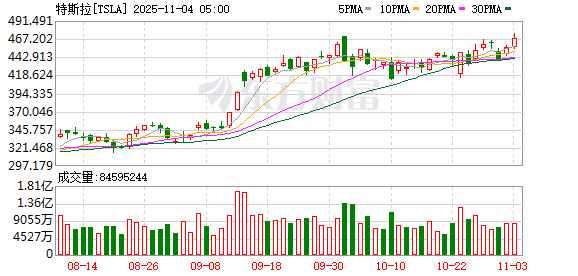
Tesla Cybercab特斯拉赛博无人驾驶电动车

Search documents
Cybercab亚太首秀,明年二季度计划量产丨南财看进博
2 1 Shi Ji Jing Ji Bao Dao· 2025-11-07 12:33
Core Points - Tesla's annual shareholder meeting approved Elon Musk's compensation plan, potentially worth up to $1 trillion, involving the grant of up to 423.7 million restricted stock units, representing approximately 12% of the company's total equity [2] - Musk must achieve specific market capitalization and operational goals to unlock the stock awards, including increasing Tesla's market value from around $1 trillion to $8.5 trillion and delivering 20 million vehicles [2] Group 1 - The Tesla Cybercab, a driverless electric vehicle, was showcased at the expo, featuring no steering wheel or pedals and utilizing Tesla Vision for autonomous driving without expensive hardware [3] - The Cybercab is designed for 1-2 passengers and aims to meet the majority of ride-hailing scenarios while also serving as a small freight vehicle [3] - Production of the Cybercab is planned to start in Q2 2026, intended for Tesla's Robotaxi fleet [3] Group 2 - Tesla is also advancing its humanoid robot, Tesla Bot, which shares technology with its electric vehicles and will begin production by the end of 2026, targeting an annual output of 1 million units by 2030 [3] - The third-generation humanoid robot is set to be released in Q1 2026 [3] Group 3 - Tesla emphasized its identity as an energy company, showcasing products like Solar Roof, Powerwall, V4 Supercharger, and Megapack at the expo [4] - The installation of Tesla's energy products reached a record 12.5 GWh by Q3 2025, driven by the ramp-up of the Shanghai energy storage factory and Powerwall installations [4]

马斯克在特斯拉股东大会透露:明年第三代人形机器人量产,可能自建大型晶圆厂
Sou Hu Cai Jing· 2025-11-07 03:17
Core Insights - Tesla's annual shareholder meeting highlighted advancements in humanoid robots, autonomous driving, production expansion, chip innovation, and mission updates [2][3][4] Group 1: Financial Position - Tesla currently holds over $40 billion in cash reserves with positive cash flow [2] Group 2: Humanoid Robots - Tesla's humanoid robot is projected to be the largest product ever, with a market size expected to reach billions of units, primarily for personal and industrial use [2] - The production line for humanoid robots will start with an annual capacity of 1 million units in Fremont, followed by a 10 million unit capacity in Texas [2] - The first generation of humanoid robots will begin mass production next year, with a target production cost of around $20,000 per unit once reaching a sustained output of 1 million units annually [2] - Future generations of humanoid robots are planned, with the third generation launching next year, the fourth in 2027, and the fifth in 2028 [2] Group 3: Autonomous Driving - Tesla's autonomous driving system, version V14.1, is reported to be smooth, with V14.3 expected to achieve a level of automation where users can sleep during travel [3][4] - The Cybercab, Tesla's first fully autonomous vehicle designed for Robotaxi operations, will begin production in April 2026, with a production rate target of 5-10 seconds per vehicle [3] - Vehicle production targets are set to increase by 50% next year, reaching an annualized output of 2.6 to 2.7 million units, with further growth expected to 4 million by the end of 2027 and 5 million by the end of 2028 [3] Group 4: Chip Development - Tesla is deeply involved in the design of the AI 5 chip, which has one-third the power consumption of Nvidia's Blackwell while maintaining comparable performance at a fraction of the cost [4] - The AI 6 chip is already in planning, expected to double the performance of AI 5 within a year of its production [4] - Tesla is considering building a "Terafab" to address chip supply constraints, aiming for a capacity of 1 million wafers per month [4] Group 5: Energy and Storage - A new energy storage Gigafactory in Nevada is set to begin production by the end of 2026 [5] - The Tesla Roadster is scheduled for a technical showcase in April 2026, with mass production expected 12-18 months later [5]


直击进博会|告别方向盘与脚踏板 特斯拉Cybercab首秀进博会
Zhong Guo Jing Ying Bao· 2025-11-05 07:50
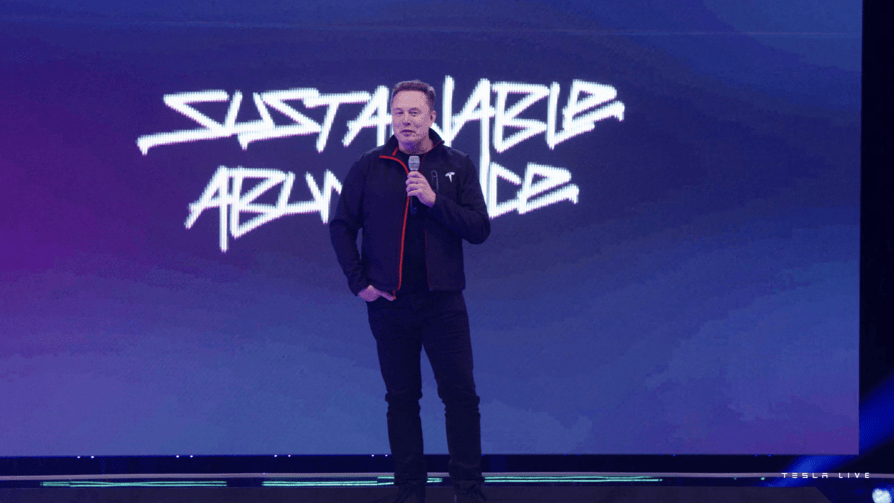
Group 1: Event Overview - The 8th China International Import Expo (CIIE) took place from November 5 to November 10 at the National Exhibition and Convention Center in Shanghai, showcasing global enterprises and innovative technologies [2] - Tesla presented its Tesla Cybercab, a driverless electric vehicle, which features a unique design without a steering wheel or pedals, attracting significant attention [2][4] Group 2: Tesla's Vision for Sustainable Prosperity - Tesla emphasizes that achieving a sustainable and prosperous society relies on AI technology to significantly reduce costs and improve efficiency across various industries [3] - The company has updated its mission to "accelerate the world's transition to sustainable prosperity," aligning its business goals with societal advancement [3] Group 3: Cybercab Features and Production Plans - The Cybercab, designed for 1-2 passengers, utilizes Tesla Vision and neural networks for autonomous driving without the need for lidar, achieving high energy efficiency of nearly 10 kilometers per kilowatt-hour [4][5] - Tesla plans to start mass production of the Cybercab in the second quarter of 2026, with testing already underway [5] Group 4: Robotaxi Operations and Cost Efficiency - Tesla's Robotaxi service, which began operations in Austin, Texas, in June 2025, aims to significantly lower transportation costs, with projected costs per kilometer being just a few dimes [6] - The introduction of Cybercab into the Robotaxi fleet is expected to enhance vehicle utilization, increasing average annual mileage to over 80,000 kilometers per vehicle [6] Group 5: Humanoid Robots and Future Production - Tesla is set to launch production of its humanoid robots by the end of 2026, with a target of producing 1 million units annually by 2030 [7] - The humanoid robots will share technology with Tesla's vehicles, utilizing extensive visual data for training and operational tasks [7][8] Group 6: Tesla's Global Market Performance - In the third quarter, Tesla produced approximately 447,000 electric vehicles and delivered 497,000, marking a historical high [10] - The Shanghai Gigafactory has become a key export center, achieving over 95% localization of parts and a 95% automation rate, with significant sales growth in the Chinese market [11]
直通进博会| 特斯拉Cybercab亚太首秀!无人驾驶黑科技亮相进博会
Xin Hua Cai Jing· 2025-11-04 02:52
Core Insights - The eighth China International Import Expo is set to showcase Tesla's innovative products, particularly the Tesla Cybercab, which highlights advancements in autonomous driving technology [2][4] - Tesla's vision for a sustainable and prosperous society relies on AI technology to significantly reduce costs and improve efficiency across transportation, energy, and robotics sectors [3] - The Cybercab features a unique design without a steering wheel or pedals, utilizing Tesla's Vision processing system and end-to-end neural network for autonomous driving, aiming to meet the needs of 1-2 passenger scenarios [4][5] Tesla's Innovations - The Cybercab is designed for efficiency, achieving nearly 10 kilometers on 1 kilowatt-hour of energy, and incorporates wireless charging and automatic cleaning features for operational scalability [5] - Tesla's humanoid robot, Tesla Bot, shares technology with its vehicles and is set to begin production by the end of 2026, with a target of 1 million units annually by 2030 [6] - The humanoid robots are capable of performing various tasks, including cleaning and industrial work, and are already operational at Tesla's engineering headquarters [6] Future Plans - Tesla plans to launch the Cybercab in the second quarter of 2026, with ongoing testing observed in California [5] - The company aims to integrate its AI capabilities and extensive visual data from vehicles to enhance the functionality of its humanoid robots [6] - CEO Elon Musk envisions a future where the ratio of humans to humanoid robots will increase significantly, impacting various sectors including manufacturing and healthcare [6]