Therabot

Search documents
AI已经在精神病院上班了
虎嗅APP· 2025-11-24 23:56
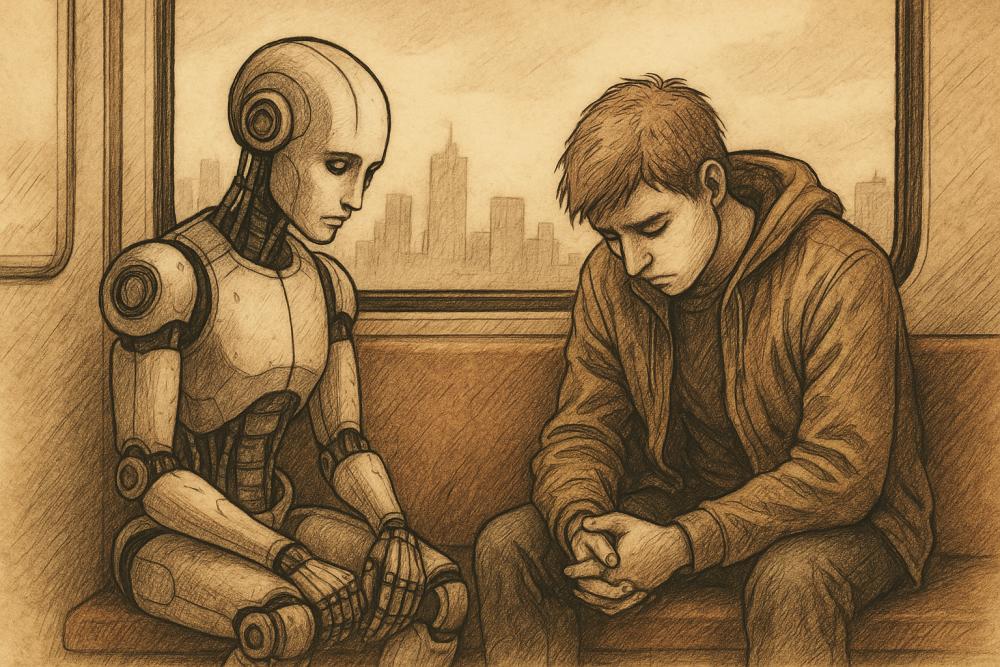
Core Viewpoint - The article discusses the integration of AI in mental health services, highlighting its role in depression screening and psychological intervention, while also addressing ethical concerns and the evolving relationship between AI and human emotions [5][6][19]. Group 1: AI in Mental Health Services - AI systems, such as "Zhixin Zhiyu," are being utilized in mental health institutions to assess depression risk with an accuracy of 80% by analyzing micro-expressions and voice tone [13]. - The development of digital therapy products like "Xinling Daoyu Aurora" offers structured digital interventions for patients, showcasing a shift towards technology-driven mental health solutions [14]. - AI is increasingly taking on roles in initial consultations, follow-ups, and reminders in various psychiatric hospitals across China, indicating a broader acceptance of AI in clinical settings [15][19]. Group 2: Ethical and Practical Considerations - Experts emphasize the need for rigorous clinical research and ethical reviews for AI tools in mental health, given the significant shortage of mental health professionals [19]. - The World Health Organization estimates that around 1 billion people globally suffer from mental health issues, with China reporting 6.6 million registered severe mental disorder patients against only 64,000 psychiatrists [19]. - The article notes that while AI can alleviate some pressure on healthcare providers, it must be used cautiously, particularly for severe mental health conditions [19][32]. Group 3: User Experience and Emotional Impact - Users report feeling more comfortable with AI interactions, as these systems provide non-judgmental support, which can be particularly beneficial for those experiencing loneliness or anxiety [31][33]. - However, there are concerns about emotional dependency on AI, with studies indicating that high satisfaction with AI interactions may lead to decreased interpersonal communication skills [34]. - The article highlights the importance of balancing AI's supportive role with the need for genuine human connection, as algorithms can simulate empathy but cannot replace the depth of human experience [34][35].


热衷于AI心理辅导的人,最终还是回到了真实的诊所
3 6 Ke· 2025-10-30 12:37
Core Insights - The article discusses the increasing reliance on AI for emotional support and psychological counseling, highlighting a shift from traditional human therapists to AI-driven solutions [4][12][29] Group 1: AI in Emotional Support - A significant portion of individuals, approximately 22%, have consulted a psychologist, while nearly 50% have interacted with AI chatbots regarding psychological issues [9] - Users like Xiao Lin and Vivian illustrate the dual purposes of AI in mental health: seeking self-understanding and companionship [11][9] - AI applications such as DeepSeek and ChatGPT provide users with immediate, non-judgmental responses, which contrasts with human therapists who may exhibit biases [7][9] Group 2: AI Applications and Effectiveness - AI tools like Therabot and Woebot have shown promising results in alleviating symptoms of depression and anxiety, with Therabot participants experiencing an average symptom reduction of 51% after four weeks [15][17] - The effectiveness of AI in mental health is often linked to its ability to provide structured interactions and immediate feedback, which can be beneficial for users with specific issues [11][17] Group 3: The Role of Human Intervention - Despite the advantages of AI, human therapists remain crucial for understanding nuanced emotional cues that AI may miss, as 70% of human communication is non-verbal [27][25] - AI applications often include mechanisms for human intervention to address extreme risks, such as suicidal tendencies, emphasizing the need for a balanced approach [22][24] - The integration of AI in mental health services aims to complement human therapists rather than replace them, facilitating a return to meaningful human interactions [29][31]

AI伴侣的温柔陷阱:算法虽懂你,但也纵容了人性弱点
3 6 Ke· 2025-07-15 09:17
Core Viewpoint - The article discusses the potential benefits and risks of AI companions in alleviating loneliness, emphasizing that while they may provide comfort, they could also undermine personal growth and the value of real human relationships [3][5][24]. Group 1: AI Companions and Loneliness - AI companions can offer solace to marginalized groups, such as the elderly and socially isolated individuals, acting as a digital painkiller [5][24]. - AI's ability to simulate empathy may surpass that of human caregivers, as studies show AI like ChatGPT often performs better in expressing understanding and empathy compared to human doctors [5][8]. - The phenomenon of loneliness is increasingly recognized as a serious issue, prompting government attention in countries like Japan and the UK, which have appointed ministers to address loneliness [6][24]. Group 2: Philosophical and Psychological Perspectives - The article explores the dual nature of AI companions, presenting them as both a source of hope and a potential threat to human emotional needs [3][5]. - Loneliness serves as a biological signal that drives individuals to seek social connections, and if AI alleviates this pain too effectively, it may diminish the motivation to foster real relationships [5][20]. - The concept of "artificial empathy" raises ethical questions about the nature of relationships formed with AI, as true understanding is simulated rather than genuine [5][13]. Group 3: Societal Implications - The increasing reliance on AI for companionship may lead to a societal shift where genuine human connections become less valued, particularly among younger generations [24]. - Critics argue that AI companions could exacerbate cognitive biases and mental health issues by failing to challenge users, potentially leading to a lack of personal growth [5][22]. - The article suggests that while AI can provide immediate comfort, it may also lead to a loss of essential human experiences and the motivation to connect with others [24].