WEWA架构

Search documents
鸿蒙智行开启的L3路测,通向一个怎样的未来?
36氪· 2025-12-26 13:08
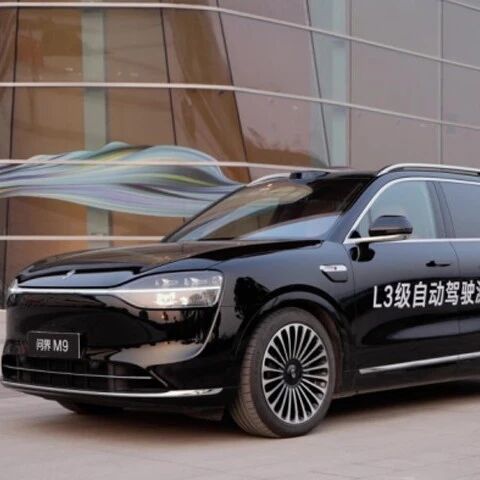
Core Viewpoint - The article discusses the recent approval of L3 conditional autonomous driving vehicles by the Ministry of Industry and Information Technology in China, highlighting the significance of real-world testing by companies like Hongmeng Zhixing to validate their systems and advance the industry [1][3][28]. Group 1: L3 Development and Testing - Hongmeng Zhixing has initiated real-world testing of L3 autonomous driving systems in cities like Chongqing and Hefei, utilizing its mass-produced models, the Zun Jie S800 and Wen Jie M9, to validate performance under actual traffic conditions [1][3]. - The testing videos demonstrate the vehicle's ability to autonomously navigate, change lanes, and overtake in traffic, showcasing the system's capability to execute dynamic driving tasks without the driver needing to hold the steering wheel [13][15]. - The company emphasizes the importance of extensive real-world testing to bridge the gap between functional demonstrations and user trust in L3 systems, addressing challenges such as human-machine interaction and responsibility delineation [8][10][24]. Group 2: Technical and Safety Considerations - The distinction between L2 and L3 lies in the shift of responsibility from the driver to the system, necessitating a robust safety engineering framework focused on system reliability and extensive validation standards [7][24]. - Hongmeng Zhixing's L3 system is built on the WEWA architecture, which allows for the creation of complex virtual driving scenarios, enabling the system to learn from extreme situations and improve decision-making capabilities [15][16]. - The company has developed a multi-source sensor array to enhance perception capabilities, ensuring reliable performance in challenging conditions such as heavy rain and fog [19][21]. Group 3: Market Outlook and Industry Impact - The market for L3 autonomous vehicles in China is projected to grow significantly, from 150 billion yuan in 2025 to 800 billion yuan by 2030, with a compound annual growth rate of 38.7% [25][30]. - Hongmeng Zhixing's proactive approach in L3 testing positions it as a leader in the industry, setting a high standard for engineering validation and potentially reshaping user trust in autonomous driving technology [26][30]. - The company aims to establish a competitive edge through data-driven improvements and a comprehensive safety framework, addressing the industry's need for reliable autonomous vehicles [16][30].

辅助驾驶,安全不能只是口号
3 6 Ke· 2025-11-28 11:24
Core Viewpoint - The automotive industry is shifting back to a development trajectory based on safety and quality, moving away from chaotic marketing practices, particularly in the autonomous driving sector [2][11]. Industry Trends - The introduction of new battery standards and regulations on autonomous driving indicates a regulatory push to ensure safety in the electric vehicle sector [2]. - The phrase "when the tide goes out, you see who is swimming naked" applies to the autonomous driving technology industry, highlighting the need for genuine technological capabilities [3]. Technological Developments - The industry is facing malicious attacks and misleading evaluations that disrupt healthy development, prompting national measures against "internet water armies" and black public relations [4]. - A joint live test by Pacific Automotive and Tongji University showcased the superior performance of vehicles equipped with Huawei's QianKun intelligent driving system, achieving full marks in all nine testing scenarios [5]. - Huawei's QianKun intelligent driving system has demonstrated significant advancements, including a 50% reduction in system latency and improved decision-making speed [6]. Safety and Standards - Safety is emphasized as a core principle, with Huawei's QianKun integrating a multi-sensor approach to enhance safety in various driving conditions [11]. - The CAS 4.0 system provides comprehensive collision avoidance capabilities, significantly enhancing safety features in vehicles [12][14]. Market Position - As of October 2025, Huawei's QianKun has partnered with 15 leading automotive companies, producing 35 models and capturing a 27.8% market share in the autonomous driving sector [9]. - In the luxury vehicle market, Huawei's market share reached 52.75%, indicating strong consumer preference for its technology [9]. Data and Ecosystem - Huawei's QianKun intelligent driving platform benefits from a "snowball effect" driven by data collection from vehicles, enhancing algorithm optimization and user experience [15][16]. - The platform's cloud computing power reached 45 EFLOPS, enabling efficient processing of vast amounts of driving data [16][17]. - By October 2025, the cumulative driving distance for Huawei's QianKun intelligent driving system reached 58.1 billion kilometers, establishing it as a leader in the industry [18]. Competitive Advantage - The combination of data and scale creates a robust competitive moat for Huawei, making it increasingly difficult for smaller competitors to keep pace [20]. - The focus on safety and quality, alongside significant investments in technology and infrastructure, positions Huawei as a leader in the autonomous driving market [20].
辅助驾驶,安全不能只是口号
36氪· 2025-11-28 11:13
Core Viewpoint - The automotive industry is returning to a development trajectory based on safety and quality, moving away from chaotic marketing practices [3][4][27]. Group 1: Industry Trends - The introduction of new battery standards and regulations on assisted driving indicates a shift towards prioritizing safety and quality in the automotive sector [3][4]. - The phrase "when the tide goes out, you see who is swimming naked" applies to the assisted driving technology industry, highlighting the need for genuine capabilities [5]. - The industry is witnessing a crackdown on malicious attacks and misleading evaluations that disrupt healthy development, supported by government actions against "internet water armies" and black public relations [7]. Group 2: Technological Advancements - The Huawei QianKun intelligent driving system has demonstrated superior performance in various tests, achieving full marks in all nine scenarios, particularly excelling in challenging situations [8][9]. - The QianKun system's architecture has improved response times by 50% and reduced braking rates by 70%, enhancing overall driving efficiency and user experience [11][12]. - The system has been upgraded to support cross-city commuting and can autonomously navigate from home to target parking spots, with an increasing number of supported parking facilities [11]. Group 3: Market Position and Performance - Huawei QianKun has established partnerships with 15 leading automotive companies, launching 35 mass-produced models and capturing a 27.8% market share in the assisted driving sector [12][20]. - The QianKun system has sold 452,000 units from January to September 2025, with a market share of 52.75% in the luxury car segment [12][20]. - The cumulative mileage for Huawei QianKun's assisted driving has reached 5.81 billion kilometers, with 35 million parking assists, leading in multiple core metrics [24][27]. Group 4: Safety and Reliability - Safety is embedded in the brand's DNA, with a commitment to prioritize safety at all levels of operation [16][17]. - The QianKun system features a comprehensive collision avoidance system capable of operating in various scenarios, enhancing overall safety [17][19]. - The system has successfully prevented over 3.18 million potential collisions, reinforcing its reputation as a reliable choice for automotive companies [19][29]. Group 5: Competitive Advantage - The QianKun platform benefits from a "snowball effect" driven by data collection from numerous vehicles, enhancing its algorithm and user experience [22][24]. - Huawei's significant investment in the assisted driving sector, exceeding billions annually, strengthens its technological development and product iteration capabilities [24][25]. - The combination of data and scale creates a robust competitive moat, making it challenging for smaller competitors to keep pace [27][29].