
辅助驾驶技术

Search documents
英伟达:与现代汽车、起亚深化合作,共同推进下一代辅助驾驶技术发展
Huan Qiu Wang Zi Xun· 2026-03-18 07:09
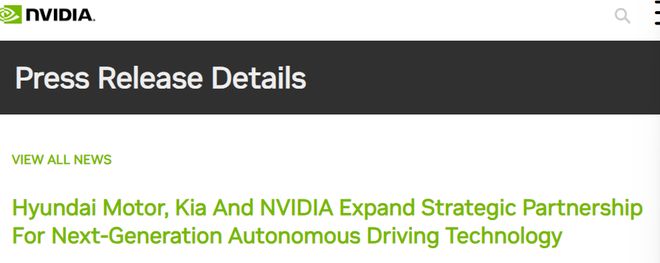
Core Insights - NVIDIA announced a deepened collaboration with Hyundai Motor Group and Kia to advance next-generation driver assistance technology based on the NVIDIA DRIVE Hyperion™ platform [1][2]. Group 1: Collaboration Details - NVIDIA's accelerated computing, AI infrastructure, and driver assistance software will be combined with Hyundai's software-defined vehicle development capabilities, global fleet scale, and experience in driver assistance development [2]. - Hyundai plans to integrate NVIDIA's driver assistance technology into certain models, providing L2 and above driver assistance systems to enhance safety and intelligent driving capabilities [2]. - The collaboration will also explore expanded cooperation with Motional, Hyundai's autonomous driving joint venture, to enhance L4 autonomous taxi technology and accelerate the development of next-generation autonomous mobility services [2]. Group 2: Technology Development - The partnership aims to develop a scalable data-driven driver assistance technology stack on the NVIDIA DRIVE Hyperion platform, supporting a range of functionalities from advanced driver assistance to higher-level autonomous driving, covering L2 to L4 levels [2]. - By combining Hyundai's large-scale fleet data and software-defined vehicle development capabilities with NVIDIA's AI computing platform, the collaboration will accelerate the creation of a continuous development loop encompassing real-world driving data collection, AI model training and optimization, simulation, validation, and deployment in production vehicles [2][3]. - This model will help Hyundai strengthen the development of data-driven driver assistance technology, allowing vehicles to continuously learn in real driving environments, train advanced AI models, and drive system iteration and upgrades [3].


最高法明确辅助驾驶系统不能代替驾驶人成为驾驶主体,责任仍在人
Zhong Guo Jing Ying Bao· 2026-02-14 10:23
Core Viewpoint - The Supreme People's Court of China has released its first guiding cases on criminal liability related to road traffic safety, addressing issues arising from the use of advanced driver-assistance systems (ADAS) and clarifying the legal responsibilities of drivers when using such technologies [1][3]. Group 1: Legal Clarifications - Guiding Case No. 271 clarifies that activating an ADAS does not transfer driving responsibility from the driver to the system; the driver remains responsible for ensuring safety while using the system [1][3]. - The case specifies that if a driver uses illegal devices to evade monitoring by the ADAS, they are still considered the driver and must bear legal responsibility, even if not physically controlling the vehicle [1][3]. Group 2: Case Details - The case involved an individual, Wang Mouqun, who drove under the influence and activated the ADAS while using an illegal device to avoid system monitoring, resulting in a legal ruling against him for dangerous driving [2][3]. - Wang Mouqun had prior knowledge of the risks associated with using the ADAS after consuming alcohol, yet he chose to install a device that simulated hand contact with the steering wheel to bypass safety measures [2][3]. Group 3: Impact on Traffic Safety - The release of these guiding cases aims to resolve disputes in the judicial practice of traffic safety criminal cases, standardize legal applications, and enhance the efficiency of handling such cases [3]. - Data from 2025 indicates a general improvement in road traffic safety, with a decrease in both the total number of accidents and serious incidents, as well as a reduction in the number of criminal cases related to traffic offenses [3].
中国最高法:车载辅助驾驶系统不能代替驾驶人成为驾驶主体
Zhong Guo Xin Wen Wang· 2026-02-13 06:28
Group 1 - The Supreme People's Court of China has clarified that driver assistance systems cannot replace the driver as the primary operator of the vehicle, emphasizing that drivers remain legally responsible even when using such systems [1] - In a specific case, a defendant was found guilty of dangerous driving after activating an auxiliary driving system while intoxicated and using unauthorized equipment, leading to a legal ruling that affirmed the driver's responsibility [1] - The court sentenced the defendant to one month and fifteen days of detention and a fine of 4,000 RMB, with the ruling becoming legally effective without appeal [1] Group 2 - By 2025, the overall traffic safety situation in China is expected to remain stable, with a decrease in both total accidents and serious incidents, alongside a reduction in the number of criminal cases related to traffic safety [2] - The Supreme Court reported a decline of over 3% in the acceptance of first-instance traffic accident criminal cases, with approximately 43,000 cases, and a nearly 16% decrease in first-instance dangerous driving cases, totaling around 230,000 [2] - The release of these guiding cases aims to unify legal applications and address complex legal issues, including the establishment of accomplice liability in cases of drunk driving and the sentencing rules for drug-related driving incidents [2]
酒后开启智驾就可以开车吗?最高法明确了
凤凰网财经· 2026-02-13 04:58
Core Viewpoint - The Supreme People's Court of China has released its first set of guiding cases on road traffic safety, focusing on criminal liability related to driving under the influence while using advanced driver assistance systems (ADAS) [1][2]. Group 1: Guiding Cases Overview - The guiding cases include specific rules for determining criminal responsibility when drivers activate ADAS while not paying attention to driving, such as using mobile phones or sleeping [2]. - Case 271, known as the Wang Mouqun Dangerous Driving Case, clarifies that activating an ADAS does not absolve the driver of responsibility; the driver remains the primary operator and must ensure safety [2][4]. Group 2: Case Details - In the Wang Mouqun case, the defendant drove under the influence and activated the vehicle's ADAS while using an illegal device to evade monitoring, resulting in a dangerous situation where he fell asleep in the passenger seat [3][4]. - The vehicle was equipped with a Level 2 automation system, which requires the driver to remain engaged and ready to take control if necessary [4]. - The court sentenced Wang Mouqun to 45 days of detention and a fine of 4,000 RMB for dangerous driving, with the judgment becoming legally effective without appeal [4].
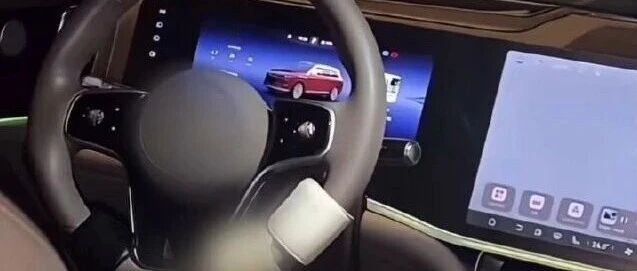
酒后开启智驾就可以开车吗?最高法明确了
Feng Huang Wang Cai Jing· 2026-02-13 04:14
Core Viewpoint - The Supreme People's Court of China has released its first set of guiding cases specifically focused on road traffic safety, highlighting the legal responsibilities of drivers using advanced driver-assistance systems (ADAS) [1][2]. Group 1: Guiding Cases Overview - The 48th batch of guiding cases includes regulations related to driving under the influence while using intelligent driving features [2]. - Case 271, known as the Wang Mouqun dangerous driving case, clarifies that activating an ADAS does not absolve the driver of their responsibility to ensure safe driving [2][5]. Group 2: Case Details - In the Wang Mouqun case, the defendant drove under the influence and activated the vehicle's ADAS while using an illegal device to evade monitoring, resulting in a dangerous situation where he was not actively supervising the vehicle [5][6]. - The court found that the defendant was aware of the risks associated with using the ADAS after consuming alcohol and had previously studied the safety protocols related to the system [6]. Group 3: Legal Implications - The ruling emphasizes that drivers remain the primary operators of their vehicles even when using ADAS, and they must be prepared to take control at any moment [2][6]. - The case serves as a precedent for future legal interpretations regarding the use of ADAS and the responsibilities of drivers in similar situations [2][5].
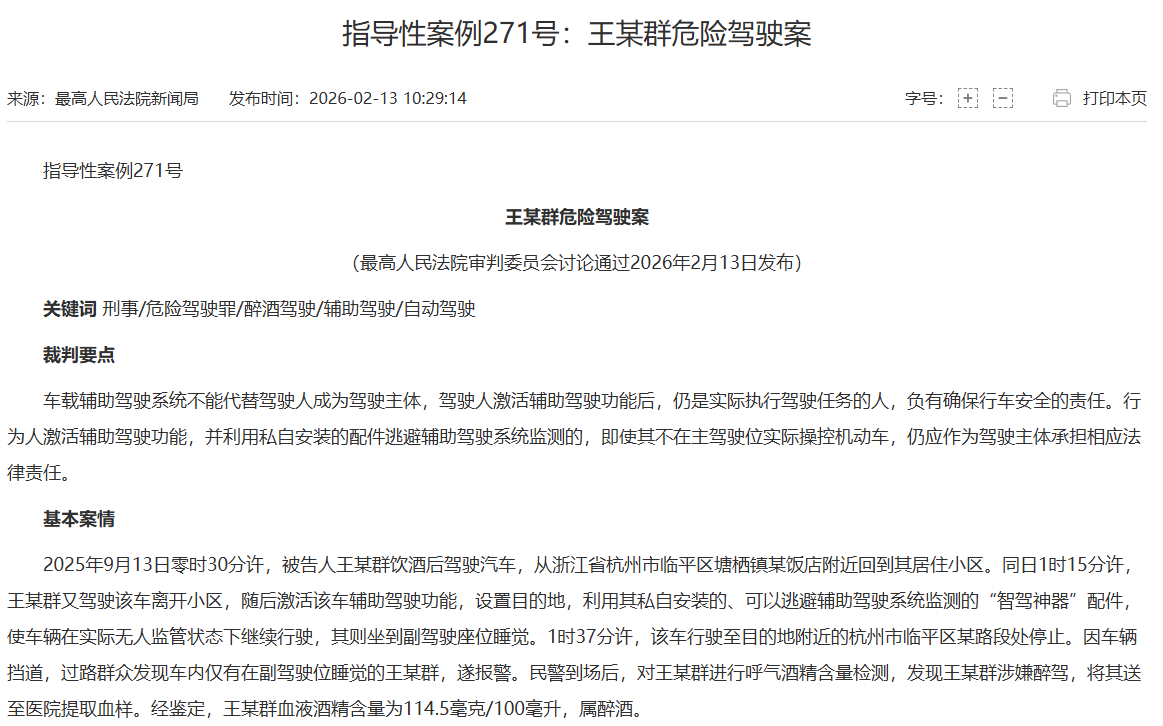
最高法首次发布道路交通安全刑事专题指导性案例,明确辅助驾驶情形下刑事责任认定规则
Mei Ri Jing Ji Xin Wen· 2026-02-13 02:29
Core Viewpoint - The Supreme People's Court of China has released its first criminal guidance case on road traffic safety, clarifying the legal responsibilities of drivers when using advanced driver-assistance systems (ADAS) [1] Group 1: Legal Responsibilities - The guidance specifies that drivers activating ADAS must remain focused on driving and cannot engage in distracting activities such as using a mobile phone or sleeping [1] - The case highlights that drivers who use illegal accessories to bypass safety monitoring systems are still considered the primary operators of the vehicle and are liable for any legal consequences [1] - Case No. 271, "Wang Mouqun Dangerous Driving Case," establishes that the vehicle's ADAS does not replace the driver as the primary entity responsible for safe driving [1]
小鹏汽车加快“纯电+增程”车型布局 Robotaxi即将开启公开道路测试
Zhong Zheng Wang· 2026-01-09 02:02
Core Viewpoint - Xiaopeng Motors is positioning 2026 as a significant year for product launches, introducing four new models and expanding its business into diverse areas such as Robotaxi operations and humanoid robots [1] Group 1: New Product Launches - Xiaopeng Motors unveiled four new vehicles at the 2026 Global New Product Launch, including the 2026 P7+, G7, G6, and G9, with the first two models available in both pure electric and range-extended versions [1] - The company plans to launch four new SUVs in 2026, emphasizing its commitment to a diverse product lineup [1] Group 2: Business Strategy - The company is accelerating its "pure electric + range-extended" strategy, having introduced its first range-extended vehicle in November 2025 [1] - Xiaopeng Motors aims to enhance its autonomous driving capabilities by upgrading driver assistance to achieve Level 4 (L4) autonomy [1][3] Group 3: Technology Development - The latest models will feature the second-generation Visual Language Action (VLA) model, which is designed to enable L4 capabilities and improve the understanding of real-world scenarios [1][2] - The second-generation VLA eliminates the "language translation" step, allowing for direct generation of action commands from visual signals, enhancing the vehicle's operational capabilities [2]
辅助驾驶,安全不能只是口号
36氪· 2025-11-28 11:13
Core Viewpoint - The automotive industry is returning to a development trajectory based on safety and quality, moving away from chaotic marketing practices [3][4][27]. Group 1: Industry Trends - The introduction of new battery standards and regulations on assisted driving indicates a shift towards prioritizing safety and quality in the automotive sector [3][4]. - The phrase "when the tide goes out, you see who is swimming naked" applies to the assisted driving technology industry, highlighting the need for genuine capabilities [5]. - The industry is witnessing a crackdown on malicious attacks and misleading evaluations that disrupt healthy development, supported by government actions against "internet water armies" and black public relations [7]. Group 2: Technological Advancements - The Huawei QianKun intelligent driving system has demonstrated superior performance in various tests, achieving full marks in all nine scenarios, particularly excelling in challenging situations [8][9]. - The QianKun system's architecture has improved response times by 50% and reduced braking rates by 70%, enhancing overall driving efficiency and user experience [11][12]. - The system has been upgraded to support cross-city commuting and can autonomously navigate from home to target parking spots, with an increasing number of supported parking facilities [11]. Group 3: Market Position and Performance - Huawei QianKun has established partnerships with 15 leading automotive companies, launching 35 mass-produced models and capturing a 27.8% market share in the assisted driving sector [12][20]. - The QianKun system has sold 452,000 units from January to September 2025, with a market share of 52.75% in the luxury car segment [12][20]. - The cumulative mileage for Huawei QianKun's assisted driving has reached 5.81 billion kilometers, with 35 million parking assists, leading in multiple core metrics [24][27]. Group 4: Safety and Reliability - Safety is embedded in the brand's DNA, with a commitment to prioritize safety at all levels of operation [16][17]. - The QianKun system features a comprehensive collision avoidance system capable of operating in various scenarios, enhancing overall safety [17][19]. - The system has successfully prevented over 3.18 million potential collisions, reinforcing its reputation as a reliable choice for automotive companies [19][29]. Group 5: Competitive Advantage - The QianKun platform benefits from a "snowball effect" driven by data collection from numerous vehicles, enhancing its algorithm and user experience [22][24]. - Huawei's significant investment in the assisted driving sector, exceeding billions annually, strengthens its technological development and product iteration capabilities [24][25]. - The combination of data and scale creates a robust competitive moat, making it challenging for smaller competitors to keep pace [27][29].

超过85%的用户因为天神之眼 B选择顶配版方程豹钛7!
Qi Lu Wan Bao· 2025-10-16 06:05
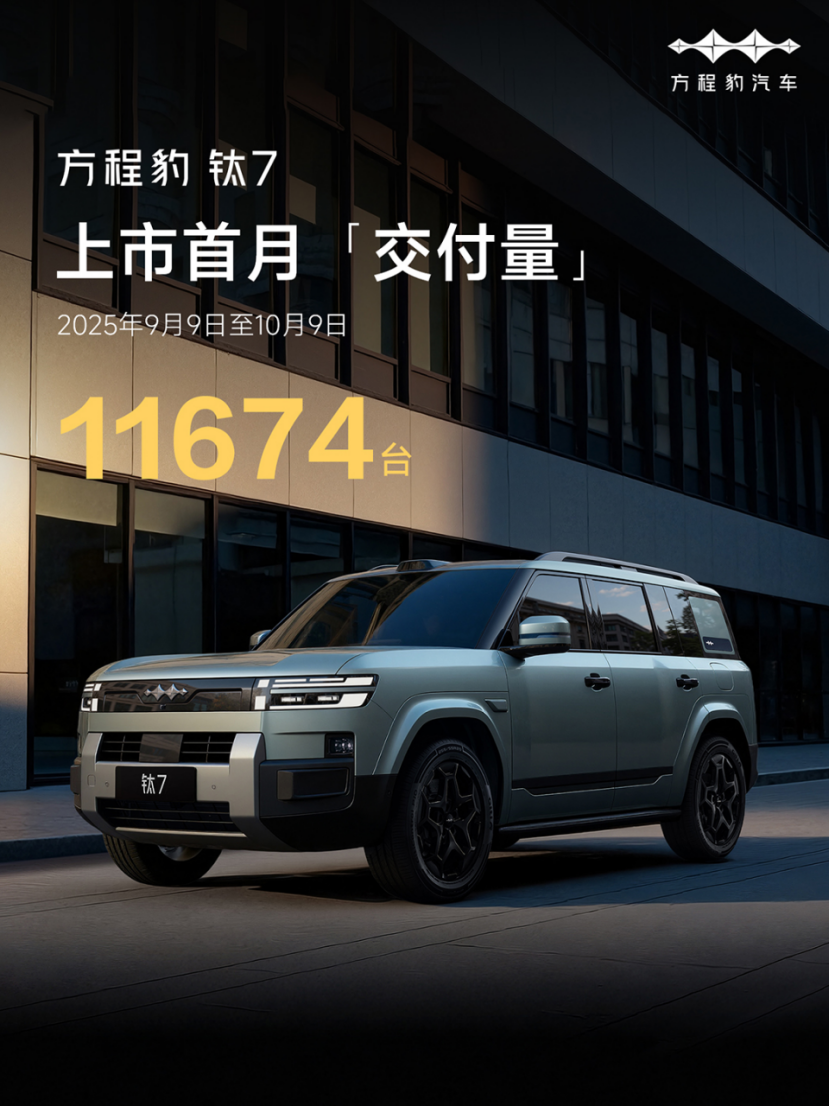
Core Insights - BYD's personalized brand, Fangchengbao, launched the Fangchengbao Titanium 7, achieving a remarkable delivery volume of 11,674 units in its first full sales month, surpassing market expectations and setting a new record for the brand [1] - 85% of Titanium 7 buyers opted for the top-tier four-wheel drive Ultra version, highlighting its strong appeal due to advanced technologies and luxurious features [3] Sales Performance - The Titanium 7's delivery of 11,674 units marks a significant milestone for Fangchengbao, showcasing its strong product capability and brand influence in the new energy SUV market [1] - The top-tier Ultra version's popularity indicates a trend towards high-end configurations among consumers [3] Technology and Features - The Titanium 7 Ultra version is equipped with the "Tianshen Eye B" advanced driver assistance system, which includes laser radar, multiple millimeter-wave radars, ultrasonic radars, and high-definition cameras, significantly enhancing driving safety [5] - The Tianshen Eye B system has proven its effectiveness in real-world scenarios, such as preventing dangerous accidents, which contributes to its positive reputation among users [7] - The system also offers efficiency features, allowing users to optimize their driving experience and save time during daily commutes [10] Continuous Improvement - The Tianshen Eye B system benefits from BYD's extensive research and development capabilities, with a large data foundation supporting continuous upgrades and enhancements [11] - The Titanium 7 Ultra version comes with a variety of advanced driving assistance features at launch, with plans for future upgrades to further improve functionality [11] Market Positioning - BYD's successful integration of advanced technology and precise product positioning has led to the Titanium 7's popularity, demonstrating the company's effective "hit product formula" [13]

新华汽车实验室|别克至境 L7“逍遥智行”首搭Momenta R6 飞轮大模型,首发体验公开
Zhong Guo Jin Rong Xin Xi Wang· 2025-09-29 11:49
Core Insights - The article highlights the launch of the Buick Zhijing L7, which features advanced driver assistance technology developed in collaboration with Momenta, showcasing its capabilities in various real-world driving scenarios [1][2]. Group 1: Product Launch and Features - The Buick Zhijing L7 is equipped with the "Xiaoyao Zhixing" driver assistance system based on the Momenta R6 flying wheel model, offering full-scene assistance features such as city NOA and "no-stop one-click parking" [1][2]. - The R6 flying wheel model utilizes 4 billion kilometers of driving data to enhance its decision-making capabilities through reinforcement learning, aiming to exceed human driving performance in complex scenarios [2][6]. - The L7's launch price starts at 169,900 yuan, and it is positioned as the first mass-produced model under Buick's high-end new energy sub-brand [6]. Group 2: Testing and Performance - The "Xiaoyao Zhixing" system was tested over a 20-kilometer route, covering various challenging environments, including congested urban areas and narrow mixed traffic [3][4]. - The L7 demonstrated its ability to recognize and respond to complex traffic situations, such as avoiding obstacles and smoothly merging into traffic, showcasing a natural "human-machine co-driving" experience [3][4]. - The system's parking capabilities were highlighted through a challenging parking test, where the L7 could autonomously identify parking spaces and execute parking maneuvers effectively [4]. Group 3: Technical Insights - The integration of AI algorithms and vehicle dynamics is emphasized as a key factor in delivering a smooth driving experience, with the collaboration between Momenta's R6 model and Buick's engineering expertise [5][6]. - The R6 flying wheel model's unique advantages stem from its ability to self-optimize using a vast "question bank," allowing it to make smarter and safer driving decisions [6]. - The L7 also incorporates advanced technologies such as lidar and the Qualcomm 8775 chip, reinforcing its competitive edge in the new energy vehicle market [6].