
cHBM

Search documents
存储不再是周期性产业
半导体行业观察· 2026-03-30 01:07
Core Viewpoint - The memory industry is not in a "super cycle" but is undergoing a structural transformation that allows for sustained higher value rather than cyclical fluctuations [3][7]. Group 1: Market Dynamics - The traditional memory industry followed a predictable cyclical pattern where slight oversupply led to price crashes, followed by reduced investment and eventual recovery [5]. - Major players in the memory market have shifted focus from aggressive capacity expansion to profitability, capital efficiency, and customer structure due to past experiences with oversupply and price drops [5][6]. - The demand for High Bandwidth Memory (HBM) is complex and requires strategic supply management, making long-term contracts essential for stability rather than just sales tools [6][7]. Group 2: HBM Market Requirements - To purchase HBM from SK Hynix, companies must meet three criteria: access to TSMC's advanced packaging capacity, the ability to operate large-scale data centers, and sufficient funding [9][11]. - The actual buyer pool for HBM has narrowed to large-scale data centers and companies like NVIDIA, Microsoft, Google, Amazon, and Meta, which can meet the necessary infrastructure and financial requirements [11][12]. Group 3: Structural Changes in the Industry - The memory industry is transitioning from a commodity-focused business to a solution-oriented business, with a greater emphasis on custom design and collaboration with clients [13][15]. - The construction of large data centers requires a comprehensive approach involving not just DRAM but also GPUs, HBM, packaging, networking, SSDs, and power infrastructure, fundamentally changing the supply chain dynamics [16][20]. - The demand for memory driven by AI data centers is no longer cyclical but is tied to long-term infrastructure investments by major companies, altering the nature of price fluctuations in the memory market [19][20].


三星公布HBM新路线图
半导体行业观察· 2026-02-12 00:56
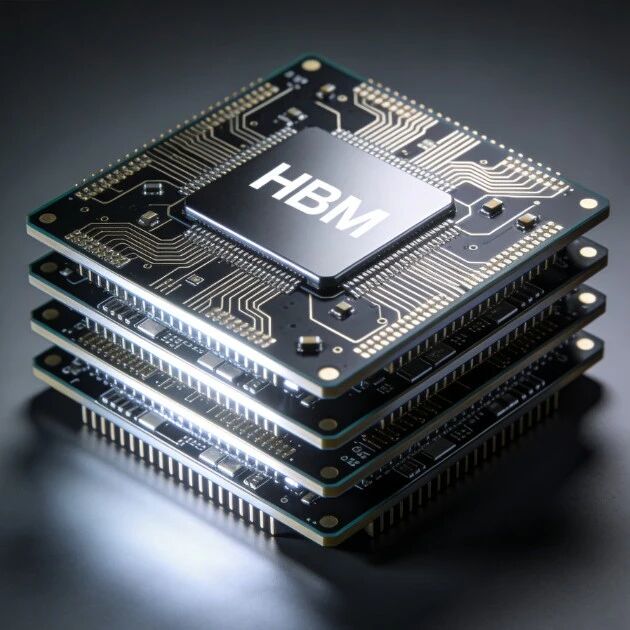
Core Viewpoint - Samsung Electronics is advancing its next-generation product roadmap, focusing on technologies that significantly reduce memory bandwidth limitations as artificial intelligence evolves from Agent AI to Physical AI [2][3]. Group 1: Product Development and Innovations - Samsung is developing custom High Bandwidth Memory (cHBM) to enhance performance by allowing base chips to handle tasks traditionally managed by GPUs, targeting a performance increase of 2.8 times at the same power consumption [3]. - The company is also working on the zHBM architecture, which aims to double wafer-to-wafer bonding efficiency, crucial for the bandwidth and power efficiency required in the Physical AI era [3]. - Samsung is introducing hybrid copper bonding (HCB) technology in the next generation of HBM, which allows direct chip bonding without bumps, significantly improving data exchange speed and power efficiency [4]. Group 2: Market Insights and Projections - According to Semi, Korea's chip exports are projected to reach $173.4 billion in 2025, a 22.2% increase from the previous year, with December alone hitting a record monthly high of $20.7 billion [4]. - Global semiconductor revenue and AI-related capital expenditures are expected to exceed $1 trillion by 2027, with wafer production capacity projected to expand from 25 million wafers per month to approximately 45 million by 2030 [5]. - Memory and advanced packaging technologies are now critical constraints for AI infrastructure expansion, shifting their role from auxiliary to essential [5].
存储市场更新_2025 年台湾国际半导体展存储高管峰会核心要点-Memory Market Update_ Key takeaways from SEMICON Taiwan 2025 Memory executive summit
2025-09-18 13:09
Summary of J.P. Morgan's Memory Market Update Industry Overview - The report focuses on the **memory industry**, particularly **DRAM** and **HBM (High Bandwidth Memory)** solutions, as discussed during the **SEMICON Taiwan 2025 Memory Executive Summit** [1] Key Insights 1. **Long-term Growth Prospects**: - Positive outlook on long-term DRAM growth driven by: - Increasing custom silicon needs for next-gen HBM solutions - Enhanced power savings contributions - Development of emerging memory solutions (CXL, PIM, Z-NAND, CUBE) - New memory solutions for edge AI applications - Pathfinding to higher capacity through hybrid copper bonding [1] 2. **Custom HBM's Role**: - Transition from passive to active memory solutions, with custom HBM (cHBM) becoming integral to AI infrastructure design - Memory makers are focusing on tailored features and processing capabilities to meet diverse customer needs - Collaboration with foundries and supply chain partners is emphasized [1] 3. **Power Consumption and AI**: - AI's explosive power consumption is leading to a critical role for HBM in total cost of ownership (TCO) savings - Datacenter power consumption is projected to rise from 1.5% in 2025 to 3.0% by 2030, with AI servers expected to account for 65% of datacenter power consumption by 2030, increasing 56 times compared to 2023 [7] - Memory makers are addressing design challenges to meet power-saving requirements, with SKH highlighting the importance of higher stack and bandwidth [7] 4. **Emerging Memory Solutions**: - Memory makers are targeting the commercialization of emerging memory solutions for specific applications - Notable developments include Samsung's LPD5X-PIM and SEC's SOCAMM2, which offers a 70% smaller form factor compared to DIMM [12] 5. **AI Inferencing Growth**: - Shift from AI training to AI inferencing is expected to drive growth in edge AI hardware, with a projected 21% CAGR from 2023 to 2030, reaching a total addressable market of $50 billion [12] - Memory suppliers are preparing advanced edge AI solutions for market adoption in the next 2-3 years [12] 6. **Hybrid Bonding Solutions**: - Increasing commitment to hybrid bonding solutions in HBM, with expectations of higher layer stacking and better thermal resistance [15] - SKH has completed HBM4 development, supporting speeds of 10Gb/s+, ahead of competitors [15] 7. **Investment Recommendations**: - Memory shares have risen 27% in the last month, driven by strong AI demand and improved pricing expectations for conventional memory [15] - The memory sector's risk-reward profile is viewed favorably over the next 6-12 months, with SKH and SEC recommended as top picks [15] Additional Important Points - The report highlights the importance of R&D investment in hybrid bonding technology and the expected impact of HBM4 qualification on pricing negotiations [15] - The ongoing strength in AI demand is anticipated to maintain tight supply-demand conditions until new capacity expansions begin in 2027 [15]