elecoglipron

Search documents
阿斯利康获瑞银上调目标价至238.85美元,市值超3200亿美元
Xin Lang Cai Jing· 2026-02-27 18:11
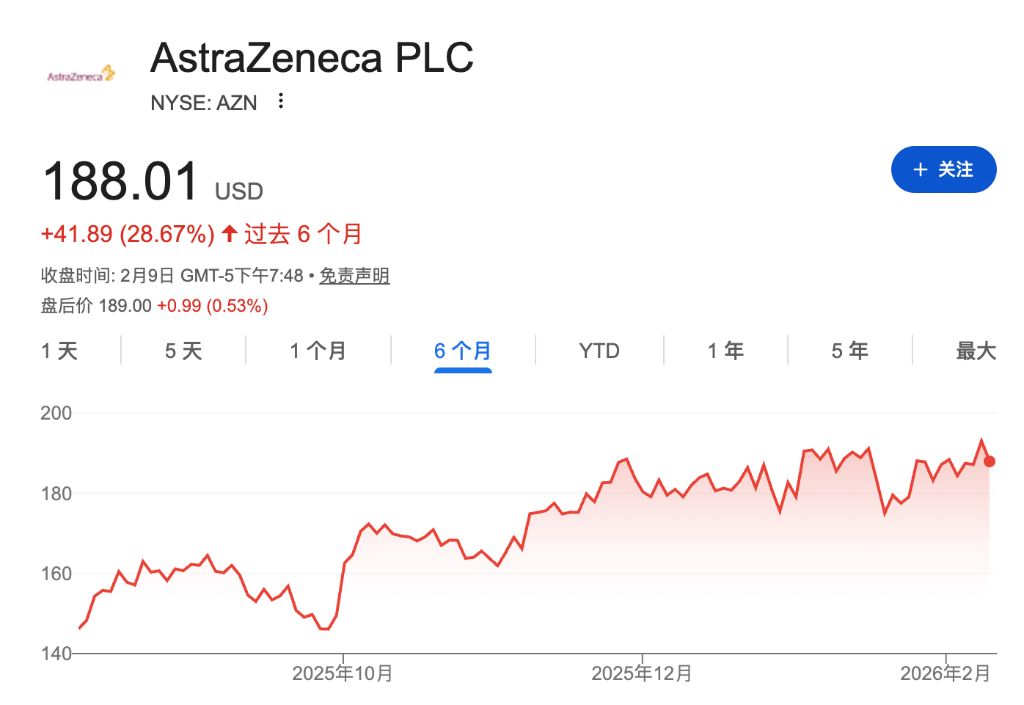
Core Viewpoint - UBS analyst Matthew Weston maintains a "Buy" rating for AstraZeneca and raises the target price to $238.85, reflecting significant upside potential from the current stock price, which may positively influence investor sentiment [1]. Recent Events - On February 25, 2026, AstraZeneca announced that its oral GLP-1 candidate drug, elecoglipron, achieved primary endpoints in Phase 2 clinical trials for obesity and type 2 diabetes, supporting the initiation of Phase 3 trials, which is expected to strengthen the company's position in the weight loss drug market [1]. - On the same day, CEO Pascal Soriot's compensation for 2025 increased to £17.7 million, benefiting from the company's performance and stock price appreciation; AstraZeneca's market capitalization exceeded $320 billion, making it the highest-valued company on the London Stock Exchange [1]. - On February 27, 2026, multinational pharmaceutical companies like AstraZeneca accelerated the introduction of GLP-1 weight loss drug assets in China, indicating international recognition of the value of Chinese innovative drugs, which may expand the company's growth pipeline [1]. Stock Performance - As of February 27, 2026, AstraZeneca's stock price was $207.63, up 1.79% for the day, with a cumulative increase of 1.68% over the past five days; the total market capitalization reached $321.98 billion, with a year-to-date increase of 19.56% [2]. - The recent stock price fluctuation range was between $202.64 and $209.35, with stable trading activity [2].
减肥药市场持续火热:两大巨头口服大战在即
Feng Huang Wang· 2026-02-17 00:51
Core Insights - The global weight loss drug market has undergone significant changes in the past five years, with Novo Nordisk's semaglutide gaining approval for weight loss in the U.S. in 2021, marking the entry of GLP-1 weight loss drugs into the pharmaceutical industry [1] - By 2025, Eli Lilly's tirzepatide is projected to achieve $36.5 billion in sales, highlighting the commercial potential of the weight loss sector [1] - The competition has shifted from injectable forms to oral formulations, with Novo Nordisk's oral semaglutide receiving approval in December 2025, becoming the first oral GLP-1 obesity treatment [1][2] Group 1: Market Dynamics - The approval of oral medications signifies a breakthrough beyond the physical limitations of injection pens, enhancing Novo Nordisk's product line defensively [2] - A surge in prescription volume for oral semaglutide has been observed, with approximately 50,000 prescriptions per week by January 23, 2026 [1] - Eli Lilly is also advancing in the oral GLP-1 space with its orforglipron, which has shown positive results in clinical trials and is expected to launch in mid-2026 [2] Group 2: Competitive Landscape - Novo Nordisk's oral semaglutide is a peptide drug, while Eli Lilly's tirzepatide is a small molecule oral drug, showcasing differentiation in their approaches [3] - Small molecule products are expected to have simpler development processes and better cost control, potentially impacting market competition if safety and efficacy are validated [3] - Other pharmaceutical giants, including AstraZeneca and various domestic companies, are also developing oral GLP-1 drugs, indicating a broadening competitive landscape [3][4] Group 3: Clinical Developments - AstraZeneca's oral GLP-1 receptor agonist, elecoglipron, has achieved positive results in key Phase 2 trials and is moving towards Phase 3 development [3] - Domestic companies like HengRui Medicine and others are advancing their oral GLP-1 drug pipelines, with promising clinical trial results [4] - The oral weight loss drug market is expected to grow, but injectable forms will still play a role in the short term, with rising expectations for their effectiveness and safety [4][5] Group 4: Future Outlook - The core patent for semaglutide will expire in 2026 in several markets, paving the way for a wave of generic versions, which may lead to more affordable options for consumers [5] - The penetration of GLP-1 weight loss drugs is anticipated to expand beyond first-tier cities, reaching broader markets [5]


阿斯利康发布2026年业绩指引,预计核心每股收益两位数增长
Xin Lang Cai Jing· 2026-02-15 23:25
Core Viewpoint - AstraZeneca expects a double-digit percentage growth in core earnings per share by 2026, with total revenue projected to grow in the mid-to-high single digits at constant exchange rates [1] Group 1: Clinical Trials and Product Development - The company plans to announce results from up to 20 advanced clinical trials by 2026, focusing on oncology, respiratory diseases, and rare diseases [1] - Key trials include AVANZAR and TROPION-Lung07 [1] - The oral GLP-1 drug elecoglipron has entered late-stage clinical trials, and the company has partnered with CSPC Pharmaceutical Group to accelerate its entry into the weight loss drug market [1] Group 2: Financial Outlook and Shareholder Returns - AstraZeneca has increased its annual dividend by approximately 3% to $3.30 [1] - The company reaffirms its long-term goal of achieving $80 billion in revenue by 2030 [1]

阿斯利康2025年财报发布,营收增长8%,肿瘤业务表现强劲
Jing Ji Guan Cha Wang· 2026-02-13 19:42
Core Insights - AstraZeneca reported total revenue of $58.739 billion for the year 2025, representing an 8% year-over-year increase [1][2] - The oncology segment generated $25.619 billion, a 14% increase, accounting for 44% of total revenue [1][2] - For Q4 2025, revenue was $15.503 billion, meeting market expectations, with core operating profit of $4.1 billion primarily due to increased R&D investment [1][2] - The 2026 guidance anticipates mid-to-high single-digit revenue growth and double-digit core profit growth, with R&D investment remaining around 24% of revenue [1][2] Recent Events - On February 10, 2026, AstraZeneca entered a strategic partnership with China National Pharmaceutical Group, potentially worth $18.5 billion, to acquire a long-acting peptide technology platform for the GLP-1 weight loss drug market [3] - At the 2026 J.P. Morgan Healthcare Conference, the company disclosed 37 late-stage indication expansion projects, including the ADC drug targeting CLDN18.2, with data expected in the first half of 2026, and successful Phase II studies for the oral GLP-1 drug elecoglipron [3] - On February 12, 2026, the former president of the China region, Wang Lei, was prosecuted for illegal drug imports and healthcare fraud, with the company potentially facing a customs fine of up to $12.5 million, though no new developments were reported for 2026 [3] - The company plans to invest over $100 billion in China by 2030 for R&D and production facilities, including an inhalation aerosol base in Qingdao expected to be operational by 2028 [3] Stock Performance - AstraZeneca's stock experienced significant volatility from February 9 to 13, 2026, with a price fluctuation of 6.00% and an amplitude of 10.18%, reaching a high of $206.71 on February 13 and a low of $187.06 on February 9 [4] - As of February 13, the latest closing price was $204.62, reflecting a slight increase of 0.05%, with a year-to-date gain of 16.59% [4] Institutional Perspectives - A report from Mingge Value Analysis on February 11, 2026, indicated that AstraZeneca's 2025 financial results validate its innovation-driven strategy, with strong growth in the oncology business supporting overall performance; the report assigned a "Buy" rating with a target price of $78, suggesting the stock is undervalued compared to industry averages and has a clear long-term growth path [5]
Prices, pipelines and patent cliffs: Inside pharma's big reset
CNBC· 2026-02-13 11:13
Core Insights - The earnings season for Europe's largest pharmaceutical companies showed mixed results, but the focus is shifting towards future developments, particularly in 2026, which is expected to be a pivotal year following significant changes in 2025 [1][2] Industry Trends - Companies are facing a "patent cliff," where major drugs will lose exclusivity, leading to increased competition from generics [3] - There is a heightened emphasis on drug pipelines as companies aim to reassure investors about future growth despite impending patent expirations [4] Company Strategies - Novartis anticipates a loss of $4 billion in sales and profits in the first half of the year due to patent expirations but remains optimistic about growth driven by a strong pipeline [5] - AstraZeneca is confident in its pipeline, projecting 25 new blockbuster medicines by 2030 and aiming for $80 billion in revenue, up from $59 billion in 2025 [8] - Companies are increasingly looking towards mergers and acquisitions (M&A) to replenish their pipelines, with a focus on both smaller and larger deals [9][11] Market Dynamics - China is emerging as a significant source of innovation for pharmaceutical companies, with increased collaboration and deal-making with Chinese firms [13][15] - The market is evolving in terms of pricing strategies, particularly in response to U.S. and European pricing pressures, with companies considering various approaches to manage drug launches [16][17] Obesity Drug Market - The obesity drug market is becoming more consumer-oriented, with companies like Novo Nordisk and Eli Lilly facing increasing competition as new players enter the space [20] - AstraZeneca and Roche are developing new treatments to differentiate themselves in the crowded obesity market, focusing on convenience and improved tolerability profiles [21][23][24]



速递|重磅!阿斯利康口服GLP-1减肥药2期成功
GLP1减重宝典· 2026-02-10 15:59
Core Viewpoint - AstraZeneca's oral GLP-1 receptor agonist elecoglipron has successfully met primary endpoints in two pivotal phase 2b clinical trials for obesity and type 2 diabetes, leading to its advancement into phase 3 clinical development [4] Group 1: Clinical Trial Results - The VISTA obesity study's primary endpoint is a statistically significant weight reduction compared to placebo at 26 weeks, with at least a 5% weight loss achievement rate [4] - The SOLSTICE type 2 diabetes study's primary endpoint focuses on significantly better blood sugar control compared to placebo at 26 weeks [4] - AstraZeneca has not released specific numerical data, but the success in both trials provides a basis for further investment in large-scale phase 3 trials [4] Group 2: Strategic Partnerships and Financials - AstraZeneca acquired global rights to elecoglipron from Eccogene for $185 million, including milestone payments and tiered royalties, aiming to shorten the development timeline by focusing resources on clinically validated assets [5] - The oral GLP-1 market is attractive due to its potential for long-term medication adherence, but it faces challenges in achieving strong efficacy while ensuring tolerability and long-term user experience [5] Group 3: Pipeline Updates and Revenue Goals - AstraZeneca updated its pipeline, indicating that key phase 3 lung cancer trials' readout times have been adjusted to the second half of 2026, while some studies have been terminated [6] - The company reiterated its goal of achieving $80 billion in annual revenue by 2030, with projected total revenue of $58.7 billion in 2025 and mid-to-high single-digit percentage growth in 2026 [8] - The obesity product line is expected to contribute significantly to overall revenue towards the end of the decade, with growth in the interim relying on existing business segments such as oncology and cardiovascular [8] Group 4: Market Expectations and Future Outlook - The success of elecoglipron in phase 2b trials establishes a clinical basis for continued investment, but the critical factors for mainstream adoption will be determined in phase 3 trials, including efficacy, tolerability, and long-term maintenance effects [8] - As the June data disclosure approaches, market assessments of AstraZeneca's position in the oral GLP-1 space will shift from interim conclusions to comparisons based on hard metrics [8]
阿斯利康(AZN.US)拟走“低价高量”路线 进军全球减肥药市场
智通财经网· 2026-02-10 14:52
Core Insights - AstraZeneca plans to enter the competitive global weight loss drug market with a strategy focused on "improved existing drugs + more competitive pricing + experience in emerging markets" [1] - CEO Pascal Soriot aims to develop next-generation weight loss drugs that are easier to use and more affordable, expanding the patient base globally, not just in the U.S. [1] - The company seeks to replicate the success of its diabetes drug Farxiga, which generated approximately $8.5 billion in revenue last year, primarily from emerging markets [2] Group 1 - AstraZeneca is developing an experimental oral GLP-1 weight loss drug named elecoglipron, which has shown success in mid-stage clinical trials and is moving towards final testing [1] - The company is exploring a shift from weekly to monthly dosing to improve patient adherence and is focusing on drugs that help reduce fat rather than muscle loss [2] - The global weight loss drug market is currently dominated by Novo Nordisk and Eli Lilly, with U.S. prices being pressured by low-cost combination weight loss drugs [2] Group 2 - AstraZeneca's international business is growing rapidly, with revenue from emerging markets increasing by 22%, compared to 10% in the U.S. and 1% in Europe [2] - The company plans to launch its weight loss products first in Europe and the U.S., despite the U.S. being its largest single market [2] - Soriot warns that while the production of combination drugs may not have long-term viability, weight loss drug prices will remain under pressure in the foreseeable future [2]
抗癌药物需求强劲 阿斯利康(AZN.US)预计今年利润将以两位数稳步增长
Zhi Tong Cai Jing· 2026-02-10 09:15
Core Insights - AstraZeneca reported a core earnings per share of $2.12 for Q4, with total revenue increasing by 2% to $15.5 billion, aligning with consensus expectations of $2.12 billion and $15.4 billion [1] - The company forecasts steady profit growth by 2026, with sales growth expected to slow down, focusing on the demand for its cancer drugs while increasing R&D investments and addressing geopolitical pressures and patent expirations [1] - AstraZeneca aims for total revenue growth in the mid-single digits and core profit growth in the low double digits by 2026, despite the impact of a major diabetes drug's patent expiration [1] Revenue Breakdown - Q4 cancer drug sales rose by 20% to $7.03 billion, while cardiovascular drug revenue fell by 6% to $3.05 billion, partly due to competition from generics, including diabetes and heart failure drug Farxiga [1] - The company is on track to achieve its ambitious goal of $80 billion in annual sales by 2030 under the leadership of CEO Pascal Soriot, driven by new drugs and investments despite unstable U.S. tariffs and healthcare policies [1] Future Plans - AstraZeneca reiterated its goal of achieving $80 billion in revenue by the end of the decade and plans to announce results from up to 20 advanced clinical trials this year [4] - Upcoming new drugs will target obesity, lung cancer, and chronic obstructive pulmonary disease [4] - The company plans to increase its annual dividend by approximately 3% to $3.30, reflecting confidence in its long-term plans [4] Market Strategies - AstraZeneca has taken significant steps to achieve growth in the U.S. and China, including a $50 billion manufacturing agreement in the U.S. and a $15 billion investment in China [4] - The experimental obesity drug, elecoglipron, is entering the final stages of clinical trials [4] - Despite potential impacts from U.S. drug pricing agreements, the company believes it can withstand the effects of these transactions [4]
斥资185亿美元牵手石药集团后,阿斯利康每股收益预增双位数
Hua Er Jie Jian Wen· 2026-02-10 08:31
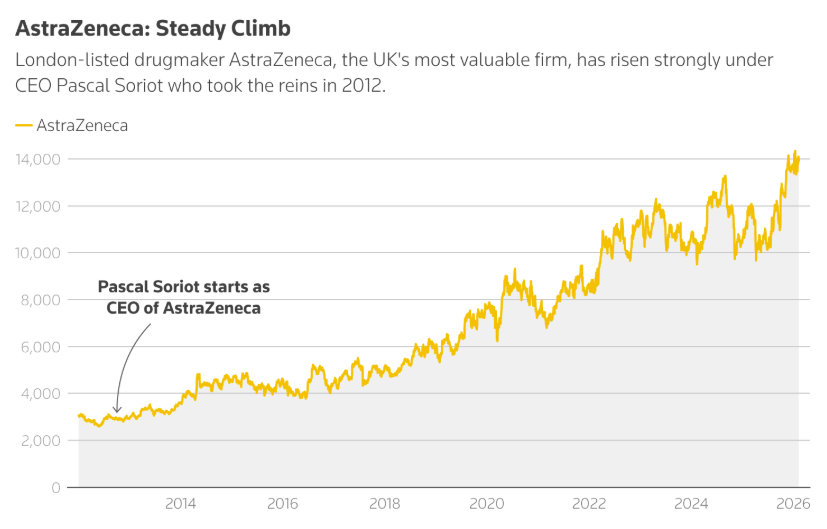
Group 1 - The core viewpoint of the articles indicates that AstraZeneca expects a double-digit percentage growth in adjusted earnings per share by 2026, driven by strong sales in its oncology drug business, which will offset the impact of patent expirations on core diabetes drugs [1] - AstraZeneca's fourth-quarter profits and revenues met expectations, with the company forecasting mid-to-high single-digit revenue growth for the year, similar to the 8% increase in 2025, allowing room for potential upward revisions later in the year [1][2] - The company is accelerating its entry into the weight loss drug market, having recently signed a collaboration agreement with China’s CSPC Pharmaceutical Group worth up to $18.5 billion, which includes access to CSPC's long-acting peptide technology platform for developing next-generation weight loss therapies [1] Group 2 - AstraZeneca's self-developed oral GLP-1 drug, elecoglipron, has entered late-stage clinical trials, becoming a key candidate in its obesity treatment pipeline [1] - The company has confidence in managing pricing impacts and is focused on achieving its long-term revenue target of $80 billion by 2030, with several new drugs in clinical development being critical for maintaining growth momentum [2] - Under CEO Pascal Soriot's leadership, AstraZeneca has established a leading position in oncology and is the second-largest listed company on the London Stock Exchange, with key clinical data for new drugs targeting diseases like lung cancer and COPD expected to be released this year [3]