减重药

Search documents
速递|礼来把下一代减重药推入中国Ⅲ期,Eloralintide不只是又一个GLP-1故事
GLP1减重宝典· 2026-03-30 08:26
Core Viewpoint - Eli Lilly's new long-acting weight loss candidate Eloralintide has received approval from China's National Medical Products Administration to enter Phase III clinical trials, targeting the adult weight management market, although it is still under research and not yet approved for sale in China or the U.S. [4] Group 1: Product Overview - Eloralintide is not a new GLP-1 drug but a selective glucagon-like peptide-1 receptor agonist administered weekly, reflecting a renewed interest in the glucagon pathway in the weight loss drug market [5] - The drug aims to selectively activate glucagon receptor pathways to influence appetite, satiety, and energy intake regulation, focusing on long-term management rather than just short-term weight loss [7] Group 2: Clinical Data and Efficacy - Early data from Eli Lilly indicates that Eloralintide has shown promising weight loss results, with some dosage groups achieving an average weight reduction of nearly 20% over 48 weeks, while the placebo group showed minimal change [7] - Improvements were also observed in waist circumference, blood pressure, blood lipids, blood glucose control, and certain inflammation-related indicators [7] Group 3: Safety and Tolerability - Common adverse reactions reported in early studies include decreased appetite, headaches, fatigue, and gastrointestinal issues, but overall tolerability is considered sufficient for continued development [8] - A slower dose escalation strategy may further improve the adverse reaction profile, which is crucial for long-term patient adherence to treatment [8] Group 4: Strategic Importance for Eli Lilly - The introduction of Eloralintide signifies Eli Lilly's strategy to build a comprehensive weight loss product matrix, incorporating injection, oral, single-target, multi-target, and new mechanism drugs [9] - The Chinese market is increasingly recognized as a core area for global clinical research and commercialization strategies, with Eloralintide's Phase III entry highlighting its significance in Eli Lilly's global weight loss strategy [9] Group 5: Industry Competition Dynamics - The competition in the weight loss drug market is evolving, with a shift from merely proving market potential to focusing on covering more subpopulations and enhancing long-term tolerability [10] - The success of Eloralintide in Phase III trials will be critical in determining its future value, as efficacy, safety, adherence, and commercialization positioning are all pivotal factors [10]


阿斯利康获瑞银上调目标价至238.85美元,市值超3200亿美元
Xin Lang Cai Jing· 2026-02-27 18:11
Core Viewpoint - UBS analyst Matthew Weston maintains a "Buy" rating for AstraZeneca and raises the target price to $238.85, reflecting significant upside potential from the current stock price, which may positively influence investor sentiment [1]. Recent Events - On February 25, 2026, AstraZeneca announced that its oral GLP-1 candidate drug, elecoglipron, achieved primary endpoints in Phase 2 clinical trials for obesity and type 2 diabetes, supporting the initiation of Phase 3 trials, which is expected to strengthen the company's position in the weight loss drug market [1]. - On the same day, CEO Pascal Soriot's compensation for 2025 increased to £17.7 million, benefiting from the company's performance and stock price appreciation; AstraZeneca's market capitalization exceeded $320 billion, making it the highest-valued company on the London Stock Exchange [1]. - On February 27, 2026, multinational pharmaceutical companies like AstraZeneca accelerated the introduction of GLP-1 weight loss drug assets in China, indicating international recognition of the value of Chinese innovative drugs, which may expand the company's growth pipeline [1]. Stock Performance - As of February 27, 2026, AstraZeneca's stock price was $207.63, up 1.79% for the day, with a cumulative increase of 1.68% over the past five days; the total market capitalization reached $321.98 billion, with a year-to-date increase of 19.56% [2]. - The recent stock price fluctuation range was between $202.64 and $209.35, with stable trading activity [2].
这家减重药公司股价大涨
Di Yi Cai Jing Zi Xun· 2026-02-25 07:53
Group 1 - Federal Pharmaceutical's stock price surged over 7% following the announcement of mid-term clinical trial data for its new weight loss drug UBT251, which showed an average weight loss of 19.7% in the treatment group compared to 2% in the placebo group after 24 weeks of treatment [2] - Novo Nordisk entered a licensing agreement with Federal Pharmaceutical for UBT251 in March last year, with an upfront payment of $200 million and a potential total deal value of up to $2 billion [2] - UBT251 targets GLP-1/GIP/GCG triple receptors and is expected to outperform Eli Lilly's dual-target GLP-1 weight loss drug [2] Group 2 - Novo Nordisk has initiated a global trial involving approximately 330 overweight or obese patients using different doses of UBT251, with results expected in 2027, and plans to start a trial for type 2 diabetes patients [3] - In a competitive landscape for weight loss drugs, multinational pharmaceutical companies are increasingly focusing on Chinese weight loss drug assets, as evidenced by recent strategic collaborations, including one between Senwa Bio and Pfizer China, with a total deal value of up to nearly $500 million [3] - Pfizer also secured a licensing agreement with a subsidiary of Fosun Pharma for a GLP-1 receptor agonist, with a total deal value exceeding $2 billion [3] Group 3 - In July last year, CSPC Pharmaceutical licensed an oral small molecule GLP-1 receptor agonist to Madrigal Pharmaceuticals for $2.075 billion, and earlier this year, it licensed another dual-target weight loss injection to AstraZeneca [4] - Domestic pharmaceutical companies, including HengRui Medicine, Hansoh Pharmaceutical, and Chengyi Biotechnology, have successfully expanded internationally through licensing their GLP-1 drugs [4] - The value of Chinese innovative drugs is being reassessed by multinational pharmaceutical companies, with next-generation weight loss drugs seen as a significant strategic focus due to their vast market potential [4] Group 4 - Goldman Sachs projected that the global market for GLP-1 drugs could reach $95 billion by 2030 and potentially expand to $120 billion by 2035 [4]

礼来最新研究公布 医药巨头角逐减重药新高地
Di Yi Cai Jing· 2026-02-19 06:58
Group 1 - The core point of the article highlights the competitive landscape between Eli Lilly and its main competitor Novo Nordisk in the development of new weight loss therapies, particularly focusing on the potential of Eli Lilly's drug tirzepatide for treating obesity in patients with autoimmune diseases [1] - A late-stage study involving 274 psoriasis patients showed that the combination of tirzepatide and the existing biologic drug, etanercept, resulted in better outcomes than etanercept alone, with approximately 27.1% of patients achieving complete psoriasis clearance and a 10% weight reduction after 36 weeks [1] - The study indicates the potential of weight loss drugs in treating obesity-related comorbidities, as most obese patients have at least one weight-related comorbidity [1] Group 2 - The expansion of new indications for tirzepatide means a broader patient base, as it recently received approval from the National Medical Products Administration in China for use in adult patients with type 2 diabetes (T2DM) as a monotherapy [2] - In the European market, Novo Nordisk's weight loss drug semaglutide at a higher dosage of 7.2mg has also received approval, providing more treatment options for doctors and patients [2] - Eli Lilly is preparing for competition in the oral weight loss drug market, with pre-launch inventory for its oral weight loss medication reaching $1.5 billion, a significant increase from $550 million in the same period last year [2]

腾讯看上了减肥药!又投公司又申请专利,意图何在?
GLP1减重宝典· 2026-02-13 05:28
Core Viewpoint - The article discusses Tencent's strategic investments in the GLP-1 weight loss drug sector, emphasizing a long-term vision that integrates health management, data processing, and service connectivity rather than focusing solely on individual drug performance [4][11]. Investment Strategy - Tencent's investment approach is structured in three phases: 1. Initial investments in near-commercial GLP-1 assets to secure stable cash flow from chronic disease management [6]. 2. Betting on next-generation technologies targeting multiple metabolic pathways to enhance weight loss effectiveness [6]. 3. Diversifying into various technological approaches to mitigate risks associated with GLP-1 competition [8]. Market Dynamics - The weight loss drug market is characterized by a large and growing user base, with significant potential for ongoing service engagement across multiple health management areas [9]. - There is a strong willingness to pay for weight loss solutions, transitioning from high-cost, niche markets to broader accessibility through various payment structures [10]. - Weight management is interconnected with chronic diseases, allowing for an expanded service offering that includes diagnostics, medication, and follow-up care [10]. Infrastructure Development - Tencent is not only investing in equity but also building foundational infrastructure through health-related patents, focusing on improving measurement accuracy and data integration for chronic disease management [12]. - Recent patent applications include innovations in GLP-1 receptor activation, aiming to create more effective and cost-efficient treatments [13][15]. Risk and Opportunity Assessment - Tencent's investments in companies like Xianweida and Minwei Biotech reflect a balanced risk preference, combining stable assets with high-potential, flexible opportunities in the next-generation drug space [16]. - The strategy aims to create a sustainable business model in weight management, leveraging technology and service integration to enhance commercial efficiency [17].

腾讯看上了减肥药!又投公司又申请专利,意图何在?
GLP1减重宝典· 2026-02-12 15:11
Core Viewpoint - The article discusses Tencent's strategic investments in the GLP-1 weight loss drug sector, highlighting a comprehensive approach that integrates drug development with health management and data services, aiming for a long-term operational model in chronic disease management [5][10]. Investment Strategy - Tencent's investment strategy involves a phased approach, starting with near-commercial GLP-1 assets to secure stable cash flow from chronic disease management, particularly in diabetes and obesity, which have high repurchase rates and long management cycles [6][7]. - The second phase focuses on investing in next-generation technologies targeting multiple metabolic pathways, which could enhance weight loss effectiveness and improve long-term health outcomes [7][8]. - The third phase aims to diversify the technological pathways in weight loss solutions to mitigate risks associated with GLP-1 competition, ensuring a broader range of commercial opportunities [8][9]. Market Dynamics - The weight loss drug market presents significant opportunities due to its large and growing user base, which allows for long-term customer acquisition and service engagement across various health management aspects [9]. - There is a strong willingness to pay for weight loss solutions, transitioning from high-cost self-pay models to more diverse payment structures, including insurance and employer benefits, which enhances the market's accessibility [9]. - Weight management is interconnected with various chronic conditions, creating a comprehensive market for metabolic disease management, thus expanding the potential service offerings beyond just weight loss [9]. Infrastructure Development - Tencent's patent applications in health management and data processing indicate a focus on building a foundational infrastructure that connects drug efficacy with user engagement, enhancing long-term adherence and service delivery [10]. - The integration of detection, data, and service pathways is crucial for addressing the challenges of long-term adherence and monitoring in weight loss treatments, positioning Tencent to leverage its platform capabilities effectively [10]. Risk Preferences - Tencent's involvement with companies like Xianweida and Minwei Bio illustrates its risk appetite, balancing investments in more certain GLP-1 assets with those in innovative, multi-target approaches that offer greater potential for differentiation and market expansion [11][12]. - This dual strategy reflects a typical internet approach, combining stable assets with high-risk, high-reward opportunities while utilizing its technological and infrastructural advantages to enhance commercialization efficiency [12].
减重药用药越来越便利 专家提醒:别把处方药当“美容药”
Ke Ji Ri Bao· 2025-12-26 00:35
Core Viewpoint - The oral version of semaglutide, a "star drug" for weight loss, has been approved by the U.S. FDA, following the approval of its injectable form as the world's first GLP-1 class weight loss medication, sparking public interest in convenient weight loss solutions [1] Group 1: Mechanism of Action - GLP-1 (glucagon-like peptide-1) regulates insulin and glucagon secretion based on blood sugar levels, and semaglutide is a similar compound that activates receptors in various cells to promote insulin secretion, suppress glucagon, and delay gastric emptying, thereby reducing appetite [2] - The core mechanism of semaglutide for weight loss is not fat burning but rather activating neural circuits related to satiety in the hypothalamus and brainstem, leading to reduced hunger and delayed feelings of hunger after meals [2] Group 2: Drug Comparison and Usage - The oral and injectable forms of semaglutide share the same active ingredients and mechanisms, with the oral form being more convenient but requiring higher doses due to lower bioavailability [3] - Current weight loss prescription drugs in China primarily consist of GLP-1 class medications, with BMI (Body Mass Index) being a key criterion for usage; individuals with a BMI of 28 or higher, or 24 with obesity-related complications, may be prescribed these medications [4] - Other weight loss medications include orlistat, which is the only over-the-counter option, but it has poor tolerance and more side effects; new generation dual-target and triple-target weight loss drugs are under development [4] Group 3: Risks of Misuse - The convenience of the oral version raises concerns about potential drug misuse, particularly among individuals not meeting the criteria for its use, which could lead to negative health outcomes such as muscle loss, nutritional deficiencies, and increased risks of gallstones and thyroid tumors [5] - Lifestyle interventions remain essential for effective weight management, and the public should not rely solely on medications for rapid weight loss, as there is a risk of rebound weight gain after discontinuation [6]
2023年中国GLP-1行业调研简报:GLP-1RA药物、双靶点创新药、减重药-20251128
Tou Bao Yan Jiu Yuan· 2025-11-28 12:45
Investment Rating - The report does not explicitly state an investment rating for the GLP-1RA drug industry Core Insights - The GLP-1 receptor agonists (GLP-1RA) are a class of drugs that mimic the action of GLP-1, promoting insulin secretion and reducing appetite, leading to blood sugar control and weight loss [2][3] - The global market for GLP-1 drugs is dominated by semaglutide and tirzepatide, with semaglutide achieving sales of $16.6 billion in the first half of 2025, making it the top-selling drug globally [8] - The expiration of patents for major drugs is expected to lead to a surge in generic versions, increasing market competition and reducing treatment costs [11] Summary by Sections GLP-1 Drug Classification and Mechanism - GLP-1RA drugs are categorized into short-acting, long-acting, and ultra-long-acting formulations, each with different pharmacokinetic profiles [2][3] - These drugs are effective in treating conditions such as obesity, type 2 diabetes, and metabolic disorders [4] Market Performance and Patent Expiration - The sales of GLP-1 drugs have shown significant growth, with semaglutide's weight management product Wegovy achieving $5.441 billion in sales, a 78% increase year-over-year [8] - Key patents for drugs like liraglutide have expired, while others like semaglutide will expire in 2026, paving the way for biosimilars [9][11] R&D Progress in China - Chinese companies are advancing in the development of dual-target and multi-target GLP-1 drugs, with significant progress in clinical trials [13][14] - The focus is shifting towards expanding indications for GLP-1 drugs beyond diabetes and obesity to include conditions like Alzheimer's and cardiovascular diseases [15] Future Market Potential - The Chinese GLP-1 market is projected to grow from 9.62 billion yuan in 2020 to 71.7 billion yuan by 2029, with a compound annual growth rate (CAGR) of 22.1% [22] - The inclusion of GLP-1 drugs in national health insurance is expected to enhance market penetration and accessibility [22] Innovation Trends - The industry is witnessing a trend towards multi-target drug development and the introduction of oral formulations to improve patient compliance [28][29] - The competitive landscape is intensifying as both original and generic drug manufacturers seek to establish a foothold in the market [30][31]


首个万亿美元市值医药公司诞生
Di Yi Cai Jing Zi Xun· 2025-11-22 06:51
Core Insights - Eli Lilly has become the first pharmaceutical company to surpass a market capitalization of $1 trillion, breaking the tech industry's dominance in the "trillion-dollar club" [2] - The company's stock has risen over 35% this year, driven by a surge in demand for weight loss drugs [2] - Sales of Eli Lilly's GLP-1 drug, tirzepatide, have exceeded $10 billion, accounting for more than half of the company's total revenue [2] - Eli Lilly has overtaken Merck's Keytruda in quarterly sales, establishing itself as a leading player in the pharmaceutical market [2] - The company plans to invest billions to increase domestic production of weight loss drugs in the U.S. [2] Market Dynamics - The weight loss drug market is projected to become one of the most profitable segments in healthcare, driven by a large patient base [2] - Wall Street estimates that the weight loss drug market could reach $150 billion by 2030, with Eli Lilly and Novo Nordisk expected to capture a significant share of the anticipated sales [3] - Eli Lilly's stock performance has outpaced the broader U.S. market, with a 75% increase since the launch of tirzepatide in late 2023, compared to a 50% rise in the S&P 500 [3] Future Prospects - Investors are closely watching Eli Lilly's next-generation oral weight loss drug, orforglipron, which is expected to receive approval in early next year [3] - Analysts from Citigroup have highlighted the latest generation of GLP-1 drugs as a "sales miracle," indicating strong sales trends for the next-generation oral weight loss drug [4]
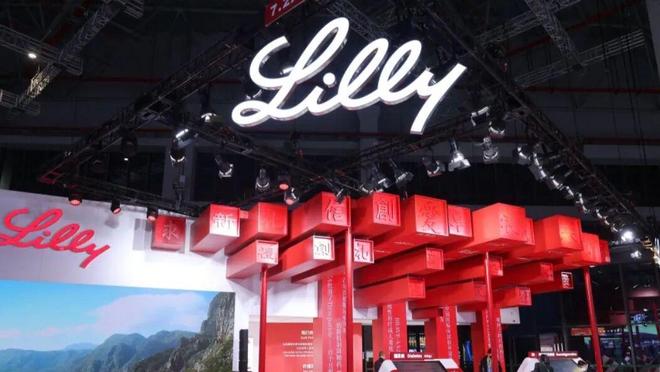
首个万亿美元市值医药公司诞生
第一财经· 2025-11-22 06:46
Core Viewpoint - Eli Lilly has become the first pharmaceutical company to surpass a market capitalization of $1 trillion, breaking the dominance of the tech industry in this exclusive club [3]. Group 1: Company Performance - Eli Lilly's stock price has increased by over 35% this year, driven by a surge in demand for weight loss drugs [4]. - The sales of Eli Lilly's GLP-1 drug, tirzepatide, have exceeded $10 billion, accounting for more than half of the company's total revenue [4]. - Eli Lilly's tirzepatide has outperformed Merck's cancer drug Keytruda in quarterly sales, establishing it as a leading product in the pharmaceutical market [4]. Group 2: Market Dynamics - Eli Lilly has rapidly gained market share in the weight loss drug sector, overtaking Novo Nordisk and capturing a significant portion of the U.S. market for GLP-1 drugs [4]. - The obesity treatment market is projected to become one of the most profitable segments in healthcare, driven by a large patient base [4]. - Analysts estimate that the weight loss drug market will reach $150 billion by 2030, with Eli Lilly and Novo Nordisk expected to dominate global sales [5]. Group 3: Future Prospects - Investors are closely watching Eli Lilly's next-generation oral weight loss drug, orforglipron, which is anticipated to receive approval in early next year [5]. - The latest generation of GLP-1 drugs is being hailed as a "sales miracle," indicating strong future sales trends for Eli Lilly's products [5].