i系列车型

Search documents
理想汽车站在“理想”的十字路口
Zhong Guo Jing Ying Bao· 2026-01-28 12:48
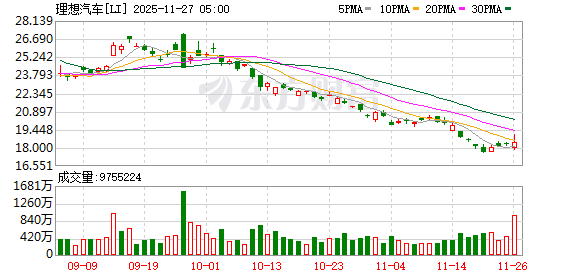
Core Viewpoint - Li Auto is strategically shifting its focus towards artificial intelligence and humanoid robotics while closing underperforming retail stores to enhance operational efficiency and reduce costs [2][4][5] Group 1: Store Closures and Strategic Shift - Li Auto announced plans to close a small number of low-efficiency retail stores by 2026, but emphasized that this will not involve mass closures [2] - The company is transitioning from a focus on "new energy" to "intelligent" strategies, indicating a long-term organizational restructuring [2][4] - As of November 30, 2025, Li Auto had a retail network of 544 centers, 170 delivery centers, and 556 service centers across 230 cities [3] Group 2: Performance and Market Strategy - In 2025, Li Auto delivered 406,300 vehicles, a year-on-year decline of 18.81%, failing to meet its target of 640,000 deliveries [4] - The company faced profitability challenges, reporting a net loss of 624 million yuan in Q3 2025 due to a recall event [4] - Li Auto's previous growth model, based on rapid expansion and market penetration, is nearing its limits as competition increases and market growth slows [5] Group 3: Future Focus and AI Investment - Li Auto is restructuring its product lines from three to two, aiming for efficiency and market coverage [6] - The company is reinforcing its brand positioning around "embodied intelligence" and is venturing into humanoid robotics [6][7] - Li Auto's CEO has indicated a commitment to maintaining high R&D investments, particularly in AI, even during challenging sales periods, viewing this as a long-term strategic bet [7]


理想进入发展新周期 回归创始人模式企业
Zhong Guo Xin Wen Wang· 2025-11-27 08:47
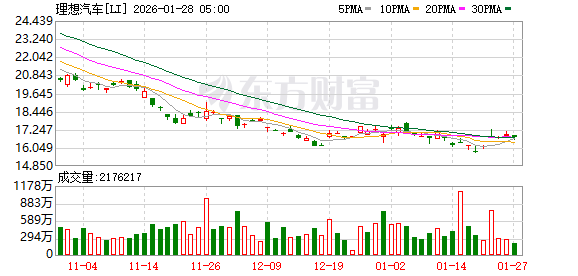
Core Insights - Li Auto reported a revenue of 27.4 billion yuan for Q3 2025, maintaining its leadership among new energy vehicle manufacturers, with a vehicle gross margin of 20.4% after excluding the estimated costs related to the Li MEGA recall [2] - The company has a cash reserve nearing 100 billion yuan, providing a solid financial foundation for its next phase of development [2] - Recent organizational changes and strategic moves indicate a return to a founder-led model, marking the beginning of a new development cycle and a key transition towards becoming a "globally leading artificial intelligence company" [2][3] Organizational Restructuring and AI Strategy - Since 2025, Li Auto has made significant organizational adjustments, including integrating sales and service systems under the leadership of Ma Donghui and eliminating the "five battle zones" for centralized management [3] - The departure of two key executives from Huawei has led founder Li Xiang to take direct control over personnel and core business operations, fully implementing the founder-led model [3] - This restructuring is not merely a response to short-term performance but represents a deep transformation from a new energy vehicle manufacturer to an artificial intelligence enterprise [3][7] Long-term Vision and Founder-led Model - Li Auto's management philosophy emphasizes that the management model must align with the company's genetic makeup and development stage, focusing on family user needs [5] - The founder-led model contrasts with a managerial approach, which often prioritizes short-term performance and compliance, potentially leading to a disconnect from user needs [5] - Li Xiang's dual role as owner and core decision-maker allows for a long-term vision that resists short-term temptations, focusing on sustainable value creation [5][6] AI Investment and Future Outlook - Li Auto plans to allocate half of its 10 billion yuan R&D budget to AI initiatives in 2025, aiming for comprehensive integration of AI technologies [6] - The transition to an AI-focused enterprise is a long-term, systematic effort that requires overcoming challenges in technology breakthroughs, resource allocation, and organizational collaboration [7] - The company anticipates higher quality growth following the introduction of new models and improvements in production capacity and infrastructure by 2026 [8][9]