iPhone 16系列

Search documents
吉利投资魅族或已失败,Flyme能否担当重任?
Sou Hu Cai Jing· 2026-02-27 09:10
Core Viewpoint - Meizu's mobile business is set to terminate, with a formal exit from the market in March 2026, highlighting the challenges faced by Geely Holdings in integrating Meizu into its broader automotive and consumer electronics ecosystem [1][2]. Group 1: Business Performance and Strategy - Geely acquired Meizu in 2022 with the intention of creating a "mobile-vehicle-home" ecosystem, but the mobile business has contracted significantly, with market share dropping below 1% and continuous losses reported [2][5]. - In 2025, Meizu's mobile sales plummeted to 980,000 units, a decline of over 40% year-on-year, resulting in a loss of 1.23 billion yuan, marking seven consecutive years of losses [2][6]. - The mobile business's operational challenges have led to a "death spiral" of declining sales, high costs, and increasing losses, with an average loss of 1,255 yuan per device sold [2][9]. Group 2: Financial Metrics - Geely's financial report for the first three quarters of 2025 shows a net profit of 13.11 billion yuan, while Meizu's ongoing losses have become a significant drag on overall performance [3]. - The smartphone market in China saw a slight decline in shipments, with major brands like Huawei, Apple, Vivo, Xiaomi, and OPPO capturing over 80% of the market share, leaving little room for smaller brands like Meizu [5][6]. Group 3: Supply Chain and Cost Issues - Meizu lacks bargaining power in the supply chain, facing component costs that are 15%-30% higher than leading brands, compounded by fixed expenses in R&D, channels, and marketing [9]. - The rising costs of smartphone components, including a 75% increase in memory prices in 2025, have severely impacted Meizu's profitability, leading to the cancellation of new product launches [6][9]. Group 4: Future Prospects - With the cessation of hardware development, Flyme is positioned as Meizu's core asset, with plans to transition it from a mobile OS to a smart cockpit system, aiming to leverage software capabilities to compensate for hardware losses [9][11]. - The future of Meizu is bifurcated into two potential paths: a successful transformation into a software service provider or a decline into a support role within Geely's automotive strategy, risking the loss of brand identity [12][13].


智能手机2026:变局中的挑战与曙光
3 6 Ke· 2026-02-01 06:26
Core Insights - The smartphone industry is experiencing a significant downturn in expected shipments for 2026, with major manufacturers like Xiaomi and OPPO reducing their forecasts by over 20% [1][2] - The decline in shipments is primarily attributed to rising storage chip prices and supply shortages, leading to a strategic shift towards higher-value products [2][6] Group 1: Industry Dynamics - In 2025, the global smartphone shipment reached 1.26 billion units, with a 1.9% year-on-year growth, while China's market saw a slight decline of 0.6% [3] - Huawei regained its position as the leading smartphone manufacturer in China with a shipment of 46.7 million units, capturing a market share of 16.4% [3] - Apple and Vivo closely followed Huawei, with shipments of 46.2 million and 46.1 million units, respectively, indicating a highly competitive landscape [3][4] Group 2: Market Challenges - The price of storage chips is expected to rise significantly, with a projected increase of 40% to 50% in Q1 2026, further impacting manufacturers' cost structures [6][8] - The cost increase is particularly pronounced in low-end models, which may deter price-sensitive consumers from upgrading their devices [7][8] Group 3: Future Trends - The integration of AI into smartphones is anticipated to be a major trend, with new AI-enabled smartphone shipments expected to reach 147 million units in China, accounting for over 50% of the market [9] - The development and application of 2nm chips are also on the horizon, promising enhanced performance and efficiency for future smartphones [10]



马斯克考虑将SpaceX与特斯拉或xAI公司合并;阿里自研AI芯片“真武”曝光;英伟达等公司商谈向OpenAI投资至多600亿美元丨邦早报
创业邦· 2026-01-30 00:30
Group 1 - Nvidia, Microsoft, and Amazon are discussing a potential investment of up to $60 billion in OpenAI as part of a larger funding round that could total $100 billion [1] - Nvidia is negotiating to invest up to $30 billion, while Microsoft plans to invest less than $10 billion, and Amazon's investment could exceed $10 billion, potentially reaching $20 billion [1] Group 2 - ByteDance has initiated the official version of the Doubao mobile assistant project, with a new device expected to be released in late Q2 2026 [3] - ByteDance and Alibaba are both preparing to launch new AI models around mid-February, with ByteDance planning three new models including a large language model, an image generation model, and a video generation model [3] - Tesla CEO Elon Musk announced the company will cease production of the Model S and Model X, transitioning the production line to focus on autonomous driving technology [3] Group 3 - Tesla's electric vehicle production reached approximately 1.655 million units in 2025, with a record delivery of 1.636 million units, and the Model Y was the best-selling SUV in multiple markets [12] - The Shanghai Gigafactory delivered 851,000 electric vehicles, accounting for over half of Tesla's global deliveries [12] Group 4 - Sony and Singapore's GIC are investing between $2 billion and $3 billion to build a music copyright library through a joint venture [6] - Mirxes completed a placement of 21.88 million shares, raising approximately HKD 711 million, with a share price premium of nearly 40% compared to its listing price [8]





苹果上线新春限时优惠,最高省1000元,“以价换量”也难回中国第一?
3 6 Ke· 2026-01-26 11:40
Core Viewpoint - Apple is actively adjusting its pricing strategy in the Chinese market to regain market share amid increasing competition from domestic brands, marking a significant shift from its previous high-price positioning [5][9]. Group 1: Promotional Activities - Apple launched a limited-time Spring Festival promotion from January 24-27, offering discounts on various products, including the iPhone 16 series and iPad, with savings up to 1,000 yuan and interest-free installments for up to 24 months [1]. - The company has conducted multiple promotional activities since 2025, including significant price reductions for the iPhone 16 Pro and iPhone 17 Pro series, with discounts exceeding 25% and additional trade-in subsidies [1][3]. - The iPhone Air, launched only three months prior, saw a price drop of 2,000 yuan, making it the lowest-priced new iPhone model, reflecting a drastic change in Apple's pricing strategy [1][7]. Group 2: Market Competition - In 2025, Apple ranked third in China's smartphone market with an activation volume of 45.21 million units, holding a market share of 16.35%, closely trailing behind Vivo and Xiaomi [3]. - The competitive landscape is characterized by minimal differences in market share among leading brands, with Huawei, Apple, Vivo, and Xiaomi all vying for dominance [4]. - Industry experts note that Apple's sales ceiling is becoming clearer, as it struggles to compete in the mid-range market (4,000-6,000 yuan) where consumers prioritize cost-performance ratios [4][10]. Group 3: Strategic Adjustments - The recent promotional efforts are not merely seasonal sales but represent a strategic shift to increase market share in response to intensified competition from domestic brands [5][9]. - The iPhone Air's price adjustment aims to enhance its appeal and align with the target demographic, indicating a proactive approach to regain lost market segments [7]. - Analysts suggest that Apple's frequent promotions reflect a response to its slower innovation pace and the need to maintain sales volume in a rapidly evolving market [8][10].
春节腾讯红包发10亿,百度发5亿;内存条成“抗跌硬通货”
2 1 Shi Ji Jing Ji Bao Dao· 2026-01-26 03:31
Group 1: Tencent and Baidu Activities - Tencent announced a cash giveaway of 1 billion yuan for the Spring Festival, with individual red packets up to 10,000 yuan, available for withdrawal to WeChat [2] - Baidu's Wenxin Assistant will distribute 500 million yuan in cash red packets from January 26 to March 12, with a maximum reward of 10,000 yuan [4] Group 2: Robotics and Technology Developments - Galaxy General Robotics will feature in the 2026 Spring Festival Gala as the designated embodied AI robot, highlighting its leadership in the embodied intelligence sector in China [3] - Samsung Electronics has raised NAND flash memory prices by over 100% in Q1, indicating severe supply-demand imbalance in the semiconductor market [7] Group 3: Market Trends and Consumer Insights - Beijing leads the nation in the number of unicorn companies, with significant achievements in high-quality economic development and innovation during the 14th Five-Year Plan [6] - A report from Zhuanzhuan Group indicates that gold, memory bars, digital cameras, luxury handbags, and high-end watches are now considered "hard currency" in the second-hand market, with a notable increase in transactions among younger consumers [5] Group 4: Product Launches - Honor and Pop Mart launched a limited edition phone priced at 4,499 yuan, targeting the young consumer demographic as the "first trendy toy phone" in the industry [8]


美联储将于1月29日公布利率决议
Sou Hu Cai Jing· 2026-01-25 13:33
Group 1: Monetary Policy and Economic Indicators - The Federal Reserve is expected to pause interest rate cuts during its upcoming meeting, with a 95.6% probability of maintaining current rates and only a 4.4% chance of a 25 basis point cut [1] - Beijing's economic development goals for 2026 include a GDP growth target of around 5%, a public budget revenue increase of about 4%, and a control of the urban unemployment rate within 5% [2] - Shandong Province's GDP surpassed 10 trillion yuan, reaching 10,319.7 billion yuan in 2025, marking a 5.5% increase from the previous year [3] Group 2: Financial Regulations and Market Developments - The China Securities Regulatory Commission (CSRC) has released new guidelines for public fund performance benchmarks, establishing a one-year transition period to minimize market impact [4] - The CSRC has expanded the range of futures and options available for domestic trading, adding 14 new products to attract foreign investors [5] - The CSRC imposed a record fine of over 28 million yuan on Zhejiang Ruifengda Asset Management Co., reflecting a zero-tolerance policy towards serious violations in the private fund sector [6] Group 3: Market Movements and Corporate Actions - Samsung Electronics has raised the price of NAND flash memory by over 100% in the first quarter, highlighting a significant supply-demand imbalance in the semiconductor market [9] - Two companies, Fenglong Co. and Jiamei Packaging, have announced stock suspensions for review due to significant price increases of 405.74% and 408.11%, respectively, indicating potential trading risks [10] - Zhongke Aerospace has completed its IPO counseling, marking progress in the commercial rocket sector [11] Group 4: Consumer Products and Promotions - Apple has launched a limited-time discount event on various products, including the iPhone 16 series and MacBook, with savings of up to 1,000 yuan on select items [12]
美联储,即将重磅来袭!
证券时报· 2026-01-25 12:57
Key Points - The Federal Reserve is expected to pause interest rate cuts during its upcoming meeting, with a 95.6% probability of maintaining current rates [2] - Beijing's GDP growth target for 2026 is set at around 5%, with public budget revenue expected to grow by 4% [4] - Shandong Province's GDP has surpassed 10 trillion yuan, achieving a growth of 5.5% in 2025 [5] - The China Securities Regulatory Commission (CSRC) has released new guidelines for public fund performance benchmarks, marking a significant step in promoting high-quality development in the public fund sector [6] - The CSRC has expanded the range of futures market products, adding 14 new futures and options for domestic specific varieties [7] - A record fine of over 28 million yuan was imposed on Zhejiang Ruifengda Asset Management Co., reflecting the CSRC's zero-tolerance policy towards severe violations in the private fund sector [8] - A market manipulation case resulted in a fine exceeding 1 billion yuan for an individual, highlighting the CSRC's commitment to enforcing market integrity [10][11] - Samsung has raised NAND flash prices by over 100%, indicating a significant supply-demand imbalance in the semiconductor market [12] - Two stocks, Fenglong Co. and Jiamei Packaging, are under trading suspension for price volatility, with respective price increases of 405.74% and 408.11% [13] - The commercial rocket company Zhongke Aerospace has completed its IPO counseling, indicating growth in the aerospace sector [14] - Apple has launched a limited-time discount on various products, including the iPhone 16 series and MacBook, with savings of up to 1,000 yuan [15][16] - This week, three new stocks are available for subscription, and 29 stocks will have their restricted shares released, totaling over 400 billion yuan in market value [18][19] - Investment strategies suggest a focus on stability before the Spring Festival, with potential growth in sectors like electronics and power equipment post-holiday [21][22][23]


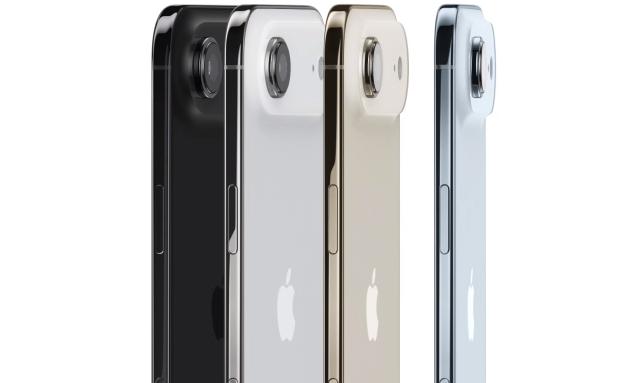
上市三个月,iPhone Air有渠道“降价”2000元!客服回应
凤凰网财经· 2026-01-25 12:01
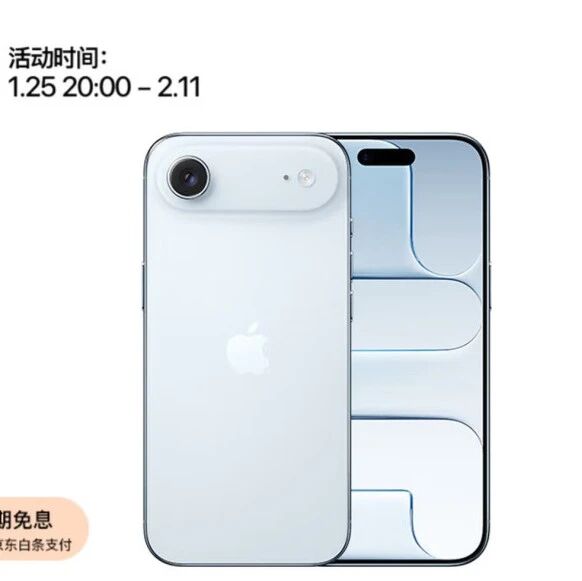
Core Viewpoint - Apple has initiated promotional activities for its products, including significant discounts on the newly launched iPhone Air, indicating a strategic move to boost sales in a competitive market [4][6]. Group 1: Promotional Activities - Apple is offering a direct discount of 2000 yuan on the iPhone Air, with a total potential discount of up to 2500 yuan when combined with national subsidies [4]. - The promotional period for the iPhone Air runs from January 25, 2026, to February 11, 2026, coinciding with the Tmall New Year shopping festival [4][6]. - Other products included in the promotion range from iPads to Apple Watches, with discounts varying from 100 yuan to 1200 yuan [6]. Group 2: Product Details - The iPhone Air, released on September 10, 2025, is noted for its ultra-thin design, measuring 5.6 mm in thickness and weighing 165 grams, making it Apple's thinnest model to date [6]. - The device features a single camera and a battery capacity of 3000mAh, which is lower than that of the iPhone 16 Plus [7]. Group 3: Financial Performance - In the fourth quarter of fiscal year 2025, Apple reported total revenue of 102.466 billion USD, a year-on-year increase of 8%, with a net profit of 27.466 billion USD, up 86% [8]. - However, revenue from the Greater China region decreased by 3.6%, contrasting with growth in other regions such as the Americas and Europe [8].
苹果客服回应iPhoneAir降价2000元
Xin Lang Cai Jing· 2026-01-25 09:57
Group 1 - Apple has initiated a promotional campaign for the iPhone Air, reducing its price by 2000 yuan, with a maximum discount of 2500 yuan when combined with national subsidies [1] - The promotion is limited to approximately 13,000 units of the iPhone Air available through direct sales channels [1] - Customer service indicated that only the iPhone 16 series is discounted on the official Apple website, while the iPhone Air discount is exclusive to specific stores [1]
【财闻联播】苹果降价!又一商业火箭企业,完成IPO辅导!
券商中国· 2026-01-24 13:45
Macro Dynamics - Beijing is enhancing the application of new generation information technologies such as space cloud computing, artificial intelligence, and big data in satellite constellations, as outlined in the "Measures for Promoting the Development and Utilization of Commercial Satellite Remote Sensing Data Resources (2026-2030)" [2] Financial Institutions - The first batch of 2025 performance reports from listed banks shows significant improvement in performance indicators, with asset quality remaining stable. For instance, China Merchants Bank reported a net profit of 150.18 billion yuan, a slight year-on-year increase, while Hangzhou Bank's net profit grew by approximately 12% year-on-year. Eight banks, including CITIC Bank and Shanghai Pudong Development Bank, have reported positive net profit growth [8] Market Data - The Nasdaq Composite Index rose by 0.28%, with the precious metals sector leading the gains. The three major U.S. stock indices closed mixed, with the Dow Jones Industrial Average down by 0.58% and the S&P 500 up by 0.03% [9][10] - The Nasdaq China Golden Dragon Index fell by 0.26%, with notable declines in stocks such as Xpeng Motors and NIO, while Youdao and New Oriental saw gains [11] Company Dynamics - Zhongke Aerospace has completed its IPO counseling, transitioning from "counseling acceptance" to "counseling work completed," with Guotai Junan Securities as its counseling institution [12] - Apple has launched a limited-time discount event from January 24 to 27, offering price reductions on various products, including the iPhone 16 series and MacBook models, with discounts reaching up to 1,000 yuan [13] - Tesla announced an 8,000 yuan limited-time insurance subsidy for certain Model 3 variants purchased before February 28, 2026, contingent on specific conditions [14] - Baidu has established a new personal super intelligent business group, merging its document library and cloud storage divisions, with Wang Ying appointed as the head, aimed at enhancing AI application capabilities [15][16] - Danone has announced an expansion of its recall of infant formula products in specific markets due to regulatory adjustments, although details on the affected products and regions have not been disclosed [17]