
政府补贴

Search documents
厦门首富,遇到大麻烦了……
商业洞察· 2026-03-31 09:22
Core Viewpoint - The article discusses the recent investigation of Lin Xiucheng, the actual controller of Sanan Optoelectronics, and the implications for the company, highlighting its reliance on government subsidies and the potential risks to its financial stability [4][6][29]. Group 1: Company Background and Financials - Sanan Optoelectronics has received over 11 billion in subsidies since its listing, significantly contributing to its profitability, with subsidies in 2011 alone exceeding 1.8 billion, double its net profit [6][20]. - The company reported a net profit of 2.5 billion for 2024, while receiving over 800 million in subsidies [6]. - The company has faced a decline in performance since 2022, with net profit remaining only due to government subsidies, indicating potential losses without these funds [29][30]. Group 2: Recent Developments - Lin Xiucheng was placed under investigation shortly after a significant political figure was also investigated, leading to speculation about the connection to subsidies [6][29]. - Following the announcement of Lin's investigation, the company's market value dropped by over 10 billion, affecting 380,000 retail investors and significant institutional investors [7][8]. - The company has seen a decline in stock value since major investments from state-owned enterprises in 2019 and 2022, with a current market value of less than 5 billion compared to the 6.5 billion invested [8][9]. Group 3: Business Model and Strategy - Sanan's business model has heavily relied on local government support and subsidies to drive expansion, with a history of receiving substantial financial backing for new projects [18][25]. - The company has been involved in various projects that have received significant subsidies, often exceeding 300 million monthly during peak periods [20][21]. - Lin's strategy has included leveraging relationships with influential political figures to secure funding and support for projects, which has been a key factor in the company's growth [18][23].



马克龙称马斯克从美国政府获超额补贴,马斯克迅速回应
Xin Jing Bao· 2026-02-12 09:09
Core Viewpoint - Macron criticized Musk for receiving excessive subsidies from U.S. federal agencies, highlighting the need for increased public investment in European industries [1] Group 1: U.S. Subsidies and Public Investment - Macron stated that U.S. companies benefit from significant public funding in addition to private investments, using the "Starlink" project as an example of government support [1] - He claimed that Musk may be one of the individuals who has received the most subsidies from U.S. taxpayers, amounting to billions of dollars [1] Group 2: Musk's Response - Musk quickly responded to Macron's comments, asserting that European countries provide more substantial subsidies to their domestic industries than the U.S. does [1]
马克龙称马斯克是“从美国纳税人手里拿补贴最多的人之一”,后者迅速回应
Huan Qiu Wang· 2026-02-12 03:45
Group 1 - French President Macron argues that European industries need to enhance public investment, using Elon Musk's Starlink project as an example of excessive subsidies from the U.S. government [1][3] - Macron emphasizes the need for a "Buy European" strategy and large-scale investments, highlighting that the U.S. has significant public funding in addition to private investments [3] - Musk responds on social media, stating that European countries provide more subsidies to their domestic industries than the U.S., and that government funding for Tesla and SpaceX constitutes only about 1% of their total market value [3] Group 2 - Macron calls for the simplification and deepening of the EU single market and advocates for diversifying trade partnerships, urging the EU to make substantial investments and challenge the dominance of the U.S. dollar [3]

金风科技遭欧盟调查股价波动,机构看好长期竞争力
Jing Ji Guan Cha Wang· 2026-02-11 10:37
Group 1 - The European Commission has initiated an in-depth investigation into Goldwind Technology (002202) under the Foreign Subsidies Regulation, focusing on whether government subsidies distort competition in the EU market, with the investigation expected to last until autumn 2027 [1] - The Chinese Ministry of Commerce has expressed concerns over the targeted and discriminatory nature of the investigation [1] - Goldwind Technology announced a performance guarantee of 159 million RMB for its Italian subsidiary to support local wind power projects, signaling business continuity [1] Group 2 - Following the EU investigation, Goldwind Technology's A-share price experienced significant volatility, dropping by 9.02% on February 5, closing at 24.82 RMB, with a cumulative decline of 6.67% over five days; however, the stock has risen by 24.80% year-to-date, indicating a mix of long-term confidence and short-term pressure [2] - Institutional reports suggest that the company's wind turbine profitability is expected to recover, with green methanol business potentially contributing to growth from 2026; CICC maintains a target price of 25.8 RMB for A-shares [3] - Ping An Securities believes the EU investigation will have limited short-term impact on wind turbine exports but increases future market uncertainty, while maintaining a positive outlook on the competitiveness of China's wind power industry [3]
嘉晨智能:关键芯片依赖进口,要完成对飒派约定量的采购
Xin Lang Cai Jing· 2026-02-06 11:26
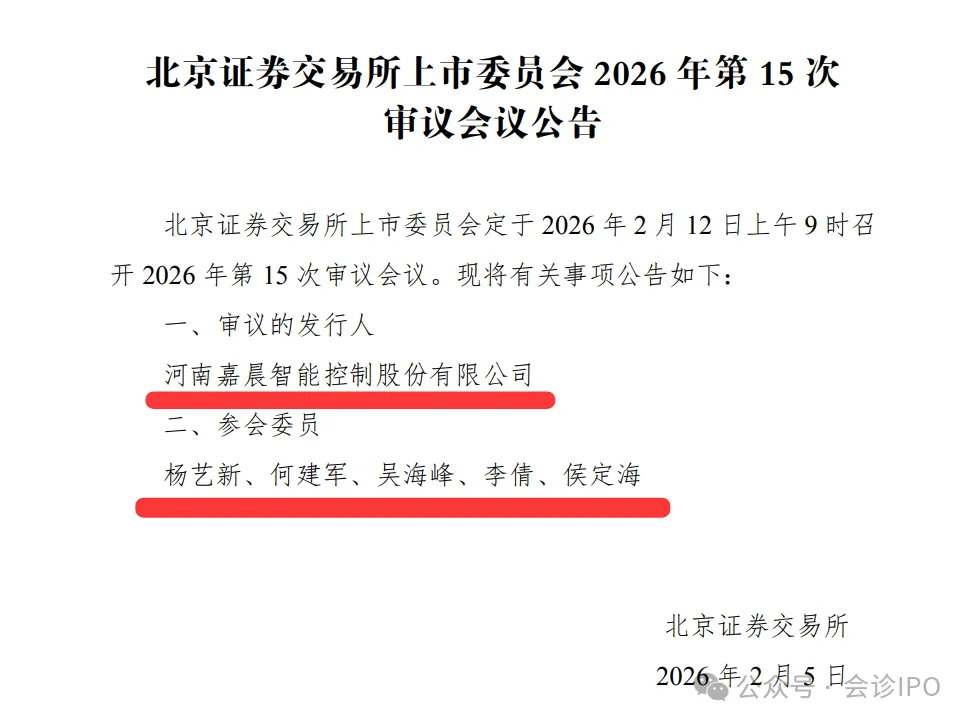
Core Viewpoint - The company, Henan Jiachen Intelligent Control Co., Ltd., is preparing for an IPO with plans to raise 260 million yuan for production and R&D, but faces significant operational contradictions and risks, including declining capacity utilization, reliance on imported chips, and a high dependency on government subsidies for profits [2][6][28]. Group 1: Business Relationships - The presence of Hangcha Group as both the second-largest shareholder (22.22%) and the largest customer raises concerns about potential conflicts of interest in business dealings [17][18]. - Sales revenue from Hangcha Group for Jiachen Intelligent was 178 million yuan, 168 million yuan, and 161 million yuan from 2022 to 2024, accounting for 52.95%, 44.69%, and 42.16% of total revenue respectively, indicating a significant reliance on this customer [18][19]. Group 2: Supplier Agreements - Jiachen Intelligent's core raw material, the motor controller, is primarily sourced from Sapai Group, with procurement ratios of 45.94%, 69.96%, and 53.10% from 2022 to 2024 [4][19]. - A unique clause in the procurement agreement requires Jiachen Intelligent to pay 10% of the difference between the agreed procurement target and actual purchases if targets are not met, which raises concerns about the fairness of procurement conditions [4][19]. Group 3: Profitability and Subsidies - Government subsidies contributed significantly to Jiachen Intelligent's profits, with amounts of 13.78 million yuan, 14.25 million yuan, and 16.96 million yuan from 2022 to 2024, representing 22.79%, 27.90%, and 27.81% of total profits [5][20]. - In 2024, the net profit was 57 million yuan, with nearly 17 million yuan coming from government subsidies, highlighting a concerning reliance on external support for profitability [6][21]. Group 4: Capacity Utilization - The company's capacity utilization has declined from 110.22% in 2022 to 82.33% in 2024, raising questions about the rationale for expanding production capacity while current utilization is decreasing [7][22]. - The North Exchange has requested clarification on the necessity of new capacity projects given the declining utilization rates [22]. Group 5: Supply Chain Risks - Jiachen Intelligent relies heavily on imported chips, with procurement amounts fluctuating between 5.96% and 9.86% of total purchases during the reporting period, indicating vulnerability to international trade dynamics [8][23]. - The company has acknowledged the challenge of transitioning to domestic suppliers, which poses a risk to its production operations if trade policies change unfavorably [8][23]. Group 6: Market Share and Competition - The company's market share has shown significant volatility, with shares in different categories of Hangcha Group's forklifts fluctuating dramatically, indicating instability in its core customer base [9][24]. - For instance, the share in category I forklifts dropped from 58.20% in 2022 to 34.80% in 2023, before recovering to 52.14% in 2024, while category III saw a decline from 17.85% to just 5% [9][25]. Group 7: Financial Health - Accounts receivable have surged from 50.11 million yuan in 2022 to 130 million yuan in 2024, suggesting potential issues with business quality [10][26]. - The accounts receivable turnover days increased from 61 days in 2023 to 142 days in 2025, indicating a slowdown in cash collection and reduced efficiency [11][26]. - In contrast, net cash flow from operating activities plummeted by 61.02% in 2024, from 90.09 million yuan to 35.12 million yuan, further highlighting financial strain [12][27].
中国千亿风电巨头遭欧盟调查,“担忧该公司从政府补贴中获益”,外交部回应!港股尾盘股价跳水,跌7%
Mei Ri Jing Ji Xin Wen· 2026-02-04 09:43
Group 1 - The European Union has initiated an investigation into Goldwind Technology Co., Ltd. due to concerns that the company benefits from government subsidies, potentially distorting competition in the EU market [1] - The Chinese Foreign Ministry criticized the EU's unilateral trade measures against Chinese companies, labeling them as discriminatory and protectionist, which could harm the EU's image and affect Chinese investment confidence in Europe [1] - The Chinese government urged the EU to adhere to commitments of market openness and fair competition, and to stop abusing unilateral trade tools to ensure a fair, transparent, and non-discriminatory business environment for all companies [1] Group 2 - Goldwind Technology's A-shares rose by 0.44%, with a share price of 27.28 yuan and a total market capitalization of 103.6 billion yuan [2] - In contrast, Goldwind Technology's Hong Kong shares experienced a significant decline, closing down by 7.25% at a price of 13.68 HKD [3] - The company's main business activities include wind turbine manufacturing, wind power services, investment and development of wind farms, as well as water services and other operations [3]

福特CEO:我开小米汽车是为了…
Guan Cha Zhe Wang· 2026-01-15 04:04
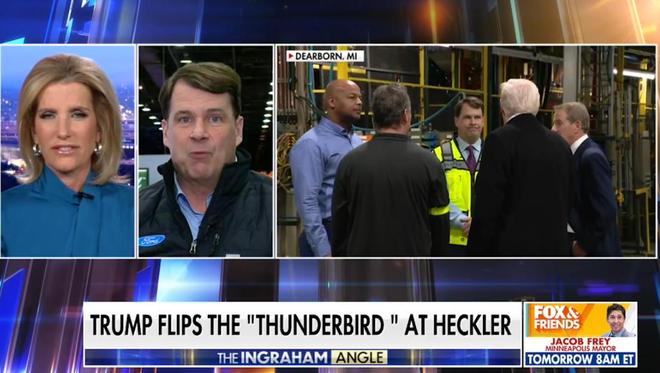
Core Viewpoint - Ford's CEO Jim Farley emphasizes the need to reduce reliance on Chinese components to mitigate supply chain risks and address competitive challenges posed by Chinese automakers [1][3][4] Group 1: Supply Chain and Competition - Ford plans to gradually decrease its dependence on Chinese parts, highlighting the importance of maintaining price advantages for popular models like the F-150 [1] - The company has learned from past experiences, such as the COVID-19 pandemic and recent rare earth supply issues, that global supply chains, including those involving China, can be vulnerable [1][3] - Farley acknowledges the competitive threat from Chinese automakers, particularly in the electric vehicle sector, and stresses the need for a fair competitive environment [3][5] Group 2: National Security and Government Subsidies - Farley raises concerns about national security regarding Chinese vehicles, noting their advanced technology and surveillance capabilities [3][4] - He criticizes the government subsidies that Chinese automakers receive, which can provide them with a price advantage of $4,000 to $5,000 [4][5] - The need for a data policy to ensure data remains within the U.S. cloud and the development of in-car entertainment systems is highlighted as essential for maintaining competitive integrity [4] Group 3: Industry Response and Political Context - The American automotive industry, represented by major manufacturers like Ford and General Motors, warns of the significant threat posed by Chinese automakers and urges the government to prevent their entry into the U.S. market [7] - Former President Trump's remarks support the idea of foreign automakers, including Chinese companies, establishing factories in the U.S., which raises concerns among domestic manufacturers [7] - The "Automotive Innovation Alliance," comprising major U.S. automakers, has expressed fears about the future of the industry if Chinese manufacturers gain a foothold in the U.S. [7]


惠民“大礼包”点燃消费热情 “政府补贴+企业让利”吹动消费市场“一池春水”
Yang Shi Wang· 2026-01-08 06:12
Core Viewpoint - The new round of the "old-for-new" policy for home appliances and digital products has been implemented since January 1, stimulating consumer purchasing enthusiasm across various sectors [1] Group 1: Policy Implementation and Consumer Response - The "old-for-new" policy has led to increased sales activity in cities like Lianyungang, where consumers are taking advantage of government subsidies to purchase new appliances [1][3] - Retailers in Lianyungang have optimized their services to provide a one-stop solution for consumers, allowing them to settle payments after subsidies and facilitating the process of old product disposal and new product installation [3] Group 2: Subsidy Details and Product Coverage - In Sichuan, a unified "subsidy deduction" model is being used, offering a 15% subsidy on the sale price for products like smartphones and tablets, which has attracted consumer interest [5] - The subsidy program has expanded to include smart glasses, indicating a broader support range for digital and smart products [7] Group 3: Market Activation Strategies - In Lanzhou, a dual approach of government subsidies and corporate discounts is being employed to activate key consumer markets, including automobiles and home appliances [7] - The subsidy for home appliances in Lanzhou covers six categories of energy-efficient products, with a standard subsidy of 15% on the final sale price [9] Group 4: Automotive Sector Insights - The automotive "old-for-new" policy includes two categories: scrapping old vehicles for new energy vehicles with a maximum subsidy of 20,000 yuan, and replacing old vehicles with a maximum subsidy of 15,000 yuan [11] - Consumers are leveraging the "old-for-new" policy in automotive purchases, benefiting from multiple layers of subsidies to acquire new vehicles at reduced prices [11] Group 5: Policy Execution and Consumer Access - Lanzhou has established a joint review mechanism among business departments to ensure effective policy implementation, with an online platform facilitating the entire process of subsidy application, review, and payment [13]
小摩:料12月内地乘用车需求持续疲弱 明年补贴或延续但加新要求
智通财经网· 2025-12-15 07:32
Core Viewpoint - Morgan Stanley reports that passenger car sales in mainland China grew only 3% month-on-month in November, which is below seasonal levels, primarily due to weak demand as government subsidies were exhausted earlier than expected, leading consumers to adopt a wait-and-see attitude [1] Group 1: Sales Performance - November passenger car sales in mainland China showed a month-on-month increase of only 3%, indicating weak demand [1] - Major electric vehicle manufacturers provided moderate guidance for fourth-quarter sales, suggesting a continuation of weak trends into December [1] Group 2: Government Subsidies and Market Outlook - There is over a 50% chance that government subsidies or other forms of stimulus will continue into next year, but they may come with increased requirements for vehicle technology, such as energy efficiency for new energy vehicles [1] - If subsidies continue, domestic passenger car demand is expected to remain flat; if not, it could decline by 3% to 5% [1] Group 3: Future Demand Projections - Overall, regardless of the subsidy scenario, first-quarter demand for new energy passenger cars is projected to decline by approximately 30% quarter-on-quarter and remain below seasonal levels [1]
小摩:预期12月内地乘用车需求持续疲弱,明年补贴或延续但增加新要求
Ge Long Hui· 2025-12-15 05:45
Core Viewpoint - Morgan Stanley's report indicates that passenger car sales in mainland China grew only 3% month-on-month in November, below seasonal levels, primarily due to weak demand stemming from government subsidies being exhausted earlier than expected, leading to consumer hesitation [1] Group 1: Sales Performance - November passenger car sales in mainland China showed a modest month-on-month increase of 3%, which is lower than seasonal expectations [1] - Major electric vehicle manufacturers provided conservative sales guidance for Q4, and early December data suggests a continuation of weak trends [1] Group 2: Government Subsidies and Market Outlook - There is over a 50% chance that government subsidies or other forms of stimulus will continue into next year, but they may impose stricter requirements on vehicle technology, such as energy efficiency for new energy vehicles [1] - If subsidies continue, domestic passenger car demand is expected to remain flat; without subsidies, demand could decline by 3% to 5% [1] Group 3: Future Demand Projections - The first quarter of next year may see a seasonal decline of approximately 30% in demand for new energy passenger vehicles [1]