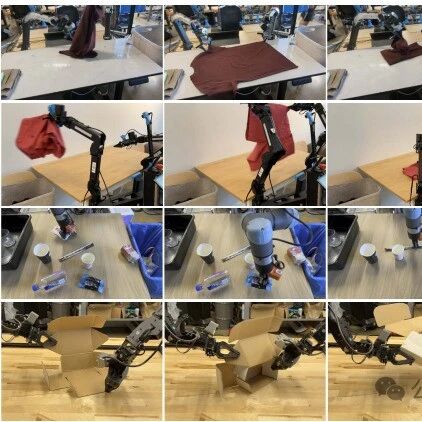
pi0

Search documents
开箱子,叠毛巾!从零把pi0部署到你的机械臂上吧!
具身智能之心· 2025-11-18 03:38
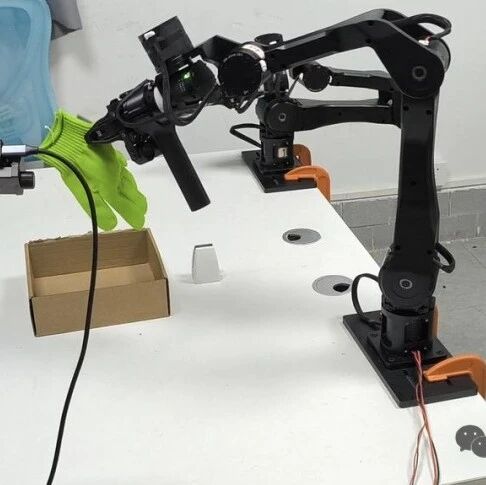
Core Viewpoint - The article introduces the Imeta-Y1, a lightweight and cost-effective robotic arm designed for beginners and researchers in the field of embodied intelligence, emphasizing its accessibility and ease of use for algorithm validation and project development [3][4][6]. Product Features - The Imeta-Y1 robotic arm is designed with a compact structure and modular interfaces, making it suitable for embedded AI and robotics learning platforms [7]. - It offers a full-process open-source toolchain and code examples, supporting data collection, model training, and deployment [18][30]. - The arm supports dual-language interfaces (Python and C++) and is compatible with ROS1 and ROS2, facilitating quick onboarding for users [4][19][20]. Technical Specifications - The robotic arm has a weight of 4.2 kg, a rated load of 3 kg, and 6 degrees of freedom, with a working radius of 612.5 mm and a repeat positioning accuracy of ±0.1 mm [9][20]. - It operates at a supply voltage of 24V and communicates via CAN, with a control method that includes trajectory tracking and teaching [9][20]. Development and Support - The company provides a comprehensive open-source SDK, including drivers, API interfaces, sample code, and documentation, supporting rapid application development [27]. - The product includes a 24-hour quick response for after-sales support, ensuring users receive timely assistance [20][45]. Testing and Reliability - The robotic arm undergoes rigorous hardware testing processes, including precision calibration, durability, load performance, and stability verification, to ensure reliability and safety in various application scenarios [36][40][41].

开箱子,叠毛巾!从零把pi0部署到你的机械臂上吧!
具身智能之心· 2025-11-14 04:00
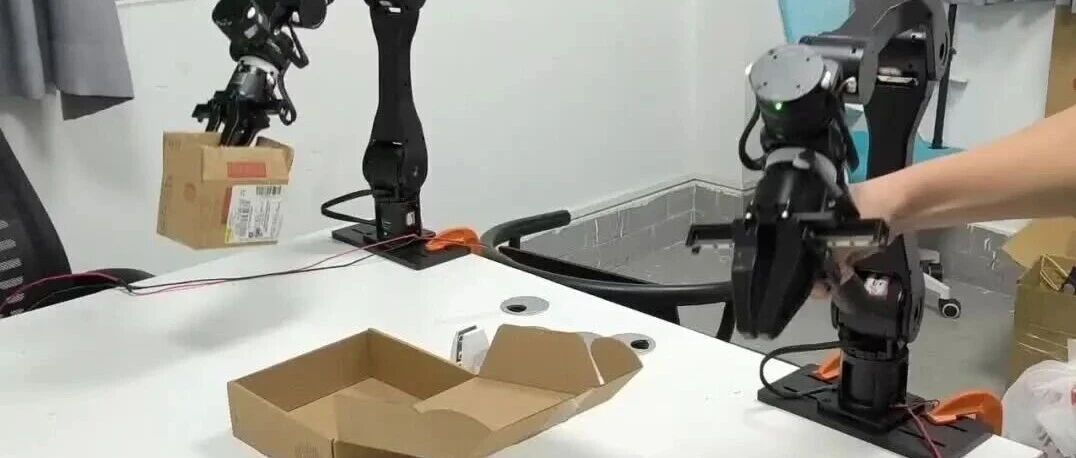
Core Viewpoint - The article introduces the Imeta-Y1, a lightweight and cost-effective robotic arm designed for beginners and researchers in the field of embodied intelligence, emphasizing its accessibility and ease of use for algorithm validation and project development [3][4][6]. Product Features - The Imeta-Y1 robotic arm is designed with a compact structure and modular interfaces, making it suitable for embedded AI and robotics learning platforms [7]. - It offers a full-process open-source toolchain and code examples, facilitating seamless transitions from data collection to model deployment [4][17]. - The arm supports dual-language interfaces (Python and C++) and is compatible with ROS1 and ROS2, allowing users to quickly get started regardless of their programming background [4][18][19]. Technical Specifications - The robotic arm has a weight of 4.2 kg, a rated load of 3 kg, and 6 degrees of freedom, with a working radius of 612.5 mm and a repeat positioning accuracy of ±0.1 mm [9][19]. - It operates at a supply voltage of 24V and communicates via CAN, with various external interfaces for power and communication [9][19]. - The arm's joint motion range and maximum speeds are specified, ensuring precise control for various applications [9][19]. Development and Support - The company provides a comprehensive open-source SDK, including drivers, API interfaces, sample code, and documentation, supporting rapid application development [26][32]. - The product includes support for multi-modal data fusion and is compatible with major frameworks like TensorFlow and PyTorch, enabling end-to-end deployment of intelligent algorithms [17][32]. - The company ensures timely after-sales support, with a 24-hour response guarantee for customer inquiries [19][44]. Testing and Reliability - The robotic arm undergoes rigorous hardware testing processes, including accuracy calibration, durability, load performance, and stability verification, to ensure reliability and safety in various application scenarios [35][39][42].
字节跳动一机器人团队研究员因泄密被开除
Nan Fang Du Shi Bao· 2025-11-12 08:24
Core Insights - ByteDance's Seed researcher was dismissed for leaking confidential information, highlighting the company's strict stance on information security [2][3] - The Seed team, established in 2023, focuses on advanced AI research, including large language models and embodied intelligence [2] - The GR-3 model, co-authored by the dismissed researcher, is noted for its efficiency in adapting to new scenarios with minimal human data [2] Group 1 - ByteDance's Seed team was formed in 2023 and covers research areas such as large language models, AI infrastructure, and next-generation AI interactions [2] - The GR-3 model, released in July 2023, is an embodied intelligent VLA model capable of quick adaptation to new environments with limited data [2] - The researcher indicated that current embodied intelligence models, including GR-3, are comparable to the cognitive abilities of a 1-2 year old human [2] Group 2 - Prior to joining ByteDance, the researcher had extensive experience in the robotics field, including roles at companies like Lattice Technology and Xiaomi [3] - ByteDance has previously terminated employees for violating information security protocols, with a notable case involving a former Xiaomi executive [3] - In September, ByteDance reported the dismissal of 100 employees for breaches of information security, emphasizing the importance of safeguarding company data [3]

从零把pi0部署到你的机械臂上吧!
具身智能之心· 2025-11-12 00:03
Core Viewpoint - The article introduces the Imeta-Y1, a lightweight and cost-effective robotic arm designed for beginners and researchers in the field of embodied intelligence, emphasizing its accessibility and ease of use for algorithm validation and project development [3][4][6]. Product Features - The Imeta-Y1 robotic arm is designed with a compact structure and modular interfaces, making it suitable for embedded AI and robotics learning platforms [7]. - It offers a full-process open-source toolchain and code examples, facilitating seamless transitions from data collection to model deployment [4][17]. - The arm supports dual-language interfaces (Python/C++) and is compatible with ROS1/ROS2, allowing users to quickly get started regardless of their programming background [4][18]. Technical Specifications - The robotic arm has a weight of 4.2 kg, a rated load of 3 kg, and 6 degrees of freedom, with a working radius of 612.5 mm and a repeat positioning accuracy of ±0.1 mm [9][19]. - It operates on a 24V power supply and communicates via CAN, with a control method that includes trajectory tracking, teaching, and API [9][19]. - The arm's joint movement range and maximum speeds are specified, ensuring precise control for various applications [9][19]. Development and Support - The company provides a comprehensive open-source SDK, including drivers, API interfaces, sample code, and documentation, supporting rapid application development [26]. - Users can validate algorithm logic in simulation environments like Gazebo before deploying to physical devices, significantly reducing development risks and debugging costs [22][29]. - The company offers timely after-sales support, with a 24-hour response guarantee, and bulk purchase discounts for educational and project development purposes [19][44]. Testing and Reliability - The robotic arm undergoes rigorous hardware testing, including accuracy calibration, durability, load performance, and stability verification, ensuring reliability and safety in various application scenarios [35][39][42].

没有导师指导,最快多久可以产出一篇具身领域相关论文?
具身智能之心· 2025-09-28 07:00
Core Insights - The article emphasizes the importance of building a solid foundation in research before diving into complex topics like VLA (Vision-Language-Action) in embodied intelligence [1][6] - VLA is highlighted as a transformative model that allows robots to perform tasks based on language instructions, breaking the limitations of traditional single-task training [4][7] - The article discusses the rapid development of the embodied intelligence sector, with various teams transitioning from research to commercialization, and major tech companies actively investing in this field [6] Summary by Sections VLA Overview - VLA enables robots to autonomously make decisions in diverse environments, significantly enhancing their adaptability and application across industries such as manufacturing and logistics [4][6] - The model has become a research hotspot, fostering collaboration between academia and industry through various projects like pi0, RT-2, and OpenVLA [4][7] Industry Development - The embodied intelligence field is experiencing robust growth, with companies like Unitree, Zhiyuan, and major tech players like Huawei and Tencent making significant strides [6] - There is a growing interest in VLA-related research, with many seeking guidance to quickly enter or transition within this domain [6] Course Offerings - A specialized course on VLA research is introduced, focusing on the theoretical and practical aspects of embodied intelligence, including simulation environment setup and experimental design [10][12] - The course aims to cultivate independent research capabilities, guiding students from idea generation to the completion of a research paper [12][17] Learning Outcomes - Participants will gain comprehensive knowledge of VLA models, practical experience in simulation, and skills in academic writing and research methodology [17] - The course is designed to help students identify research opportunities and navigate the complexities of the embodied intelligence landscape [12][16]
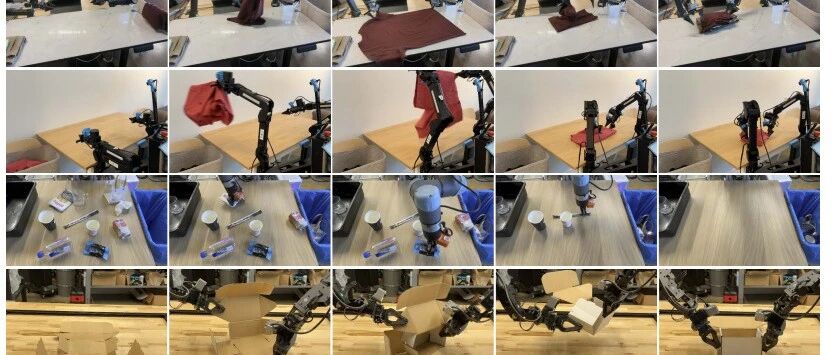
VLA的论文占据具身方向的近一半......
具身智能之心· 2025-09-18 04:00
Core Insights - The article emphasizes the significance of Vision-Language-Action (VLA) models in the field of embodied intelligence, highlighting their ability to enable robots to autonomously make decisions in diverse environments, thus breaking the limitations of traditional single-task training methods [1][4]. Industry Development - The embodied intelligence sector is experiencing rapid growth, with teams like Unitree, Zhiyuan, Xinghaitu, and Yinhai General transitioning from laboratory research to commercialization, alongside major tech companies such as Huawei, JD, and Tencent collaborating with international firms like Tesla and Figure AI [3]. Research Opportunities - VLA is identified as a current research hotspot with many unresolved issues, making it a promising area for academic papers. The article mentions the establishment of a specialized VLA research guidance course aimed at helping individuals quickly enter or transition within this field [3][4]. Course Content and Structure - The course focuses on how agents interact effectively with the physical world through a perception-cognition-action loop, covering the evolution of VLA technology from early grasp pose detection to recent models like Diffusion Policy and multimodal foundational models [7][8]. - It addresses core challenges in embodied intelligence, such as cross-domain generalization and long-term planning, and explores how to integrate large language models with robotic control systems [8]. Learning Outcomes - Upon completion, participants are expected to master the theoretical foundations and technical evolution of VLA models, gain proficiency in simulation environments, and develop independent research capabilities [14]. - The course aims to guide students from idea generation to the completion of a high-quality academic paper, ensuring they can identify research opportunities and design effective experiments [10][14].
卷VLA,提供一些参考方向......
具身智能之心· 2025-09-15 10:00
Core Insights - The Vision-Language-Action (VLA) model represents a new paradigm in embodied intelligence, enabling robots to generate executable actions from language instructions and visual signals, thus enhancing their adaptability to complex environments [1][3]. - VLA breaks the traditional single-task limitations, allowing robots to make autonomous decisions in diverse scenarios, which is applicable in manufacturing, logistics, and home services [3]. - The VLA model has become a research hotspot, driving collaboration between academia and industry, with various cutting-edge projects like pi0, RT-2, OpenVLA, QUAR-VLA, and HumanVLA emerging [3][5]. Industry Development - The embodied intelligence sector is experiencing robust growth, with teams like Unitree, Zhiyuan, Xinghaitu, Galaxy General, and Zhujidongli transitioning from laboratories to commercialization [5]. - Major tech companies such as Huawei, JD.com, and Tencent are actively investing in this field, alongside international firms like Tesla and Figure AI [5]. Educational Initiatives - A specialized VLA research guidance course has been launched to assist students in quickly entering or transitioning into the VLA research area, addressing the complexity of the related systems and frameworks [5]. - The course focuses on the perception-cognition-action loop, providing a comprehensive understanding of VLA's theoretical foundations and practical applications [7][8]. Course Structure and Outcomes - The curriculum covers the entire research process, from theoretical foundations to experimental design and paper writing, ensuring students develop independent research capabilities [15]. - Students will learn to identify research opportunities, analyze unresolved challenges in the field, and receive personalized guidance tailored to their backgrounds and interests [15]. - The course aims to help students produce a complete research idea and a preliminary experimental validation, culminating in a draft of a high-quality academic paper [15][18].

当老师给我指了VLA作为研究方向后......
具身智能之心· 2025-09-10 11:00
Group 1 - VLA (Vision-Language-Action) model represents a new paradigm in embodied intelligence, enabling robots to generate executable actions from language instructions and visual signals, thus enhancing their understanding and adaptability in complex environments [1][3] - The VLA model breaks the limitations of traditional single-task training, allowing robots to make autonomous decisions in diverse scenarios, which is applicable in manufacturing, logistics, and home services [3][5] - The VLA model has become a research hotspot, driving the development of several cutting-edge projects such as pi0, RT-2, OpenVLA, QUAR-VLA, and HumanVLA, fostering collaboration between academia and industry [3][5] Group 2 - The embodied intelligence sector is experiencing rapid growth, with teams like Unitree, Zhiyuan, Xinghaitu, and Yinhai General transitioning from laboratories to commercialization, while tech giants like Huawei, JD.com, and Tencent are actively investing in this field [5] - The course on VLA research aims to equip students with comprehensive skills in academic research, including theoretical foundations, experimental design, and paper writing, focusing on independent research capabilities [13][15] - The curriculum emphasizes identifying research opportunities and innovative points, guiding students to develop their research ideas and complete preliminary experiments [14][15] Group 3 - The course covers the technical evolution of the VLA paradigm, from early grasp pose detection to recent advancements like Diffusion Policy and multimodal foundational models, focusing on end-to-end mapping from visual input and language instructions to robotic actions [8][9] - Core challenges in embodied intelligence, such as cross-domain generalization and long-term planning, are analyzed, along with strategies to combine large language model reasoning with robotic control systems [9] - The course aims to help students master the latest research methods and technical frameworks in embodied intelligence, addressing limitations and advancing towards true general robotic intelligence [9][15]