
Zhong Guo Neng Yuan Wang

Search documents
原材料价格上涨对白电龙头影响有限,白电1-2月排产增速环比改善
Zhong Guo Neng Yuan Wang· 2026-02-03 02:01
Core Viewpoint - Recent increases in copper and other raw material prices have raised concerns about the profitability of leading white goods companies. However, historical analysis shows that the negative impact of rising raw material costs on gross margins has gradually diminished, and these companies are expected to maintain profitability through structural adjustments and cost savings [2]. Group 1: Raw Material Price Impact - Since 2008, the home appliance industry has experienced three significant raw material price increase cycles, with the impact on gross margins decreasing over time. During the 2009-2011 cycle, the maximum quarterly gross margin decline for leading white goods companies was 5-7 percentage points; in the 2016-2017 cycle, it was around 5 percentage points; and in the 2020-2022 cycle, it was limited to a maximum of 2 percentage points [2]. - In January 2026, the average monthly closing prices for copper and aluminum on the SHFE increased by 36.7% and 20.9% year-on-year, respectively. This increase is lower than that observed during the 2020-2022 period, suggesting that the current impact on white goods companies may be less severe, with an expected gross margin decline of less than 2 percentage points [2]. Group 2: Production and Demand Trends - In February, the total production of white goods in China reached 23.79 million units, a year-on-year decrease of 22.1%. The cumulative production for January and February is expected to decline by 5.0%. Compared to the over 10% decline in production in Q4 2025, the production performance of white goods has shown signs of recovery [3]. - The production of air conditioners, refrigerators, and washing machines has seen varying declines, with air conditioners down 31.6% year-on-year, refrigerators down 17.0%, and washing machines down 3.2%. The cumulative decline for January and February is 10.3%, 6.4%, and 2.4%, respectively. The impact of the Spring Festival has pressured production, but the cumulative growth rate has slightly improved [3]. Group 3: Retail Market Performance - In 2025, the retail scale of China's home appliance market was 893.1 billion yuan, a year-on-year decline of 4.3%. The retail sales of air conditioners, refrigerators, and washing machines decreased by 0.4%, 11.5%, and 4.6%, respectively. However, small home appliances performed better, with an overall retail sales increase of 3.8% [4]. - The market performance in January showed a relative return of -2.6% for the home appliance sector. The prices of copper and aluminum increased by 7.8% and 4.8% month-on-month, while cold-rolled steel prices decreased by 0.5% [4]. Group 4: Investment Recommendations - Recommended investments in the white goods sector include Midea Group, Haier Smart Home, TCL Technology, and Hisense Home Appliances. For the black goods sector, TCL Electronics and Hisense Visual are recommended, while for small appliances, Stone Technology, Bear Electric, and Xinbao Co. are suggested [5].
发电侧容量电价机制完善,容量机制扩围提比,调节性资产价值重塑
Zhong Guo Neng Yuan Wang· 2026-02-03 01:56
Core Viewpoint - The report from Dongwu Securities highlights the recent notification from the National Development and Reform Commission and the National Energy Administration regarding the improvement of the capacity price mechanism for power generation, which includes an increase in the coal power capacity price recovery ratio and the inclusion of new energy storage, gas power, and pumped storage in the capacity compensation framework [2][3]. Group 1: Investment Highlights - The coal power capacity recovery ratio is set to increase from approximately 30% in 2024-2025 to no less than 50% [2]. - The average capacity fee revenue for coal power is expected to rise from 0.027 yuan/kWh to 0.040 yuan/kWh by 2026 due to the increased recovery ratio [2]. - Local governments are encouraged to adjust the lower limit of medium- and long-term trading prices for coal power and to relax the signing ratio requirements for medium- and long-term contracts, promoting flexible pricing mechanisms [2]. Group 2: Capacity Compensation Mechanism Expansion - A new independent capacity price mechanism for grid-side energy storage has been established, which will be compensated based on local coal power standards [3]. - The pumped storage capacity price mechanism will adopt a "new and old distinction" principle, allowing for market-based cost recovery [3]. - A capacity price mechanism for gas power generation may be established by provincial pricing authorities, determining capacity prices based on a fixed cost recovery ratio [3]. Group 3: Reliable Capacity Compensation Mechanism - A reliable capacity is defined as the capacity that can provide stable power supply during peak demand periods [4]. - A reliable capacity compensation mechanism will be established to replace the original capacity price, focusing on compensating for the fixed costs not recovered by marginal units [4]. - The compensation scope will include coal power, gas power, and independent new energy storage, gradually expanding to pumped storage [4]. Group 4: Investment Recommendations - Operators of coal power, gas power, and pumped storage will benefit from the increased fixed cost recovery ratio and market revenue sharing mechanisms [4]. - The implementation of capacity prices will significantly improve the revenue model for independent energy storage stations, favoring high-quality storage asset operations [4]. - The regulatory resources will support the construction of new power systems and facilitate the absorption of renewable energy [4]. Recommended companies include Huaneng International (600011), Huadian International (600027), and Longyuan Power (001289) [4].




主机厂原材料涨价后续影响分析
Zhong Guo Neng Yuan Wang· 2026-02-03 01:55
Core Viewpoint - The automotive industry has experienced significant price increases in raw materials since 2020, primarily driven by two distinct phases of price surges, with lithium carbonate leading the increases [1][2]. Group 1: Price Trends - The first phase of price increases occurred from Q3 2020 to Q1 2022, where the average price of battery-grade lithium carbonate rose from 40,000 yuan/ton in Q3 2020 to 550,000 yuan/ton by Q4 2022 [1][2]. - The second phase began in Q4 2025, with notable increases in prices for lithium carbonate, lithium hexafluorophosphate, copper, and aluminum, with price increases of 187% for lithium carbonate and 180% for lithium hexafluorophosphate compared to their lowest values in 2025 [2]. Group 2: Impact on Stakeholders - The price increases have been shared among upstream component suppliers, manufacturers, and consumers, with component suppliers experiencing a decline in gross margins from 19.3% in Q3 2020 to 15.3% in Q4 2021 [3]. - Vehicle manufacturers also faced margin pressures, with gross margins for passenger vehicles dropping from 12.7% in Q4 2020 to 8.8% in Q4 2021 [3]. - Consumers have seen price increases for electric vehicles, with companies like BYD raising prices by 1,000 to 7,000 yuan due to rising raw material costs and subsidy reductions [3]. Group 3: Future Outlook - The automotive industry is expected to manage raw material cost increases through moderate price hikes or product enhancements, rather than significant price increases, to avoid negatively impacting sales [4]. - The penetration rate of new energy vehicles is projected to reach 54% by 2025, which may influence pricing strategies as manufacturers navigate subsidy reductions and rising costs [4]. - The domestic passenger car market may face challenges due to raw material price increases, but high-end manufacturers are expected to maintain profitability, while exports of new energy vehicles are anticipated to grow [5].
完善容量电价政策发布 碳减排明确成为发展主线
Zhong Guo Neng Yuan Wang· 2026-02-03 01:36
Group 1: Power Generation Capacity - As of the end of 2025, the cumulative installed power generation capacity in the country is 389 million kilowatts, with a total of 434 GW of new energy capacity added throughout the year, exceeding market expectations. This includes 119 GW from wind power and 315 GW from solar power. Notably, thermal power added 95 GW [1][5] - In December alone, solar power added 41 GW and wind power added 38 GW, significantly higher than the monthly figures from June to November, likely due to the grid connection of large wind and solar projects at year-end [1][5] Group 2: Energy Storage - The national level has proposed the establishment of a capacity pricing mechanism for energy storage, with provincial policies expected to accelerate. The National Development and Reform Commission and the National Energy Administration issued a notice on January 30, 2026, to improve the capacity pricing mechanism for various power sources, including coal, natural gas, pumped storage, and new energy storage [2][4] - The domestic energy storage market is expected to expand, benefiting energy storage integrators, upstream component manufacturers, and battery companies [2] Group 3: Investment Recommendations - Companies to focus on include energy storage integrators such as Haibo Shichuang, Sunshine Power, and Canadian Solar; battery manufacturers like CATL, Yiwei Lithium Energy, and Penghui Energy; and energy storage inverters from companies like Kehua Data and Chint Power [3] - Recommendations also include companies with potential installation growth and high dividend yields, such as Datang Power and Huaneng International, as well as companies involved in green energy and asset integration [6] Group 4: Carbon Market and Environmental Policies - The "14th Five-Year Plan" emphasizes carbon reduction as a development priority, with a focus on energy transition and industrial upgrading. The carbon market is expected to expand, with more industries being included by 2027 [7][9] - New methodologies for CCER (China Certified Emission Reduction) are being introduced, expanding the market support to key areas such as oil and gas recovery and green hydrogen [8][9]
国网孝义市供电公司 全面"体检"充电桩 助力春运绿色行
Zhong Guo Neng Yuan Wang· 2026-02-02 11:03
下一步,孝义公司将持续深化春节保电机制,加大重点区域充电设施巡检频次,畅通24小时应急响应通 道,以优质电力服务守护群众返乡路,让广大市民度过一个安心、便捷、祥和的新春佳节。(邓步攀) 随着现在越来越多人选择新能源汽车,充电站成了春节出行路上的"香饽饽" 。服务现场,该公司工作人员 秉持"隐患零容忍"原则,对站内充电桩的供电线路、开关设备、接地装置等关键部位开展"地毯式"排 查,重点检测桩体绝缘性能、充电接口稳定性及消防器材有效性,细致排查低温天气下设备防寒防冻措 施落实情况。针对排查发现的2处线路接触不良问题,工作人员当场完成整改,确保每台设备均处于最佳 运行状态。在设备巡检的同时,服务队员与充电站负责人李经理及现场工作人员深入交流,详细了解站 点日常运营负荷及节日期间用电需求,精准解读集中式充换电站电价优惠政策。此外,工作人员还发放 安全用电宣传手册,普及充电桩日常维护、应急处置等知识,进一步提升站点运维人员的安全防护能 力。 岁末将至,年味渐浓,返乡出行客流逐步攀升,新能源汽车充电需求持续增长。2月2日上午,国网孝义 市供电公司组织太行黎明共产党员服务队与青年突击队来到孝义市德信宏充电站有限公司开展春节 ...
2026年电力市场化政策宣贯会在兰州举办
Zhong Guo Neng Yuan Wang· 2026-02-02 11:01
Group 1 - The conference aimed to promote the understanding of electricity market reform policies and facilitate enterprise participation in market transactions, attracting over 200 representatives from various companies [1][2] - The significance of electricity market reform was emphasized, highlighting its role in efficient energy allocation, industrial transformation, and green development, encouraging enterprises to leverage policy benefits [1] - The conference provided a systematic analysis of the current electricity market operation and the opportunities for management optimization and cost control through market transactions [1][2] Group 2 - A detailed guide on the market entry process was provided, covering registration, qualification review, contract signing, and information maintenance, along with key considerations for enterprises [2] - The conference underscored the need for collaboration among government, grid companies, and enterprises to advance electricity market reform, with the grid company committed to enhancing service levels [2] - The successful hosting of the conference strengthened enterprises' understanding of market policies, laying a solid foundation for their smooth and standardized participation in market transactions [2]
国网邵武市供电公司:实战练兵强技能 居民度冬电无忧
Zhong Guo Neng Yuan Wang· 2026-02-02 10:17
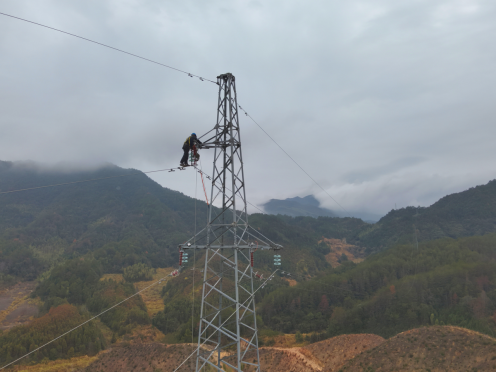
Core Viewpoint - The company is actively enhancing its winter power supply safety measures by replacing aging lightning arresters on the 35 kV Zhaiqing line to ensure stable electricity supply during the winter season [1][3]. Group 1: Equipment Maintenance and Safety - Lightning arresters are crucial for preventing overvoltage and ensuring the stable operation of power transmission lines, directly impacting residential electricity safety [3]. - Aging and performance degradation of some lightning arresters on the 35 kV Zhaiqing line pose significant risks, especially during adverse weather conditions like rain and snow [3]. - The company has completed the installation of 274 lightning arresters across 17 lines, including the 35 kV Zhaiqing line, to eliminate safety hazards [4]. Group 2: Operational Excellence and Training - The replacement work was conducted under the principles of "self-implementation, practical training, and eliminating hidden dangers," enhancing the team's ability to independently address equipment issues [3]. - The operational team adhered to standardized procedures, ensuring safety measures were in place and that all tasks were performed meticulously to guarantee quality and safety [3]. - The company aims to continuously focus on winter power supply tasks, regularly conducting equipment inspections and practical training to strengthen emergency response capabilities [4].

特来电入股宁德时代、一汽解放汽车合资公司,后者增资至约4.9亿
Zhong Guo Neng Yuan Wang· 2026-02-02 10:07
该公司成立于2023年3月,法定代表人为乔燕南,经营范围包括新能源汽车整车销售、电池销售、电池 零配件销售等,现由一汽解放(000800)汽车有限公司、宁德时代(300750)(300750)及上述新增股 东共同持股。 天眼查App显示,近日,解放时代新能源科技有限公司发生工商变更,新增特来电新能源股份有限公司 为股东,同时,注册资本由9000万人民币增至约4.9亿人民币。 ...


国网盐城供电公司党委:锚定“第一议题”强根基 赋能盐阜供电谱新篇
Zhong Guo Neng Yuan Wang· 2026-02-02 10:00
最近,国网盐城供电公司召开党委会,以"第一议题"学习了习近平总书记对第七届中俄能源商务论坛的 重要贺信,在《求是》杂志上的重要文章《扩大内需是战略之举》以及最近召开的中共中央政治局会议 精神。会议立足企业使命担当,将理论学习与工作实践深度融合,切实把"第一议题"学习成效转化为推 动盐阜地区电力事业高质量发展的强大动力。 把牢"第一议题"政治舵,筑牢发展思想根基。坚持把学习贯彻习近平总书记重要讲话和重要指示批示精 神作为首要政治任务,严格落实"第一议题"制度,通过党委理论学习中心组学习等多元形式,推动理论 学习往深里走、往实里走、往心里走。按照"有没有学习研讨、有没有贯彻措施、有没有督导推动、有 没有跟踪问效"四项标准强化闭环管理,确保党的创新理论在企业落地生根、开花结果,以坚定的政治 站位践行央企"三大责任"。 激活"第一议题"新动能,勇担绿色转型使命。紧扣"十五五"谋篇布局关键期,以"第一议题"学习成果为 指引,争做能源改革先行官。深化"三链"党建赋能,发挥基层党组织战斗堡垒作用和党员先锋模范作 用,统筹推进地区千万千瓦级风光接网规划研究。依托公共电网扎实推进"绿电进园区"工程,高水平服 务大丰港国家零碳园 ...
安晟能源公司“科技引擎”激发智慧矿山新活力
Zhong Guo Neng Yuan Wang· 2026-02-02 09:31
Core Viewpoint - Guizhou Ansheng Energy Co., Ltd. is advancing high-quality "rich mine precision mining" through technological innovation, focusing on the construction of smart mines to achieve comprehensive automation in mining, transportation, and washing processes, thereby promoting the transformation and upgrading of coal enterprises for high-quality development in the new era [1][8]. Group 1: Technological Innovation and Investment - The company has invested 260 million yuan in smart coal mine construction since 2017, achieving 100% mechanization in coal mining and auxiliary production systems across all its coal mines [2][3]. - Key projects include the establishment of the first intelligent coal mining face in Southwest China at the Fa'er coal mine in 2018 and the first thin coal seam intelligent unmanned working face in Guizhou at the Xiaotun coal mine [2][3]. Group 2: Automation and Efficiency - The transition from "single-point intelligence" to "full-system collaboration" has led to a reduction in production personnel from 13 to 5, improving production efficiency by 10% [3][4]. - Each mine has reduced personnel by 150, saving 15 million yuan annually in labor costs while enhancing safety and economic benefits [4]. Group 3: Smart Mining Systems - The "5G + Smart Mine" system integrates 12 major systems, creating a data-centric, networked control platform that enhances safety and operational efficiency [5][6]. - The implementation of AI video analysis systems and real-time monitoring has improved safety measures, such as automatic shutdowns in hazardous situations [6]. Group 4: Key Technology Breakthroughs - The company has focused on overcoming industry bottlenecks by developing key technologies, such as the "110 method" and "2G N00 method," which have increased production by 146,000 tons and revenue by 116 million yuan [7]. - The introduction of advanced equipment like hydraulic supports and high-power coal mining machines has significantly improved mining efficiency and safety in complex geological conditions [8]. Group 5: Overall Impact on Workforce and Environment - The shift to smart mining has transformed the working environment, allowing workers to transition from high-risk roles to positions focused on equipment inspection and maintenance, enhancing their quality of life [4][8]. - The company's efforts in smart mining not only optimize underground working conditions but also ensure that every miner enjoys dignified labor and a happy life, contributing to the sustainable development of the coal industry [8].