
Zhong Guo Neng Yuan Wang

Search documents
国网甘肃电力:助力民营企业复工复产“开门红”
Zhong Guo Neng Yuan Wang· 2026-02-28 02:07
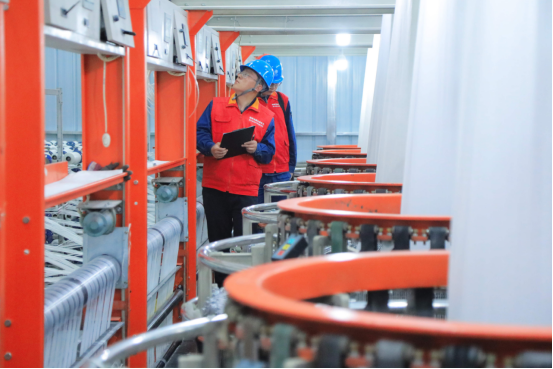
Group 1 - The core viewpoint of the articles highlights the importance of stable electricity supply for the efficient resumption of production in private enterprises, particularly in the agricultural sector [1][2] - Tianshui Wushan Xiangda Camel Feed Co., Ltd. resumed operations on February 23, achieving a production capacity of 500 tons per day within two days, demonstrating rapid recovery and efficiency [1] - The company has created stable employment for over 200 local residents since its establishment in 2021, while also improving feed quality and guiding farmers in scientific breeding practices [1] Group 2 - The Gansu Electric Power Company has proactively supported the resumption of production by focusing on private enterprises and agricultural processing, ensuring a strong electricity supply to boost economic recovery [2] - Special service teams were formed to conduct thorough inspections of electrical equipment and provide guidance for safe equipment restart and load adjustment, enhancing the safety of electricity usage [2] - The company has implemented a "green channel" for electricity services, simplifying processes and providing one-stop services for enterprises to address their electricity needs effectively [2]

国网兰州供电公司:精准服务送上门 暖心护航复工复产
Zhong Guo Neng Yuan Wang· 2026-02-28 01:49
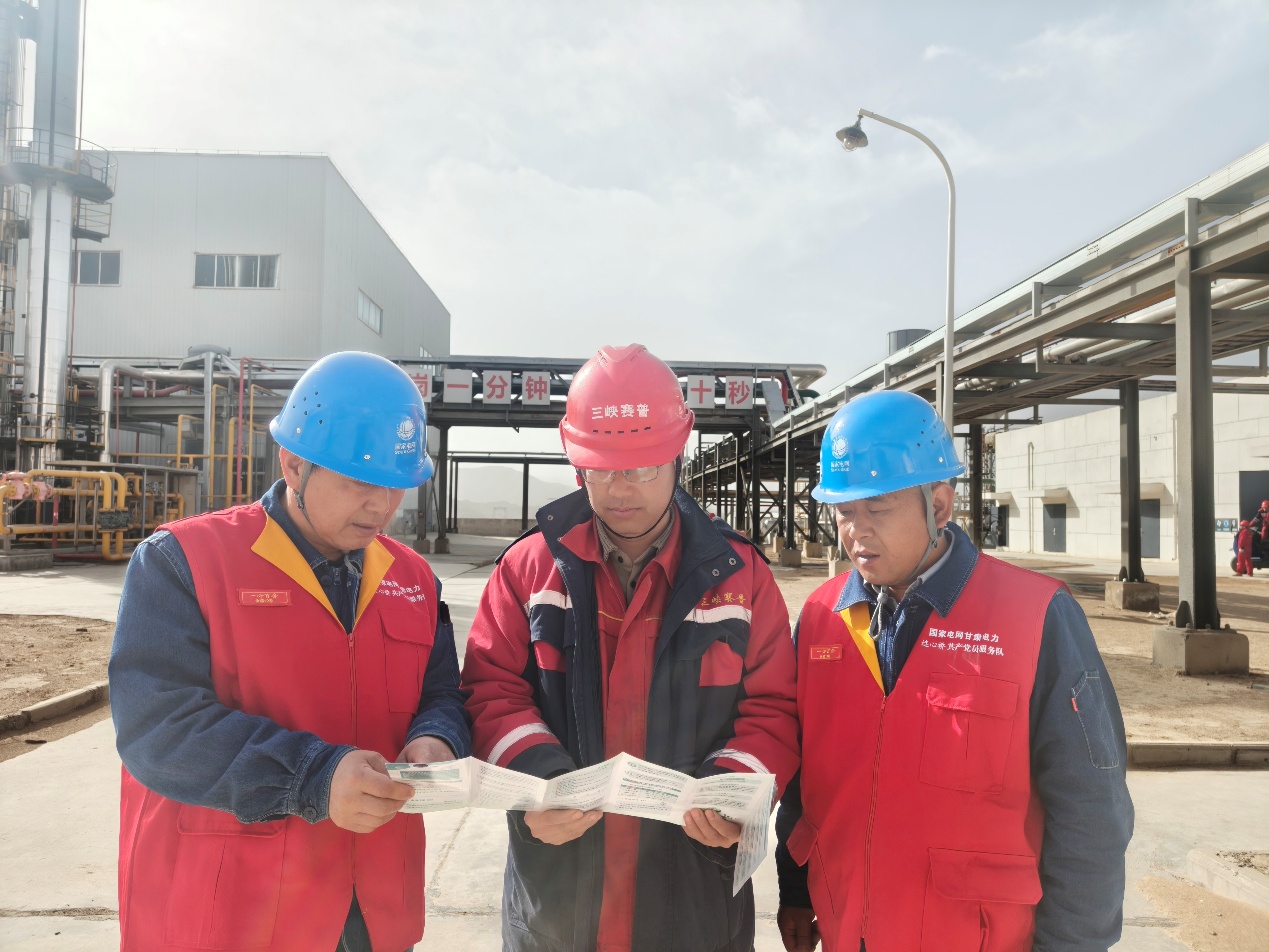
Core Viewpoint - The State Grid Lanzhou Power Supply Company is actively conducting safety inspections for electricity supply in key enterprises to support their production resumption after the holiday, contributing to local economic growth in the new year [1][3]. Group 1: Safety Inspections - The company organized a service team to perform thorough safety checks on electricity supply at key industrial sites, ensuring reliable power for production [1][3]. - Inspections included the use of infrared thermometers and insulation resistance testers to assess the health of electrical equipment and systems [3]. Group 2: Communication and Guidance - Power supply employees engaged in detailed discussions with enterprise leaders to understand their production plans and electricity needs, providing on-site guidance for safe electricity usage [3][5]. - The company emphasized the importance of reliable electricity supply for the liquefied natural gas production facility, highlighting the potential impact of electrical hazards on safety [3]. Group 3: Problem Resolution and Management - The inspection process followed a principle of "identifying, guiding, and eliminating" issues, with immediate rectification for manageable hazards and a structured follow-up for more complex issues [5]. - Safety and energy-saving materials were distributed to enterprises, promoting efficient electricity usage and emergency response knowledge [5].
LV中国公司董事长变更
Zhong Guo Neng Yuan Wang· 2026-02-28 01:34
Core Viewpoint - Recent changes in the management of Louis Vuitton (China) Commercial Sales Co., Ltd. indicate a shift in leadership with David Ponzo stepping down and Hugues, Henri, Pierre Bonnet-Masimbert taking over as the legal representative and chairman [1] Company Overview - Louis Vuitton (China) Commercial Sales Co., Ltd. was established in November 2004 with a registered capital of 50 million RMB [1] - The company's business scope includes retail of publications, food sales, liquor operations, leather goods sales, luggage sales, and wholesale and retail of clothing and accessories [1] - The company is wholly owned by Louis Vuitton Hong Kong Limited [1]
正泰新能“新光未来”公益计划点亮英国Keech Hospice
Zhong Guo Neng Yuan Wang· 2026-02-28 01:31
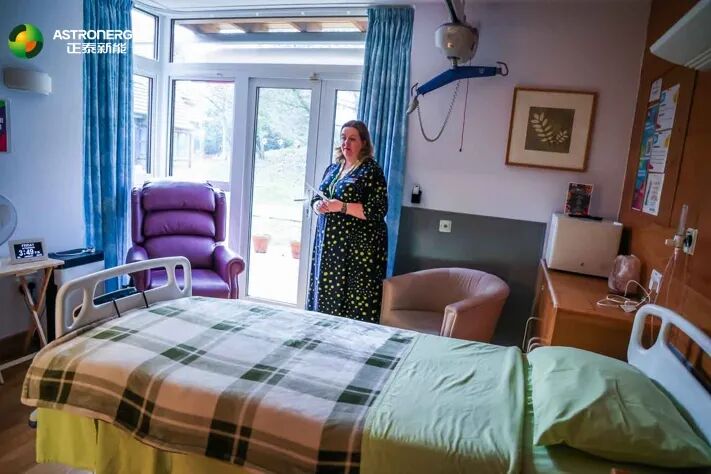
Core Viewpoint - The recent donation of 504 ASTRO N high-efficiency photovoltaic modules by Chint New Energy to Keech Hospice in the UK is part of the "Solar The Future" green energy community public welfare program, aimed at providing sustainable energy solutions and support for terminally ill patients [1][3]. Group 1: Project Overview - The project involves the installation of a rooftop photovoltaic system with a total capacity of 220 kW at Keech Hospice, expected to save up to £50,000 annually in energy costs, amounting to over £1.8 million in savings over the system's 25-year lifespan [3][5]. - The installation is set to begin in May 2025 and is a collaboration between Chint New Energy, Park Electrical Distribution Company, Renewable EDtricity Systems, and Keech Hospice [3]. Group 2: Technological Aspects - The donated 220 kW ASTRO N series photovoltaic modules utilize Chint New Energy's proprietary n-type TOPCon technology, featuring advanced processes such as gap reflective film, dual-layer coated glass, high-density packaging, and non-destructive cutting, ensuring high power generation and reliability under variable UK weather conditions [5]. Group 3: Community Impact - The savings generated from the photovoltaic system will be reinvested into patient care, family support, and improvements in medical facilities at Keech Hospice, directly benefiting families in need [3][8]. - The "Solar The Future" program also aims to support various public welfare projects globally, including biodiversity, youth education, and women's empowerment, demonstrating a commitment to social responsibility through commercial activities [7][8]. Group 4: Future Plans - Chint New Energy plans to continue leveraging photovoltaic technology to sustainably support global initiatives in educational equity, community empowerment, and environmental protection, expanding the "Solar The Future" public welfare blueprint [8].
从资金援助到生态共建:“远程卡友护航计划”如何织就一张温暖的路网
Zhong Guo Neng Yuan Wang· 2026-02-28 01:22
Core Insights - The "Remote Truck Driver Support Program" aims to create a comprehensive support network for truck drivers, addressing their health, safety, and emotional challenges while enhancing their welfare and societal value [1][8] Group 1: Systematic Construction - The program focuses on building a four-dimensional support system that includes economic aid, physical services, mutual assistance networks, and emotional care, moving beyond traditional one-way charity [2] - A dedicated "Remote Truck Driver Support Fund" has been established to provide timely financial assistance to families facing sudden hardships, with a transparent application and approval process [2] - The initiative has created offline service stations called "Remote Brothers' Homes" and integrated a nationwide service network, ensuring that support is accessible and tangible for truck drivers [2] Group 2: Value Extension - The program fosters a virtuous cycle of "public service - brand enhancement - user loyalty - ecological optimization," positioning itself as a model for high-quality development in the logistics industry [3] - Special activities are organized during critical periods, such as the Spring Festival, to provide targeted support to truck drivers when they need it most, enhancing the program's relevance and effectiveness [3] Group 3: Case Studies - The implementation of the support fund has led to impactful case studies that highlight the program's role in providing material assistance and addressing broader social issues [5] - Examples include support for truck drivers who are family breadwinners facing severe health crises, showcasing the program's commitment to family stability and emotional resonance [5] - The program also addresses the professional risks faced by truck drivers, emphasizing the need for improved occupational health management and insurance coverage [5] Group 4: Collaboration and Resonance - The program aligns with national policies aimed at supporting truck drivers and enhancing social welfare, demonstrating a proactive approach to social governance [8] - It complements other industry initiatives, such as the "Warm Journey" program, creating a collaborative environment that benefits truck drivers [8] - Feedback from truck drivers indicates a growing sense of community and support, reinforcing the program's value and impact on their lives [8] Group 5: Future Vision - The program represents a significant step in leveraging corporate responsibility to improve the circumstances of truck drivers, with an open invitation for more industry partners to join the initiative [9] - The ultimate goal is to create a comprehensive support network that spans the entire career lifecycle of truck drivers, contributing to a better logistics environment [9]

上海电气集团成立医疗装备公司,注册资本3亿
Zhong Guo Neng Yuan Wang· 2026-02-28 01:19
Group 1 - Shanghai Electric Group Medical Equipment Co., Ltd. was established on February 27, with a registered capital of 300 million RMB [1] - The legal representative of the new company is Peng Yong [1] - The business scope includes software development, medical research and experimental development, and specialized equipment repair [1] Group 2 - Shanghai Electric Group Co., Ltd. holds 100% ownership of the newly established medical equipment company [1]

2025年机床行业稳健增长,高端数控机床领域加速推进
Zhong Guo Neng Yuan Wang· 2026-02-28 00:56
Core Insights - The production of metal cutting machine tools in China is projected to reach 868,300 units by 2025, representing a year-on-year growth of 9.70% [1][2] - Machine tool exports are expected to amount to $12.91 billion in 2025, with a year-on-year increase of 14.60%, while imports will total $5.874 billion, showing a modest growth of 0.40% [1][2] - The import quantity of machine tools is forecasted to be 72,300 units, reflecting a year-on-year increase of 3.50% [1][2] Industry Growth - The machine tool market is experiencing steady growth, with a significant increase in the production of CNC metal cutting machine tools, which is expected to reach 346,800 units, a year-on-year growth of 16.81% [3] - The demand for machine tools is closely linked to the upgrading of the manufacturing industry and investment in high-end equipment, with the high-tech manufacturing PMI reaching 52.00 in January 2026, indicating expansion [3] - The domestic high-end machine tool sector is supported by government policies aimed at encouraging technological innovation and equipment upgrades, which will likely sustain growth into 2026 [3] Export Dynamics - Machine tool exports are projected to grow by 14.60% in 2025, with a notable increase in export value despite a decrease in export quantity by 18.20% to 14.92 million units [4] - The average export price of machine tools has risen significantly by 40.19%, indicating a successful transition towards higher-value products [4] - Orders for metal cutting machine tools in Japan have also increased, suggesting a recovery in overseas markets and sustained demand for equipment [4] High-End Machine Tool Development - The domestic high-end CNC machine tool industry is advancing rapidly, driven by policy support and market demand, with significant breakthroughs in core technologies [5] - The market share of domestic manufacturers in the five-axis CNC machine tool sector has increased dramatically from 18% in 2020 to 55% in 2024 [5] - The focus on high-end manufacturing applications such as aerospace, new energy, and semiconductors is accelerating the domestic high-end machine tool market's growth and import substitution [5] Investment Opportunities - The machine tool sector is closely tied to the overall health of the manufacturing industry, with leading domestic companies actively investing in high-end CNC systems and smart manufacturing [6] - Companies with strong R&D capabilities, core technology barriers, and deep ties to major downstream clients are recommended for investment consideration, including Kede CNC, Nuwei CNC, Haitan Precision, Qinchuan Machine Tool, Haomai Technology, Genesis, and Huazhong CNC [6]
HRSG材料共享燃气轮机新机遇,看点在出海+通胀
Zhong Guo Neng Yuan Wang· 2026-02-28 00:56
Group 1 - The core viewpoint of the report highlights the significant cost advantage of gas-fired power generation in the U.S., with the levelized cost of energy for combined cycle gas plants projected to average $78 per megawatt-hour by 2025, which is substantially lower than other traditional energy sources such as natural gas peaking, nuclear, and coal [1][2] - Natural gas has become the primary energy source for power generation in the U.S., with gas turbine project approvals and construction progressing faster than nuclear, wind, and solar projects, making it the optimal solution for addressing electricity shortages in North America [1][2] - The report indicates a structural increase in electricity demand in the U.S., driven by the rapid expansion of AI data center clusters and the return of manufacturing, leading to a significant rise in demand for gas turbines and their core heat recovery steam generators (HRSG) [6] Group 2 - The global gas turbine market is experiencing high demand, with the top three manufacturers—Mitsubishi Heavy Industries, Siemens Energy, and GEV—accounting for 82% of new orders in 2023, indicating a robust market environment [3] - The visibility of orders is high, extending over four years, and profitability is improving, as evidenced by Siemens Energy's gas segment profit margin increasing from 14.5% in Q1 2025 to 18.3% in Q1 2026, and GEV's EBITDA margin rising from 9.9% in 2023 to 14.7% in 2025 [4] - The demand for HRSG, a critical component of gas turbines, is also increasing, with a focus on entering the North American market requiring stringent international certifications and partnerships with major manufacturers [5] Group 3 - Investment recommendations suggest focusing on HRSG pipelines, which are essential for upgrades, and HRSG components, which are expected to see price increases, particularly for companies with early advantages in overseas markets [6]
L3/L4开启征求意见,北美Robotaxi加速,看好智能化
Zhong Guo Neng Yuan Wang· 2026-02-28 00:52
Core Insights - The article discusses the recent developments in the AI smart vehicle sector, highlighting the initiation of public consultation on national standards for L3/L4 autonomous driving by the Ministry of Industry and Information Technology (MIIT) in China [1][2] - Tesla's Cybercab has officially rolled off the production line at its Texas Gigafactory, featuring hardware without a steering wheel or accelerator pedal, marking a significant milestone in autonomous vehicle technology [1][2] - Waymo has expanded its operations to four new cities, indicating growth in the autonomous ride-hailing market [1][2] - XPeng Motors has identified 2026 as a pivotal year for full autonomous driving, introducing the concept of "DeepSeek moment" and merging intelligent driving with cockpit technology into a "Universal Intelligent Center" [1][2] Regulatory Developments - The MIIT is actively seeking public feedback on five stringent standards related to L3/L4 autonomous driving safety requirements, which will shape the regulatory landscape for the industry [2] - Continuous monitoring of the feedback and finalization timeline for these standards is essential for understanding the regulatory environment [2] Investment Recommendations - The report maintains a positive outlook on the L4 RoboX theme for 2026, favoring B-end software companies over C-end hardware firms [3] - Recommended stocks in the H-share market include XPeng Motors, Horizon Robotics, Pony.ai, and others, while A-share recommendations include Qianli Technology and Desay SV [3] - Various investment perspectives are outlined, including Robotaxi, Robovan, and other autonomous vehicle applications, with specific companies highlighted for each category [3] Market Trends - The report emphasizes the importance of tracking the operational density of Waymo's new cities and the initial road test data following the launch of Tesla's Cybercab [2] - Observations are also suggested for Uber's collaborations in Hong Kong and the performance of XPeng's second-generation VLA model in the first quarter [2]
新质生产力驱动下的钢铁行业变革
Zhong Guo Neng Yuan Wang· 2026-02-28 00:48
Core Viewpoint - The steel industry is undergoing a fundamental shift in growth logic, driven by the demand for high-performance and high-value-added products in the context of "new quality productivity" [1][3]. Demand Side - The demand focus is shifting historically from "civil engineering steel" to "industrial steel," with high-end manufacturing sectors such as new energy vehicles, high-end equipment, new energy power (UHV, hydrogen energy), and green smart homes driving this change [1][3]. - High-end manufacturing not only provides incremental demand but also raises requirements for steel in terms of strength, corrosion resistance, electromagnetic performance, and lightweighting, pushing consumption towards higher performance and value [1][3]. Supply Side - The steel industry is facing a structural mismatch between demand and supply, characterized by high production, high costs, high exports, and low demand, prices, and efficiency, leading to an average sales profit margin of 0.71% for key enterprises in 2024, a historical low [2]. - The "dual control" policy on capacity and production is constraining growth, with crude steel output remaining relatively rigid at 960 million to 1.07 billion tons, while the industry concentration ratio (CR10) has increased to approximately 43% [3]. - The development focus has shifted to optimizing existing structures, with high-end product domestic substitution continuing to advance, although the "high input, low output" price gap in imports and exports indicates shortcomings in high-end sectors [3]. Future Paths - Companies' survival and development will depend on their substantive positioning in high-value-added products, green production, and resource control [3]. - Five differentiated paths are emerging for companies to embrace "new quality productivity": 1. Technology-driven firms focusing on R&D to overcome bottlenecks in high-end special steel, represented by Taiyuan Iron & Steel and CITIC Special Steel [3]. 2. Service-oriented firms evolving from material suppliers to industry chain solution providers, represented by Nanjing Steel and Ansteel [3]. 3. Green-first firms converting low-carbon investments into long-term compliance advantages, represented by Baowu and Hebei Steel [3]. 4. Overseas layout firms seeking growth and synergy through international expansion, represented by Delong Steel and Jingye Group [3]. 5. Resource assurance firms extending upstream to control costs and supply chain security, represented by Baowu, Shougang, and Ansteel [3].