
Zhong Guo Neng Yuan Wang

Search documents
清单品种扩容与国际合作加速——美国关键矿产发展跟踪
Zhong Guo Neng Yuan Wang· 2026-02-27 01:54
Group 1 - The core viewpoint of the report highlights the expansion of the critical minerals list by the U.S. Geological Survey from 50 to 60 items, with the inclusion of base commodities such as copper, silicon, metallurgical coal, and silver, indicating a shift in focus from high-tech materials to fundamental raw materials [1][3] - The U.S. plans to enhance its critical mineral supply chain by signing agreements with trade partners to ensure sufficient supply, with a deadline of 180 days from the announcement made on January 14, 2026 [2][3] - The U.S. government is establishing a multi-tiered strategic metal investment and support system, focusing on rare earths, lithium, antimony, scandium, and cobalt as key investment areas, supported by various government departments [3] Group 2 - The U.S. is advancing the "Mineral Security Partnership" (MSP) to build a supply chain based on strategic alliances and joint investments with allies, aiming to create a closed-loop supply chain for critical minerals [3] - The report anticipates that critical minerals will become a focal point in the competition between the U.S. and China for emerging industries, with overlapping interests in certain minerals identified in both countries' strategic plans [4] - A list of common minerals for future U.S.-China industrial development includes niobium, titanium, yttrium, barium, copper, silicon, graphene, arsenic, phosphorus, potassium, magnesium, cobalt, platinum, iridium, tungsten, lithium, rare earths, nickel, aluminum, gallium, germanium, and tantalum [4]
税收优惠政策支持海洋油气开发及天然气进口利用
Zhong Guo Neng Yuan Wang· 2026-02-27 01:53
Core Viewpoint - The report highlights the increasing global spending on offshore oil and gas exploration, which is driving a rapid rise in offshore oil and gas reserves and production [1][4]. Group 1: Offshore Oil and Gas Exploration Spending - Offshore oil and gas exploration spending significantly declined in 2020 due to the pandemic but has rebounded, surpassing $100 billion in 2022, with expectations to maintain this level in the coming years, indicating a high level of activity in the offshore oil and gas sector [1][4]. - The average annual discovered oil and gas reserves from 2000 to 2010 were 35 billion barrels of oil equivalent, with deepwater discoveries accounting for 30%. From 2011 to 2023, the average annual discovery dropped to 18 billion barrels of oil equivalent, but deepwater discoveries increased to 51% of total discoveries [4]. Group 2: Policy Implications - The Ministry of Finance, Customs, and the State Taxation Administration announced tax incentives for energy resource exploration and development during the 14th Five-Year Plan, including exemptions on import tariffs for essential equipment used in offshore oil and gas exploration [2][3]. - The policy aims to reduce the import costs of offshore oil and gas exploration equipment, enhancing domestic oil and gas supply capabilities and ensuring national energy security [2][3]. Group 3: Investment Recommendations - The tax exemptions on core equipment for offshore exploration are expected to lower procurement costs and improve internal rates of return for projects, particularly in deepwater oil fields. Companies to watch include China National Offshore Oil Corporation (CNOOC), China Oilfield Services Limited, and CNOOC Development [3][9]. - The mechanism for VAT refunds on imported natural gas will help stabilize costs, especially during periods of high gas prices, making companies like China National Petroleum Corporation and CNOOC attractive for investment [3][9]. Group 4: Natural Gas Supply and Pricing - Natural gas plays a crucial role in China's energy supply, with consumption projected to reach 4,320 billion cubic meters by 2025, and imports are essential despite their higher and more volatile prices [7][8]. - The government has implemented measures to refund VAT on certain imported natural gas, which will help mitigate price fluctuations and stabilize expectations for importers, thereby enhancing energy security [8].



AI变革推动OCS新技术快速发展
Zhong Guo Neng Yuan Wang· 2026-02-27 01:39
Group 1 - The core viewpoint of the report highlights the rapid growth of the Optical Circuit Switch (OCS) market, driven by increasing demand for AI data center computing power and expanding customer penetration and application scenarios, with a projected market size of approximately $4 billion by 2025 and over $2.5 billion by 2029, reflecting a CAGR of about 58% [1][3] - OCS technology enables direct switching of optical signals between fiber ports without the need for optical-electrical-optical (O/E/O) conversion, significantly reducing latency and power consumption, with potential power savings of over 30% for AI computing clusters and data center optical interconnect systems [2] - There are four main technical routes for OCS, including MEMS, liquid crystal, piezoelectric, and silicon waveguide, with MEMS being the fastest commercialized solution developed by Google, indicating a shift from a "self-research + foundry" model to OCS system procurement, thus expanding the market [2][3] Group 2 - As SerDes rates continue to upgrade, OCS technology is expected to see rapid growth among customers beyond Google, with Lumentum reporting an OCS order backlog exceeding $400 million, primarily from three core customers, and anticipated revenue exceeding $100 million by Q4 2026 [3] - The report suggests that as the penetration rates of Google and other customers increase, the demand for OCS-related components and materials (such as collimators, yttrium vanadate lenses, and optics) will rise, benefiting domestic manufacturers, especially those with deep collaborations with leading overseas firms [3]


TERA-Award 智慧能源创新大赛全球布局再升级
Zhong Guo Neng Yuan Wang· 2026-02-27 00:44
Group 1 - TERA-Award has partnered with UNCTAD and CISL to enhance the integration of international resources and accelerate the application of innovative energy technologies and climate solutions [1] - UNCTAD will leverage its global policy research and cross-regional industry networks to support TERA-Award, facilitating efficient market alignment for participating projects [1] - CISL will contribute its research expertise in climate technology and energy innovation to enhance the depth of the evaluation system and identify high-quality projects with both scientific value and industrial potential [1] Group 2 - TERA-Award, initiated in 2021, aims to address climate challenges through innovative energy technologies, having attracted nearly 2,000 projects from 76 countries by 2025, with a total prize distribution of $4.65 million [2] - The 2026 edition of TERA-Award has opened registration, focusing on key technology areas related to emission reduction and energy transition, while introducing two new tracks: "AI×Energy" and "Next-Generation Energy Technologies" [2] - The "AI×Energy" track emphasizes the deep application of artificial intelligence in energy systems and the support of low-carbon, efficient energy technologies for sustainable AI development [2]
携程“四君子”时代落幕:两个“盖楼人”的殊途同归
Zhong Guo Neng Yuan Wang· 2026-02-27 00:40
携程四君子关系就像是一起"盖楼" 时间回到1999年。 那一年,马云在杭州创办阿里巴巴,李彦宏从硅谷回国创建百度……互联网的春风刚刚吹到中国,时任 德意志银行亚太区总裁的沈南鹏、甲骨文中国区咨询总监的梁建章、创办过协成科技的季琦,以及上海 旅行社总经理范敏在鹭鹭餐厅凑到了一起,他们还有一个共同的身份:上海交通大学校友。 范敏后来有一段生动的话来描述四个人的合作关系,这段话今天读来依然精准:"这就像是盖楼,季琦 有激情,能疏通关系,他去拿批文、搞来土地;沈南鹏精于融资,他去找钱;梁建章懂IT、能发掘业务 模式,他定出大楼的框架;而我来自旅游业,善于搅拌水泥和沙子,制成混凝土去填充这个框架。" 来源:海报新闻 26年,携程终于要和最初的两位"盖楼人"说再见了。2月26日,携程集团发布2025年第四季度及全年财 报的同时,公布了一则重磅人事变动:联合创始人范敏辞任公司董事兼总裁职务,另一联合创始人季琦 辞任公司董事职务。 携程在公告中罕见地使用了极高规格的感谢词:"作为本公司联合创始人,范先生与季先生对公司的创 立、成长与成功作出了根本性且不可估量的贡献。董事会对他们的远见卓识、卓越领导及多年来的尽心 服务表示最诚 ...

四川金控投资管理公司增资至14.98亿,增幅约50%
Zhong Guo Neng Yuan Wang· 2026-02-26 10:25
该公司成立于2019年2月,法定代表人为于永峰,经营范围包括自有资金投资的资产管理服务、以自有 资金从事投资活动、社会经济咨询服务、信息咨询服务等,由四川金融控股集团有限公司全资持股。 天眼查App显示,近日,四川金控投资管理有限公司发生工商变更,注册资本由10亿人民币增至14.98亿 人民币,增幅约50%。 ...
破解海运锂电安全困局
Zhong Guo Neng Yuan Wang· 2026-02-26 10:05
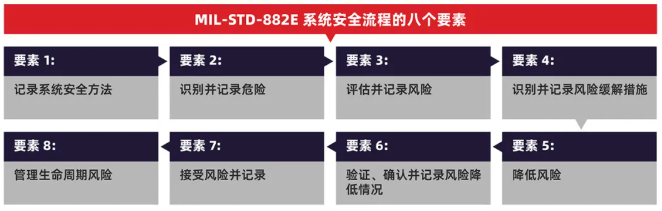
Core Viewpoint - The article emphasizes the importance of quantitative risk management in the maritime industry, particularly concerning lithium-ion batteries, to identify and manage risks effectively throughout their lifecycle [1][6]. Risk Management - Maritime and port operations inherently carry risk due to complex factors such as fuel supply, cargo handling, equipment operation, and hazardous materials storage. The goal is not to eliminate risk but to identify an acceptable level of risk [1]. - A systematic approach to risk quantification allows managers to allocate resources more effectively and control key risk points [1]. Key Areas of Focus - The quantitative risk management should focus on critical areas related to lithium-ion batteries, including: - Ship propulsion systems using lithium-ion batteries as power sources [2]. - Operation of energy storage systems on board during charging and discharging [3]. - Transportation of lithium-ion battery products, including consumer electronics and electronic waste [4]. - Port operation equipment such as electric machinery and vehicles [5]. Risk Assessment - A rigorous and formal method for hazard identification is essential, allowing for pre-assessment of potential consequences and the development of necessary mitigation strategies [6]. - The MIL-STD-882E standard outlines a process for identifying risks associated with new lithium-ion battery technologies and assessing their potential outcomes [6]. Mitigation Measures - The strategies for controlling risks associated with lithium-ion batteries are evolving, with a focus on adopting industry best practices in the absence of stringent regulations [8]. - Key categories for risk mitigation include: 1. Ship propulsion energy storage systems [8]. 2. Products containing lithium-ion batteries [8]. 3. Transportation of electric vehicles [8]. 4. Electric industrial equipment [8]. Specific Risk Control Strategies - For ship propulsion energy storage systems, significant investment and specialized facilities are required to prevent catastrophic failures. The NFPA855 standard provides valuable safety concepts applicable to maritime environments [10]. - Effective fire suppression systems, such as AFFF foam or fine water mist, are crucial for controlling fire spread and toxic vapor release [11]. - Identifying products containing lithium-ion batteries and ensuring proper tracking throughout the logistics chain is essential for risk management [12][13]. Transportation of Electric Vehicles - Strict adherence to manufacturer guidelines for electric vehicle storage and battery management is necessary, with a call for unified standards to resolve discrepancies in recommendations [15][16]. - Emergency response strategies must be comprehensive, covering various scenarios from large-scale vehicle fires to small-scale incidents involving consumer products [18]. Safety Certification - The Safety and Security Certification (SSC) process is a proactive management tool for identifying, assessing, and mitigating risks in facilities, ensuring that safety hazards are controlled [19][20]. Conclusion - With the increasing application of lithium-ion battery technology and the acceleration of global electrification, the frequency of catastrophic failures is expected to rise. In the absence of comprehensive regulations, conducting systematic risk assessments and learning from historical incidents is the most pragmatic approach to managing safety risks in the maritime and port operations [23].

滴滴充电发布2025年度桩企伙伴运维报告 共建智能运维服务能力
Zhong Guo Neng Yuan Wang· 2026-02-26 09:56
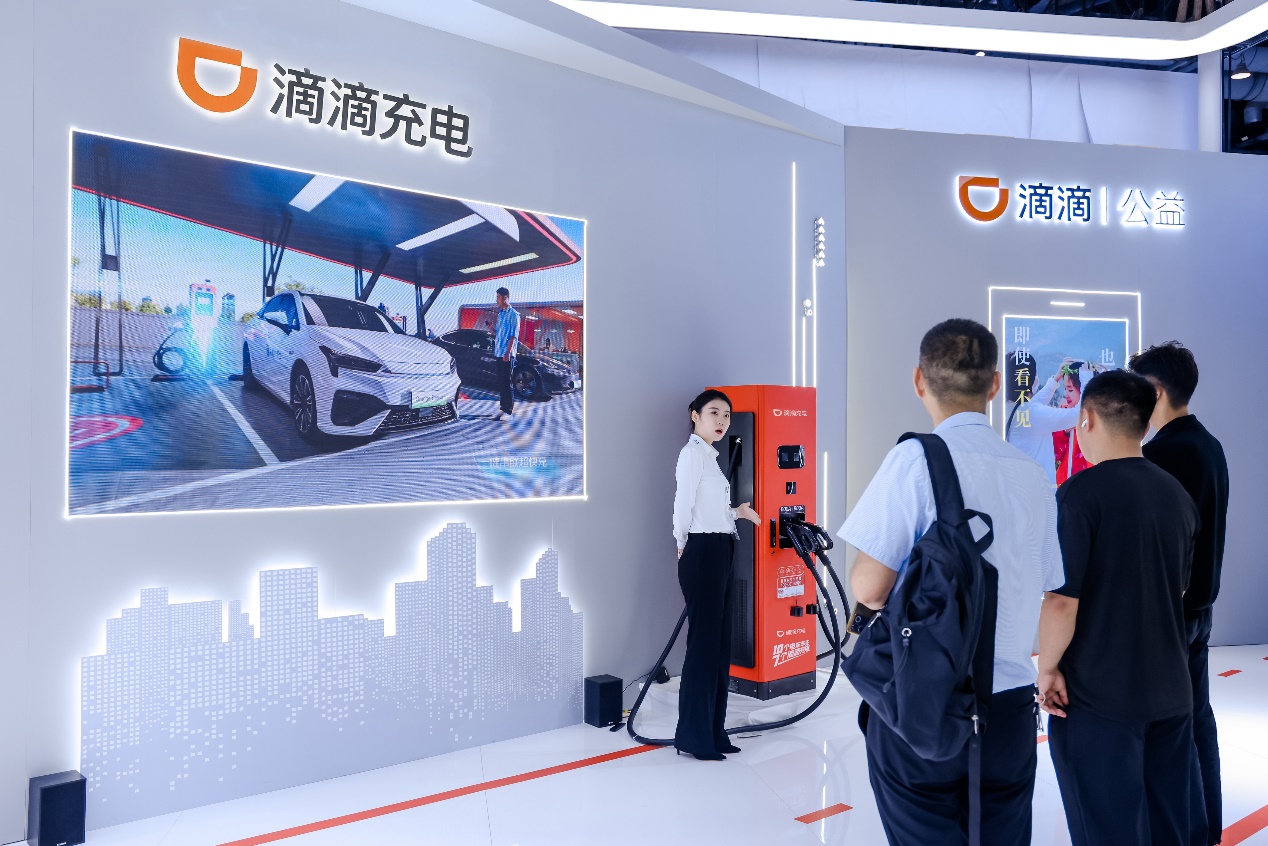
Core Insights - Didi Charging has partnered with over 800 charging pile companies and provided more than 1.7 billion charging services by December 31, 2025, with an average equipment anomaly rate of 3.3% [1] Group 1: Industry Development - The high-quality development of the charging industry requires the establishment of an ecological service system under the guidance of national authorities [1] - Equipment manufacturers need to provide reliable, long-lasting, and easy-to-maintain devices to solidify the industry foundation [1] - Operators should focus on the layout of charging service networks, while platform companies must leverage AI and big data to empower various merchants and enhance service quality [1] Group 2: Open Ecosystem - Ecological openness is key to promoting high-quality development in charging infrastructure [1] - Didi Charging adheres to an "open" philosophy, collaborating with charging pile partners to build intelligent operation and maintenance capabilities, ensuring a user-friendly charging experience [1] Group 3: Representative Companies - The report identifies Shenzhen Shenghong Electric Co., Ltd., Green Energy Huichong (600212) Digital Technology Co., Ltd., Shenzhen Yonglian Technology Co., Ltd., Xi'an Lingchong Chuangxiang New Energy Technology Co., Ltd., and Zhejiang Anfu New Energy Technology Co., Ltd. as representative companies for the year [3] Group 4: Industry Transition - The charging industry is transitioning from "scale expansion" to a new phase that emphasizes both "experience and efficiency" [3] - Charging pile manufacturers will innovate through technology and service quality improvements, providing tailored equipment solutions for different charging scenarios [3] - Didi Charging aims to enhance the operational efficiency and stability of charging equipment while continuously optimizing user service experiences to support high-quality industry development [3]

南瑞牵头编制的国际标准《电动汽车传导式充电车辆适配器》正式发布
Zhong Guo Neng Yuan Wang· 2026-02-26 09:56
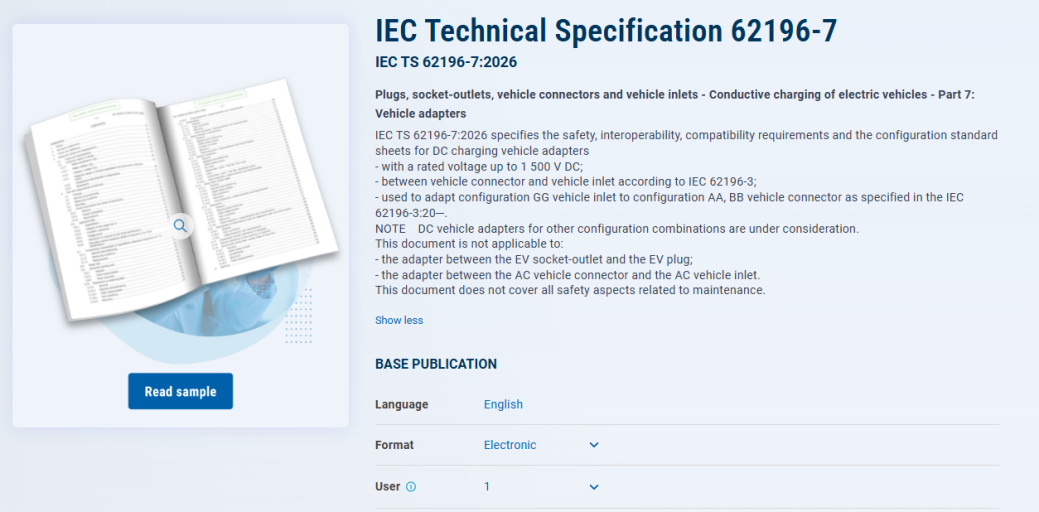
Core Viewpoint - The release of the international standard IEC TS62196-7:2026 for electric vehicle conductive charging vehicle adapters marks a significant step in addressing compatibility issues and establishing a global charging technology ecosystem led by China [1][5]. Group 1: Standard Overview - The standard focuses on core technical specifications for direct current charging vehicle adapters, detailing safety, interoperability requirements, and supporting testing methods [5]. - IEC TS62196-7 specifies technical indicators with a rated voltage of up to 1500V DC, primarily applicable to adapters connecting vehicles compliant with the IEC62196-3 standard [5]. - The standard provides strict definitions for adapters between vehicles equipped with the GG (ChaoJi interface) socket and typical vehicle plugs used in Japan and China, enhancing the usability of existing DC charging networks [5][6]. Group 2: Technical and Strategic Implications - The release of IEC TS62196-7 offers a technical solution to the physical interface compatibility challenge and is a key component in building a compatible system with existing global charging standards [6]. - Ongoing discussions by IEC TC69MT5 and PT17 working groups on complementary System D requirements and multi-system compatibility will further enhance the standard's effectiveness [6]. - The successful publication of this standard highlights the technical expertise and international influence of the State Grid Electric Power Research Institute (NARI Group), which aims to contribute to global charging interface compatibility with high-quality technical solutions [6].

珠江股份增资至11.1亿,增幅约30%
Zhong Guo Neng Yuan Wang· 2026-02-26 08:16
Core Viewpoint - Recently, Zhujiang Co., Ltd. (600684) has undergone a business change, increasing its registered capital from approximately 850 million RMB to about 1.11 billion RMB, representing an increase of around 30% [1] Company Overview - Zhujiang Co., Ltd. was established in December 1992 and is legally represented by Li Chaozuo [1] - The company's business scope includes land use rights leasing, housing leasing, non-residential real estate leasing, and property management [1] - The shareholders include Guangzhou Zhujiang Industrial Group Co., Ltd., Li Zhuangyu, and Guangzhou Urban Construction Investment Group Co., Ltd. [1]
