
Zhong Guo Neng Yuan Wang

Search documents
AI风机,到底强在哪?
Zhong Guo Neng Yuan Wang· 2026-02-02 09:25
Core Insights - The development of wind energy in China has been characterized by the pursuit of certainty amidst uncertainty, particularly in the evolution of wind turbine technology [1] Group 1: Wind Turbine Evolution - The first generation of wind turbines focused on automation and power target tracking, but faced limitations due to the computational power of industrial PLCs, leading to issues in complex operational conditions [1] - The second generation introduced a shift from rule-based control to model-based control, significantly increasing the complexity of control models and algorithms, but still struggled with reliability in complex environments [2] - The 2.5 generation, represented by Envision Energy's "smart turbine," utilized load sensing and real data to enhance design boundaries and address key operational challenges, such as blade overload issues [2] Group 2: AI Integration in Wind Turbines - The third generation, exemplified by the Galileo AI turbine, incorporates AI for generalized learning and adaptive optimization, moving away from manually coded scenarios to an autonomous exploration of optimal operational strategies [3][4] - The AI turbine's learning process is likened to a child's development of muscle memory, showing rapid improvement over time and the potential for limitless advancement [4] - The integration of AI technology in large-scale turbines addresses uncertainties in component and system performance, as well as market fluctuations, necessitating a holistic upgrade in perception, planning, and control [4][5] Group 3: Performance and Market Impact - The Galileo AI turbine has demonstrated a 20.9% increase in revenue since its deployment in 2024 compared to the previous generation, highlighting the effectiveness of AI in enhancing operational efficiency [5] - Envision Energy's recent deployment of the first AI turbine for the Nullagine wind project in Australia showcases the adaptability of AI turbines to extreme environmental conditions and complex wind scenarios [6]
重庆江长项目(长寿段)预制T梁任务圆满完成
Zhong Guo Neng Yuan Wang· 2026-02-02 07:08
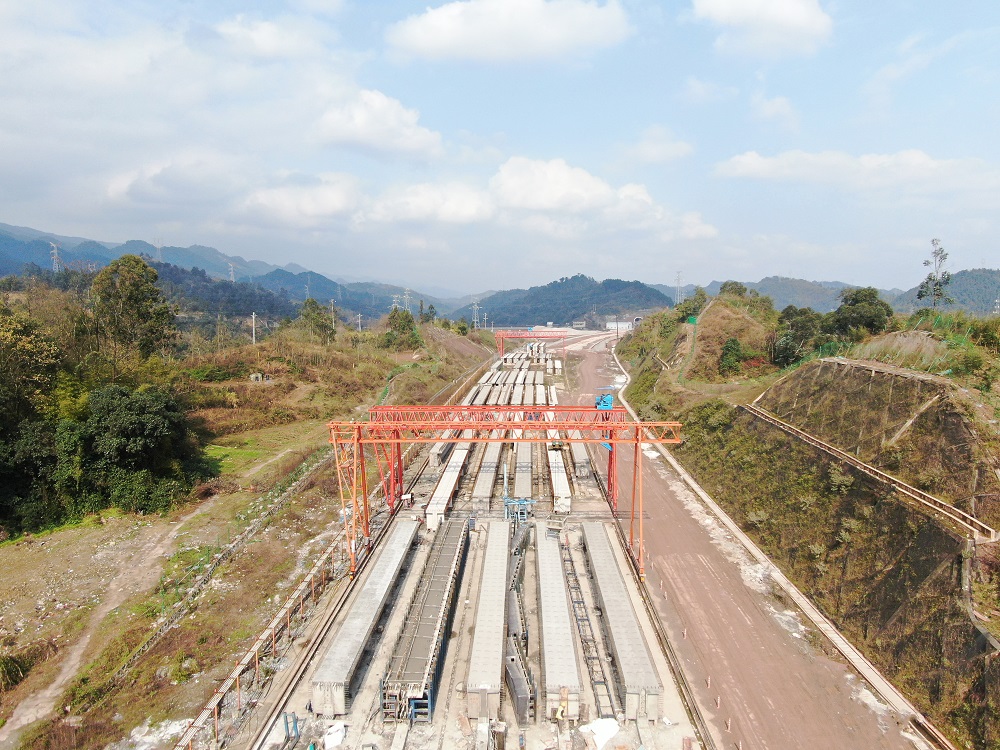
在接下来的工作中,中交路建项目团队将继续严格执行施工规范,在确保安全与质量的前提下,加快推进全线架梁施工,为后续桥面系及附属 结构施工创造有利条件。 江长项目(长寿段)全线共设桥梁9座,累计长度2077米,涵盖主线桥梁6座、匝道桥1座、连接线桥1座及还建道路桥梁1座。所需架设的预制T梁 包括30米梁174片、40米梁258片。为确保施工推进,中交路建项目团队积极应对挑战,在全线布置2座梁场,分别服务于标头与标尾段的架梁 作业,有效缩短运输距离、降低安全风险,并提升了架梁效率。 1月31日,随着最后一片40米T梁浇筑完成,标志着由重庆城投江长建设有限公司投资、中交路桥建设有限公司承建的两江新区至长寿区快速 通道项目(长寿段)预制T梁生产任务全部结束。该项目共需预制T梁432片,至此已全部顺利完成。 ...

莱茵豪森集团斩获双项ESG大奖
Zhong Guo Neng Yuan Wang· 2026-02-02 06:37
本报讯 近日,第十五届公益节暨ESG影响力年会日前于北京圆满落幕。作为中国公益慈善领域的重要 年度盛会,本届公益节以"15年,共益新篇章"为主题,汇聚公益、商界、学界及媒体代表,集中展示企 业在社会责任与可持续发展方面的实践成果。 在此次盛会上,全球电力控制领域领导者德国莱茵豪森集团(MR)凭借将ESG理念深度融入企业战略 与核心业务的长期实践,一举斩获两项重磅大奖:"2025年度ESG典范企业奖"和"2025年度ESG案例 奖"。 MR大中华区人力资源及市场总监沈燕超表示:"ESG已深度融入MR核心战略,这一长期承诺离不开员 工与合作伙伴的共同努力。荣获'ESG典范企业奖'和'案例奖'让我们倍受鼓舞。ESG是企业实现长期价 值的重要基石,MR将持续把可持续发展融入技术创新、业务实践与人才培养,携手各方推动能源转型 与社会价值协同增长。" 值得注意的是,MR核心产品通过优化电网运行电压,实现"小设备撬动大减排"。经核算,其降低输电 损耗带来的碳减排效益,达产品全生命周期碳足迹的数十万倍。该成效已在多项国家级标杆项目中验 证,包括三峡如东海上风电、"西电东送"青海—河南±800kV工程及吉林松原绿色氢氨醇项目, ...
在酸菜池吐痰涉事企业老板被罚百万
Zhong Guo Neng Yuan Wang· 2026-02-02 06:28
Core Viewpoint - Liaoning Runze Agricultural Co., Ltd. has been fined and ordered to suspend operations due to serious food safety management failures, highlighting significant risks in the food industry related to compliance and oversight [1] Group 1: Penalties and Regulatory Actions - The company was fined 50,000 yuan and ordered to cease operations by the Xingcheng Market Supervision Administration [1] - The legal representative of the company was fined 1 million yuan [1] Group 2: Reasons for Penalties - The penalties were imposed following a public complaint regarding unsafe practices, specifically workers smoking and spitting in the pickling area [1] - Investigations revealed that the company failed to implement effective supervision over illegal activities within the factory, lacking a food safety management system and necessary personnel [1] - Key management deficiencies were identified, including poor hygiene conditions, inadequate product inspection, and failure to manage staff properly [1] Group 3: Previous Compliance Issues - The company was previously ordered to rectify these issues in March of last year but did not make substantial improvements [1] - The ongoing food safety risks have led to significant negative social impacts, prompting the regulatory body to seal off the pickling workshop [1]
以地热能支撑零碳园区建设——专访万江新能源股份有限公司董事长陈泽民
Zhong Guo Neng Yuan Wang· 2026-02-02 03:39
Core Viewpoint - Geothermal energy is gaining traction as a clean, efficient, and stable renewable energy source in the context of China's "dual carbon" goals, with expanding application scenarios and significant opportunities for development in the energy sector [1][2]. Industry Development - China possesses approximately 1/6 of the global geothermal resources and leads in direct utilization, accounting for about 37.7% of the global total [2]. - The development of geothermal energy technology has advanced significantly, with innovations such as containerized geothermal power generation reducing construction time to 1/10 and costs to 1/2 compared to international standards [2]. - The shift towards geothermal energy is crucial for achieving carbon neutrality and enhancing energy security, especially given China's reliance on imported fossil fuels [2]. Zero Carbon Park Construction - The construction of zero carbon parks presents new opportunities for geothermal energy, with the EU's carbon border adjustment mechanism emphasizing the importance of sustainable energy supply systems [3]. - Notable projects include the Liaoning Shenyang Sino-German High-end Equipment Manufacturing Industrial Park and the Zhengzhou Airport Economic Zone, which utilize geothermal energy for clean heating solutions [3]. Economic Benefits - Implementing geothermal heating in buildings can save significant amounts of natural gas and reduce energy expenditures, with estimates suggesting a savings of approximately 3 billion yuan annually for every 100 million square meters of buildings [4]. - The transition to geothermal energy not only lowers carbon emissions but also significantly reduces operational costs, as demonstrated in projects like the one in Xinxiang, Henan [4]. Future Prospects - The geothermal industry is expected to develop into a distinctive industrial cluster worth over 100 billion yuan, driven by continuous technological advancements and supportive government policies [5]. - The growth of the geothermal sector is anticipated to encompass a wide range of applications, including residential heating, hospitals, schools, and industrial uses, contributing to new economic growth points and production capabilities [5].

多产品涨价,继续看好大化工板块投资机会
Zhong Guo Neng Yuan Wang· 2026-02-02 03:34
Group 1 - The core viewpoint of the report highlights the strong demand in the AI industry, which is driving the entire related industrial chain upward, with various segments showing significant performance improvements [1][2] - In the equipment segment, ASML reported explosive Q4 performance, with strong storage demand leading to a doubling of orders and an upward revision of the 2026 growth guidance [1][2] - In the power generation segment, GE Vernova's Q4 revenue exceeded expectations, with backlogged orders reaching a historical high of $150 billion [1][2] - In the storage segment, SK Hynix's Q4 operating profit more than doubled year-on-year, marking its strongest performance ever [1][2] - Seagate Technology indicated in a conference call that its 2026 capacity has been fully allocated and discussions for 2027 orders have begun [1][2] - In the chip segment, Intel reported a surge in CPU demand but is facing supply shortages [1][2] Group 2 - The domestic market experienced fluctuations, with the Shenwan Chemical Index dropping by 0.86%, underperforming the CSI 300 Index by 0.94% [2] - Multiple products in the basic chemical industry saw price increases this week, including dyes and para-nitrochlorobenzene, accelerated by the cancellation of export tax rebates [2] - The real estate sector is witnessing the end of the "three red lines" policy, leading to a more stable and healthy market as old cycle risks are gradually cleared [3][4] - ByteDance and Alibaba are set to launch new AI models around the Spring Festival, with Alibaba increasing its investment in AI and cloud computing from 380 billion to 480 billion yuan over the next three years [2] - The Clawdbot AI agent has gained significant attention in the tech community, being viewed as a potential "ChatGPT moment" for 2026 [4]
稀土板块进入击球区,继续看多锡钨锑钼
Zhong Guo Neng Yuan Wang· 2026-02-02 03:34
Group 1: Rare Earths - The price of praseodymium and neodymium oxide is 748,700 CNY/ton, an increase of 11.03% month-on-month [3] - The price of dysprosium oxide is 1,330,000 CNY/ton, a decrease of 10.74% month-on-month [3] - The price of terbium oxide is 6,100,000 CNY/ton, a decrease of 4.98% month-on-month [3] - The processing fee for yttrium-rich europium ore has risen to 41,000 CNY/ton, indicating ongoing optimization in the smelting industry [3] - December's rare earth permanent magnet exports decreased by 3% month-on-month but increased by 7% year-on-year, reaching a historical high for the month [3] - The rare earth sector is expected to see valuation and performance improvements, with 2026 being a critical year for resolving industry competition [3] Group 2: Tin - The price of tin ingots is 423,600 CNY/ton, an increase of 2.17% month-on-month [4] - The upward price trend is supported by lower-than-expected supply from Indonesia and Myanmar [4] - The demand side is expected to benefit from AI advancements and the recovery of the semiconductor industry [4] - Recommended stocks include Huaxi Nonferrous Metals and others [4] Group 3: Tungsten - The price of tungsten concentrate is 600,700 CNY/ton, an increase of 19.24% month-on-month [4] - The price of ammonium paratungstate is 890,600 CNY/ton, an increase of 19.49% month-on-month [4] - The establishment of a $2.5 billion "strategic resilience reserve" in the U.S. may increase tungsten's priority [4] - Recommended stocks include Zhongtung High-tech and others [4] Group 4: Antimony - The price of antimony ingots is 164,100 CNY/ton, an increase of 1.26% month-on-month [5] - The price of antimony concentrate is 141,000 CNY/ton, an increase of 2.27% month-on-month [5] - December's antimony exports increased by 4% month-on-month but decreased by 71% year-on-year [5] - The global antimony price trend remains upward due to supply shortages and steady demand [5] Group 5: Molybdenum - The price of molybdenum concentrate is 4,010 CNY/ton, remaining stable month-on-month [6] - The price of molybdenum iron is 256,000 CNY/ton, an increase of 0.79% month-on-month [6] - The ongoing low inventory levels and increased defense spending may further support molybdenum prices [6] - Recommended stocks include Jinduicheng Molybdenum and Guocheng Mining [6]
伊朗推动地缘溢价进一步上升
Zhong Guo Neng Yuan Wang· 2026-02-02 03:24
国金证券近日发布石油化工行业研究:基本面依然供过于求,前期支撑原油价格的利好寒潮以及哈萨克 斯坦产量减少的供应下降已经开始修复。同时俄乌达成停火一周协议,泽连斯基确认停止袭击俄罗斯能 源设施,关注俄乌近一步进展。地缘问题仍是市场交易核心,伊朗问题是主要焦点。 以下为研究报告摘要: 原油:本周原油快速上行,原油继续计价美伊开战风险,市场担忧伊朗封锁霍尔木兹海峡。我们预计当 前地缘风险溢价计价伊朗问题8-10美元/桶。基本面依然供过于求,前期支撑原油价格的利好寒潮以及 哈萨克斯坦产量减少的供应下降已经开始修复。同时俄乌达成停火一周协议,泽连斯基确认停止袭击俄 罗斯能源设施,关注俄乌近一步进展。地缘问题仍是市场交易核心,伊朗问题是主要焦点。我们预计伊 朗问题落地前原油价格短期或继续保持强势。如果伊朗烈度低于预期或者伊朗未发生实际冲突,交易中 心重回供需则预计价格将回落。截止1月29日,WTI现货收于65.42美元,环比+6.06美元;BRENT现货 收于72.57美元,环比+6.6美元。EIA1月23日当周商业原油库存环比-229.5万桶,前值+360.2万桶。其中 库欣原油环比-27.8万桶,前值+147.8万桶 ...
钢厂春旺补库时间滞后+强度偏弱
Zhong Guo Neng Yuan Wang· 2026-02-02 03:21
Group 1 - The core viewpoint of the report indicates that the domestic steel industry is experiencing a mixed trend in raw material prices, with export policies driving external prices higher while domestic prices remain under pressure [1][2] - Steel mills are currently in a raw material stocking phase, with iron ore imports increasing but steel inventory remaining low, suggesting a cautious approach to restocking due to weak price differentials and expectations of low post-holiday production [2][3] - The profitability of steel companies has slightly decreased to 39.4%, indicating that previous raw material price increases may have started to impact financial statements [1][2] Group 2 - The average price of hot-rolled coils in major markets is reported at 3355 CNY/ton, showing a slight decrease of 1 CNY/ton from the previous week, while the inventory of hot-rolled coils has decreased by 2.82 million tons week-on-week [3] - The price index for metallurgical coke has remained stable, with trade prices for first-grade coke at 1470 CNY/ton and second-grade coke at 1570 CNY/ton, while inventory levels at major ports have decreased [4] - The price index for domestic iron concentrate shows mixed results, with the price for 66% concentrate at 978 CNY/ton, reflecting a 0.72% increase, while overall iron ore inventory at ports continues to rise [5]

国家人工智能产业投资基金入股芯片研发商新芯航途
Zhong Guo Neng Yuan Wang· 2026-02-02 03:19
Core Viewpoint - New Chip Navigation (Suzhou) Technology Co., Ltd. has undergone a business change, adding the National Artificial Intelligence Industry Investment Fund as a shareholder and increasing its registered capital from approximately 18.717 million RMB to about 19.199 million RMB [1] Company Overview - New Chip Navigation (Suzhou) Technology Co., Ltd. was established in December 2023, with Li Jun as the legal representative [1] - The company's business scope includes technology promotion and application services, software development, integrated circuit chip design and services, and sales of integrated circuit chips and products [1] Shareholder Information - The current shareholders of the company include Suzhou Good Hope New Chip Enterprise Management Partnership (Limited Partnership), Shanghai SAIC Chuangyuan Venture Capital Partnership (Limited Partnership), and the newly added shareholder [1] Industry Focus - The company is engaged in integrated circuit chip design and autonomous driving technology research and development [1] - Its self-developed chips target the market for vehicles priced between 200,000 to 300,000 RMB, aiming to compete with mainstream products in the industry [1]