Zhong Guo Neng Yuan Wang

Search documents
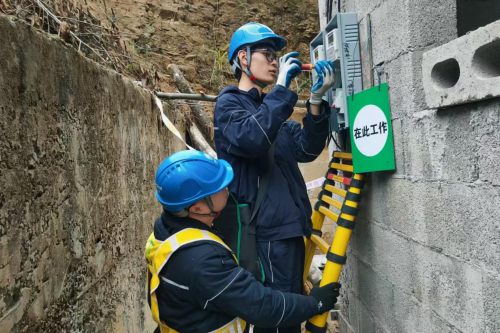
重庆石柱:电力服务“零时差” 照亮返乡人员团圆路
Zhong Guo Neng Yuan Wang· 2026-01-29 04:22
Core Viewpoint - The article highlights the proactive measures taken by the State Grid Chongqing Shizhu Power Supply Company to ensure reliable electricity supply for returning migrant workers during the Spring Festival, emphasizing their commitment to customer service and safety [1][3]. Group 1: Service Initiatives - The company has implemented a "village network co-construction" and "dual grid" service model to effectively connect with local communities and gather information on returning workers [3]. - A "green channel" has been established to simplify the application process for electricity services, promoting the use of the "Online State Grid" app for online services [3]. - The company organized a service team, including Communist Party members and grid staff, to provide on-site consultations, safety checks, and fault handling, ensuring that returning workers have immediate access to safe electricity [3]. Group 2: Achievements - As of now, the Ma Wu Power Supply Station has completed new installations or restorations of electricity for 26 returning families and addressed various electricity needs 33 times [3]. - The company plans to continue optimizing its service measures to provide efficient, convenient, and warm electricity services, ensuring a bright and harmonious Spring Festival for the community [3].

陕煤曹家滩矿业公司:让文明成为矿井最美底色
Zhong Guo Neng Yuan Wang· 2026-01-29 02:56
Core Viewpoint - The company aims to integrate the creation of a civilized workplace into its strategic planning and operational processes, guided by the leadership of the provincial state-owned assets supervision and administration commission and the Shaanxi Coal Group [1] Group 1: Civilized Construction Framework - The company has established a seven-dimensional civilization construction system focusing on "party building, safety, intelligence, culture, responsibility, employee welfare, and ecological priority" [1] - The framework emphasizes "party leadership, safety development, efficiency through smart construction, value integration, volunteer responsibility, employee care, and ecological strength" [1] Group 2: Improvement in Employee Quality of Life - The company has developed a beautiful mining area with amenities such as star-rated apartments, smart dining halls, and various cultural and sports associations, enhancing the quality of life for employees [2] - Significant improvements in the working and living environment have been achieved, leading to increased employee satisfaction [2] Group 3: Continuous Enhancement of Comprehensive Quality - The company promotes skill development through mentorship, technical competitions, and training programs, fostering a culture of continuous improvement [2] - Initiatives like the "Dandelion Project" and "Leading Talent Program" have been launched to enhance talent engagement and productivity [2] Group 4: Efficiency and Cost Reduction - The integration of civilized creation with safety production has led to a cost reduction of 1.15 billion yuan, exceeding the target by 39%, with coal production costs reaching a five-year low of 220 yuan per ton [3] - The company has successfully completed state-owned enterprise reform tasks and achieved significant internal collaboration, resulting in a total collaboration scale exceeding 1.453 billion yuan [3] Group 5: Commitment to High-Quality Development - The company is committed to the philosophy of "pursuing excellence and surpassing oneself," aiming for high-quality development while navigating challenges [3]
博碳PHA生物基高性能阻隔涂层:2026迈向规模化交付
Zhong Guo Neng Yuan Wang· 2026-01-29 02:17
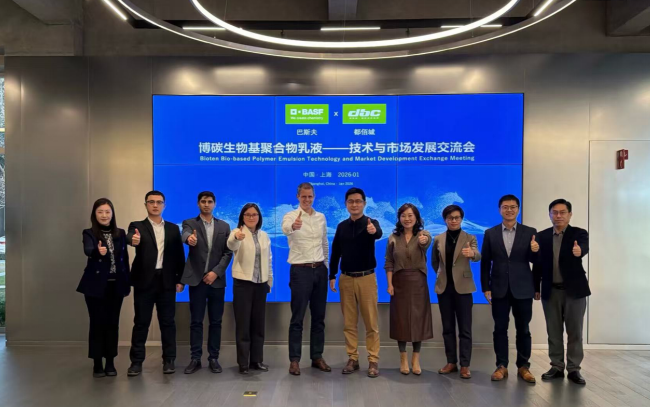
都佰城与巴斯夫近日围绕Bioten生物基高性能聚合物乳液开展系统化交流。巴斯夫全球高级副总裁 Carsten Hoehne 先生及管理团队到访都佰城,双方聚焦博碳 PHA(聚羟基脂肪酸酯)生物基阻隔乳液的 产能效率与供应响应,并就纸基餐饮具食品接触场景的关键要求形成一致口径:以安全合规与阻水/阻 油为底座,面向特种纸应用延伸至阻潮/阻氧等综合性能;同时明确材料导入所需的产线节拍、运行稳 定性及文件化交付要求。 过去三年,双方以"小纸杯"为抓手贯穿产业链,围绕纸基餐饮具建立从研发到量产的验证闭环:性能端 (阻水/阻油/阻潮/阻氧、耐热、气味与体验)、工艺端(涂布适配—干燥—成型—热封同频)、合规与 末端(食品接触合规、源头降碳核算、回收再浆/堆肥降解路径验证)。由此沉淀出可落地、可复现的 全链路解决方案。 双方一致认为:生物基乳液的全球竞争正在从"概念与标签"转向"规模化交付能力"——性能可复制、工 艺可放大、合规可审计、数据可传递、供应可响应,缺一不可。客户最终采购的,不只是"一桶乳液", 而是一套可跨区域导入、可被审计与复用的工程化交付包。 为什么把 2026 视为关键窗口? 推进,为餐饮与商贸流通场景导入 ...
智领健康 数赢未来|中金慈云勇夺新年开门红!
Zhong Guo Neng Yuan Wang· 2026-01-29 02:17
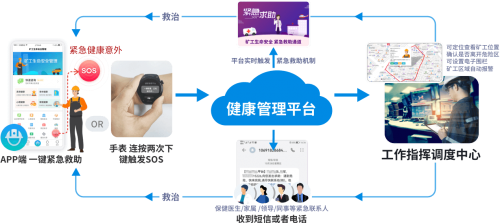
本项目中金慈云将为国网能源哈密某矿区员工提供为期五年的健康监测服务,深度融合搭载华为擎云 H9D20健康监测手表,构建从数据采集—智能分析—风险预警—主动干预的闭环健康管理体系。平台将 依托矿工日常穿戴数据,结合上传年度体检信息,运用大数据深度挖掘与分析技术,生成个人动态健康 画像和团体健康报告,基于AI驱动的健康风险分级引擎,实现对不同健康风险人群的主动识别、分级 分层与精准干预,为国能集团一线作业人员构筑一道智能化、前置化的健康防线,为安全生产提供坚实 保障,助力"健康国能"建设。 新年伊始,喜传捷报。中金慈云凭借在政企健康管理领域深厚的技术积淀、丰富行业经验与成功案例, 成功中标国网能源哈密某矿区人员健康监测服务项目与北京市公安局某分局健康管理服务2期项目,吹 响了2026年健康中国建设奋进号角。 国网能源哈密某矿区人员健康监测服务项目: 近年来,中金慈云已为国能集团三道沟煤矿、陕煤集团玉华煤矿、山西保利裕丰煤业等多家煤矿企业提 供了专业健康管理服务,形成了一套成熟的"基于华为穿戴设备的煤矿井下作业安全管理解决方案"。该 方案依托 "华为穿戴设备 + 数据看板" ,实现数字化动态健康监管。 中金慈云将充 ...
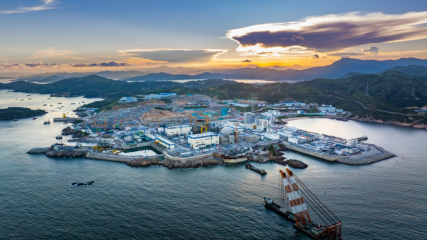
中广核核电总装机、新能源在运装机双创新高
Zhong Guo Neng Yuan Wang· 2026-01-28 10:27
Core Insights - China General Nuclear Power Group (CGN) has made significant progress in nuclear and renewable energy development during the 14th Five-Year Plan period, with a total of 16 nuclear power units approved and 10 under construction, bringing the total to 20 units in progress [1][3] - The company has achieved a clean energy generation of over 1.67 trillion kilowatt-hours, with operational installed capacity increasing from 62 million kilowatts to 113 million kilowatts, and domestic renewable energy capacity surpassing 70 million kilowatts [1][5] Nuclear Power Development - As of now, CGN operates 28 nuclear power units and has 20 units under construction, with a total installed capacity exceeding 56 million kilowatts [3] - The company is advancing the construction of 18 nuclear power units using the "Hualong One" technology, with a focus on batch construction [3][5] - CGN's nuclear power units maintain a high level of safety and stability, with 82% of operational indicators meeting world-class standards [5] Renewable Energy Achievements - During the 14th Five-Year Plan, CGN's domestic renewable energy capacity has nearly tripled, reaching over 70 million kilowatts, with cumulative grid-connected electricity exceeding 370 billion kilowatt-hours [5][6] - The company plans to add 13.29 million kilowatts of new renewable energy capacity by 2025, achieving an annual self-operated capacity of over 10 million kilowatts [5] Technological Innovation and Digitalization - CGN emphasizes technological innovation, with R&D investment intensity reaching 3.8% and a talent pool of over 8,600 [6][7] - The company has developed a digital monitoring platform for critical components, enhancing operational efficiency and predictive maintenance capabilities [5][7] - Innovations such as the "Ningde Nuclear Power Parallel System" and the "3D Smart Screen" have significantly improved maintenance efficiency and reduced downtime [7] International Expansion - CGN has expanded its overseas renewable energy operations to 18 countries, with an installed capacity exceeding 13 million kilowatts and providing over 370 billion kilowatt-hours of clean electricity [6][7] - The company is actively involved in the development of strategic emerging industries and has supported over 17,000 upstream and downstream enterprises in high-quality development [6]

中创新航等在自贡成立科技公司,注册资本15亿
Zhong Guo Neng Yuan Wang· 2026-01-28 09:39
天眼查App显示,近日,中创新航科技(自贡)有限公司成立,法定代表人为耿言安,注册资本15亿人民 币,经营范围包括新材料技术研发、电池制造、电池销售等,由中创新航(03931.HK)、自贡市东投建设 开发有限公司共同持股。 ...
知行科技增资至2.57亿,增幅约14%
Zhong Guo Neng Yuan Wang· 2026-01-28 09:37
知行汽车科技(苏州)股份有限公司成立于2016年12月,法定代表人为宋阳,经营范围包括汽车零部件研 发、汽车零部件及配件制造、通用零部件制造、汽车零配件批发等,由宋阳、中国国有企业混合所有制 改革基金有限公司、李双江等共同持股。 天眼查App显示,近日,知行科技(01274.HK)发生工商变更,注册资本由约2.26亿人民币增至约2.57亿 人民币,增幅约14%。 ...
氢启南亚 硬核出海!希倍优氢能交付尼泊尔首个国家级绿氢示范项目
Zhong Guo Neng Yuan Wang· 2026-01-28 06:34
Core Insights - The successful delivery of a hydrogen production system tailored for a South Asian client marks a significant milestone for the company, showcasing its technical strength and delivery capabilities in the international hydrogen equipment sector [1][9] Project Overview - The hydrogen production system has completed the entire production, testing, and acceptance process, and is now set to be deployed in Nepal, representing the first successful entry of Chinese hydrogen equipment into the country [1] - The project is a collaboration with Butwal Power Co Ltd. (BPC) and aims to establish Nepal's first national-level green hydrogen demonstration project, enhancing the country's energy transition [1] Technical and Operational Excellence - The company has implemented a comprehensive quality assurance system throughout the project lifecycle, adhering to international engineering management standards [5] - Key components such as material selection, electrolyzer assembly, and intelligent control system debugging have undergone meticulous management to ensure reliable and stable operation [5] System Features - The entire system is integrated into a standard shipping container, significantly reducing on-site installation time and costs, and facilitating rapid deployment in Nepal's challenging terrain [7] - The hydrogen production system utilizes advanced alkaline electrolysis technology, achieving hydrogen purity levels exceeding 99.9999%, with a robust safety and operational framework [12] - An advanced automation control system allows for remote monitoring, intelligent load adjustment, and automatic fault diagnosis, simplifying operations and reducing maintenance challenges [13] Market Adaptability - The containerized design is highly adaptable to various environmental conditions, suitable for local hydropower hydrogen production, and can also extend to distributed energy, off-grid hydrogen production, and industrial hydrogen applications [15] - The project is expected to leverage local clean hydropower resources for large-scale zero-carbon hydrogen production, supporting the development of Nepal's hydrogen industry and accelerating its green energy transition [15] Future Prospects - The successful project completion within three months has garnered high customer recognition, reflecting the maturity and reliability of the company's green hydrogen technology [15] - The delivery is viewed as a new starting point for the company's international expansion, with plans to deepen research in alkaline electrolysis technology and enhance cooperation with energy enterprises in Belt and Road Initiative countries [15]
盒马在温州成立网络科技公司,注册资本1000万
Zhong Guo Neng Yuan Wang· 2026-01-28 06:34
天眼查App显示,近日,温州瓯超网络科技有限公司成立,法定代表人为冷智勇,注册资本1000万人民 币,经营范围包括货物进出口、食品销售、食品互联网销售等,由盒马(中国)有限公司全资持股。 ...
国网重庆石柱供电公司:优质服务获乡村政企联合点赞
Zhong Guo Neng Yuan Wang· 2026-01-28 03:02
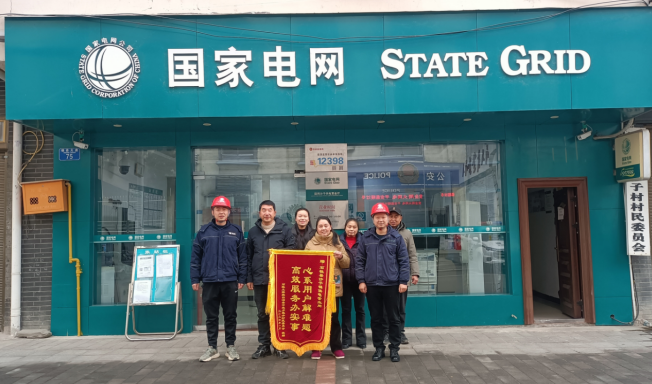
Core Viewpoint - The article highlights the recognition of the Shazi Power Supply Station by the Yan Dequan representative from the Salt Well Village Committee for its efficient service in supporting rural revitalization and ensuring stable electricity supply for collective enterprises [1] Group 1: Service Initiatives - The Shazi Power Supply Station has formed a special service team to provide "full-cycle, zero-wait" electricity guarantees for local collective enterprises during the critical phase of rural revitalization and industrial development [1] - A green channel for electricity expansion and installation has been established, ensuring efficient coordination from work order acceptance, on-site inspection, plan formulation to meter installation and power connection [1] - The station has implemented a "regular inspection + emergency response" mechanism to ensure safe and stable electricity supply for enterprise production, thereby strengthening the power foundation for local specialty industry development [1] Group 2: Community Feedback - Yan Dequan expressed gratitude, stating that the staff of the Shazi Power Supply Station prioritize the needs of the community and provide professional and efficient services to resolve electricity issues, boosting confidence in industrial development [1] - Wang Kai, the head of the Shazi Power Supply Station, emphasized that the recognition is both an honor and a responsibility, committing to continue optimizing electricity service measures to inject stronger momentum into rural revitalization and provide reliable power support for local economic and social development [1]