
Zhong Yang Ji Wei Guo Jia Jian Wei Wang Zhan

Search documents
中国海油:点题式监督推动农资化肥技术攻关和产品保供
Zhong Yang Ji Wei Guo Jia Jian Wei Wang Zhan· 2025-10-23 04:12
Core Viewpoint - Food security is a national priority, and China National Offshore Oil Corporation (CNOOC) plays a crucial role in ensuring the supply of agricultural fertilizers to support food production and rural development [1][2]. Group 1: Supervision and Management - The CNOOC disciplinary inspection team has implemented a targeted supervision mechanism to identify and rectify 21 issues related to fertilizer safety production, raw material procurement, and pricing management [2]. - During the peak fertilizer application period, CNOOC's chemical production units maintained stable production despite adverse weather conditions caused by Typhoon "Biparjoy" [1][2]. Group 2: Innovation and Technology - The focus on the development and technological upgrade of value-added fertilizer products is a priority for CNOOC, with ongoing supervision of key project phases to ensure alignment with regional agricultural needs [3]. - CNOOC has emphasized the importance of scientific formulation and optimization of fertilizer products based on crop and regional characteristics, enhancing production efficiency and market supply [3].

践悟丨以改革精神和严的标准构建监督网络
Zhong Yang Ji Wei Guo Jia Jian Wei Wang Zhan· 2025-10-23 00:11
Core Viewpoint - The construction of a comprehensive supervision network for major engineering projects is essential for ensuring political integrity, safety, and public trust in the South-to-North Water Diversion Project and the national water network [3][4][5][8]. Group 1: Importance of Supervision Network - The South-to-North Water Diversion Project is a critical national infrastructure project that impacts strategic planning, long-term development, and public welfare [3]. - Establishing a supervision network is vital for building a political, clean, safe, and people-oriented project [4][5][8]. Group 2: Construction and Management - The China South-to-North Water Diversion Group is committed to high-quality development of the project, aligning with the directives of President Xi Jinping [4][5]. - The group has undertaken significant investments in various water resource projects, which are prone to corruption due to their scale and complexity [6][8]. Group 3: Safety and Risk Management - The group prioritizes safety in engineering, water supply, and water quality as a political task, emphasizing the need for a robust safety supervision network [7][8]. - Collaborative efforts with local supervisory bodies are in place to ensure the safety and quality of ongoing projects [7][10]. Group 4: Public Trust and Community Engagement - The South-to-North Water Diversion Project has benefited over 195 million people, enhancing water resource allocation and ecological restoration [8]. - The supervision network aims to address community concerns, such as land compensation and migrant resettlement, thereby increasing public satisfaction [8][14]. Group 5: Innovative Supervision Mechanisms - The group has implemented innovative mechanisms like "supervision sentinels" and "supervision commissioners" to enhance oversight at the grassroots level [11][12]. - A comprehensive information management platform is being developed to facilitate real-time monitoring and risk assessment [16][17].


理论视野丨严明党的政治纪律和政治规矩
Zhong Yang Ji Wei Guo Jia Jian Wei Wang Zhan· 2025-10-23 00:11
Core Viewpoint - The emphasis on strict adherence to political discipline and regulations is crucial for the success of the Communist Party of China, serving as a foundation for unity and effective governance [3][4][5]. Group 1: Historical Context - The concept of political discipline has been integral to the Communist Party since its early days, with formal regulations established as early as 1922 [3]. - Key historical milestones include the introduction of the "Three Major Disciplines and Six Points of Attention" in 1927, which prioritized political discipline [3][4]. - The establishment of disciplinary committees in 1949 provided organizational support for maintaining political discipline [4]. Group 2: Current Framework - The current disciplinary framework includes six categories: political discipline, organizational discipline, integrity discipline, mass discipline, work discipline, and life discipline, with political discipline being the most critical [7]. - The Party has made significant revisions to the disciplinary regulations since the 18th National Congress, emphasizing the importance of political discipline in maintaining unity and authority [7][8]. Group 3: Implementation and Education - There is a strong focus on enhancing political education among Party members to ensure compliance with political discipline and regulations [9]. - The Party aims to integrate political supervision into major strategic decisions and policies, ensuring that directives from the central leadership are effectively implemented [9][10]. - Continuous monitoring and correction of political deviations are essential to maintain political integrity and accountability within the Party [10].
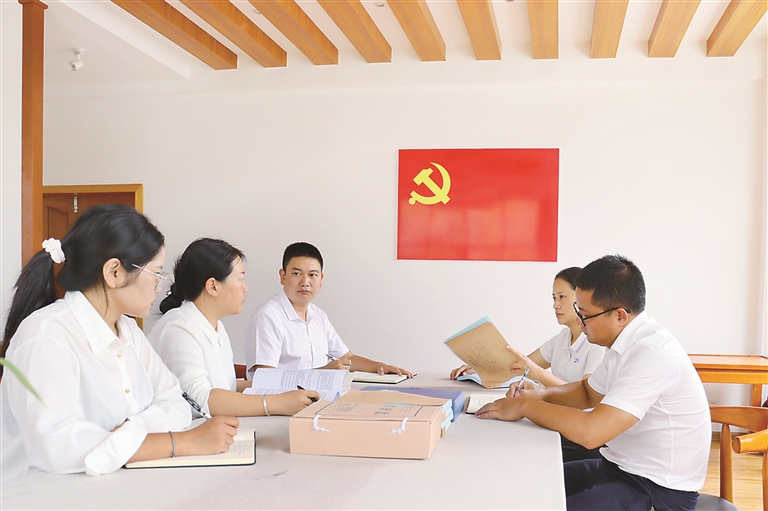
清风为伴产业兴丨履职尽责畅通群众致富路
Zhong Yang Ji Wei Guo Jia Jian Wei Wang Zhan· 2025-10-23 00:11
Core Insights - Liao Yuan City is recognized as one of the largest cotton sock production bases in China, with over 1,200 sock enterprises and 41,000 sock machines, producing 3.5 billion pairs of socks annually, significantly contributing to local income growth [1][2] Group 1: Business Environment and Support - The Liao Yuan City Discipline Inspection Commission has implemented a work plan to optimize the business environment, focusing on supporting over 30 sock enterprises by addressing urgent operational issues [1] - The commission has established a liaison team to enhance communication and support for sock enterprises, ensuring efficient service delivery and addressing bureaucratic inefficiencies [2] Group 2: Regulatory Oversight and Accountability - A case of misconduct involving an official from the Environmental Protection Administration was addressed, highlighting the negative impact of corruption on the sock industry, leading to the official's dismissal and imprisonment [1] - The Liao Yuan City Discipline Inspection Commission emphasizes the importance of accountability and has used this case as a warning to deter similar behavior in the future [1] Group 3: Infrastructure and Development Initiatives - The city is advancing the construction of a modern textile industrial park with a total investment of 690 million yuan, expected to attract over 40 production enterprises and 20 supply chain companies upon completion [2] - The local government is actively promoting employment initiatives, such as the "Thousand People Entrepreneurship Employment Plan," in collaboration with the Northern Sock Group to ensure job opportunities for graduates [2]
我说变化丨“村里用水不再愁”
Zhong Yang Ji Wei Guo Jia Jian Wei Wang Zhan· 2025-10-23 00:11
范常增,河南省林州市姚村镇水河村村民。 就拿我来说吧,我家住在村西头七八米落差的高坡上,自来水经常断断续续的,偶尔还会有断水的情 况。不久前,听说林州市纪委监委正在镇上开展"现场接访"活动,我就把家里水压不足、水管不出水的 困扰告诉了他们。接待的市纪委监委干部认真记录了我的问题,还特意让我留下了具体地址和联系方 式。 没想到第二天一早,我就接到林州市纪委监委干部打来的电话,说他们已经联系了水利局,会马上帮我 解决问题。下午市纪委监委和水利局的干部还专门来我们村,不但到我家查看情况,还实地走访了周边 的邻居,详细了解村里的用水困难和大伙的诉求。 大约过了一周左右,我再次接到市纪委监委干部的电话。他们告诉我,我反映的"用水难"问题已经列入 了整改清单,市纪委监委已经督促相关部门制定了改造方案,还为我们这几户高坡人家优先安排施工。 半个月后的一个早晨,施工队就开着工程车来到村里,市纪委监委的干部也来到现场协调督促,仅用3 天时间就完成了20多米的新管道铺设。 我们偏远山村,之前虽然通了自来水,却经常断流,有时候还得靠机井度日。现在,用水问题有了根本 改善。一拧开水龙头,清亮的水就哗哗地流出来,水压足,水质也好,再也 ...
宁夏:守护师生“舌尖上的安全”
Zhong Yang Ji Wei Guo Jia Jian Wei Wang Zhan· 2025-10-23 00:10
Core Viewpoint - Ningxia's disciplinary and supervisory authorities are intensifying oversight of school meal safety, focusing on the procurement of bulk food supplies to ensure the safety of students' meals [2][4]. Group 1: Supervision and Inspection - The Ningxia Discipline Inspection Commission and the Education and Market Supervision Departments conducted surprise inspections at a high school cafeteria, emphasizing the procurement of bulk food supplies [2]. - A database was established, compiling information on 874 suppliers for schools and kindergartens, allowing for targeted supervision of high-risk suppliers [2][3]. - A total of 132 issues were identified during inspections, with 4 problem clues transferred for further investigation [2]. Group 2: Food Safety Management - The focus is on the entire supply chain of bulk food, from procurement to delivery, ensuring compliance with food safety risk prevention mechanisms [3]. - The local education authority is responsible for centralized procurement of 12 types of bulk food, which helps reduce costs and ensure quality [3]. - Regular meetings with suppliers are held to address issues related to food quality and supply chain management [3]. Group 3: Continuous Improvement and Accountability - The authorities are promoting standardized procurement processes across all schools, ensuring compliance with contracts and procurement regulations [4]. - Monthly inspections and quarterly reports are conducted, covering 828 school cafeterias and 138 bulk food suppliers, resulting in 790 identified issues [5]. - A collaborative mechanism between disciplinary and audit supervision has been established to enhance accountability and address financial discrepancies in school meal operations [5].
书记谈丨持续深化法治领域政治监督
Zhong Yang Ji Wei Guo Jia Jian Wei Wang Zhan· 2025-10-23 00:10
Group 1 - The importance of strengthening political supervision is emphasized as a crucial guarantee for fulfilling the responsibilities assigned by the Party Central Committee [3][4] - Political supervision is seen as a key tool to eliminate the breeding ground for corruption, requiring a comprehensive approach to prevent corruption and enhance political construction [3][4] - The role of the disciplinary inspection and supervision agencies is highlighted as essential for high-quality development, focusing on both case handling and supervision responsibilities [4][5] Group 2 - The implementation of Xi Jinping's important speeches and directives is identified as a primary political requirement that must be strictly adhered to [6] - The focus on political issues in supervision aims to address corruption and misconduct that directly affect the public, ensuring that the needs and concerns of the people are prioritized [7] - The commitment to maintaining political discipline and rules is underscored, with an emphasis on correcting political deviations and fostering a positive political environment [8]

时代专论丨中国共产党与中国式现代化
Zhong Yang Ji Wei Guo Jia Jian Wei Wang Zhan· 2025-10-23 00:10
Core Points - The 20th Central Committee's Fourth Plenary Session outlines a blueprint for China's development over the next five years, emphasizing the importance of socialism with Chinese characteristics and the leadership of the Communist Party of China (CPC) [1][2][3] Group 1: China's Modernization Path - The CPC is recognized as the pioneer of the Chinese modernization path, which is shaped by historical traditions, social systems, and external environments [2][3] - China's modernization is distinct from Western models, having learned from past failures of adopting foreign systems without considering local conditions [2][3] - The CPC's establishment marked a shift from passive to active pursuit of modernization, leading to a unique path rooted in Marxism and Chinese culture [3][4] Group 2: Characteristics of Chinese Modernization - Chinese modernization is characterized by five distinct features: large population scale, common prosperity for all, coordination of material and spiritual civilization, harmony between humanity and nature, and a peaceful development path [6][7] - The essence of Chinese modernization includes high-quality development, people-centered growth, and the promotion of a community with a shared future for mankind [7][8] Group 3: CPC's Role in Modernization - The CPC serves as a unifying force, mobilizing various societal elements to drive modernization efforts, emphasizing its commitment to serving the people and maintaining strong organizational capabilities [9][10] - The party's ability to integrate resources and mobilize public participation has been crucial in achieving significant milestones, such as poverty alleviation [10][11] Group 4: Global Perspective - Chinese modernization aims to contribute to global development, advocating for a shared future and cooperation among nations, while promoting peace and stability [14][15] - The CPC emphasizes the importance of respecting diverse modernization paths and fostering mutual learning among civilizations [16][17]
学有所悟丨始终绷紧自我革命这根弦
Zhong Yang Ji Wei Guo Jia Jian Wei Wang Zhan· 2025-10-23 00:10
Group 1 - The core viewpoint emphasizes the importance of continuous self-revolution within the Communist Party to maintain discipline and unity, which is crucial for the party's success and development [1][3][4] - The concept of self-revolution is highlighted as a distinguishing feature of Marxist parties, with historical references to the importance of discipline in achieving success [2][3] - The practice of strict discipline and anti-corruption measures has been reinforced since the 18th National Congress, leading to significant improvements in party governance and public trust [3][5] Group 2 - The self-revolution of the party is framed as essential for leading social revolutions, ensuring that the party remains a strong core of socialism with Chinese characteristics [4][5] - The need for a strong ideological foundation and collective consensus is emphasized, advocating for deep understanding and adherence to the party's innovative theories [5][6] - The importance of accountability and clear responsibility within the party structure is stressed, with mechanisms in place to ensure that power is exercised transparently and responsibly [6]
本网评论 | 把纪检监察工作思路举措搞得更加科学更加严密更加有效
Zhong Yang Ji Wei Guo Jia Jian Wei Wang Zhan· 2025-10-23 00:08
Core Viewpoint - The article emphasizes the importance of deeply studying and applying Xi Jinping's thoughts on governance to enhance the effectiveness and scientific nature of discipline inspection and supervision work [1][2][3]. Group 1: Theoretical Foundation - Xi Jinping's thoughts on socialism with Chinese characteristics are the latest achievements of Marxism in the context of the new era, serving as the fundamental guideline for discipline inspection and supervision work [2]. - The discipline inspection and supervision agencies must deepen their political recognition and understanding of the "two establishments" and enhance their "four consciousnesses" and "four confidences" [2][3]. Group 2: Learning and Understanding - Continuous learning is essential for accurately grasping the new thoughts and viewpoints from the Party regarding strict governance, party conduct, and anti-corruption efforts [3]. - Understanding the significance and core requirements of the Party's self-revolution is crucial for promoting high-quality development in discipline inspection and supervision work [3]. Group 3: Research and Investigation - Emphasizing the importance of practical research, the article highlights that investigation should be thorough and grounded in reality to identify problems and formulate effective solutions [4]. - The need for grassroots engagement and practical application of the Party's innovative theories is stressed to ensure that research outcomes translate into actionable measures [4]. Group 4: Implementation and Effectiveness - The article underscores that effective implementation is critical, with a focus on addressing root causes and enhancing the precision and effectiveness of governance [5]. - It advocates for a balance between immediate actions and long-term strategies, emphasizing responsibility and capability in executing the Party's decisions [5]. Group 5: Continuous Improvement - The process of learning and implementing Xi Jinping's thoughts is ongoing, requiring a scientific approach to improve the quality of discipline inspection and supervision work [6]. - The goal is to support the comprehensive advancement of strict governance of the Party and contribute to national rejuvenation through effective discipline inspection [6].