
校园餐

Search documents
聚焦“校园餐”领域问题持续深化整治 守护好学生“舌尖上的安全”
Zhong Yang Ji Wei Guo Jia Jian Wei Wang Zhan· 2026-02-13 23:59
Core Viewpoint - The central government is intensifying efforts to address corruption and misconduct in the "campus meal" sector, which is crucial for ensuring the health and safety of students across the nation [1][2]. Group 1: Governance and Oversight - The Central Commission for Discipline Inspection and National Supervisory Commission has launched a nationwide campaign to rectify corruption and misconduct related to "campus meals," with a focus on issues raised by parents and students [2]. - By 2025, a total of 61,000 cases of corruption and misconduct in the "campus meal" sector were investigated, resulting in disciplinary actions against 35,000 individuals [1]. - The establishment of dietary supervision committees has been implemented to enhance oversight and accountability in school meal programs [1]. Group 2: Responsibility and Coordination - The Central Commission has emphasized the importance of responsibility and coordination among various departments, including the Ministry of Education and the State Administration for Market Regulation, to effectively address issues in the "campus meal" sector [2]. - A task force led by the Ministry of Education has been established to oversee the implementation of food safety standards across schools, with over 160,000 supervisors deployed for regular inspections [2]. - Local governments are encouraged to adopt a collaborative approach, ensuring that responsibilities are clearly defined and that all levels of government are involved in the oversight process [2]. Group 3: Case Handling and Accountability - The campaign has led to significant case handling, with various provinces reporting numerous investigations into misconduct related to student meal funds, procurement processes, and other areas [5][6]. - In Beijing, 15 individuals were prosecuted, and 808 issues were identified and rectified through comprehensive inspections of school meal programs [5]. - The focus on accountability has resulted in the recovery of over 22.99 million yuan in misappropriated student meal funds in Qinghai province [5]. Group 4: Systematic Improvements and Regulations - Efforts are being made to establish systematic regulations to ensure the proper management of meal funds, including the implementation of dedicated accounts for meal fees [7]. - Digital tools are being utilized to enhance the management and oversight of "campus meals," with platforms being developed to monitor food safety and financial transactions [7]. - The ongoing reforms aim to create a transparent and accountable system that safeguards the interests of students and their families [7]. Group 5: Ongoing Challenges and Future Directions - The governance of "campus meals" remains a work in progress, with continuous monitoring and improvement efforts being emphasized [8]. - The focus on addressing key issues in meal management is expected to enhance the overall quality and safety of food provided to students [8]. - The commitment to maintaining high standards of oversight and accountability will be crucial in ensuring that students receive safe and nutritious meals [8].
教育提质工程
Xin Lang Cai Jing· 2026-01-25 20:19
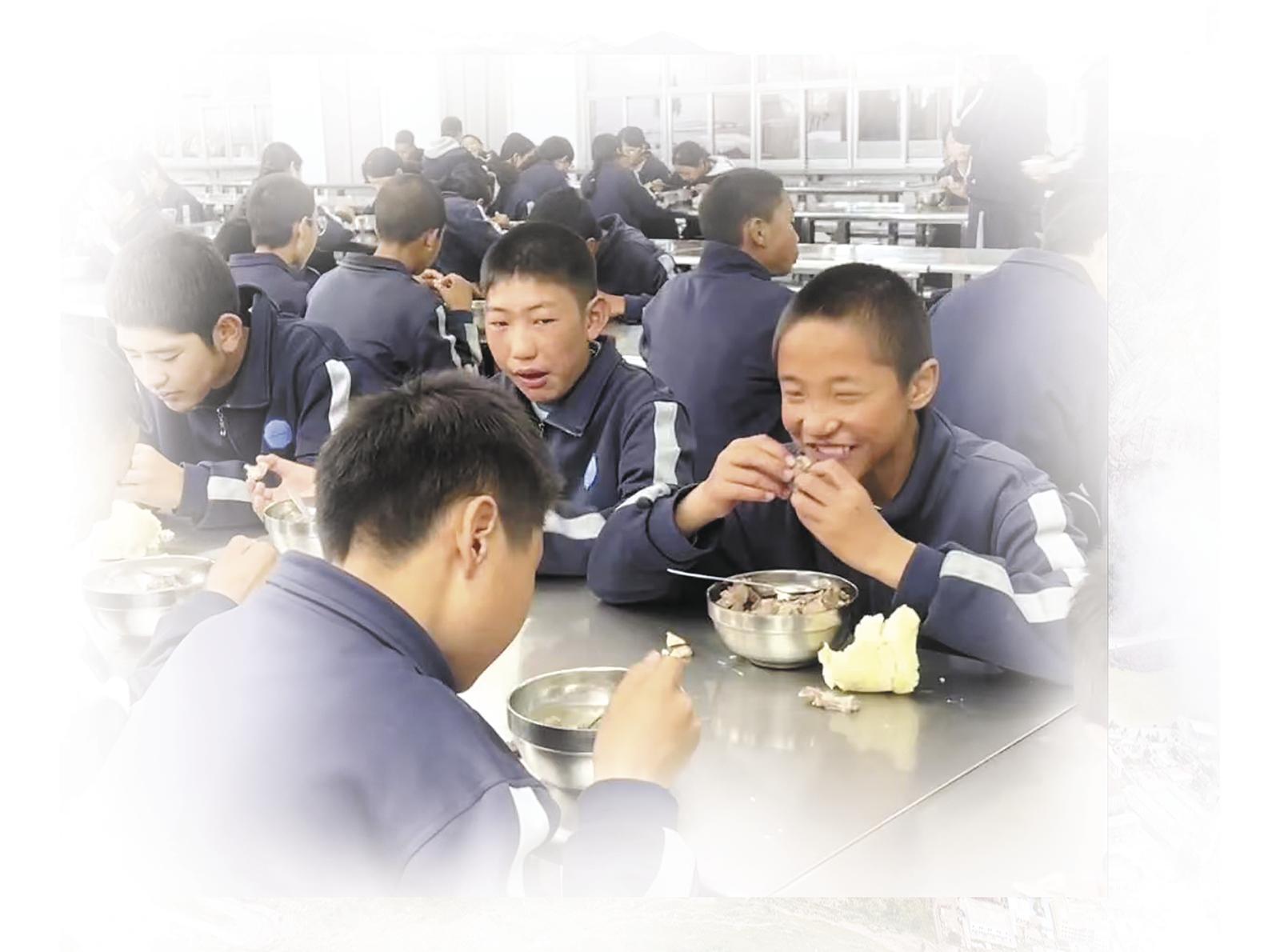
Core Points - The article discusses the implementation of a nutrition improvement plan for rural compulsory education students in Qinghai Province, focusing on enhancing meal quality and increasing the number of schools participating in the program [2][3] - The plan aims to recruit over 1,000 teachers for primary and secondary schools and kindergartens, as well as 500 public normal students [2] Group 1: Progress - Qinghai Province has become a national leader by completing the nutrition improvement plan's quality enhancement and expansion tasks, adding 208 schools in county towns, benefiting 254,800 students with hot meal services [3] - A total of 791 schools are now part of the nutrition improvement plan, serving 513,100 students [3] - The actual enrollment for two universities in 2025 reached 4,147 students, with plans to recruit 1,285 teachers for primary and secondary schools and kindergartens [3] Group 2: Feedback - Students at the Hainan Tibetan Autonomous Prefecture's Republican County Ethnic Middle School have expressed excitement over improved lunch options, noting an increase in meat and the addition of fruit, which has positively impacted their meal enthusiasm [3] - Parents have reported feeling reassured about their children's nutrition and safety, with one parent highlighting that the variety and quality of school meals surpass what can be provided at home [4] - The overall sentiment among parents and students reflects gratitude towards the government for providing a supportive learning and living environment [4]

四川出台实施方案,推动食品安全监管从“各管一段”向“协同治理”转变 守好“从农田到餐桌”每道关口
Si Chuan Ri Bao· 2026-01-23 00:24
Core Viewpoint - The implementation plan aims to enhance food safety regulation in Sichuan by transitioning from segmented oversight to collaborative governance across various sectors, ensuring comprehensive monitoring from farm to table [1][4][5]. Group 1: Regulatory Measures - The plan mandates market regulatory departments to encourage online food delivery platforms to adopt "Internet + Bright Kitchen" practices, enhancing oversight of takeout services and ensuring consumer awareness [1][6]. - It specifies the need for cross-departmental collaboration in regulating emerging business models like mobile food trucks, with a focus on waste management and market entry standards [1][6]. - The plan emphasizes the optimization of the food supply chain for schools, promoting the implementation of "Internet + Bright Kitchen" in school cafeterias [1][7]. Group 2: Technological Integration - The initiative promotes the integration of technology in food safety, including the enhancement of the "Sichuan Smart Monitoring" platform and the implementation of real-time monitoring for cold chain transport vehicles [4][5]. - It encourages the installation of temperature and humidity monitoring devices in transportation to ensure traceability and accountability throughout the food supply chain [5]. Group 3: Collaborative Governance - The plan outlines a shift from isolated regulatory efforts to a coordinated approach, addressing the complexities of food safety across multiple sectors and enhancing data sharing among departments [4][5]. - It introduces innovative community governance models, such as involving delivery personnel in oversight roles and conducting regular inspections based on consumer feedback [4]. Group 4: Risk Management - The implementation plan aims to establish a comprehensive information system for food safety that allows for traceability and risk control, addressing issues like pesticide residue through targeted strategies [5]. - It sets clear collaborative regulatory requirements for the transportation and delivery of liquid and perishable foods, ensuring safety throughout the logistics process [5].
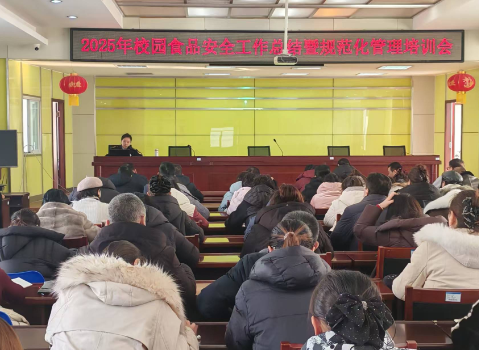
新疆乌苏市开展2025年校园食品安全工作总结暨规范化管理培训会 筑牢师生“舌尖安全”
Zhong Guo Shi Pin Wang· 2026-01-20 05:30
Core Viewpoint - The Xinjiang Uygur Autonomous Region's Wusu City Market Supervision Administration is enhancing food safety in schools by implementing a comprehensive management training program and reinforcing responsibilities among educational institutions and food suppliers [1][3]. Group 1: Food Safety Initiatives - A training conference was held to summarize the 2025 campus food safety work and to promote standardized management practices across 25 kindergartens, 15 primary and secondary schools, 3 vocational schools, and 2 major food suppliers [1][3]. - The conference emphasized the principles of "prevention first, full control, and social co-governance," achieving a 100% coverage rate for "bright kitchen" initiatives and a 100% connection rate for smart supervision platforms [3][4]. Group 2: Training and Compliance - Six training sessions were conducted, with 610 participants, to enhance awareness of responsibilities and management levels, leading to the identification and elimination of 683 food safety hazards [3][4]. - A total of 41 batches of campus food samples were tested, achieving a 100% pass rate, demonstrating effective compliance with food safety standards [3]. Group 3: Future Directions - The meeting called for a focus on "sensitivity, effectiveness, and innovation" in campus meal safety, urging participants to maintain a strong sense of responsibility and urgency regarding food safety issues [4]. - The administration aims to shift from reactive to proactive food safety risk management, enhancing the ability to identify and address potential problems in campus meals [4].
在创新中狠抓落实丨福建莆田查改治一体发力 让“校园餐”成放心餐
Zhong Yang Ji Wei Guo Jia Jian Wei Wang Zhan· 2026-01-17 00:39
Core Insights - The article discusses the ongoing efforts in Putian City, Fujian Province, to address issues related to "campus meals" through a series of corrective measures and regulatory frameworks aimed at ensuring food safety and proper management of meal funds [1][2][3] Group 1: Investigation and Accountability - The Putian City Discipline Inspection and Supervision Commission has focused on the "campus meal" sector, investigating cases of misappropriation of student meal funds, with 186 individuals investigated and 391 cases of misconduct addressed [1] - A total of 133 individuals received disciplinary actions, and 64 disciplinary recommendations were issued to improve the system [1] Group 2: Systematic Governance - The city has introduced a comprehensive governance framework with 33 specific measures targeting procurement, supply, acceptance, hygiene, funding, and supervision to enhance food safety in schools [2] - The implementation of an online unified procurement mechanism and traceability management for food supplies has been established to ensure compliance and accountability [2] Group 3: Supervision and Collaboration - Random inspections of the "campus meal" situation have been conducted to identify and rectify issues such as improper procurement and misuse of meal funds [3] - A multi-departmental collaborative supervision mechanism has been established to enhance the effectiveness of oversight and ensure a closed-loop management system for food safety [3]
福建三明坚持查改治一体推进守护“校园餐”安全
Zhong Yang Ji Wei Guo Jia Jian Wei Wang Zhan· 2025-12-27 00:19
Core Viewpoint - The article highlights the ongoing efforts by the Sanming City Discipline Inspection Commission to address food safety and financial management issues in school cafeterias, emphasizing the importance of ensuring student health through improved oversight and management practices [1][2][3]. Group 1: Issues Identified - The Sanming City Discipline Inspection Commission discovered problems such as misappropriation of meal funds, lack of food safety supervision, and opaque procurement processes in school cafeterias [1][2]. - Specific issues included interference in bidding processes, acceptance of kickbacks, and fraudulent fund claims, which were addressed through strict oversight and management measures [2][3]. Group 2: Actions Taken - The commission implemented a "check and rectify" approach, establishing a working group to oversee the rectification of food safety issues in schools, with clear management and collaboration among various departments [2][3]. - A comprehensive supervision plan was developed, focusing on key areas such as meal fund management and food procurement, utilizing collaborative supervision and joint investigations to ensure accountability [2][3]. Group 3: System Improvements - The Sanming City Education Bureau established a management mechanism for school cafeterias and off-campus meal services, ensuring compliance with public bidding procedures for food suppliers [4]. - Nutritional guidelines and daily food intake standards for students were introduced to promote healthy eating habits and ensure proper food procurement practices [4]. Group 4: Future Directions - The commission plans to leverage technology and institutional support to enhance food safety in school cafeterias, emphasizing the importance of safeguarding students' health through systematic reforms [5].
新疆乌苏市部门联动筑牢校园餐饮安全防线
Zhong Guo Shi Pin Wang· 2025-12-26 09:35
Group 1 - The core viewpoint of the articles emphasizes the importance of strengthening food safety responsibilities in schools to ensure the safety of students and staff [1][2] - The Urumqi Market Supervision Bureau is collaborating with educational departments and local authorities to conduct a concentrated inspection of food safety in schools, focusing on risk identification and responsibility enforcement [1] - The inspection includes verifying the completeness and validity of food business licenses and health certificates for staff, as well as checking the implementation of food procurement and record-keeping systems [1] Group 2 - The enforcement personnel are not only inspecting but also providing on-site training on food safety laws and regulations to school canteen staff, emphasizing the need for strict adherence to management systems [2] - The Urumqi Market Supervision Bureau plans to establish a long-term mechanism for information sharing and joint enforcement with relevant departments, combining routine supervision with surprise inspections to maintain a high-pressure regulatory environment [2] - The bureau aims for a "zero tolerance" policy towards violations of food safety in schools, striving to create a safe and reliable dining environment for students [2]
强化规范管理 筑牢安全防线
Nan Jing Ri Bao· 2025-12-24 02:26
Core Viewpoint - The safety of campus food directly impacts students' health and safety, prompting a significant initiative by the municipal human resources and social security bureau to address issues related to "campus meals" in vocational schools since 2024 [1] Group 1: Special Rectification Work - The municipal human resources and social security bureau has coordinated with various departments to systematically address campus meal issues, ensuring that schools implement corrective measures with clear responsibilities and deadlines [2] - A comprehensive inspection of the rectification progress has been conducted, utilizing on-site verification, document review, and discussions to enhance management capabilities and facilities in vocational schools [2] Group 2: Institutional Norms - The municipal human resources and social security bureau has developed guidelines to strengthen campus meal management, emphasizing transparency, cost control, and the establishment of a centralized procurement system [3] - Future efforts will focus on continuous improvement of campus meal management, addressing challenges, and exploring new strategies to ensure food safety and student satisfaction [3]
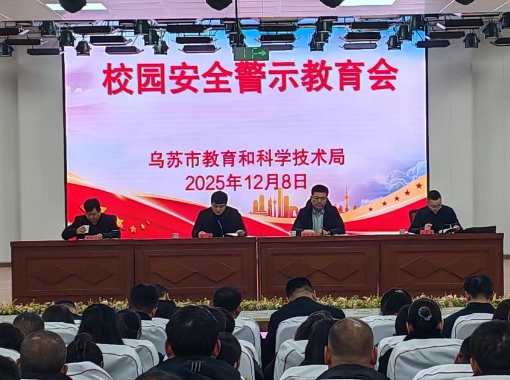
新疆乌苏市开展校园安全警示教育会 筑牢师生“舌尖安全”防线
Zhong Guo Shi Pin Wang· 2025-12-10 11:05
Core Viewpoint - The Xinjiang Uygur Autonomous Region's Wusu City Market Supervision Administration is enhancing food safety measures in schools to ensure the safety of meals for students and peace of mind for parents [1][3]. Group 1: Safety Education Initiatives - A safety warning education meeting was held, focusing on the management of core food ingredients used in daily meals for students, covering key aspects such as responsibility implementation, food procurement, storage, processing, and utensil disinfection [3][4]. - The meeting emphasized the need for schools to strictly follow a "daily control, weekly inspection, monthly assessment" work system to identify and eliminate food safety hazards promptly [3]. Group 2: Responsibility and Management Enhancement - The meeting effectively reinforced the food safety responsibilities of schools and major food suppliers, aiming to enhance political awareness, responsibility consciousness, and service commitment among participants [4]. - The administration plans to transform the sense of responsibility into actionable measures, optimizing work methods to ensure the effective implementation of food safety regulations in schools [4]. Group 3: Focus on Innovation and Proactive Measures - The initiative encourages a shift from reactive measures to proactive risk prevention in campus food safety, enhancing awareness of potential issues and improving risk response capabilities [3][4]. - The focus is on making the campus meal safety management more precise and targeted, with an emphasis on problem-oriented approaches [3].
安全 营养 惠民 通辽市校园餐提质降价
Nei Meng Gu Ri Bao· 2025-12-05 01:40
Core Viewpoint - Tongliao City has implemented a series of practical measures to ensure food safety in schools, establishing a new management model for campus meals [1] Group 1: Collaborative Management Model - The city promotes a "multi-party collaboration, full participation" model for campus meal governance, involving student supervision positions and rotating parental oversight [1] - A three-tier system is established, consisting of self-inspection by schools, supervision by the education and sports bureau, and oversight by parent representatives, transforming parents from "observers" to "participants" [1] Group 2: Cost Reduction and Quality Improvement - The campus meals are managed through self-operation and centralized procurement, leading to cost reduction and quality enhancement; for instance, Hohhot City has achieved full regional self-operation, with bulk ingredient bidding saving costs by 20% [1] - The quality of meals is improved, as seen in Kezuohouqi, where a senior public nutritionist is hired to create a unified menu, implementing a "basic uniformity and specialty supplementation" approach to dish management [1] Group 3: Proactive Food Safety Regulation - The city shifts its food safety regulation from "post-event correction" to "pre-event prevention," enhancing food safety management systems [1] - Various regions are improving food safety management regulations, establishing related systems for meal accompaniment and financial management, and issuing specific documents on canteen safety and meal fee management [1] - A comprehensive regulatory framework is constructed, covering the entire chain from ingredient procurement and storage to financial usage and personnel management [1]