校园餐饮

Search documents
北京丰台召开“新春第一会”,400余项具体任务定下“硬指标”
Xin Jing Bao· 2026-02-24 06:36
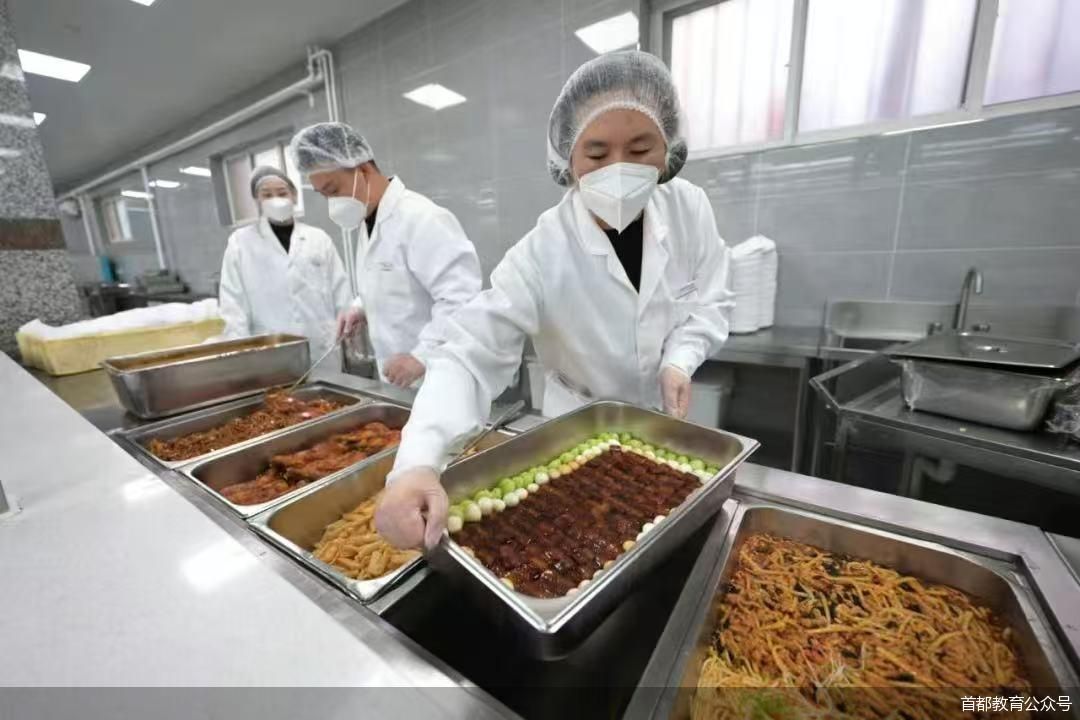
Group 1 - The core objective of the meeting held on February 23 is to outline the key work tasks for 2026 in Fengtai District, emphasizing the importance of responsibility and task recognition among district leaders [1] - Fengtai District has set a hard economic target for 2026, with 150 key projects expected to commence by September 30, and a projected fixed asset investment of 91.7 billion yuan for the year [1] - The meeting highlighted the establishment of a "mid-test platform" for application scenarios to facilitate the transformation of technological innovations into business opportunities [2] Group 2 - The construction of 13 rail micro-centers is planned, including the development of a no-fence garden area at Beijing Fengtai Station, with projects expected to enter the approval phase this year [3] - Fengtai District aims to achieve full coverage of "one school, one park" for 120 primary and secondary schools, with the establishment of 40 smart canteens and a goal to eliminate 80% of off-campus meal locations [4] - In the ecological environment sector, Fengtai District plans to build 60 kilometers of urban park greenways and four age-friendly parks, while also promoting smart planting technologies in collaboration with major flower production areas [5]
聚焦“校园餐”领域问题持续深化整治 守护好学生“舌尖上的安全”
Zhong Yang Ji Wei Guo Jia Jian Wei Wang Zhan· 2026-02-13 23:59
Core Viewpoint - The central government is intensifying efforts to address corruption and misconduct in the "campus meal" sector, which is crucial for ensuring the health and safety of students across the nation [1][2]. Group 1: Governance and Oversight - The Central Commission for Discipline Inspection and National Supervisory Commission has launched a nationwide campaign to rectify corruption and misconduct related to "campus meals," with a focus on issues raised by parents and students [2]. - By 2025, a total of 61,000 cases of corruption and misconduct in the "campus meal" sector were investigated, resulting in disciplinary actions against 35,000 individuals [1]. - The establishment of dietary supervision committees has been implemented to enhance oversight and accountability in school meal programs [1]. Group 2: Responsibility and Coordination - The Central Commission has emphasized the importance of responsibility and coordination among various departments, including the Ministry of Education and the State Administration for Market Regulation, to effectively address issues in the "campus meal" sector [2]. - A task force led by the Ministry of Education has been established to oversee the implementation of food safety standards across schools, with over 160,000 supervisors deployed for regular inspections [2]. - Local governments are encouraged to adopt a collaborative approach, ensuring that responsibilities are clearly defined and that all levels of government are involved in the oversight process [2]. Group 3: Case Handling and Accountability - The campaign has led to significant case handling, with various provinces reporting numerous investigations into misconduct related to student meal funds, procurement processes, and other areas [5][6]. - In Beijing, 15 individuals were prosecuted, and 808 issues were identified and rectified through comprehensive inspections of school meal programs [5]. - The focus on accountability has resulted in the recovery of over 22.99 million yuan in misappropriated student meal funds in Qinghai province [5]. Group 4: Systematic Improvements and Regulations - Efforts are being made to establish systematic regulations to ensure the proper management of meal funds, including the implementation of dedicated accounts for meal fees [7]. - Digital tools are being utilized to enhance the management and oversight of "campus meals," with platforms being developed to monitor food safety and financial transactions [7]. - The ongoing reforms aim to create a transparent and accountable system that safeguards the interests of students and their families [7]. Group 5: Ongoing Challenges and Future Directions - The governance of "campus meals" remains a work in progress, with continuous monitoring and improvement efforts being emphasized [8]. - The focus on addressing key issues in meal management is expected to enhance the overall quality and safety of food provided to students [8]. - The commitment to maintaining high standards of oversight and accountability will be crucial in ensuring that students receive safe and nutritious meals [8].
安全 营养 惠民 通辽市校园餐提质降价
Nei Meng Gu Ri Bao· 2025-12-05 01:40
Core Viewpoint - Tongliao City has implemented a series of practical measures to ensure food safety in schools, establishing a new management model for campus meals [1] Group 1: Collaborative Management Model - The city promotes a "multi-party collaboration, full participation" model for campus meal governance, involving student supervision positions and rotating parental oversight [1] - A three-tier system is established, consisting of self-inspection by schools, supervision by the education and sports bureau, and oversight by parent representatives, transforming parents from "observers" to "participants" [1] Group 2: Cost Reduction and Quality Improvement - The campus meals are managed through self-operation and centralized procurement, leading to cost reduction and quality enhancement; for instance, Hohhot City has achieved full regional self-operation, with bulk ingredient bidding saving costs by 20% [1] - The quality of meals is improved, as seen in Kezuohouqi, where a senior public nutritionist is hired to create a unified menu, implementing a "basic uniformity and specialty supplementation" approach to dish management [1] Group 3: Proactive Food Safety Regulation - The city shifts its food safety regulation from "post-event correction" to "pre-event prevention," enhancing food safety management systems [1] - Various regions are improving food safety management regulations, establishing related systems for meal accompaniment and financial management, and issuing specific documents on canteen safety and meal fee management [1] - A comprehensive regulatory framework is constructed, covering the entire chain from ingredient procurement and storage to financial usage and personnel management [1]
宁夏:守护师生“舌尖上的安全”
Zhong Yang Ji Wei Guo Jia Jian Wei Wang Zhan· 2025-10-23 00:10
Core Viewpoint - Ningxia's disciplinary and supervisory authorities are intensifying oversight of school meal safety, focusing on the procurement of bulk food supplies to ensure the safety of students' meals [2][4]. Group 1: Supervision and Inspection - The Ningxia Discipline Inspection Commission and the Education and Market Supervision Departments conducted surprise inspections at a high school cafeteria, emphasizing the procurement of bulk food supplies [2]. - A database was established, compiling information on 874 suppliers for schools and kindergartens, allowing for targeted supervision of high-risk suppliers [2][3]. - A total of 132 issues were identified during inspections, with 4 problem clues transferred for further investigation [2]. Group 2: Food Safety Management - The focus is on the entire supply chain of bulk food, from procurement to delivery, ensuring compliance with food safety risk prevention mechanisms [3]. - The local education authority is responsible for centralized procurement of 12 types of bulk food, which helps reduce costs and ensure quality [3]. - Regular meetings with suppliers are held to address issues related to food quality and supply chain management [3]. Group 3: Continuous Improvement and Accountability - The authorities are promoting standardized procurement processes across all schools, ensuring compliance with contracts and procurement regulations [4]. - Monthly inspections and quarterly reports are conducted, covering 828 school cafeterias and 138 bulk food suppliers, resulting in 790 identified issues [5]. - A collaborative mechanism between disciplinary and audit supervision has been established to enhance accountability and address financial discrepancies in school meal operations [5].
实践故事丨筑牢校园食品安全防线
Zhong Yang Ji Wei Guo Jia Jian Wei Wang Zhan· 2025-09-16 02:33
Core Viewpoint - The article highlights the efforts of the Huixian City Discipline Inspection Commission in ensuring food safety in schools through a digital platform called "Internet + Campus Sunshine Canteen," which enhances the supervision of food procurement, quality testing, and delivery processes [1][2][3] Group 1: Food Safety Supervision - The Huixian City Discipline Inspection Commission has established a supervision team to monitor food safety in schools, focusing on the freshness, compliance, and safety of food ingredients [1] - The supervision team conducts thorough checks on food items, including testing for pesticide residues and other harmful substances, ensuring that data is uploaded in real-time [1][2] - A digital platform allows parents to track food sources and safety reports, enhancing transparency and trust in school meals [2] Group 2: Delivery and Operational Standards - Customized delivery plans are implemented based on school sizes, with larger schools receiving food deliveries twice a day to maintain freshness [2] - The supervision team monitors cold chain logistics to ensure temperature control during transportation, triggering alerts for any anomalies within 10 minutes [2] - Regular inspections of kitchen operations are conducted to ensure compliance with food safety management protocols [2] Group 3: Long-term Safety and Quality Improvement - The city aims to shift from merely ensuring food safety to enhancing the quality of school meals through effective supervision [3] - The initiative involves collaboration among government, educational authorities, schools, parents, and social oversight to create a comprehensive supervision network [2][3] - Continuous monitoring of data authenticity and effective implementation of safety protocols is emphasized to maintain high standards in school dining [3]
开展校园食品安全培训 筑牢校园食品安全防线
Zhong Guo Shi Pin Wang· 2025-07-07 11:54
Core Viewpoint - The training organized by the Tori Market Supervision Administration aims to enhance food safety awareness and management capabilities among personnel in primary and secondary schools and kindergartens, in line with Xi Jinping's important discourse on food safety [1][2]. Group 1: Training Overview - The training took place on July 4, 2025, at Tori County First Primary School, with over 100 participants, including key personnel from schools and kindergartens [1]. - The training lasted for one day and focused on various aspects of food safety management [1]. Group 2: Training Content - The curriculum emphasized the importance of improving food safety assurance capabilities in schools, guiding participants to recognize the strategic significance of food safety work [2]. - It detailed the responsibilities and obligations of food production and operation enterprises in ensuring student dietary health [2]. - Specific management measures and risk prevention points were proposed to strengthen the food safety baseline in campus dining, addressing common issues in the industry [2]. - The training also discussed the regulation and development trends of special foods for students, focusing on their unique nutritional needs [2]. Group 3: Outcomes and Future Plans - Participants reported significant improvements in their knowledge and skills related to food safety management [2]. - The Tori Market Supervision Administration plans to continue monitoring food safety issues in schools and enhance training efforts to ensure the safety of students' diets [2].
升级冬奥餐、拥抱智能+ 提质校园餐打响“适配赛”
Bei Jing Shang Bao· 2025-04-10 14:43
Core Viewpoint - The article discusses the recent upgrades in Beijing's school meal programs, highlighting the introduction of innovative dishes and the "central kitchen + micro kitchen" supply model, which aims to enhance food safety and nutritional quality while restructuring the supply chain in the industry [1][3][11]. Group 1: Innovations in School Meals - The upgraded "Winter Olympics meals" have received positive feedback, with over 80 new innovative dishes launched in schools, significantly increasing satisfaction among students and parents [3][4]. - The new meal development focuses on nutritional balance, diverse cooking methods, and ingredient freshness, emphasizing food safety and dietary nutrition [3][4][11]. Group 2: Supply Chain Restructuring - The "central kitchen + micro kitchen" model addresses issues such as the hygiene of self-provided utensils and the quality inconsistencies from decentralized procurement, thereby reducing food safety risks [4][10]. - This model involves centralized procurement and processing, with schools handling the final cooking, ensuring both taste and efficiency in meal delivery [4][8]. Group 3: Industry Standardization and Challenges - The school meal industry is undergoing a transformation towards standardization and safety, driven by policy changes and the adoption of new supply models [11][12]. - Companies are facing increased costs due to the need for professional training and equipment upgrades, with profit margins reportedly shrinking to below 10% due to rising ingredient and labor costs [9][10]. Group 4: Future Directions and Technological Integration - The future of school meals is expected to focus on better taste, safety, nutrition, and health, with a call for more scientific evaluation of meal quality beyond just taste [12]. - There is potential for further integration of technology in meal management, including smart procurement, personalized meal planning, and waste reduction strategies [12].