Guo Ji Jin Rong Bao

Search documents
宿州拟28亿元投航天产业 一期12亿元投向运载火箭、卫星星座 航天宏图董事长现身签约仪式
Guo Ji Jin Rong Bao· 2026-01-19 10:43
Core Viewpoint - The signing ceremony for the Suzhou Aerospace Industry Project, with a total investment of approximately 2.8 billion yuan, took place in the city's high-tech zone, indicating a significant commitment to aerospace development in the region [1] Investment Details - The first phase of the project involves an investment of about 1.2 billion yuan, with 600 million yuan allocated for the construction of a launch vehicle manufacturing base for the Yuhang-1 liquid oxygen methane launch vehicle [1] - An additional 600 million yuan is designated for the research and launch of a computing + radar remote sensing satellite constellation, which will operate in conjunction with the Aerospace Hongtu Nuwa constellation [1]

长源电力:拟以现金方式增加公司全资子公司国能长源武汉青山热电有限公司资本金8842.2万元
Guo Ji Jin Rong Bao· 2026-01-19 10:28
Core Viewpoint - The company is committed to green transformation and aims to implement the "carbon peak and carbon neutrality" strategy by optimizing its power generation structure through capital investment in renewable energy projects [1] Group 1: Investment Details - The company plans to increase the capital of its wholly-owned subsidiary, Guoneng Changyuan Wuhan Qingshan Thermal Power Co., Ltd., by 88.422 million yuan [1] - A subsidiary of Qingshan Company will invest in the construction of the Guoneng Changyuan Wuhan Jiangxia Husi 120MW fish-solar complementary photovoltaic project, with the first phase having a capacity of 80MW [1] Group 2: Project Financials - The static total investment for the Husi photovoltaic project is 292 million yuan, which includes transmission projects and supporting energy storage [1] - The dynamic total investment for the project is 295 million yuan, also encompassing transmission projects and supporting energy storage [1]

长源电力:汉川四期项目全面建成投产
Guo Ji Jin Rong Bao· 2026-01-19 10:28
长源电力公告,近日,全资子公司国能长源汉川发电有限公司所属国能长源汉川四期2×100万千瓦扩建 项目8号机组顺利通过168小时满负荷试运行,正式投入商业运营。此前,7号机组已投入商业运营。这 标志着汉川四期项目全面建成投产。汉川四期项目采用新一代高效超超临界二次再热技术,将进一步增 加公司大容量高参数煤电装机比重,增强公司煤电机组市场竞争力。 ...
奥泰生物:董事长高飞提议以1亿元-2亿元回购公司股份
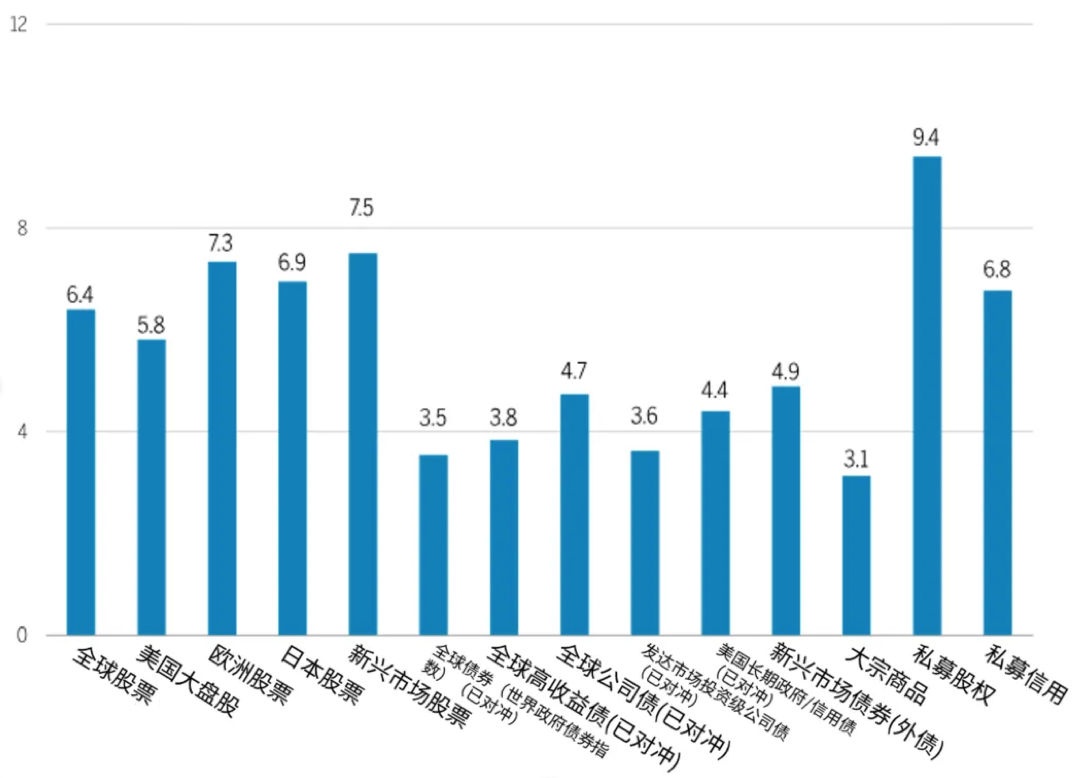
Guo Ji Jin Rong Bao· 2026-01-19 10:18
奥泰生物公告,董事长高飞提议以1亿元-2亿元回购公司股份,回购价格不超过董事会通过回购股份决 议前30个交易日公司股票交易均价的150%。 ...

均瑶健康:预计2025年净利润为负,同比减少395.14%到642.71%
Guo Ji Jin Rong Bao· 2026-01-19 10:16
均瑶健康公告,预计2025年年度实现归属于上市公司股东的净利润为-2.16亿元到-1.44亿元,与上年同 期相比,将减少1.15亿元到1.87亿元,同比减少395.14%到642.71%。预计2025年年度实现归属于上市公 司股东的扣除非经常性损益的净利润为-2.33亿元到-1.55亿元,与上年同期相比,将减少9704.89万元到 1.75亿元,同比减少167.33%到301.00%。 ...

好上好:预计2025年度净利润同比增长115.64%-175.35%
Guo Ji Jin Rong Bao· 2026-01-19 10:12
好上好公告,预计2025年度归属于上市公司股东的净利润为6500万元-8300万元,比上年同期的3014.33 万元增长115.64%-175.35%。扣除非经常性损益后的净利润预计为6200万元-8000万元,比上年同期的 2465.91万元增长151.43%-224.42%。 ...
应改革IPO承销保荐费机制
Guo Ji Jin Rong Bao· 2026-01-19 10:10
Core Viewpoint - The China Securities Regulatory Commission (CSRC) emphasizes the need to deepen comprehensive reforms in investment and financing, particularly focusing on the reform of underwriting and sponsorship fees for IPOs as part of the capital market financing structure [1] Group 1: IPO Financing and Costs - IPO financing is a significant part of capital market financing, attracting more attention due to its substantial market impact compared to the larger scale of annual refinancing by listed companies [1] - The introduction of the sponsorship system has led to a noticeable increase in the costs associated with new stock issuances, as issuers now bear both underwriting and sponsorship fees [1] - The rise in IPO costs is also attributed to the significant increase in the financing amounts for single IPO projects, with typical financing now reaching billions, which has become the norm [1] Group 2: Trends in Underwriting and Sponsorship Fees - Statistics indicate a divergence in underwriting and sponsorship fees across different market segments for 2025, with the North Exchange and Sci-Tech Innovation Board experiencing increases, while the main boards and ChiNext see declines [2] - For instance, the average underwriting and sponsorship fee for Sci-Tech Innovation Board IPOs in 2025 is projected to be 122 million yuan, a nearly 28% increase from the 95.8 million yuan average in 2023-2024 [2] - Conversely, the average fee for ChiNext IPOs is expected to drop by approximately 34%, from 70.16 million yuan in 2023-2024 to 46.59 million yuan in 2025 [2] Group 3: Regulatory Changes and Their Impact - The implementation of the new regulations on February 15, 2025, has led to the discontinuation of the "tiered fee" model, contributing to the decrease in underwriting and sponsorship fees for the main boards and ChiNext [3] - The increase in fees for the Sci-Tech Innovation Board is linked to the emergence of several "star projects," with notable fees such as 392 million yuan for Moer Technology and 267 million yuan for Muxi Co [3] - The new regulations aim to standardize the services provided by intermediaries, which has resulted in a mixed impact on different market segments [3] Group 4: Recommendations for Fee Reform - Reforming the IPO underwriting and sponsorship fee mechanism is deemed necessary, with suggestions including setting a cap on fees, currently seen as excessively high at around 9% of the fundraising amount [4] - It is proposed that the maximum underwriting and sponsorship fee should not exceed 5% to ensure fairness in the fundraising process [4] - Additionally, a ceiling on underwriting and sponsorship fees should consider both the fundraising amount and the number of shares issued to reflect a more reasonable structure [4]
严查过度炒作需做好四方面工作
Guo Ji Jin Rong Bao· 2026-01-19 10:10
Core Viewpoint - The China Securities Regulatory Commission (CSRC) emphasizes the need to strengthen trading supervision and information disclosure to maintain market fairness and prevent excessive speculation and market manipulation, particularly in light of the recent positive trends in the A-share market [1][2]. Group 1: Regulatory Focus - The CSRC's reiteration of "seriously investigating excessive speculation" is a targeted response to the increasing market speculation and volatility, especially following the favorable market conditions since September 2024 [2]. - Excessive speculation has been identified as a significant factor contributing to market fluctuations and instability, necessitating a proactive regulatory approach to maintain a stable market environment [2]. Group 2: Implementation Strategies - The CSRC suggests establishing clear quantitative standards for defining "excessive speculation" to minimize subjective enforcement and help investors avoid overly speculative stocks [2][3]. - Regulatory measures should treat new and old stocks equally, ensuring that both are subject to the same scrutiny to uphold fairness in market regulation [3]. - The implementation of effective regulatory measures, such as trading suspensions for stocks involved in excessive speculation and thorough investigations into potential illegal activities, is crucial for enhancing regulatory deterrence [3]. - Distinguishing between excessive speculation and market manipulation is essential, allowing for simultaneous investigations and actions against both types of behavior without conflating them [3].
应进一步明晰上市公司同业竞争边界
Guo Ji Jin Rong Bao· 2026-01-19 10:10
一是监管部门应进一步明晰同业竞争的定义及边界。认定同业竞争需同时满足"相同或相近业 务"和"对上市公司产生重大不利影响"两大核心条件,但"相近业务"的判定标准、"重大不利影响"的具 体情形,以及未产生重大不利影响的同类业务是否构成违规等问题,均缺乏明确界定。对此,有必要出 台专项解释或配套规则,明确认定标准。同时,同业竞争边界的划定应适度留有弹性,若边界过窄,反 而可能增加监管认定难度。 具体而言,相关规则可明确:相同业务予以绝对禁止;"相近业务"可结合产业链环节、核心技术、 应用场景、目标客户四个维度进行综合判定。凡处于同一产业链环节且服务同类需求、依托同一核心技 术研发产品、应用场景存在交叉覆盖、主要目标客户重合度达到合理比例的,均可纳入相近业务范 畴。"重大不利影响"可包括:抢占核心客户,导致上市公司市场份额下滑或滞涨;通过关联交易转移利 润,侵蚀上市公司收益等。另外,可引入推定原则,即只要开展相近业务,即推定已对上市公司产生重 大不利影响,由相关方承担举证责任,证明不存在实质性影响。 二是明确违反同业竞争规定的法律责任。按照公司法第184条、第186条规定,董事、监事、高级管 理人员未依照公司章程规定 ...
2026年十大投资指南
Guo Ji Jin Rong Bao· 2026-01-19 10:10
Core Insights - The annual top investment guide by Wellington Investment aims to help investors clarify priorities for the upcoming year to achieve better investment outcomes [1] Review of Last Year's Performance - The overall market performance for 2025 (up to November) was similar to 2023 and 2024, with strong stock returns, decent credit returns, low government bond returns, and mixed performance in commodities [2] - Gold ranked second in asset performance for the second consecutive year, with emerging markets, including China, and broad non-U.S. equities being the best-performing asset classes [2] - U.S. stocks showed resilience due to the strong performance of large-cap stocks [2] Lessons Learned - Policy paths are not linear, as the new U.S. government's tariff policies were unpredictable, impacting market sentiment [4] - Risk appetite and risk-averse sentiment can coexist, as evidenced by the strong performance of stocks during periods of rising gold prices [5] - The U.S. dollar is not invulnerable, facing pressure due to market and strategic reasons [6] - Betting against inflation and shorting tech stocks can be costly, indicating risks in going against the current cycle [7] - The principle of "buying the dip" remains valid, as increasing positions during market downturns often outperforms reducing positions [8] - Current global trends may persist, and investors should be prepared for this [9] Assessing Short-Term Outlook - As of December 2025, the team holds a moderately overweight view on global equities, benefiting from reduced uncertainty in global economic policies and central bank easing [10] - Preference for stock allocation is given to Japan and the U.S., followed by Europe and emerging markets [10] - A moderately overweight view on developed market government bonds, neutral on credit, and slightly underweight on commodities, primarily driven by a slight underweight on oil [10] - The short-term outlook for stocks remains optimistic following a strong rise in 2025 [11] Examining Potential Opportunity Areas - Wellington Investment's capital market assumptions indicate that stock returns are expected to outperform fixed income, with non-U.S. stocks leading [12] - The expected return for a typical 60% equity/40% fixed income portfolio is slightly above 5%, lower than the historical average of about 6% due to valuation constraints [16] - Adjustments to tech stock allocations are recommended, as nearly 40% of surveyed respondents are underweight in tech stocks [16] - Defensive stock strategies may still hold value in portfolios despite temporarily lagging behind tech stocks [17] - Consideration of non-favored areas such as non-U.S. stocks, small-cap stocks, and value stocks is encouraged [18] - 2026 may present ample diversification investment opportunities [19] Understanding Market Consensus - Current market consensus indicates a preference for stocks and gold, with concerns over bubble risks [20] - The risk pricing for government and credit bonds is relatively low [21] - The expectation remains that the Federal Reserve will intervene during market sell-offs [22] - Investor sentiment towards emerging markets is generally cold, despite increasing interest from some fund managers [23] - Value stocks, quality stocks, and small-cap stocks appear to remain out of favor [24] - Market expectations show a nearly 50% growth in earnings, despite past negative actual earnings [25] - Strong recovery is anticipated in Europe and emerging markets, with steady expectations for the U.S., while Japan's economic improvement is minimally expected [25] - The market anticipates the continuation of current trends, suggesting that any surprises could lead to significant impacts [26] Considering Possible Surprises - Preparation for stronger growth, higher inflation, and unexpected policy changes is advised [28] Long-Term Outlook - Institutional asset owners plan to increase allocations in 2026 to hedge funds, infrastructure, private credit, private equity, non-U.S. developed market stocks, emerging market stocks, and return-seeking fixed income [29] - Strategies that may be effective regardless of the cycle include market concentration strategies and dynamic fixed income strategies [30] Researching Alternative Investment Areas - Alternative investments are crucial for many investors, with a focus on hedge funds, private equity, and private credit [32] Fostering Internal Risk Management Awareness - Key risks to monitor in 2026 include U.S. midterm elections, potential fiscal stimulus, and optimistic sentiment towards earnings, especially in tech stocks [34] - Scenario analysis and stress testing of portfolios are recommended to incorporate various risk factors [34] Evaluating Liquidity Conditions - Investors should consider factors that may alter liquidity demands in the coming year [36] - Overall liquidity conditions are expected to remain consistent with those seen in 2025 [37] Streamlining 2026 Priorities - Investors should simplify their priorities into manageable lists, focusing on both defensive and offensive strategies [38]