Guo Ji Jin Rong Bao

Search documents
限期整改!华住会被约谈,条款涉嫌限制消费者权利
Guo Ji Jin Rong Bao· 2026-02-11 13:23
Group 1 - The hotel industry is experiencing a surge in prices due to the high demand during the Spring Festival, prompting regulatory scrutiny [1][5] - Huazhu Group's membership program, Huazhu Club, is under investigation for unfair terms in its service agreement, which allegedly restrict consumer rights [2][3] - The Beijing Consumer Association has mandated Huazhu Club to rectify its unfair arbitration clause and conduct a comprehensive review of all consumer-facing agreements [3] Group 2 - As of Q3 2025, Huazhu Group reported a hotel revenue of 30.6 billion yuan, a year-on-year increase of 17.5%, with adjusted net profit rising by 10.8% to 1.52 billion yuan [4] - The total number of hotels operated by Huazhu Group exceeded 12,700 globally, marking a 17.1% year-on-year growth [4] - The hotel price surge has led to public outcry, with reports of significant price hikes during the Spring Festival, such as a hotel room priced at 4,200 yuan per night compared to a regular price of around 900 yuan [6]

2030“五个中心”再跃升,2035基本建成国际大都市!上海市“十五五”规划《纲要》出炉
Guo Ji Jin Rong Bao· 2026-02-11 12:58
Core Objectives - Shanghai's "15th Five-Year Plan" aims for significant advancements in urban capabilities and competitiveness by 2035, with a goal of doubling per capita GDP compared to 2020 levels [3][5] - The plan emphasizes the development of "five centers" to enhance global positioning and resource allocation capabilities [4][8] Development Goals - The plan outlines key tasks and objectives for the "15th Five-Year" period, focusing on technological innovation, reform and opening-up, national strategic alignment, and modern urban governance [4][6] - Specific targets include achieving decisive progress in high-level institutional openness and improving the quality of life for residents [4][6] Key Indicators - The "15th Five-Year Plan" sets 20 core indicators, with 14 being anticipatory and 6 being binding, aimed at guiding economic and social development [6] - Indicators focus on economic growth, efficiency improvement, structural optimization, and enhancing the functions of the "five centers" [6] Major Initiatives - The plan includes 13 major initiatives categorized under "new momentum," "new space," and "new quality," aimed at enhancing urban core functions and competitiveness [8][10] - Initiatives for the international economic center focus on building a modern industrial system and promoting the digital and green transformation of traditional industries [8][9] Regional Development - The plan emphasizes the integration of the Yangtze River Delta region, promoting collaborative development and innovation [10] - It aims to optimize urban-rural spatial layouts and enhance infrastructure systems within the city [10] Quality of Life Improvements - The plan prioritizes cultural, ecological, and governance improvements to ensure high-quality living standards for residents [11] - Goals include enhancing public services in employment, housing, education, and healthcare, while also ensuring ecological sustainability [11]

南华期货增资境外全资子公司
Guo Ji Jin Rong Bao· 2026-02-11 10:52
2月9日晚间,南华期货发布公告称,将对境外全资子公司横华国际进行增资,增资金额为12.03亿港 元,增资后其注册资本将达到20.29亿港元。 记者了解到,横华国际持续稳健的盈利能力,或是南华期货加码投入的核心考量。 据公告披露,2024年度,横华国际的营业收入为6.54亿元,净利润为4.17亿元;2025年前三季度(未经 审计),横华国际的营业收入为5.06亿元,净利润为3.28亿元,同比均实现正增长。 公开资料显示,南华期货成立于1996年,并先后于2019年8月及2025年12月在上海证券交易所和香港联 合交易所上市。横华国际则为南华期货境外全资子公司,于2006年获中国证监会批准在中国香港注册成 立,先后于中国香港、美国、新加坡、英国设立全资附属公司。 南华期货于2025年12月12日刊发的H股招股说明书中明确,公司H股全球发售所得款项净额全部用于横 华国际,计划加强中国香港、英国、美国及新加坡的境外附属公司的资本基础,以进一步扩展公司的境 外业务、优化公司的境外业务架构,以提升公司于全球市场的竞争力及风险应对能力。 从出资方式来看,本次增资采用现金出资方式,资金来源为公司发行境外上市股份(H股)募集资 ...

东阿阿胶15亿元投资健康消费品产业园
Guo Ji Jin Rong Bao· 2026-02-11 10:47
Core Viewpoint - Dong'e Ejiao plans to invest 1.485 billion yuan in a health consumer goods industrial park, marking one of its largest single investments in recent years [1][3] Group 1: Investment Details - The investment includes 1.421 billion yuan for fixed assets and 64 million yuan for liquidity support [1] - The project will cover an area of 406,800 square meters with a construction area of approximately 151,100 square meters, and is expected to take 22 months to complete [3] - This investment aligns with the company's "1238" strategy, which aims to develop a dual-driven growth model of pharmaceuticals and health consumer goods [3] Group 2: Business Strategy - The health consumer goods sector is characterized by diverse demand and rapid product iteration, necessitating higher standards for R&D, quality, and agile supply chains [3] - The existing industrial park faces limitations in expansion and capacity bottlenecks, prompting the need for new facilities to meet the fast-paced development of health consumer goods [3] - The new investment is seen as a strategic move to capitalize on the growing health industry and the trend of "younger health consumption" [3] Group 3: Financial Implications - The investment will consume a significant portion of the company's cash reserves, which stood at approximately 8.2 billion yuan as of the end of Q3 last year [6] - The shift towards heavier asset allocation may lead to a decline in fixed asset turnover during the construction phase, potentially impacting short-term profitability [6] - As of February 11, the company's stock price was 55.44 yuan, with a market capitalization of 35.7 billion yuan, reflecting an 18% decline over the previous year [6] Group 4: Market Competition - Investors express mixed opinions on the investment, with concerns about the impact on the company's balance sheet and liquidity [4] - Competitors in the health consumer goods space include Kunming Pharmaceutical, Yunnan Baiyao, and others, which may pose challenges for Dong'e Ejiao in achieving expected performance [7]

春节前集体闭店!小南国上海门店拟售8家、2家更名重启
Guo Ji Jin Rong Bao· 2026-02-11 10:44
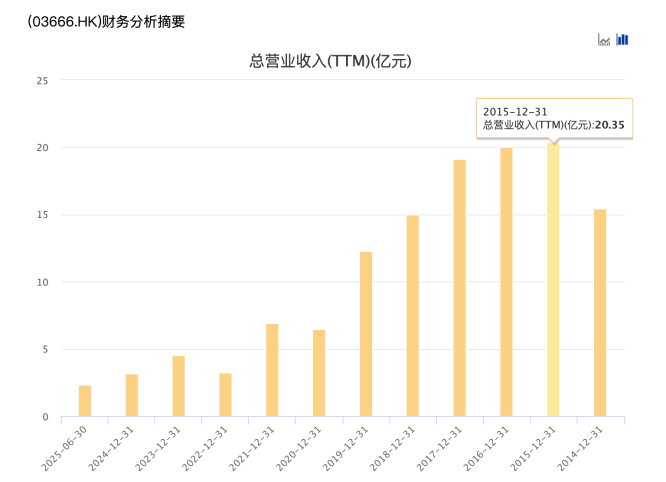
Core Viewpoint - Shanghai Xiao Nan Guo, a well-known dining brand, is facing significant operational challenges, including the closure of all its restaurants in Shanghai, which has led to a substantial drop in its stock price and raised concerns among consumers regarding refunds and the brand's future [2][4][5]. Group 1: Company Operations - The company announced the closure of 10 restaurants in Shanghai as part of a strategy to streamline operations and reduce financial losses, reallocating resources to core markets [4][9]. - The sudden closure occurred just before the Chinese New Year, disrupting consumer dining plans and raising refund concerns for deposits made for holiday meals [5][9]. - The company clarified that it is processing refunds for deposits and that prepaid card funds are secured in a designated account, ensuring customers can receive their refunds [4][5]. Group 2: Financial Performance - Shanghai Xiao Nan Guo's revenue has significantly declined since 2017, with reported revenues of approximately 3 billion yuan in 2024 and a net loss of 85 million yuan [9]. - The company's debt situation is critical, with an asset-liability ratio of 251%, indicating severe financial distress [9]. - To alleviate financial pressure, the company plans to sell 8 of its 10 Shanghai restaurants for $100,000, which is a contributing factor to the recent closures [9][10]. Group 3: Brand Evolution - Founded in 1987, Shanghai Xiao Nan Guo was once a leading brand in high-end local cuisine, achieving over 2 billion yuan in revenue at its peak in 2015 [7]. - The brand is undergoing a transformation, with plans to rebrand two remaining restaurants as "Ching Ching," targeting a younger demographic [10][12]. - The operational status of the company's headquarters has been reported as vacant, indicating a significant reduction in workforce and activity [5].
特朗普威胁阻止美加新桥开放
Guo Ji Jin Rong Bao· 2026-02-11 10:42
Core Viewpoint - The construction of the Gordie Howe International Bridge, aimed at alleviating congestion at one of North America's busiest border crossings, has become a focal point of political and trade disputes between the U.S. and Canada, following President Trump's threats regarding its operation and ownership [1][4]. Group 1: Project Overview - The Gordie Howe International Bridge connects Detroit, Michigan, and Windsor, Ontario, and is funded by Canada, taking nearly eight years to build, with an expected opening in early 2026 [2]. - The bridge, approximately 1.5 miles long, is designed to address long-standing traffic congestion in the Detroit-Windsor corridor, which is critical for the movement of automotive parts and other goods [2]. - The existing Ambassador Bridge, over 90 years old, struggles to meet the growing cross-border trade demands since the implementation of NAFTA in 1994, leading to significant delays and inefficiencies [2]. Group 2: Political and Economic Implications - Trump's recent comments have raised concerns among Michigan's political and business leaders, who emphasize the project's importance for job creation and supply chain security [6]. - The Michigan Chamber of Commerce has labeled the bridge as one of the most significant infrastructure projects for the state and region, warning that any attempts to halt it could have severe repercussions [6]. - The project is financed by Canada, with tolls used to repay construction costs, while the U.S. side does not charge tolls and has no financial obligations, with ownership shared between Canada and Michigan [2][4].

鹿客科技冲刺IPO,患“小米依赖症”,自有业务萎缩
Guo Ji Jin Rong Bao· 2026-02-11 07:43
Core Viewpoint - Luoketech (Beijing) Co., Ltd. has submitted an application for a mainboard IPO to the Hong Kong Stock Exchange, aiming to become the "first AI smart lock stock" in the Hong Kong market [1] Group 1: Financial Performance - The company reported revenue growth from 1.015 billion to 1.086 billion yuan from 2023 to 2024, with a year-on-year increase of 11.5% in the first three quarters of 2025, reaching 774 million yuan [2] - Profits for 2023 and 2024 are projected at 14.03 million and 53.11 million yuan, respectively, with 31.98 million yuan reported for the first three quarters of 2025 [3] Group 2: Cash Flow Challenges - Operating cash flow showed a significant decline, with net inflow dropping from 89.485 million yuan in 2023 to just 1.247 million yuan in 2024, and turning negative with a net outflow of 38.307 million yuan in the first three quarters of 2025 [4] - As of September 2025, cash and cash equivalents were only 66.73 million yuan, a substantial decrease from the beginning of the period [5] Group 3: Business Structure and Dependency - The company's revenue growth heavily relies on ODM (Original Design Manufacturer) business, which accounted for 61.6% of total revenue in the first three quarters of 2025, up from 50.6% in 2023 [6] - Revenue from proprietary brand consumer products declined from 319 million yuan in 2023 to 301 million yuan in 2024, further dropping to 159 million yuan in the first three quarters of 2025, reducing its share from 27.8% to 20.5% [6] - The overall gross margin decreased from 35.2% in 2024 to 31.2% in 2025 due to the imbalance in business structure [7] Group 4: Client Dependency Risks - The company is significantly dependent on a single client, with sales to the top five clients accounting for 65.2% of total revenue, and sales to the largest client, Xiaomi, making up 60.6% [8] - The founder, Chen Bin, acknowledged that after receiving investment from Xiaomi, the company largely abandoned its proprietary brand, leading to a lack of product differentiation [9]

存款搬家!理财公司上调单户持仓上限 降费率揽客
Guo Ji Jin Rong Bao· 2026-02-11 06:34
(原标题:存款搬家!理财公司上调单户持仓上限 降费率揽客) 当前,现金管理类理财产品成为银行理财机构揽客的发力点。 《国际金融报》记者注意到,6月以来,包括招银理财、光大理财、华夏理财、兴银理财在内的多家银行理财子公司正针对现金管理类产品开启费 率优惠、上调个人客户持仓上限等揽客活动。 受访专家指出,存款利率下行促使居民储蓄加速向理财市场迁徙,现金管理类理财产品直接关系客户体验和理财公司市场份额争夺。展望后市, 银行理财市场将呈现"稳中求变"的发展特征,权益类资产的配置价值将进一步凸显,成为增厚收益的重要突破口。 密集调整费率和持仓限额 以招银理财为例,截至6月19日下午4时,当天宣告成立了2款现金管理类理财产品,并针对4款现金管理类理财计划开展费率优惠活动。公告显 示,两只新成立的现金管理类理财产品募集规模分别约为457.50万元和546.92万元。阶段性费率优惠则是下调了产品固定投资管理费,其中两只产 品年化费率由0.3%降至0.01%。 此外,招银理财称,为满足客户的投资需求,将旗下一款现金管理类产品的销售对象拓展至招商银行公司客户、招商银行私人银行客户,并分别 新增销售份额。更早前,该公司上调了一款" ...
多家银行官宣“年中红包”!六大行数额亮了
Guo Ji Jin Rong Bao· 2026-02-11 06:34
Core Viewpoint - Increasing number of banks are adopting mid-year dividend plans, with 17 A-share listed banks planning to implement mid-year dividends for 2024, reflecting a shift towards more frequent cash distributions to investors [1][2][3] Group 1: Mid-Year Dividend Plans - CITIC Bank has expressed its intention to implement a mid-year dividend for 2024, following the lead of Minsheng Bank, marking it as the second shareholding bank to announce such plans [2] - As of July 4, 2023, 17 out of 42 A-share listed banks have decided to implement mid-year dividends for 2024, with six major state-owned banks already having made arrangements [2][3] - The mid-year dividend plans are part of a broader trend among banks to enhance investor returns and improve liquidity [1][4] Group 2: Regulatory Influence - The Chinese government has introduced policies to strengthen cash dividend regulations, encouraging companies to adopt stable and predictable dividend policies, including multiple distributions within a year [4][5] - The new regulations aim to enhance the frequency of dividends, aligning domestic banks with international practices where dividends are distributed more frequently [5] Group 3: Impact on Investor Sentiment - Increased dividend frequency is expected to enhance investor confidence and attract more investments, as it reflects banks' profitability and commitment to shareholder returns [3][5] - Analysts suggest that mid-year dividends can serve as a sign of banks' confidence in their earnings and can improve investor sentiment towards bank stocks [3][5] Group 4: Considerations for Banks - Banks need to balance dividend payouts with their profitability, capital adequacy, and risk management capabilities to ensure sustainable operations [5][6] - There is a need for banks to improve internal governance and operational efficiency to better serve the real economy while managing dividend policies [6]





狂砸6500亿美元押注AI,科技巨头们的“烧钱叙事”能走多远?
Guo Ji Jin Rong Bao· 2026-02-11 04:13
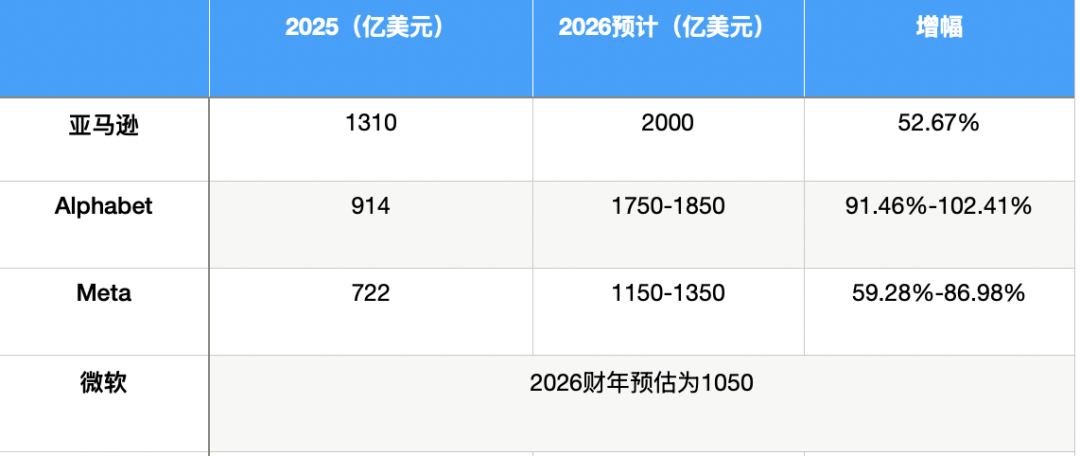
Core Viewpoint - The focus of the market has shifted towards the substantial capital expenditure budgets set by major tech companies for 2026, which are significantly higher than expected, totaling approximately $650 billion, indicating a strong commitment to AI development despite concerns from investors about the aggressive spending plans [1][4]. Group 1: Capital Expenditure Plans - Amazon is projected to have a capital expenditure of $200 billion in 2026, exceeding analyst expectations of $144.7 billion, representing a year-over-year increase of over 50% from $131 billion in 2025 [2][3]. - Alphabet (Google) anticipates capital expenditures between $175 billion and $185 billion for 2026, a significant increase from $91.4 billion in 2025, reflecting a growth rate of approximately 91.5% to 102.4% [3]. - Meta plans to double its capital expenditure to between $115 billion and $135 billion in 2026, compared to $72.2 billion in 2025, indicating a growth rate of 59.3% to 87% [3]. - Microsoft is expected to reach a capital expenditure of $105 billion for its fiscal year ending in June 2026, with a reported $37.5 billion in capital expenditures for the second fiscal quarter, marking a 66% year-over-year increase [2][3]. Group 2: Investment Focus and Strategy - The investment strategies of these companies are aligned, focusing on the strong demand for AI while addressing capacity constraints that require increased investment [4]. - Meta is prioritizing investments in computational infrastructure, with plans to build large-scale data centers to support AI models and ensure stable power supply [4]. - Alphabet aims to enhance its computational and cloud services capabilities, with approximately 60% of its 2026 capital expenditures allocated to servers and 40% to data centers and network equipment [5]. - Amazon's capital expenditures will primarily support its cloud business (AWS) to meet strong customer demand, emphasizing the ability to quickly deploy computing resources [6]. Group 3: Market Performance and Concerns - The cloud business is becoming a high-return investment area in the AI sector, with notable performances from major cloud service providers during the earnings season [7]. - Amazon's AWS sales reached $35.6 billion in Q4 2025, a 24% year-over-year increase, while Microsoft's cloud revenue grew 26% to $51.5 billion, and Alphabet's cloud revenue increased 48% to $17.7 billion [8]. - Despite the strong order backlog, which includes $240 billion for Google Cloud and $244 billion for AWS, there are concerns about the pressure on profitability and cash flow due to the need for continued capital investment [8][9]. Group 4: Financial Health and Investor Sentiment - Amazon's free cash flow has dropped significantly from $38.2 billion to $11.2 billion over the past year, with predictions of a negative free cash flow of $17 billion in 2026 [9]. - Alphabet is also facing challenges, with projections indicating a 58% and 80% drop in free cash flow per share for the fiscal years 2026 and 2027, respectively [9]. - Microsoft's aggressive capital expenditure plans have raised concerns among investors, leading to a 10% drop in its stock price following its earnings report, the largest single-day decline since March 2020 [9][10].